
Sandy soil improvement by using natural fertilizer and liquid compost
Type: Technologies
Creation: 2017-07-18 10:42 Updated: 2019-03-08 11:33
Compilers: Be Gechkim
Reviewers: Nimul CHUN, Ursula Gaemperli, Alexandra Gavilano
Country/ region/ locations where the Technology has been applied and which are covered by this assessment
- Country: Cambodia
- Region/ State/ Province: Prey Puoch village, Chrey Bak commune, Rolea B'ier District, Kampong Chhnange province
- Map: View Map
Description of the SLM Technology
Short description of the Technology
The practice of improving the conditions of a sandy soil by natural fertilizers and liquid compost application increases the crop production, as it leads to a substantial improvement of the soil quality. It improves the water retention capacity, improves the soil structure (less compaction), eases the nutrient absorption and finally, increases the soil fertility in general.
Detailed description of the Technology
A sandy soil is a soil type with large particles that has difficulty in retaining both moisture and fertility, which makes it challenging for crop cultivation. Therefore, a practice is needed that helps farmer to improve the quality of such soils. Improving soil quality means to promote a process of constant improvement of soil fertility by maintaining soil moisture, reducing soil compaction, and support to better nutrient absorption, thereby finally promoting better plant growth. Sandy soils are relatively compact and can hamper the growth and penetration of plant roots, what hinders the absorption of nutrients. To reduce this effect, the incorporation of organic matter can be useful (Rhoades, 2016). The farmers have their own techniques to improve sandy soils; one example is the diversified crop cultivation by using natural fertilizer and liquid compost. This technology is applied by one of farmers in the Prey Puoch village, belonging to the Rolea B'ier District.
His objective was to improve sandy soils in order to achieve higher production. Apart of the application of liquid compost and natural fertilizers ‒ and consequently the improvement of the soil nutrient status ‒ the farmer also increased the range of crops to raise the production level. Therefore, the family was able to raise its surpluses to be sold at the markets significantly. This led to a meaningful improvement of the livelihood.
The farmer use only natural fertilizers, such as crops residue, and cow manure or manure from pigs, when cow manure is not available. Although pig manure does not contain the same high level of nutrients as cow manure, it helps to reduce soil compaction, allows crop’s roots to absorb nutrients, and improves soil moisture. In addition, liquid compost can be applied to increase soil fertility, as this kind of compost is rich in microorganisms that play an important role in the decomposition of organic materials. By this, nutrients can be provided in the best possible way. The farmer has planted long beans and other trellising plants in rotation and as inter-crops for example strongly smelling spring onion and anise basil. Such crops grown beneath the long beans can help to reduce pest damage and diminish the use chemical pesticides. Plating anise basil and spring onions along each long bean row and the rotation practices also help maintaining the nutrition level in the soil.
To make liquid compost the farmer uses two main ingredients, such as animal (poultry) manure and plant leaves (Siam weed, Cassia tree, Lead tree, Sesbania, etc.). All of the materials are chopped and mixed, and then put into a big jar with 20 times the volume of water being added. The jar is then closed to reduce the unpleasant smell. The mixture is stirred twice daily to provide enough oxygen for the microorganisms. After three weeks the liquid mixture will be no longer smelly, and will be ready for use as liquid compost. This compost is applied three times during the crop cycle: at the start of planting, just before the flowering stage, and at the production stage. The ratio of application is 1 liter of the liquid compost for each square meter of land (Yang and Pean, 2015).
Before the farmer adopted this technology they could not even grow water morning glory and they needed a lot of labor and much water for the irrigation. This practice not only helps to improve soil quality, it reduces also the costs by using less chemical fertilizers and pesticides, by reducing the labour input, and it helps to expand the area of arable land.
Photos of the Technology
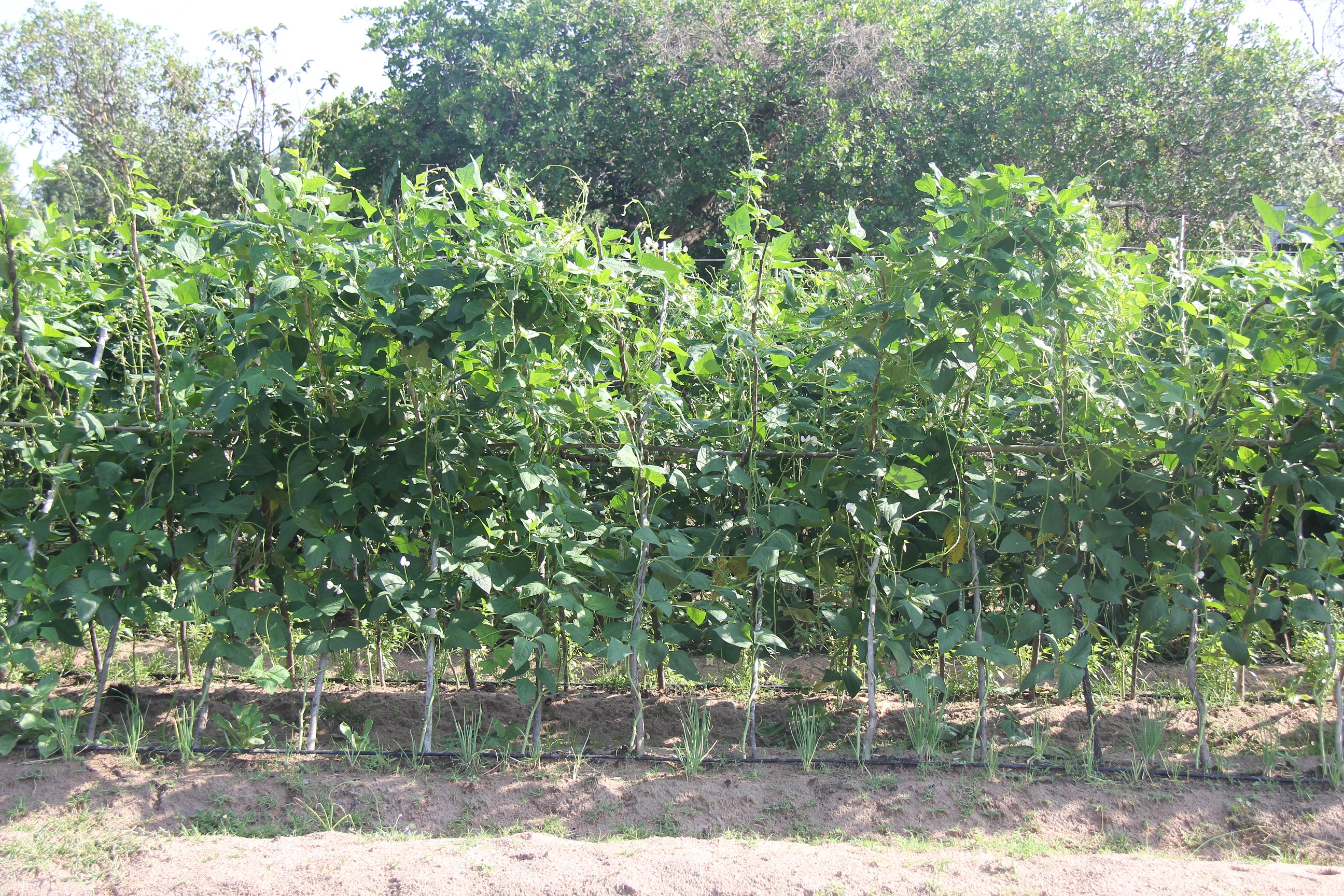
- 📍 Prey Puoch village, Chrey Bak commune, Rolea B'ier District, Kampong Chhnange province
- 📷 Mr. Kim Soben
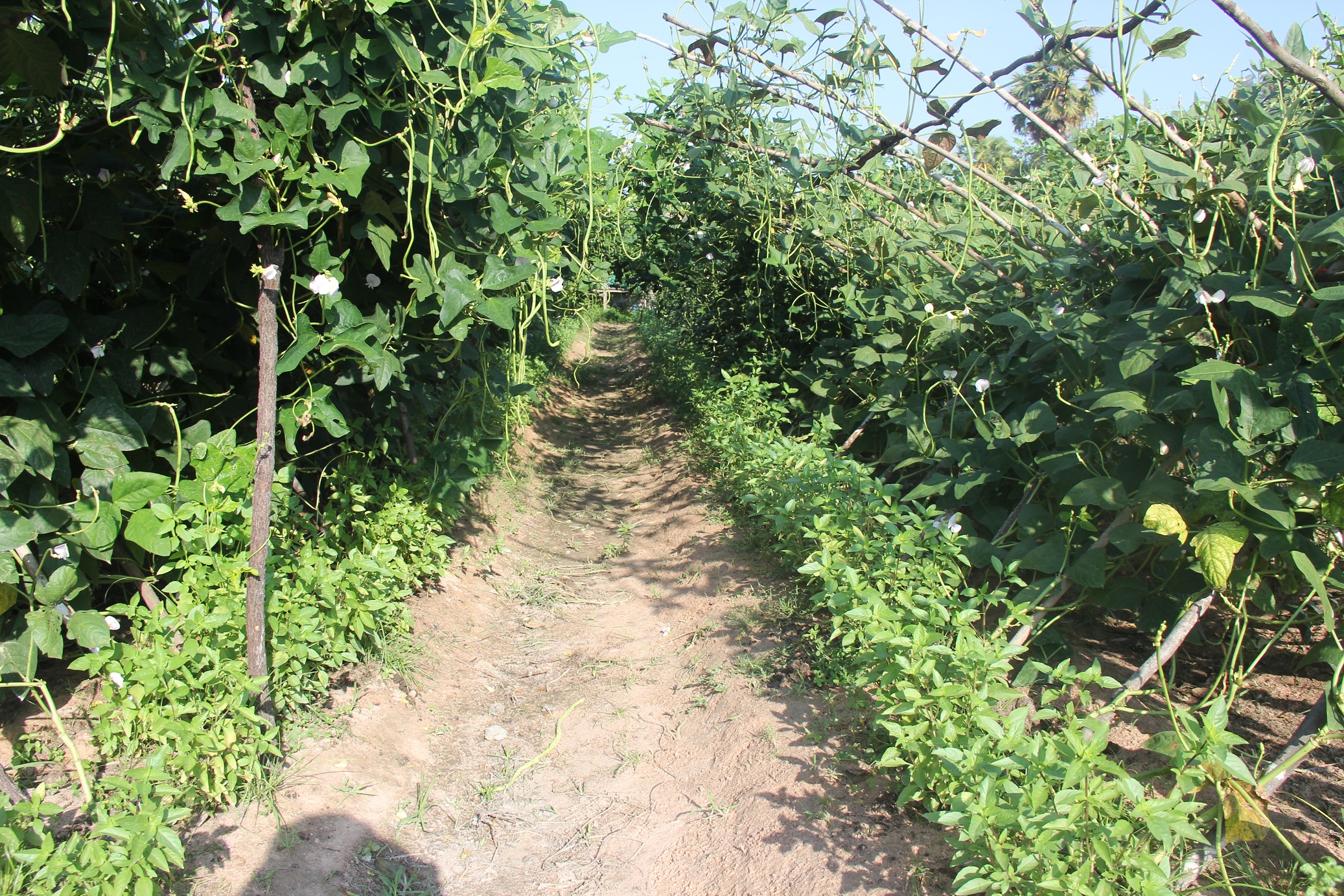
- 📍 Prey Puoch village, Chrey Bak commune, Rolea B'ier district, Kampong Chhnang province
- 📷 Mr. Kim Soben