
Growing vegetables in a nethouse to ward off insects
Type: Technologies
Creation: 2017-08-18 11:31 Updated: 2019-03-08 14:37
Compilers: Nary Lay
Reviewers: Cornelia Hett, Nicole Harari, SO Than, Ursula Gaemperli, Alexandra Gavilano
Country/ region/ locations where the Technology has been applied and which are covered by this assessment
- Country: Cambodia
- Region/ State/ Province: Ta Sei village, Ta Meun commune, Thmakoul district, Battambang province.
- Further specification of location (e.g. municipality, town, etc.), if relevant: The farm behind the village
- Map: View Map
Description of the SLM Technology
Short description of the Technology
A nethouse is a structure that is enclosed by a nylon net (like mosquito nets) which protects vegetables from insects. Additionally, it prevents the vegetables from being damaged by rainfall wind and sunlight.
Detailed description of the Technology
Currently one of the major challenges farmer face when growing vegetables is the damage caused by insects. Moreover, climate change creates obstacles when cultivating crops such as irregular rainfall, strong winds, and a rise in temperature. In order to address these issues the farmers trialed the growing of vegetables under a nethouse. Nethouses also enable crop growing throughout the whole year.
The main purpose of building a nethouse is to ward off insects without having to apply pesticides. A nethouse is highly effective in damage reduction caused by insects on crop from 80% to 100% (Stilers, 2011). Also farmers noticed that there's no significant insect infestation when using this technology. The netted roof helps to protect vegetables from direct rainfall onto them as this can damage plants or splashes soil on plant's leaves. As well it is slowing down the speed of rainfall and split it into small droplets, which is important to improve the cultivation of vegetables during rainy season, (usually farmer can grow vegetables only during dry season).
Nethouses come in a range of different size and height, and construction materials also differ depending on the available resources. Before setting up a nethouse, farmer will firstly have to prepare the terrain and then mark out the points where posts will be installed (generally it is rectangular in shape) and dig holes measuring 0.40 meters x 0.40 meters with a depth of 1 meter at all of the marked out point. After post have been inserted into these holes they should be filled with concrete to a height of 60 cm so as to secure post (the length of side post are 3 meters and the middle post are 4 meters). After frame completion, nylon ropes are extended. They act as frames to support the net and then lastly, the net is rolled over the frame to cover the entire nethouse (the sides of net should be buried in ground at a depth of 25 cm). There are two common types of nethouse roofs, those being either a gable roof or a curved (gambrel) roof, which is better than a flat roof that risks breaking down when water accumulates on it during heavy rainfalls.
Farmers generally use the same cultivation techniques as other farmers. The differences lie in the nethouse, in nearly no use of chemical fertilizers and in complete elimination of pesticide. The interviewed farmer established a nethouse measuring 316.25 square meters at Tasei village, Tameun commune (Thmakoul district). The land selected by the farmer for such nethouse vegetable growing was previously a rice field. He considered that rice can only be grown once a year, whereas vegetables can be grown throughout the year. Thus, it is possible to generate more income. They decided to dig a large pond (35meter x 35meter) for water storage connected to the irrigation system, which disburden him from watering during dry season. Initially, the excavated soil was less fertile, but the farmer used compost for one year, after which it was possible to improve the soil quality. The farmer makes dry and liquid compost by himself and also uses organic fertilizer which is purchased externally. The liquid compost is made up of sugar palm 1 kg, pineapple 5 kg and coconut juice 2 liters. This practice adds nutrients to soil and promotes a lot of living organisms that make crops flourish.
Comparing the construction costs and time it takes to make a profit from sale of vegetables farmers have to have at least three harvests before they can cover the cost of the nethouse or to achieve the profit. The nethouse can be used for a period of 10 to 13 years, and it is only necessary to change the nylon net once it is ripped. The actual gross income from pok choi and escarole is 1,590,000 riels for 530 kilograms.
If he continued to produce rice on this land, this would generate 100kg of rice sold at about 800 riels per kg and so, he would gain 80,000 riels per year. However, as the farmer applies this technology he can grow vegetable several times per year (6-7 times) with an average yield of 530 kg per harvest that amounts to 3,180 kg per year. If one kilogram of vegetables is worth 3000 riel he is able to generate an income of around 9,540,000 riel, which is more than hundredfold that of rice. Additionally, he is able to produce safe vegetables, contributes to the reduction in environmental pollution and the technology is adapted to climate change.
Photos of the Technology
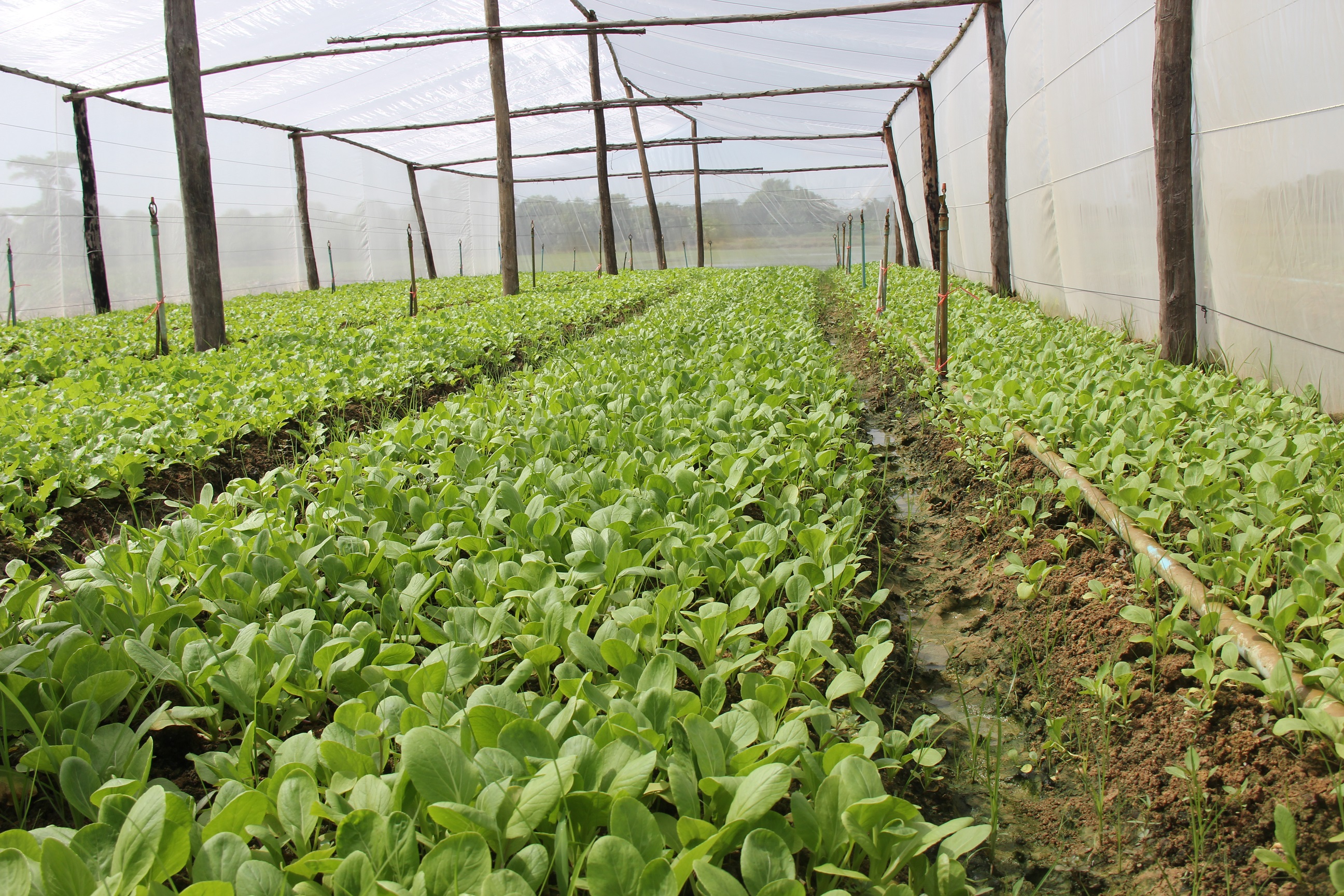
- 📍 Ta Sei village, Ta Meun commune, Thma Koul district, Battambang province.
- 🗓 2017-03-07
- 📷 Mr. Kim Soben
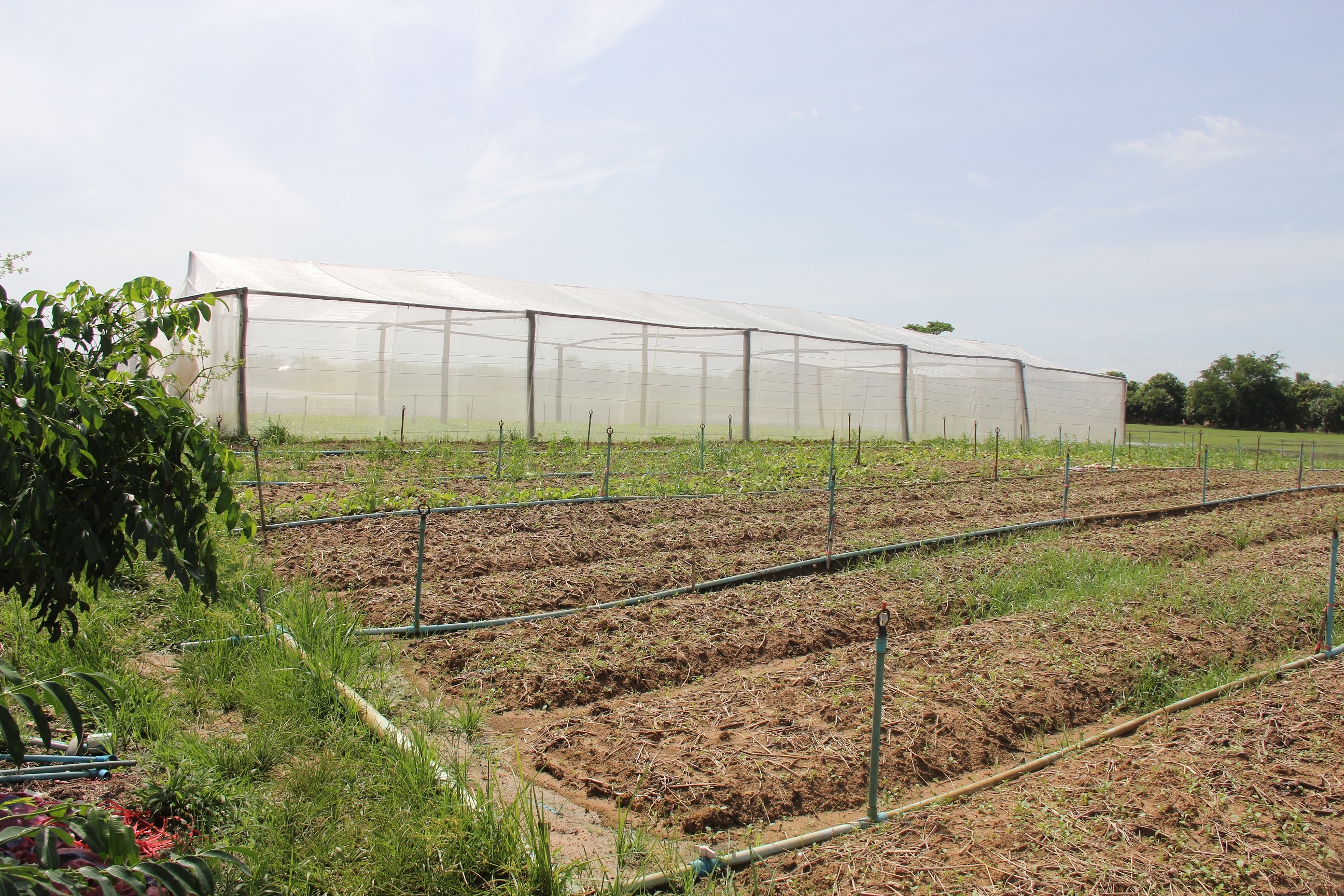
- 📍 Ta Sei village, Ta Meun commune, Thma Koul district, Battambang province.
- 🗓 2017-03-07
- 📷 Mr. Kim Soben
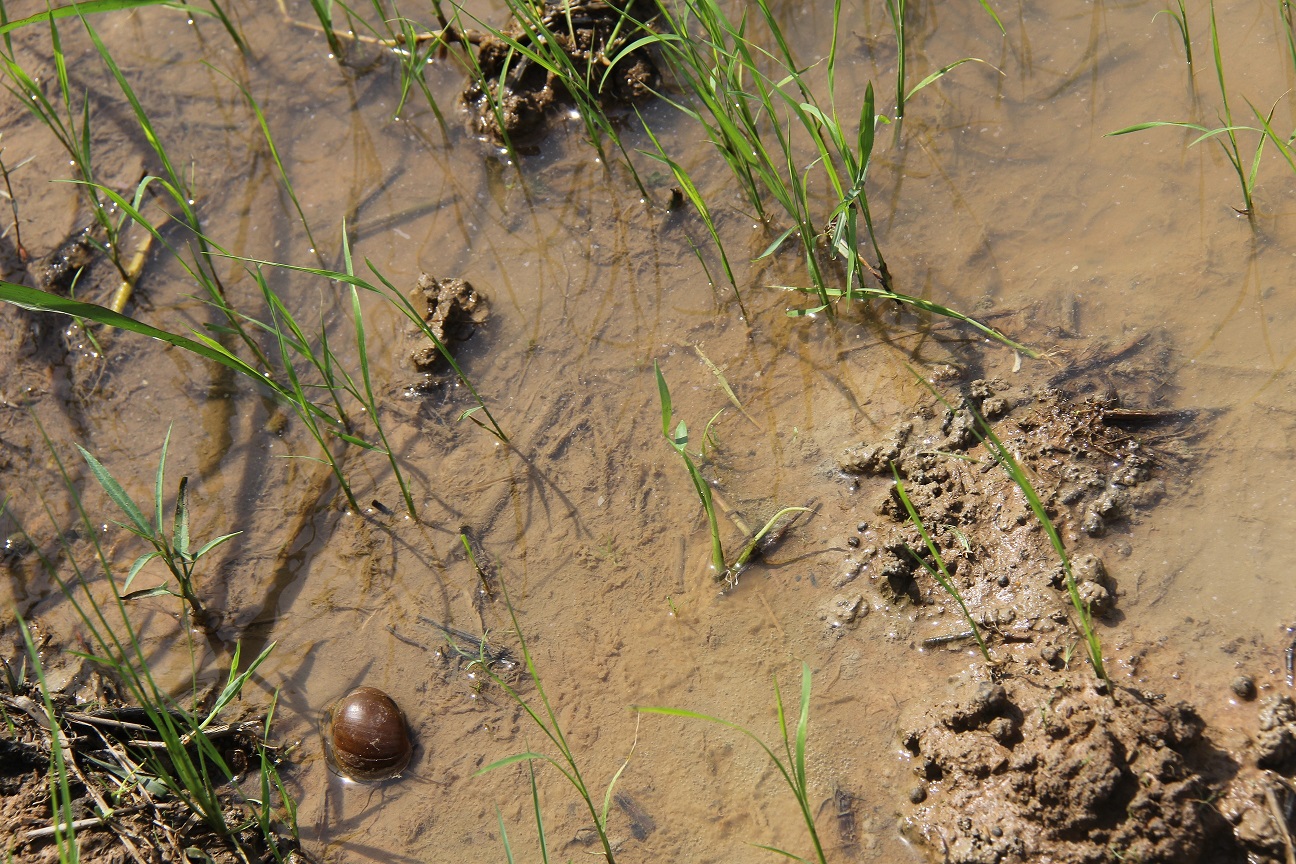
- 📍 Ta Sei village, Ta Meun commune, Thma Koul district, Battambang province.
- 🗓 2017-03-07
- 📷 Mr. Kim Soben