
Crop diversification with the application of rotation techniques
Type: Technologies
Creation: 2017-08-22 10:52 Updated: 2019-09-02 08:51
Compilers: Navin Chea
Reviewers: Nimul CHUN, Ursula Gaemperli, Alexandra Gavilano
Country/ region/ locations where the Technology has been applied and which are covered by this assessment
- Country: Cambodia
- Region/ State/ Province: Ruessei Duoch village, Banteay Peal Commune, Rolea B'ier District, Kampong Chhnang Province.
- Map: View Map
Description of the SLM Technology
Short description of the Technology
Crop diversification is the practice of simultaneously cultivating two or multiple varieties of crops in a given area whilst at the same time applying crop rotation and/or intercropping. In this case study the land user has been practicing crop diversification with eleven different crop varieties.
Detailed description of the Technology
Crop diversification entails simultaneously growing two or multiple varieties of crops in a particular place with the application of crop rotation techniques and/or intercropping. The selection of the crop varieties will depend on the purpose of the land user. In general, a diversity of crops will provide a range of benefits such as food security, nutritional diversity, income generation, soil conservation, pest and disease control as well as adaptation to climate change (CGIAR, 2017, Makate et al, 2016, MoEYS& VVOB Cambodia, 2013).
Mrs. Prum Thon has been cultivating a diversity of crops with the application of rotation techniquesfor about 10 years, which involves exchanging an entire crop in a particular row. This means that cultivation can take place throughout the year without having to leave the land fallow. At the time of the interview eleven different crops had been cultivated including spring onions, anise basil, Cambodian mint, bok choy, choy sum, escarole, mint, long beans, cucumbers, bitter melons and lettuce. Almost all of these crops have an average lifespan of three months, except for the anise basil which can grow for one or two years depending on the way it is cultivated. After she has harvested a particular crop, she will then rotate this crop row with a new distinctive crop species. For instance after having harvested spring onions she will then plant mint in that row, and in the row where she was previously growing mint, she will rotate that with either spring onions or cucumbers.
The practice of crop diversification whilst at the same time rotating the crop in each of the rows aims to achieve the following main objectives:
Crop diversification enables the farmer to generate a daily income to offset her daily expenses which thereby becomes a means of improving her livelihood. Growing a diversity of crops can also enable her to meet a variety of market demands and generate a high daily income. If a farmer grows only one crop specie she can usually earn about 15,000 Riel per day, but if she plants four crop species such as anise basil, bok choy, long beans and cucumbers she can increase her income to about 20,000 Riel per day, However if she grows one more specie such as lettuce or grows eleven different crops, she would be able to increase her income up to 40,000 or 80,000 Riel per day. The practice of crop diversification enables her to generate an income on a daily basis.
Crop diversification with the rotation of the crop in each row after the harvest could assist in reducing soil degradation. According to her experience and observations each crop absorbs different nutrients from the soil. If one row is repeatedly used to cultivate spring onions, they tend not to flourish so well and the roots have a tendency to decay. However if they are rotated with another crop and the spring onions are then grown in another row, they are able to thrive and the roots and stems are less likely to spoil. Crop diversification also has other functions as the cover crops help to reduce soil degradation through expose to sunlight, maintain soil moisture, make the soil less compact and add beneficial micro-organisms to the soil. In addition crop diversification can control pests especially the practice of growing companion plants such as herbs or spring onions as this can prevent crops from being damaged by pests.
The use of this technology assists in improving livelihoods, reduces migration because she does not need to move in order to find a job in another location, and enables her to generate a daily income. In addition this technology is able to reduce the risk of crop failure resulting from damage by pests and insects.Furthermore it reduces the risks associated with changes in market demand as the farmer produces a diversity of crops and also it prevents and reduces soil degradation. In order to effectively use this technology there needs to be sufficient water supply such as a river, stream, well or pond.This enables the land user to grow crops throughout the year round and reduces damage of crops as the result of unpredictable adverse climate conditions such as changes in rainfall, or the occurrence of drought.
Photos of the Technology
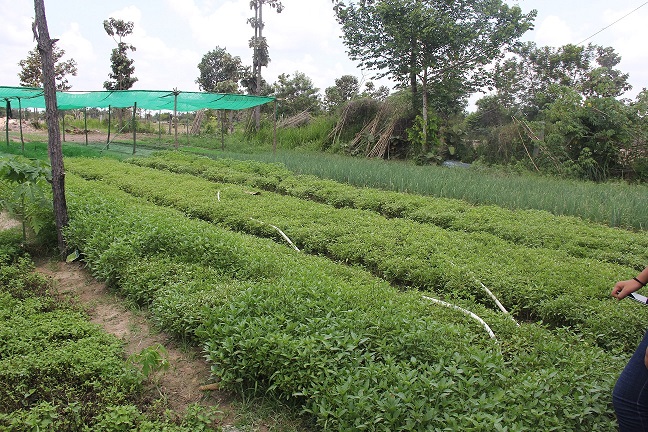
- 📍 Ruessei Duoch village, Banteay Peal Commune, Rolea B'ier District, Kampong Chhnang Province.
- 📷 Mr. Sok Pheak
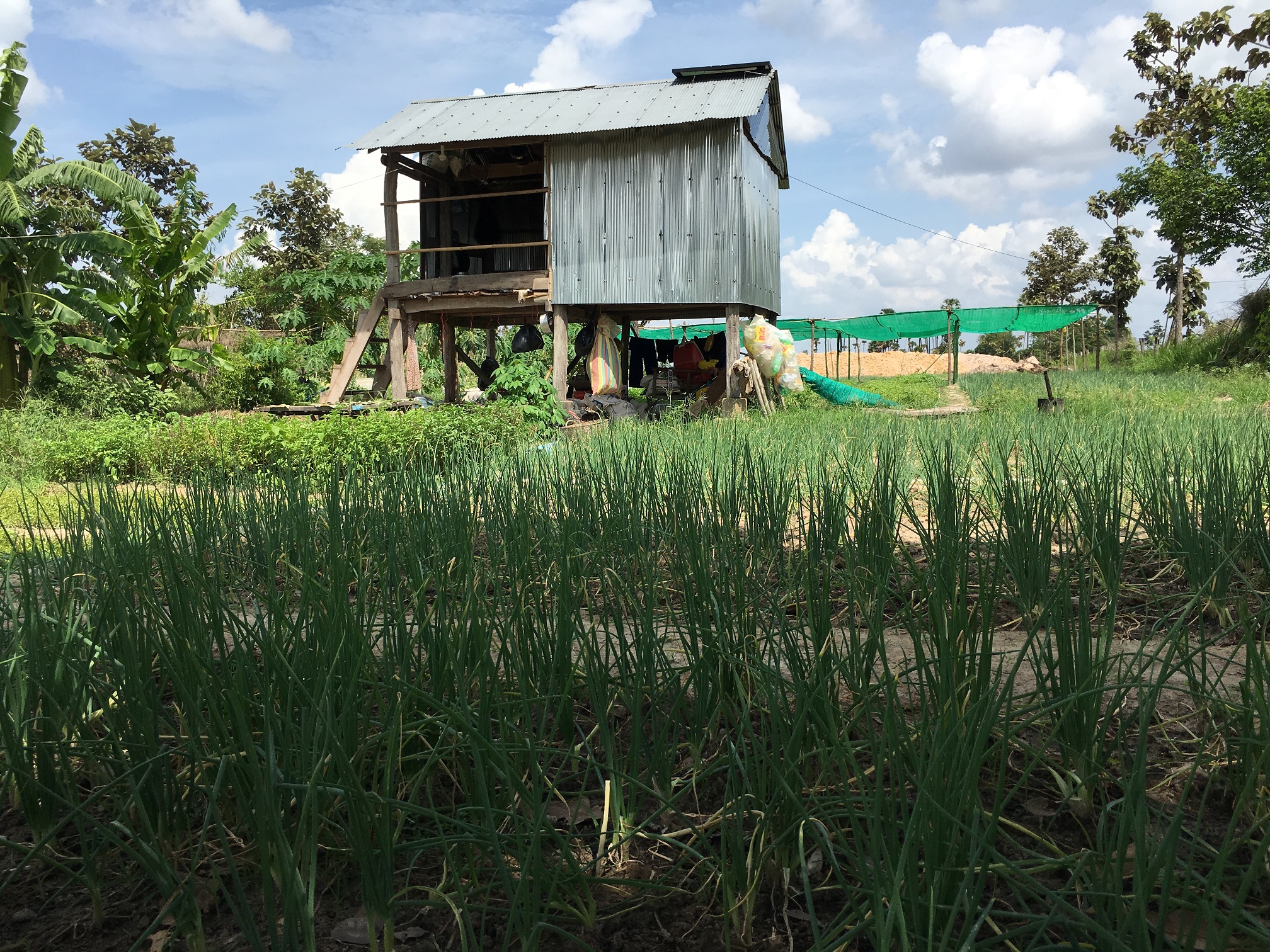
- 📍 Ruessei Duoch village, Banteay Peal Commune, Rolea B'ier District, Kampong Chhnang Province.
- 📷 Mr. Sok Pheak
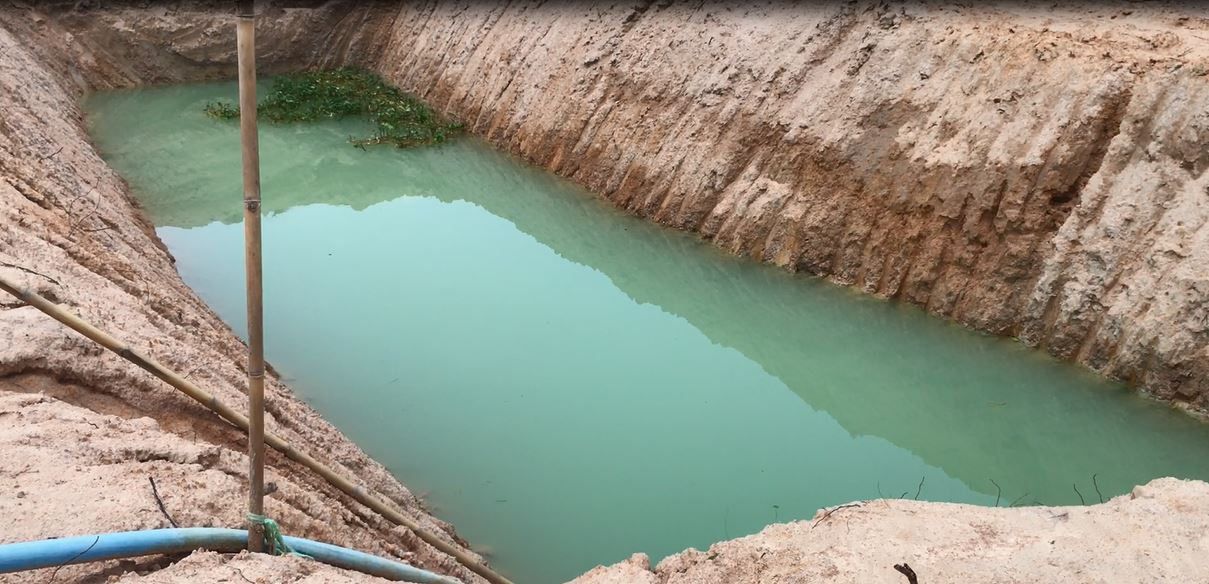
- 📍 Ruessei Duoch village, Banteay Peal Commune, Rolea B'ier District, Kampong Chhnang Province.
- 📷 Mr. Sok Pheak