
Intercropping of orange trees with mungbean in mountainous areas
Type: Technologies
Creation: 2017-08-22 18:10 Updated: 2019-03-11 11:24
Compilers: Navin Chea
Reviewers: Nimul CHUN, SO Than, Ursula Gaemperli, Alexandra Gavilano
Country/ region/ locations where the Technology has been applied and which are covered by this assessment
- Country: Cambodia
- Region/ State/ Province: Ongkrong Village, Samrong Commune, Phnum Kravanh District, Pursat Province.
- Further specification of location (e.g. municipality, town, etc.), if relevant: Phnum Kravanh of Cambodia.
- Map: View Map
Description of the SLM Technology
Short description of the Technology
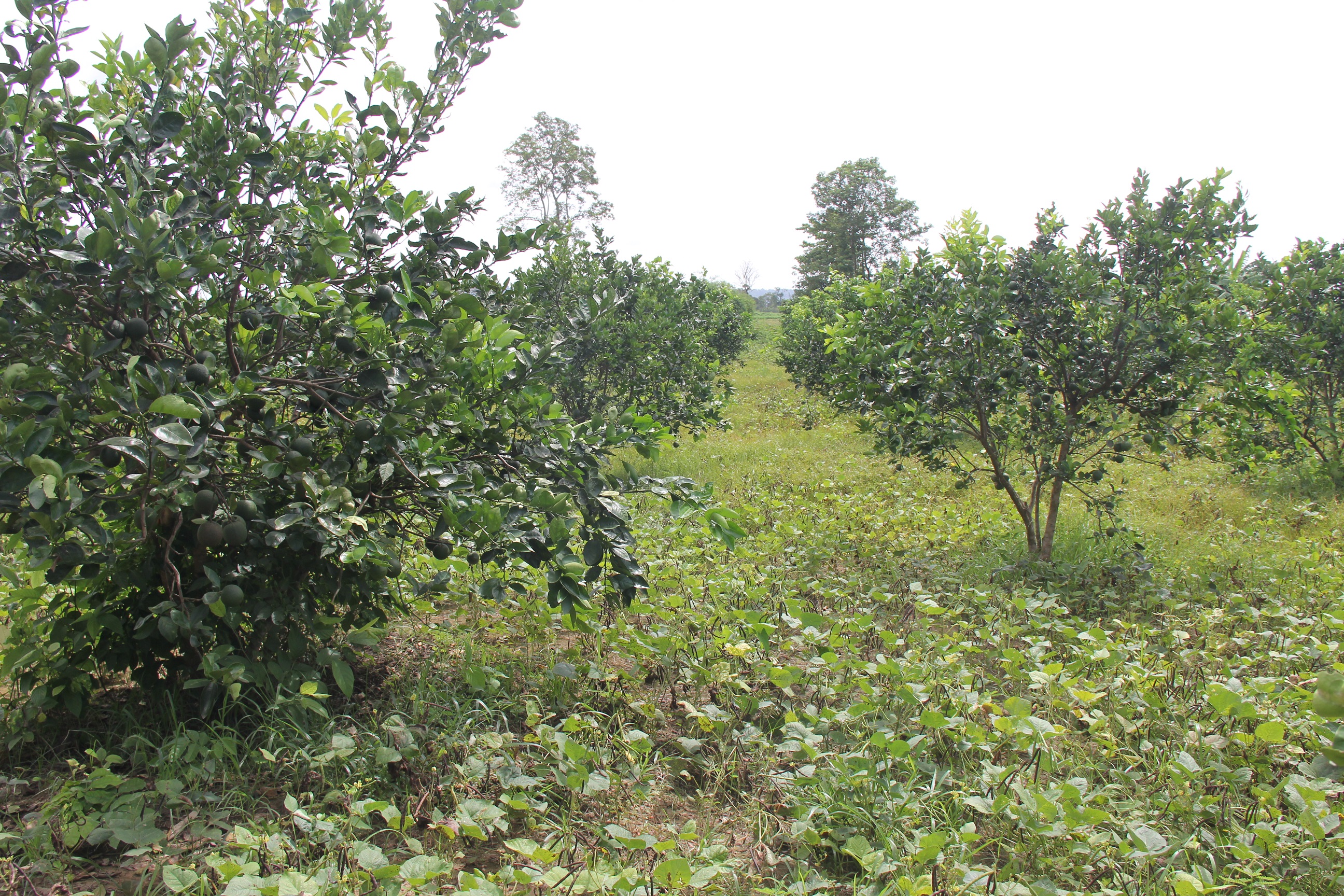
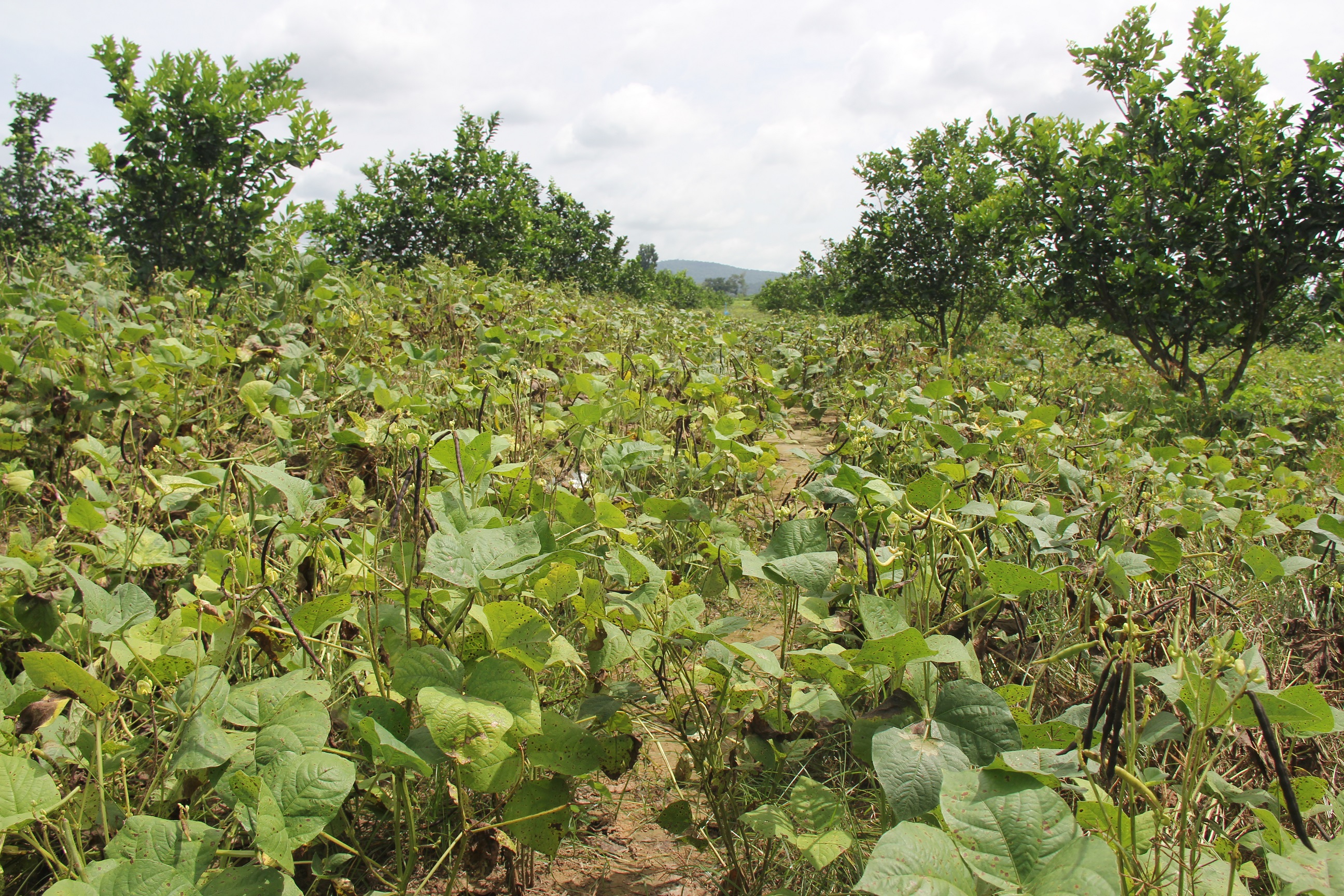
Intercropping of mungbean between orange trees improves soil fertility and generates income before the orange trees bear fruit.
Detailed description of the Technology
Agroforestry is a farming practice that can involve growing of a mixture of woody perennials like trees, shrubs, palms, bamboos, etc. with crops and/or animals, on the same land-management units. Agroforestry systems play an important role in ecological and economical interactions between the different land use components (Lundgren and Raintree, 1982). It represents an interface between agriculture and forestry, and encompasses mixed land-use practices. Agroforestry systems are composed of three attributes:
1. Productivity (improved tree products, yields of associated crops, reduction of cropping system inputs, and increased labor use efficiency);
2. Sustainability (beneficial effects of woody perennials);
3. Adoptability (MoE/Adaptation Fund/UNEP, 2016).
In Cambodia, mungbean grows throughout the whole year almost, depending on the moisture factor. Mungbean is short maturity crop which can be grown both in sloping upland and in lowland areas. In upland areas farmers usually plant their second crop in August and harvest it in October. Mungbean is a crop that can be grown on many soil types, but grows best on alluvial, sandy, and volcanic soils which well drained containing high levels of nutrients (incl. N, P, K, Ca, Mg) and organic matter (MAFF, 2005). Mungbean crop duration depends on the variety, with short-term, medium-term and long-term being harvested between 60-65 days, 65-75 days, and 75-80 days, respectively.
Mungbean residues can make an active contribution to improvement of soil quality through nitrogen fixation and subsequent incorporation of this nitrogen into the soil after root and nodule degeneration by Rhizobium bacteria. The incorporation of the organic root material also improves the soil structure (MAFF, 2005, Chadha, 2010, IRRI-CIMMYT Alliance, 2009). The taproot of the mungbean can penetrate the soil to a depth of 50-60 centimeters. Sometimes, some land users grow mungbean as a green manure crop specifically to improve soil quality (Tauch Ung, 2010).
Mr. Chea Sarith is one example of land user who practices intercropping of orange trees with mungbean since 2013. The main purpose is to improve soil fertility, to prevent soil erosion, and to generate income before the orange trees provide fruit. In addition, it eases the weed control. After the harvest the farmer leaves the plant residues on the soil to provide organic matter. With the objective not to harm the roots of the orange trees, he avoids tilling the soil. In general, mungbean grows twice a season depending on the rainfall distribution and soil moisture.
The average yield of direct seeded mungbean as an intercrop between orange trees is about 1,200 kg/ha (harvested 3 times per crop). If mungbean is grown as a single crop the yield is usually ranges from 1,300 to 1,400 kg/ha. The market price for mungbean grain is usually about 4,500 to 5,000 Riel/kg.
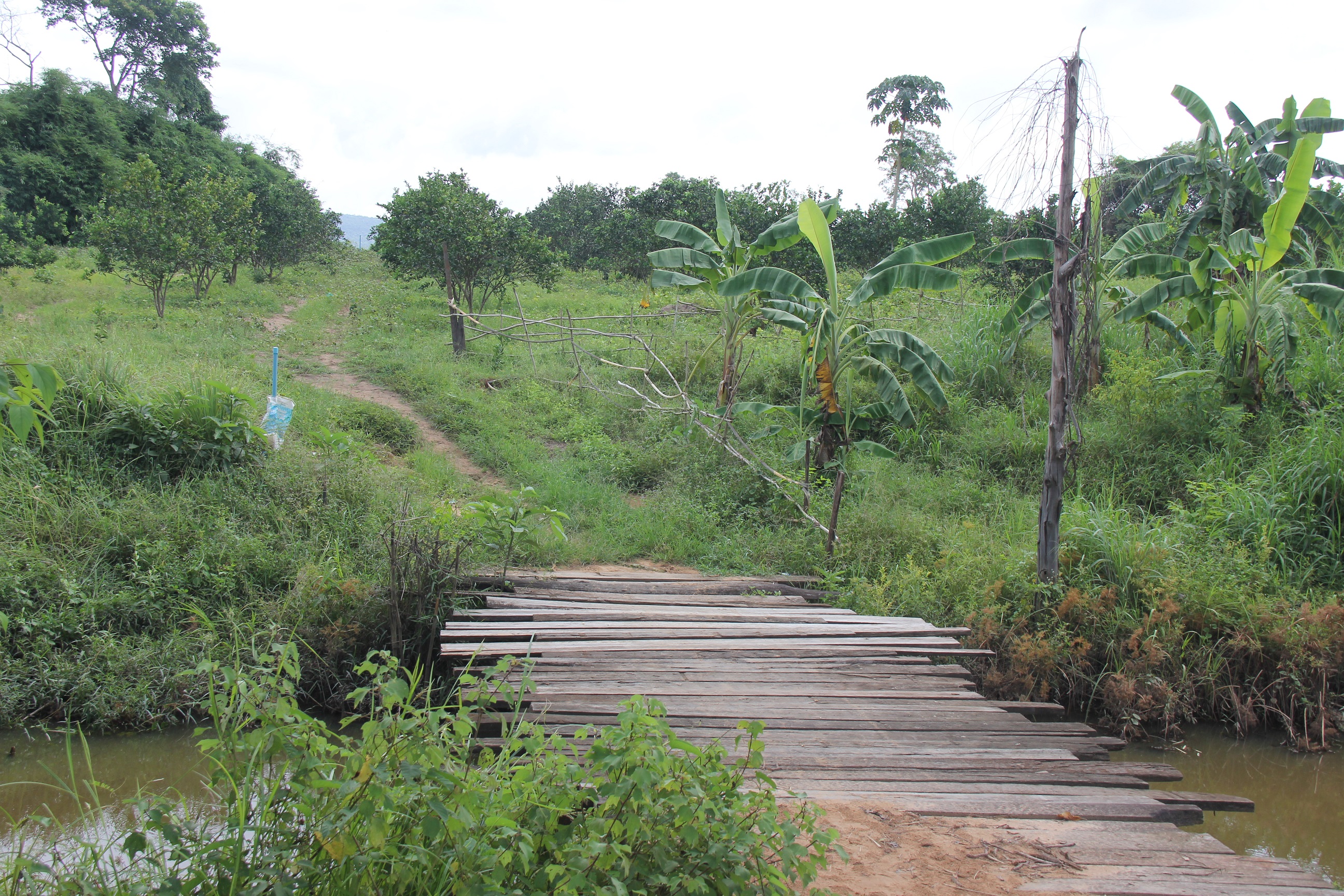
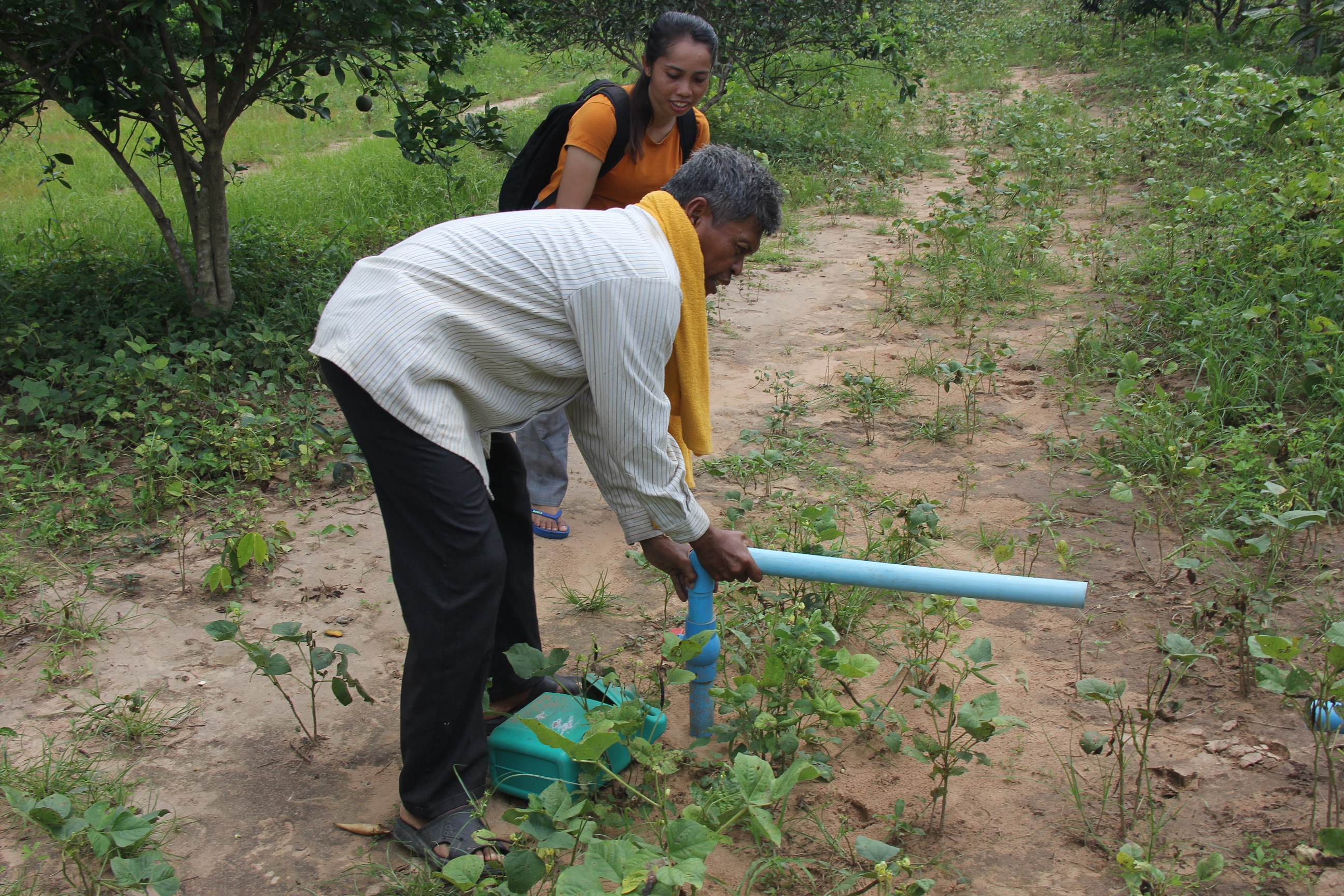
Before planting orange trees the soil requires two turns of ploughing. After first ploughing the soil should dry during 1-2 months, before it can be ploughed again by a wheel harrow. Orange trees then are planted in rows into pits of 1 m x 1 m, with a depth of 70-80 cm. The spacing between the trees, as well as between the rows is usually 6 meters. Before planting, the orange tree seedlings (bought from outside) are usually kept at the farm site for 15 to 20 days, which to allow them to adapt to the conditions of the growing environment. The farmer installed a water pipe in the underground to irrigate the fruit orchard. The nearby stream serves as water source. After the tree plantation, mungbean is sown by direct seeding on the remaining bare soil. This is done by putting 3 to 4 seeds into the seed holes (3 to 4 cm sowing depth at a plant spacing of 20 cm and a row spacing of 30 cm. After harvest the residues of the mungbean plants are squashed by machine and left to rot on the soil surface until is the next mungbean cycle starts by direct seeding.
Photos of the Technology
- 📍 Ongkrong Village, Samrong Commune, Phnum Kravanh District, Pursat Province.
- 🗓 2017-05-07
- 📷 Mr. Sok Pheak
- 📍 Ongkrong Village, Samrong Commune, Phnum Kravanh District, Pursat province.
- 🗓 2017-05-07
- 📷 Mr. Sok Pheak
- 📍 Ongkrong Village, Samrong Commune, Phnum Kravanh District, Pursat province.
- 🗓 2017-05-07
- 📷 Mr. Sok Pheak
- 📍 Ongkrong Village, Samrong Commune, Phnum Kravanh District, Pursat Province
- 🗓 2017-05-07
- 📷 Mr. Sok Pheak
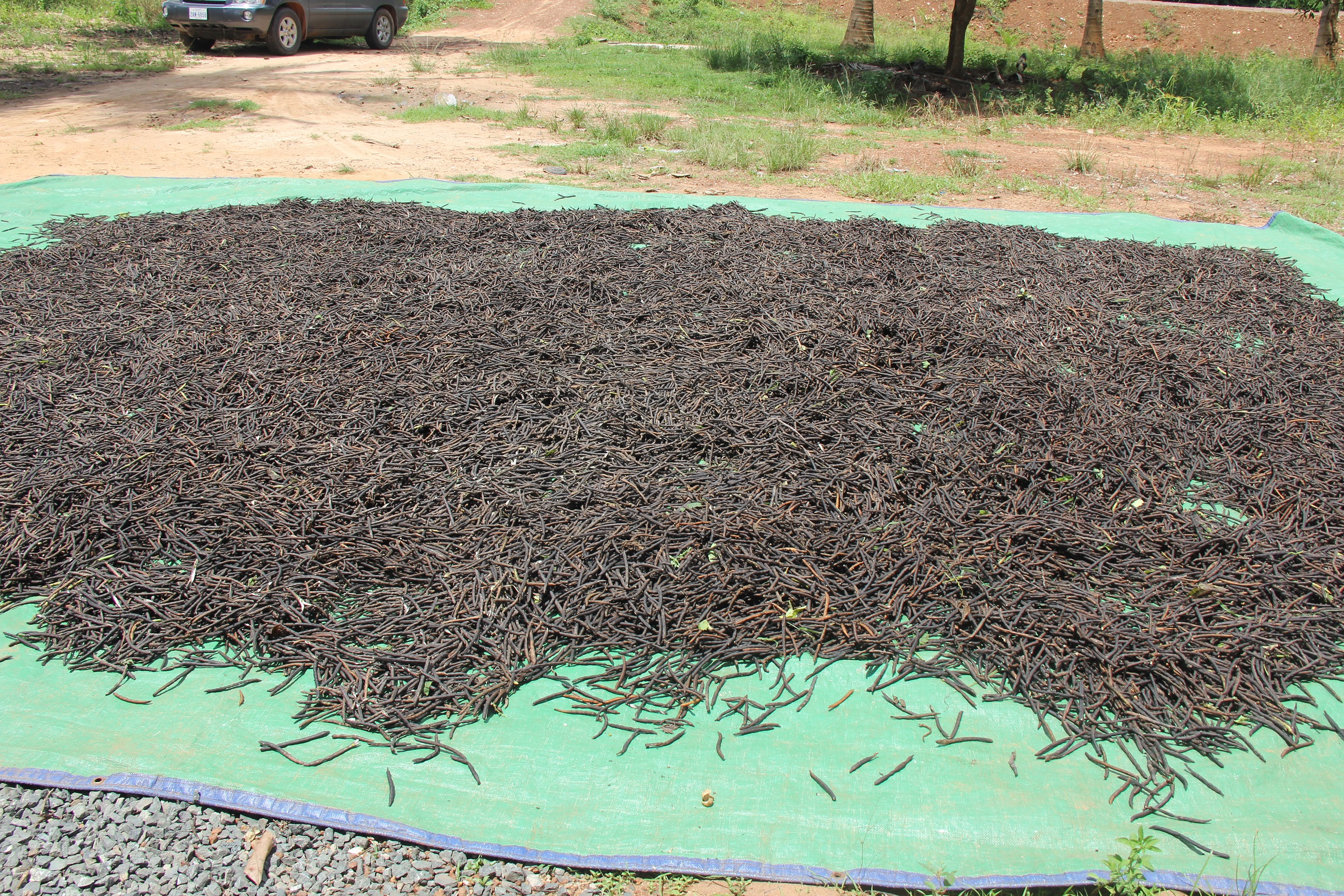
- 📍 Ongkrong Village, Samrong Commune, Phnum Kravanh district, Pursat Province.
- 🗓 2017-05-07
- 📷 Mr. Sok Pheak