
Eggplant cultivation technique between lemon trees
Type: Technologies
Creation: 2017-08-28 08:48 Updated: 2019-09-02 09:05
Compilers: Be Gechkim
Reviewers: SO Than, Ursula Gaemperli, Alexandra Gavilano
Country/ region/ locations where the Technology has been applied and which are covered by this assessment
- Country: Cambodia
- Region/ State/ Province: Svay Sa village, Khnach Romeas commune, Bavel district, Battambang province
- Map: View Map
Description of the SLM Technology
Short description of the Technology
Eggplant cultivation between lemon trees using restroom and crop residues as a source of soil nutrients instead of being reliant on the use of chemical fertilizers.
Detailed description of the Technology
Growing short-term crops or vegetables like eggplants and other crops between long-term crops belongs to the category of intercropping system. In case the farmer plants trees like lemon trees as long-term crop it can further be declared as agroforestry system. One important reason why farmers grow both, long-term and short-term crops on the same plot is to optimize the use of land resources. Another reason is that the short-term crops offer the opportunity to generate income to the farmers long before the long-term crop is productive.
These were also among the main reasons why Mr. Sokhom Oem from Svay sa village, Khnach romeas commune, Bavel district, Battambang province (the north-western province of Cambodia). He changed from mono-cropping to the intercropping system in 2016. His farm is connected to very deep alluvial soils (pH=5) with high topsoil organic matter and medium soil texture. The average annual rainfall in the region is 1100 mm. On a flat plot of 325.5 square meters (18.3 x 45 meters), he planted 10 lines of lemon trees (4 lemon trees per line). The space between each lemon tree is 4.5 x 4.5 meters. On his first year in December, after plowing and drying the soil, he planted eggplants at a distance of 80 to 100 cm on 40 rows between the lemon trees (16 plants per row = 640 plants). The reason why many farmers potentially prefer eggplants as an intercrop is that it can be grown as a yearlong crop that provides an initial fruit harvest only after one month of planting. After first harvest they continue to bear fruit during the whole year long. A fact that is very appreciated by the farmer, as this kind of plant does not require lots of work. Nevertheless, the productivity of the intercropped eggplant depends on its maintenance. Old leaves need to be removed when the plant has few flowers (General Directorate of Agriculture, 2012). After the eggplant cultivation the farmer can change to other intercrop vegetable if he likes. Lemon trees, on the other hand, can take up to three years before they produce fruit for harvest, after which they can be harvested continuously during 8 to 10 years. Sometimes trees can provide fruit during the whole year, but their productivity depends on sufficient water supply during the period from flowering to harvest. All in all, while waiting for full lemon yield the eggplants are an early and secure source of income. A further advantage to be mentioned is that eggplants improve the soil cover that protects from weed growing and in consequence eases the land management.
Besides the optimal use of the land, this technology also maintains and improves soil quality through the use of toilet residues. Only well decomposed liquid toilet waste (without a strong smell) is used in the form of a mixture of urine and feces which is drained from the septic tank. The application of this organic waste is based on the application of between 300-400 mm per lemon tree, after which normal watering is practiced. This liquid toilet waste is applied again when an intercrop like eggplants are producing less harvestable fruit. The intercrop plant residues are also kept as soil cover between the lemon trees, to provide more organic instead of using chemical fertilizer. The intercrop residues also help maintain the soil moisture content.
At some time after the initial adoption of this intercropping technology including the use of organic residues, land users understand the need for maintenance rather than anticipating ongoing long-term benefits after the immediate benefits. For example, the watering of the intercropped eggplants and of the lemon trees needs to be maintained in order to maintain their productivity. It is noted that farmers are able to achieve better and more sustainable incomes from the intercropping when compared with their previous practice of single cropping with corn or in the case of this study site sugar cane.
Photos of the Technology
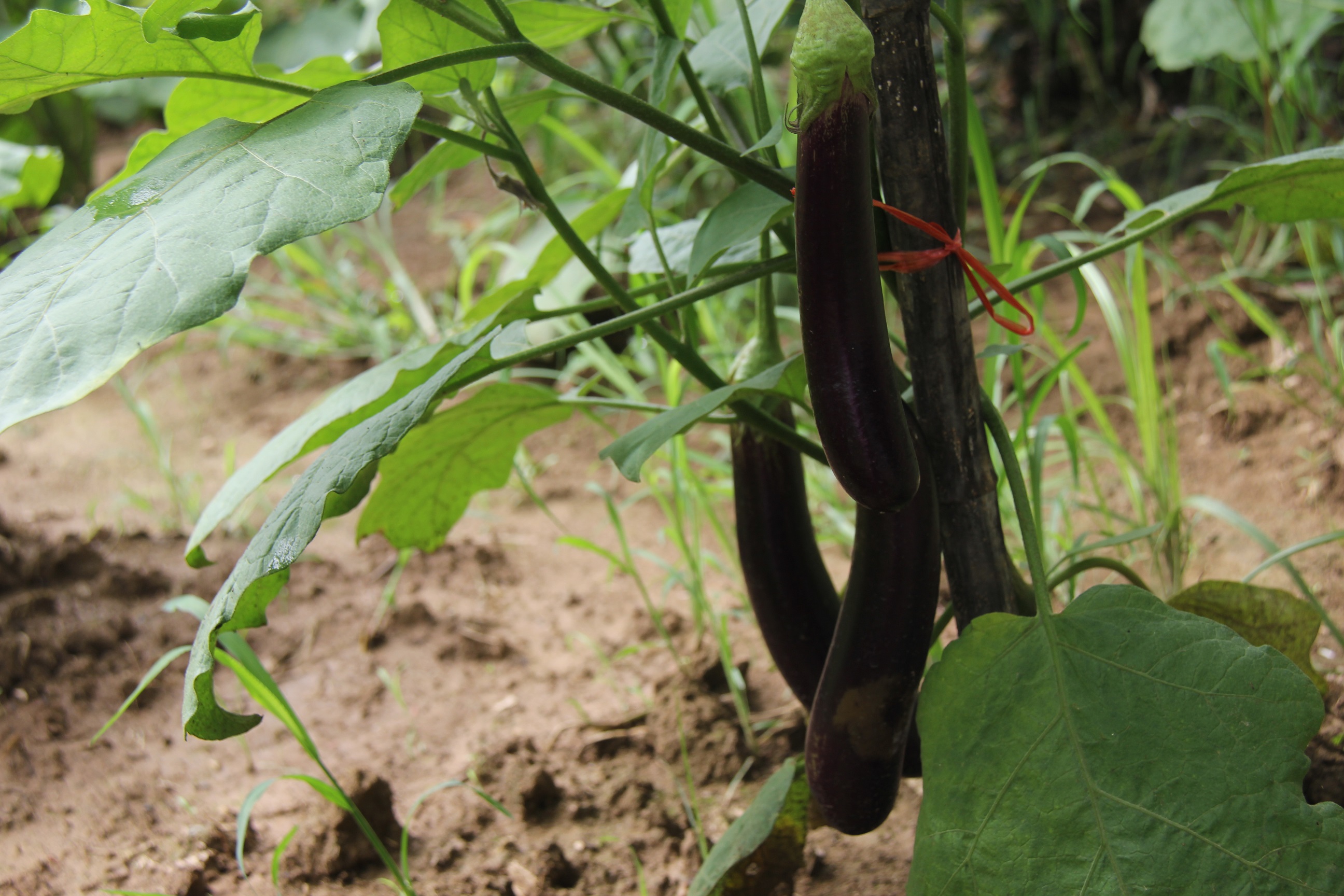
- 📍 Svay Sa village, Khnach Romeas commune, Bavel district, Battambang province
- 📷 Mr. Kim Soben
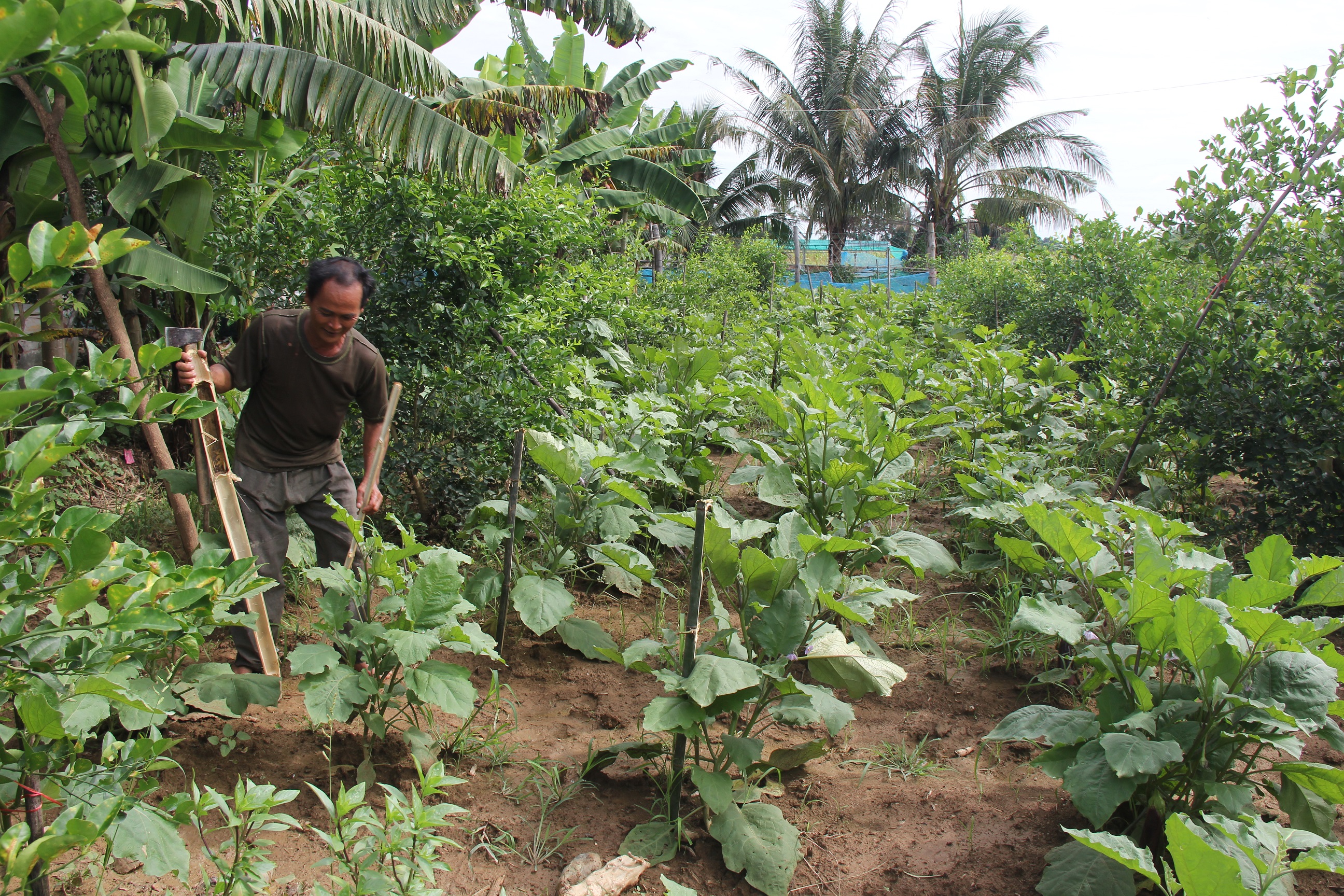
- 📍 Svay Sa village, Khnach Romeas commune, Bavel district, Battambang province
- 📷 Mr. Kim Soben