
Agroforestry: Intercropping of vegetables between orange trees
Type: Technologies
Creation: 2017-09-08 05:58 Updated: 2019-09-02 08:45
Compilers: Be Gechkim
Reviewers: Nicole Harari, SO Than, Stephanie Jaquet, Ursula Gaemperli, Alexandra Gavilano
Country/ region/ locations where the Technology has been applied and which are covered by this assessment
- Country: Cambodia
- Region/ State/ Province: Sangkae district, Battambang province
- Further specification of location (e.g. municipality, town, etc.), if relevant: Kampong Chlang village, Voat Ta Muem commune
- Map: View Map
Description of the SLM Technology
Short description of the Technology
Intercropping of chilies (or other short-term crops) between young orange trees is a type of agro-forestry system which increases income, makes ultimate use of land resources, saves time for maintenance and irrigation, and improves soil fertility by using crop residue with cow manure as fertilizer, thereby reducing the use of chemicals.
Detailed description of the Technology
Chili can be seen as a short-term crop that can be harvested soon after plantation. Farmers plant such short term crops to support their family’s income (Pov, 2016). Oranges are a long-term crop that can be fully harvested after six years and then continue to be harvested for a long time. The more the orange trees are mature, the more they are able to produce. Furthermore, they do not require a great deal of maintenance and there is a good market demand for oranges (CEDAC, 2011). Growing chilies between young orange trees is known as an agro-forestry system that gives rise to a great number of benefits including an increase in the efficiency of land use, a saving of time otherwise spent on maintenance and irrigation, and also it improves the soil quality and prevents land degradation. Moreover it is an improvement in crop production that helps to generate more income for farmers (ECHO, 2007).
The purpose of implementing this technology, whereby other short-term crops (such as chilies, eggplants, and herbs) are seasonally intercropped between young orange trees is to economize time spent on maintenance, watering, and applying fertilizer on chilies. And oranges benefit, too. Assorted crops absorb different nutrients from the soil which enables the soil to remain balanced and fertile and also they do not interfere with the growth of the long-term crop. Additionally the use of crop residue with cow manure is a mean of improving the soil’s fertility and it helps to reduce the use of chemical fertilizer. Alternatively this technology can also include the plantation of papaya and banana trees around the land as additional crops, which provide shade and help to control soil moisture for the other crops.
The farmer needs to plough the soil three times. After the first ploughing the soil has to be dried for four days, after the second ploughing for five days and after the final ploughing it should be dried seven days. If there is additional rainfall then extra days will be needed to get the soil dry. After that, holes need to be dug at a distance of 3.5 meters from each other in any direction. Each hole measures 30 X 40 centimeters and is 30 centimeters in depth. . Before the orange trees are planted the soil should be mixed with compost, consisting of vegetables or crop residue and cow manure. Twenty-five to thirty days after the chilies have sprouted they should be planted between the trees in a row with a gap of 1.2 meters and a distance of one meter from side to side. 2 month later the around 270 chilies plants are able to produce a yield of around 50 to 60 kg.. Once they are four to five months old, 100 to 200 kg can be harvested every 15 days for a period of 6 months. The market price of chilies is between 2000 to 4000 riel per kilogram.
One of the main advantages stated by the land user is to be able to balance the land shortage by using all of free space within the orange orchard. Another advantage is that weeds have less chance to grow. This saves labor time and generates better income. Due to crop rotation (different seasonal crops) he can maintain a good soil quality through a balanced absorption of the soil nutrients.
Photos of the Technology
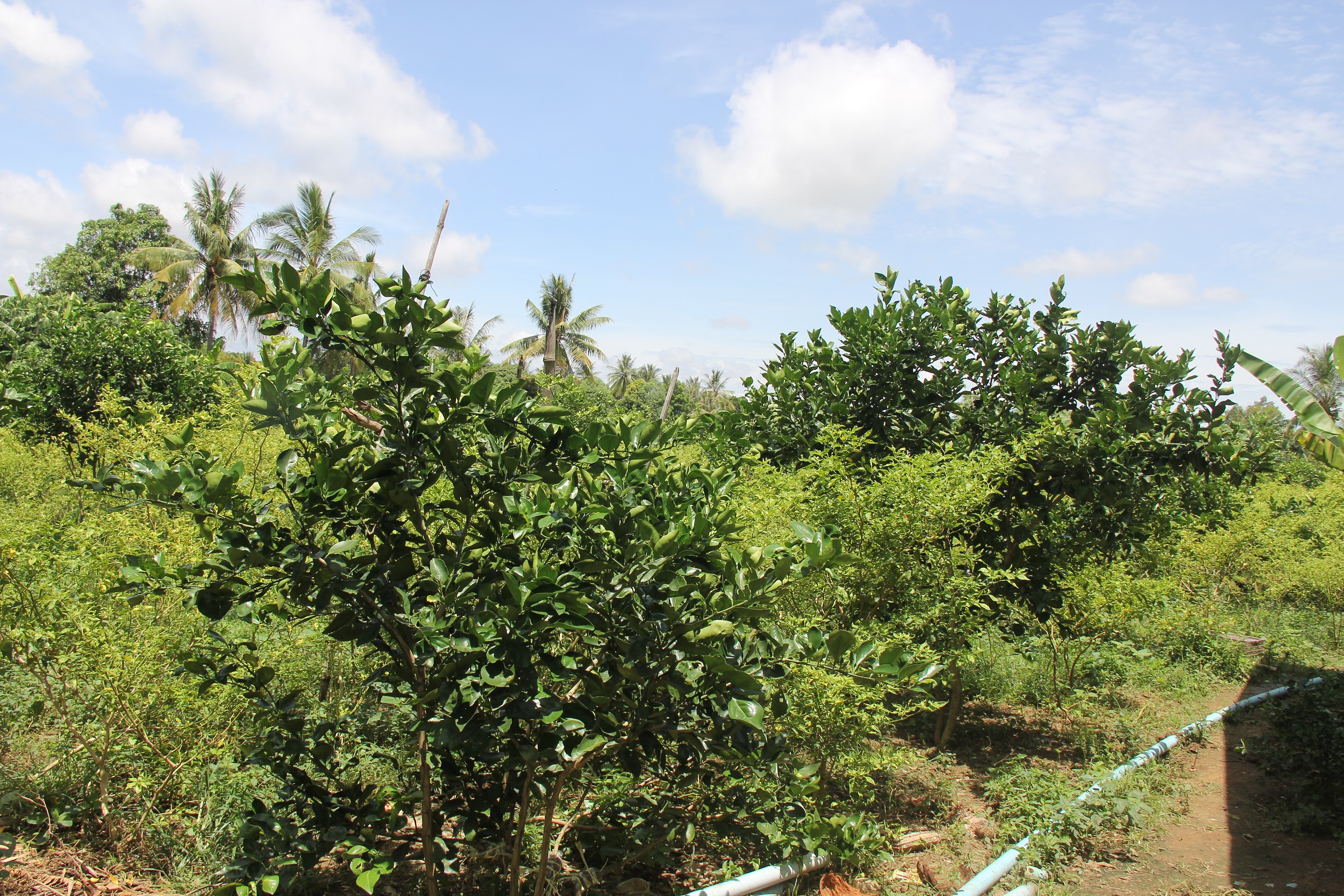
- 📍 Kampong Chlang village, Voat Ta Muem commune, Sangkae district, Battambang province.
- 🗓 2017-02-07
- 📷 Mr. Sok Pheak
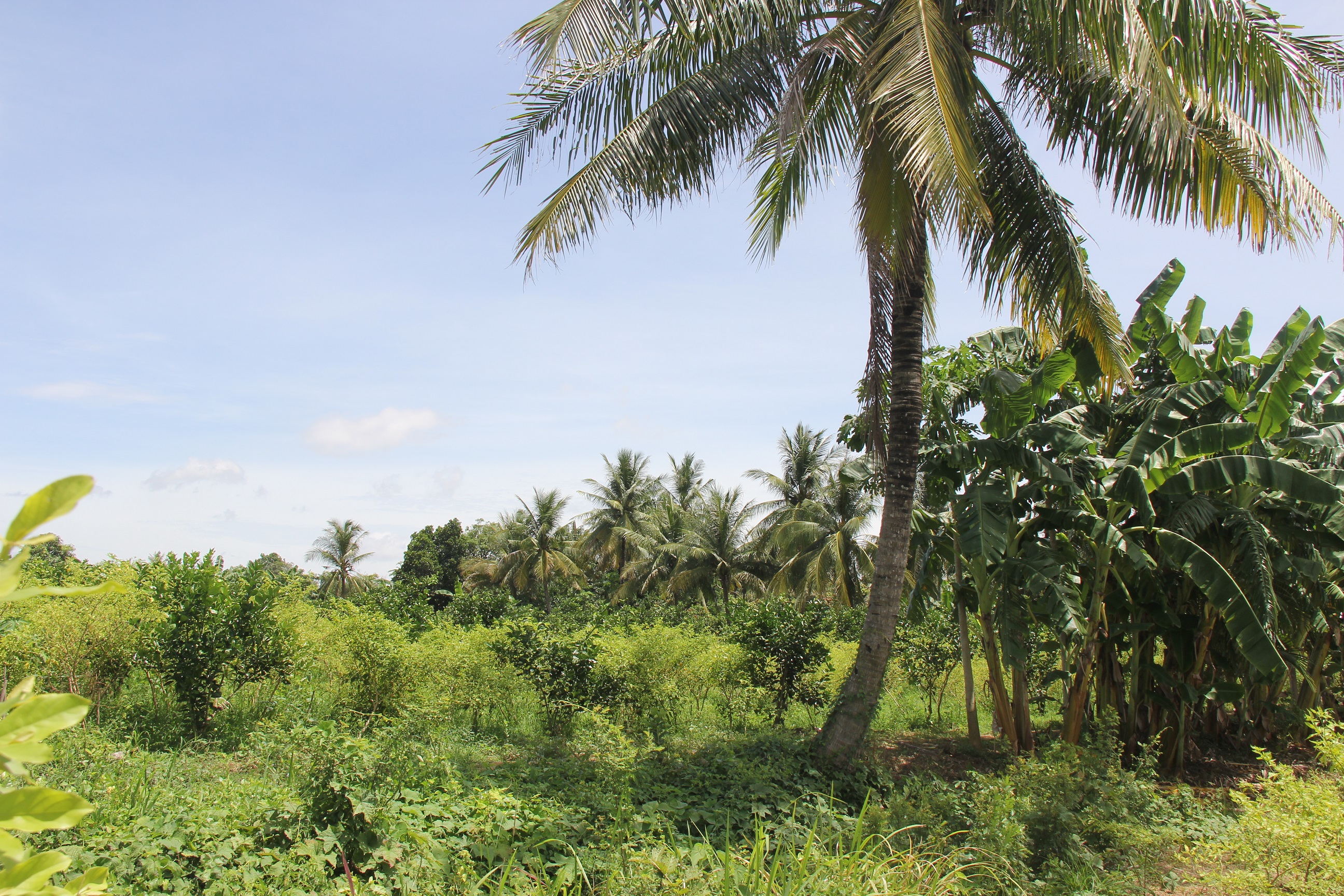
- 📍 Kampong Chlang village, Voat Ta Muem commune, Sangkae district, Battambang province.
- 🗓 2017-02-07
- 📷 Mr. Sok Pheak