
Use of solar water pumping to adapt to climate change
Type: Technologies
Creation: 2017-10-12 09:12 Updated: 2019-09-02 08:41
Compilers: Sok Pheak
Reviewers: Nimul CHUN, Ursula Gaemperli, Alexandra Gavilano
Country/ region/ locations where the Technology has been applied and which are covered by this assessment
- Country: Cambodia
- Region/ State/ Province: Thomacheat Samdach Te Chhor Hun Sen, Sror Aem commune, Choam Ksant district, Preah Vihear province
- Further specification of location (e.g. municipality, town, etc.), if relevant: Rural area
- Map: View Map
Description of the SLM Technology
Short description of the Technology
A solar water pump is a technology that uses solar panels to convert the solar power to electricity for pumping water from different sources including an underground source of water. The use of solar water pump is to reduces the operating costs, and avoid the CO2 emission, which is a good option for increasing climate resilience, and contributing to climate change mitigation.
Detailed description of the Technology
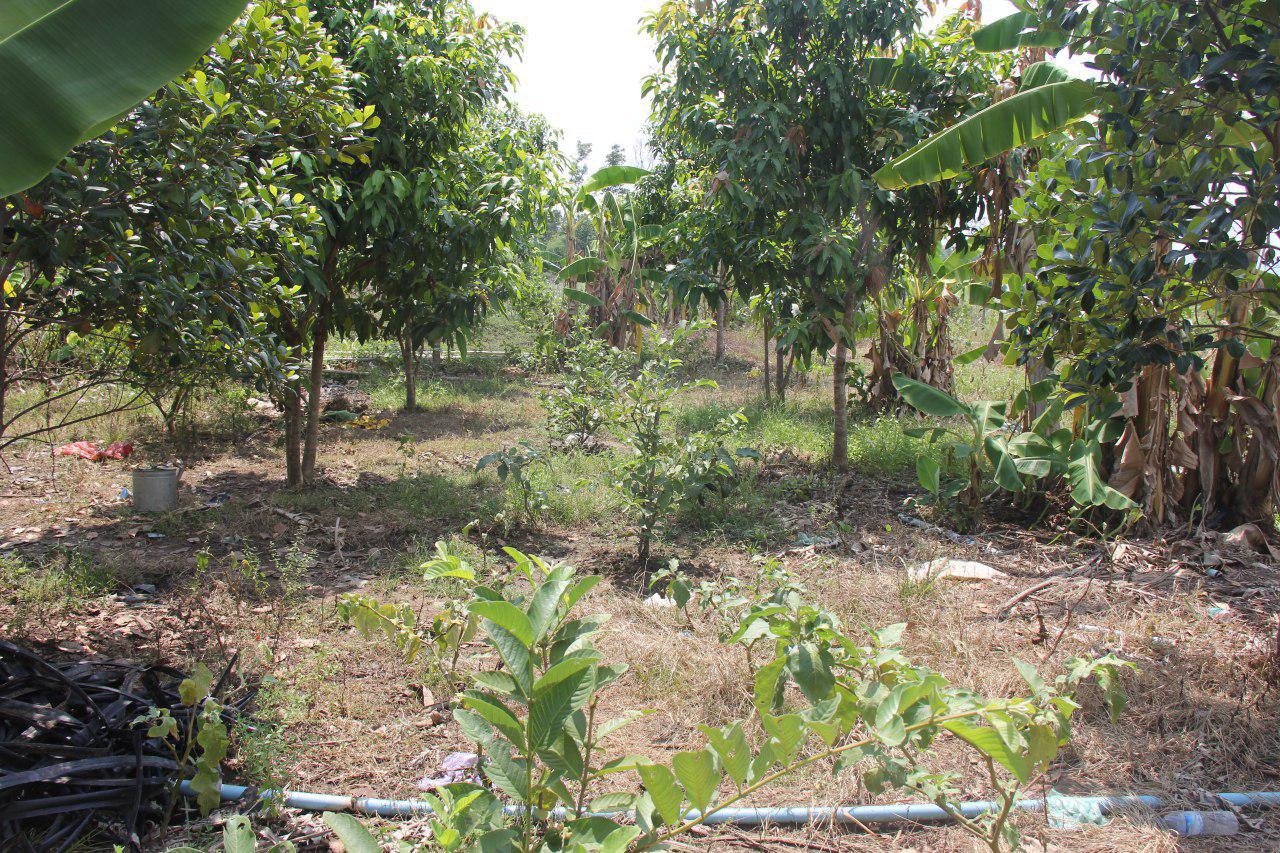
The solar water pump is an innovation that uses solar panels to convert the solar power to electricity for pumping water. It is an optimum choice to help reduce the impacts of climate change. The farmers in Thomacheat Samdach Te Chhor Hun Sen, Sror Aem Commune, Choam Ksant District, Preah Vihear Province, Cambodia previously used the water from ponds for the irrigation of their fields. But this supply was insufficient. In order to resolve the issue, the Cambodia Center for Study and Development in Agriculture (CEDAC) implemented a project and provided a bore hole with a solar powered pump in the commune in 2011 so as to irrigate the crops. In 2014, the Provincial Department of Agriculture, Forestry and Fishery (PDAFF under the support of the National Adaptation Programme of Action (NAPA Follow up phase 2) gave a set of solar water pump which was implemented in the commune for irrigating also the vegetable fields. They offered the village seven solar water pumps in total. One solar water pump has been installed at the house of Mr. Mao Sarath. The solar panels are portable, as sometime the solar power is variable.
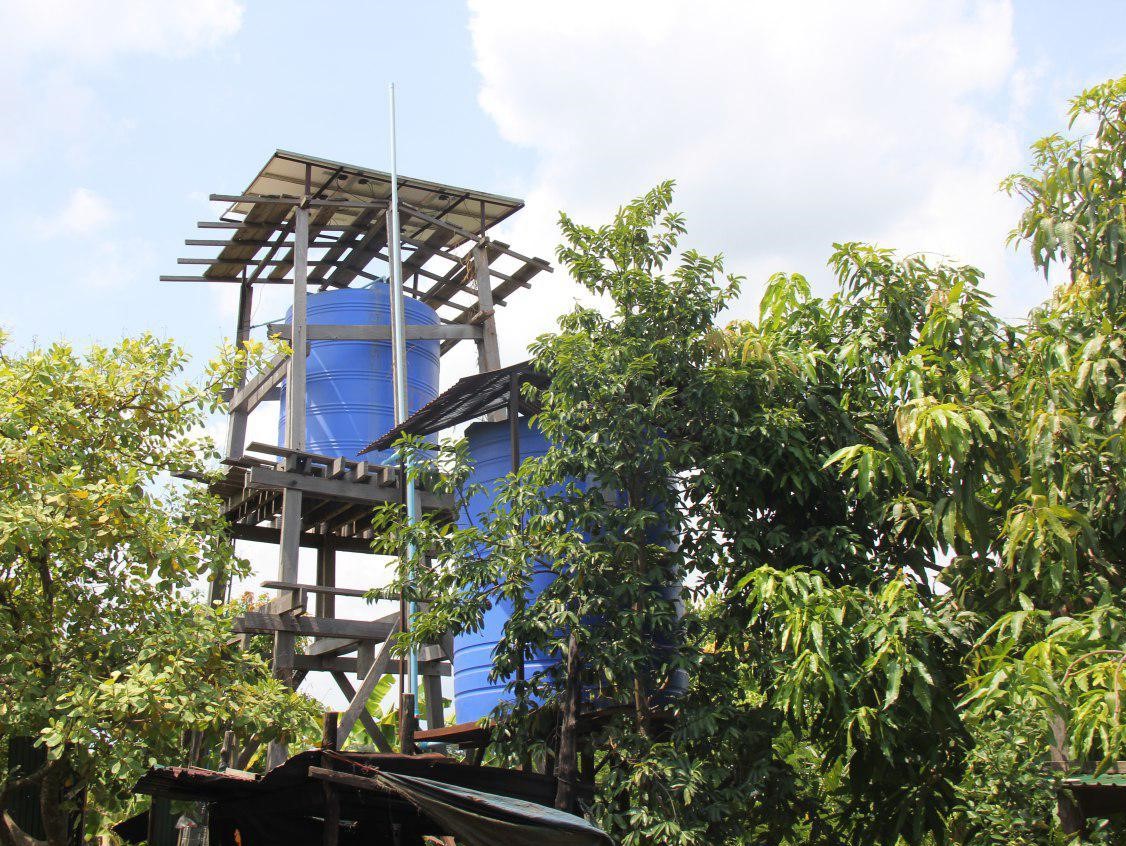
The solar pump system consists of solar panels mounted on the top of a wooden structure, a pump motor, a pump inverter, a water storage tank with a supporting structure and electric cables. For its installation, a bore hole firstly needs to be drilled, and a pump needs to be put in place to draw the water from the bore hole and a for water delivery a drip pipe set has to be putted on the vegetable field. Then the supporting structures for two water storage tanks need to be installed which one of 4.8 and one of 2.04 meters in height. After the water storage tanks have been connected with a pump motor. Nine solar panels were fastened on the top of the water tank support construction and a pump inverter has been attached to generate electricity. The water in the tank has to be monitored regularly to secure permanent supply of water. The two water storage tanks have a capacity of 5000 liters which is enough for irrigating the crops and for the consumption of 3 households. Due to this kind of water supply facility the resilience to climate change has been increased and in consequence the emigration has been reduced. More people turned back to the agricultural sector, including farming.
The advantages of the technique are that water can be pumped automatically, that it saves labor and time, it does not use fuel, it reduces the CO2 emission, and it can deliver water at a considerable distance. A budget of 2000 USD was left to maintain the solar water pumps before the project has been completed. This budget was managed by the Border Development and Natural Agriculture Community; however, the community could use this budget for example for their members to take out a loan with an interest rate of 2% per month. After one year of the installation of the water pump, Mr. Mao Sarath expected to sell drinking water to other villagers during dry season or drought condition at cost of 1,500 Riel per cubic meter (excluded the 3 mentioned household). But until now, he was not able to do so due to the fact that other villagers were able to get access to bore holes with pumps and ponds by support of other NGOs too.
In short, the solar water pump is an innovation which uses solar energy to power a motor, thereby replacing a fuel powered motor which would have heavy impacts on the environment. The water is used to irrigate crops in the fields as well as for household consumption by the inhabitants of the village. This is to replace the bore holes with pumps in all of the different households, as villagers are now able to just drill one and install a solar powered pump with water storage tanks, and drip irrigation which provides water more easily to each household in the village.
Photos of the Technology
- 🗓 2017-06-05
- 📷 Mr. Tim Sophea
- 🗓 2017-06-05
- 📷 Mr. Tim Sophea