
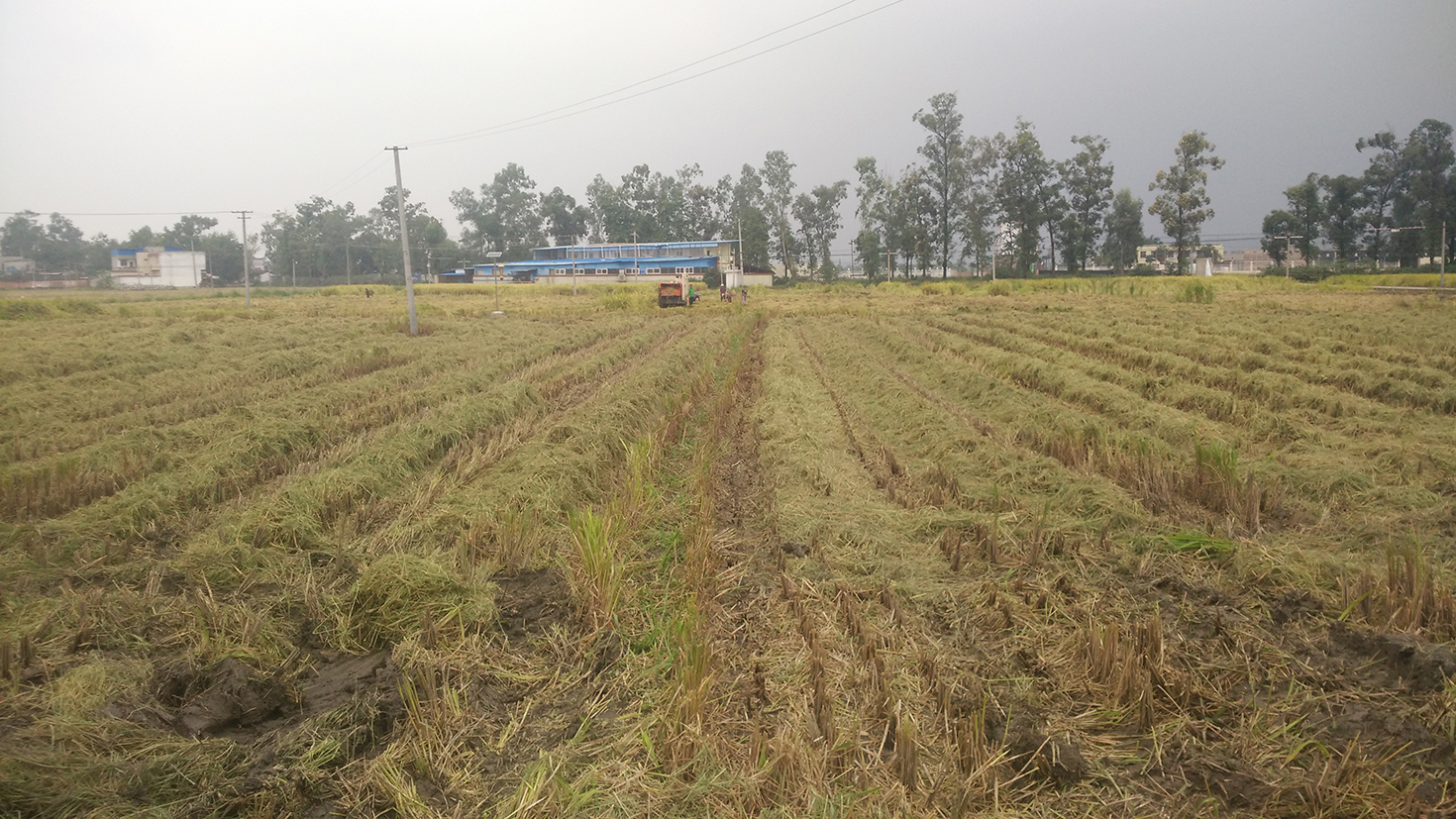
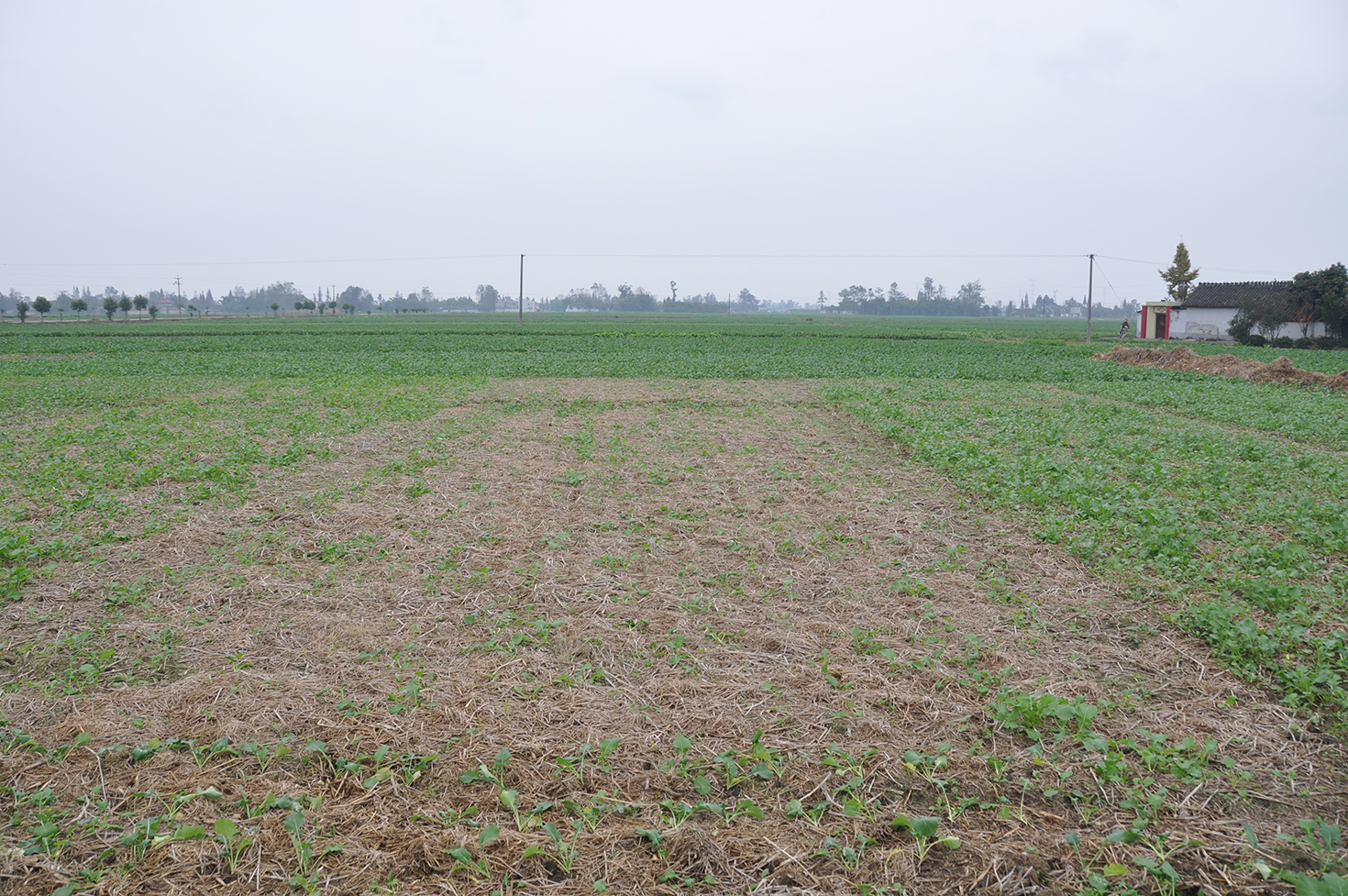
Straw residues left on field after harvest and no tillage
Type: Technologies
Creation: 2017-10-31 04:17 Updated: 2019-03-13 14:47
Compilers: Song Guo
Reviewers: Gudrun Schwilch, Ursula Gaemperli, Alexandra Gavilano
Country/ region/ locations where the Technology has been applied and which are covered by this assessment
- Country: China
- Region/ State/ Province: Basin plain, Chengdu, Sichuan
- Further specification of location (e.g. municipality, town, etc.), if relevant: Guanhan City, Wenjiang District, Chongzhou City
- Map: View Map
Description of the SLM Technology
Short description of the Technology
Method of this agricultual technology the rice straw will be left on the field after mechanized harvesting. Succession crop, such as rape, wheat or potato, were seeded directly under no tillage condition. Both measures aim at better soil regeneration and soil conditions for agriculture and subsequently increased yield and less soil degradation.
Detailed description of the Technology
The SLM practice (straw mulching and no tillage) is applied in the Chengdu Plain Paddy Soil. The Chengdu plain has mild climate and abundant rainfall. It belongs to the warm humid subtropical Pacific monsoon climate zone.The main types of soil in the Chengdu plain are paddy soil and purple soil.The total land resources of the Chengdu plain are 1331800 hectares, and the per capita land resources are about 0.1044 hectares per person. In 2010, the total amount of cultivated land in the Chengdu plain was 478069 hectares, accounting for 35.90% of the area of the plain, accounting for 42.36% of the total area of agricultural land in the region, and the per capita arable land area was only about 0.0375 hectares. The Chengdu Plain is an important grain production base in Sichuan. Rice field-upland field rotation (rice - wheat, rice - rapeseed) is an important agricultural system.
On the case study area, the N, P and K fertilizers were applied as urea, calcium superphosphate and potassium chloride at the rates of 120-150 kg N ha-1, 75-120 kg P2O5 ha-1,and 75-120 kg K2O ha-1, during every crop. During crop season, the rate of 60% of N, 100% of P, and 50% of K fertilizers were applied as base fertilizer, while remaining 40% of N and 50% of K were used as top dressing fertilizer. The main measures of this SLM is rice straw or wheat straw mulching while havesting (leaving the straw after havest scattered on the field). Crops were harvested by a combine harvester (Kuotian combine harvester, model PR0488), then straw and stubble of crops were left at size of less than 20 cm in the field. The seeding of succession crop such as wheat and oil seed rape is done by a direct seeding machine. The land users are working eighter with a contractor or they use their own machines and labour force. The purposes of this technology were to increase production and improve soil fertility. Although plough layer can become shallow by long-term no tillage cultivation, more and more land users like this technology because it promises increased grain yield, reduction of fertilizers (and subsequently cost), and it improves soil physical, chemical and biological properties of soil. Thus, it is expected that the measures of this SLM-Technology ends up in improved soil moisture, higher diversity of soil life and finally soil fertility .
Photos of the Technology
- 📍 Guanghan City
- 📷 Shanghong Chen
- 📍 Guanghan City
- 📷 Shanghong Chen