
FLOATING AGRICULTURE IN WATERLOGGED SOIL
Type: Technologies
Creation: 2018-04-08 20:16 Updated: 2022-11-18 11:12
Compilers: Naznin Imrana
Reviewers: Udo Höggel, Rima Mekdaschi Studer
Country/ region/ locations where the Technology has been applied and which are covered by this assessment
- Country: Bangladesh
- Region/ State/ Province: Nazirpur Upazila (upazila means sub unit of a district), Pirojpur District
- Further specification of location (e.g. municipality, town, etc.), if relevant: Gaokhali,Mugarjhor,Bisharkandi,Bildumoria etc
- Map: View Map
Description of the SLM Technology
Short description of the Technology
The aim of this technology is to use the waterlogged soils, which remain under water during 6 to 7 months of a year, for vegetable seedlings. This is done through floating seed beds which are made of water hyacinths.
Detailed description of the Technology
Floating agriculture is a special technique to cultivate vegetables and vegetable seedlings such as Pumpkin, Bean, Brinjal, Cucumber, Tomato, Papaya, Green Chili etc. on waterlogged soils. This is done by using floating seed beds, which are made of water hyacinths and other aquatic plants such as Dulalilata (Hygroryza aristata) Tepapana (Pistia stratiotes) and Khudepana (Lemna spirodela).
Paddy cultivation is usually done from October to April. After the paddy harvest, the lands usually remain waterlogged under 7 to 8 feet of water from May to November. With the onset of the rainy season, these regions are covered with water hyacinths and other aquatic plants etc. Normal agricultural production during this period is not possible due to this waterlogged condition and the growing water hyacinths, Dulalilata, Tepapana etc.
However, floating agriculture enables farmers to use this land in the best productive way. Floating agriculture is started by collecting water plants (Hyacinth, Dulalilata, Tepapana) for preparing floating seedbeds using these plants. This is because the vegetable seeds cannot be sown traditionally into the soil. Hence, a nutritious soft ball is prepared by using Tepapana and Khudepana which is called dowla. A small amount of urea fertilizer is put into each dowla. Thereafter, different types of vegetable seeds are sown / placed, in wet condition, into the dowlas. The dowlas so prepared are kept in an open place for drying / sprouting for 3 to 7 days. Thereafter, the dowlas are placed on the floating seedbed, which have been already made, where each Dowla is placed respecting 6 inches of distance in a bed. In such manner and about 2,450 dowlas can be placed in each seedbed. After taking proper care for one month including irrigation every day to prevent root dry up and fertilisation using a little amount urea fertilizer the sprouting seedlings are getting matured and ready for sale.
The establishment costs for a floating seedbed of 150 -180 feet long is between 3000 to 5500 taka. To make such a floating seedbed, a person must work 6 to 8 or 10 hours on a wage of 250 taka per workday. Nearly 25000 thousand women workers of these regions are directly or indirectly involved in this production. Each worker earns 200 to 250 taka per day. On an average, women can prepare between 1000 to 2000 dowlas per day. In this work, a female worker gets an average of 150 to 200 taka per day. A farmer earns 6-7 thousand taka through one time use of bed by selling seedlings within 20-22 days. The seedbeds can be used at least 3 times for seedling production in a season (May to November). So, it is possible to earn 18000 -20000 taka per bed in a season.
After that, the floating beds can be used again for growing vegetables, thus they are able to grow about ten thousand metric tons of vegetables annually in these regions that meets the local demand. Some vegetables are also sent to other regions /communities, achieving a very beneficial profit. It is possible to earn about 2-3 thousand taka by selling vegetables. After completing all these seedlings and vegetables growing processes seedbeds can be sold for between 1-2 thousand taka to other farmers. Therefore, it is possible to earn 20000-250000 taka per bed in a season including all other sources of income, which are mentioned above.
Storm and other climatic hazards cannot do much harm to this cultivation method. Besides, it is possible to produce vegetables throughout the year.
Using this technology allows people of waterlogged regions to turn their wheel of fortune by cultivating vegetables/vegetable seedlings, hence being able to overcome poverty up to 70%.
Photos of the Technology
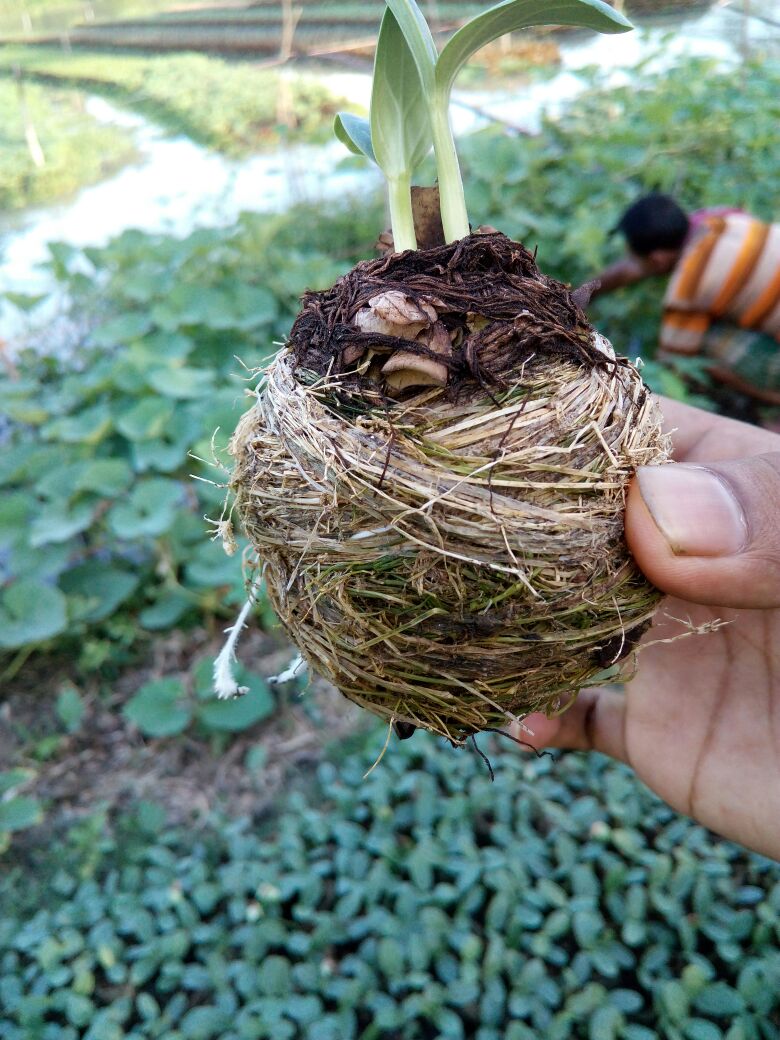
- 📍 Bisarkandi, Nazirpur.
- 🗓 2018-07-04
- 📷 Naznin Imrana
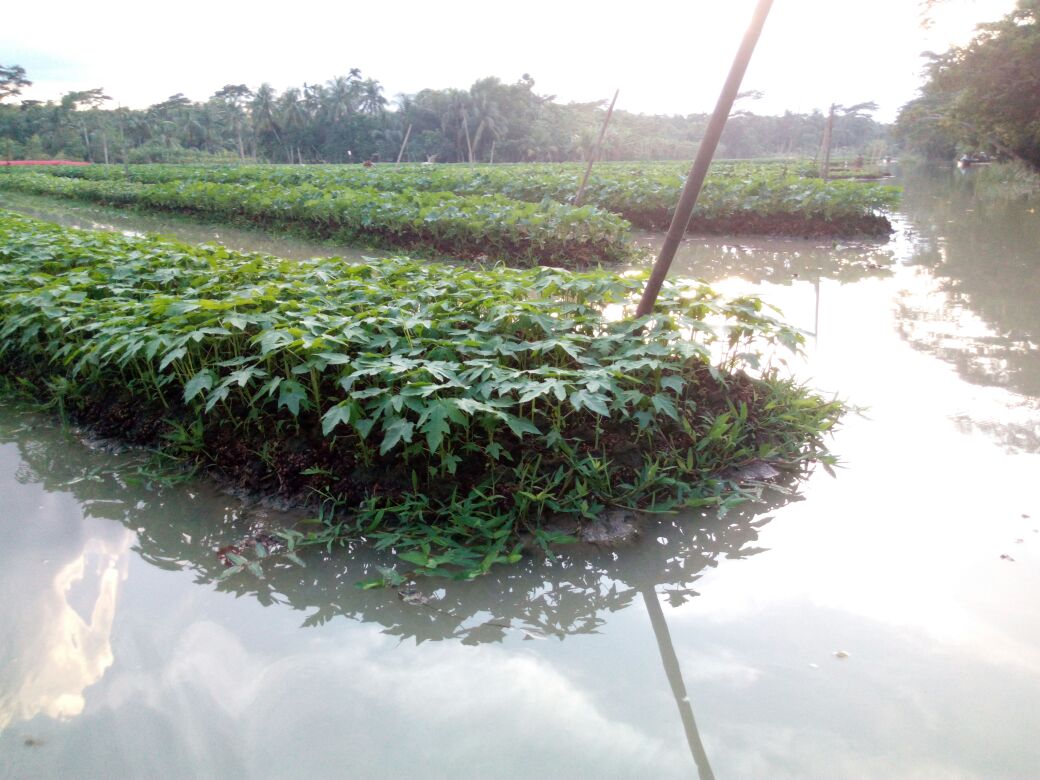
- 📍 Bisarkandi, Nazirpur
- 🗓 2018-07-07
- 📷 Naznin Imrana
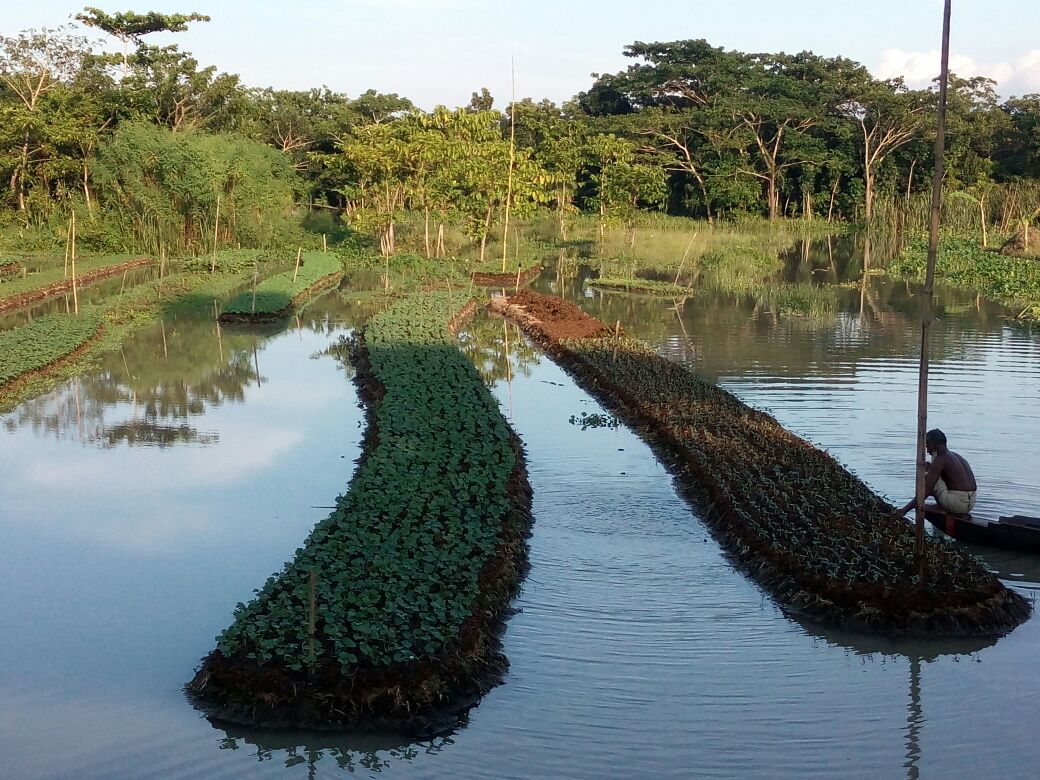
- 📍 Bisarkandi, Nazirpur
- 🗓 2017-07-07
- 📷 Naznin Imrana
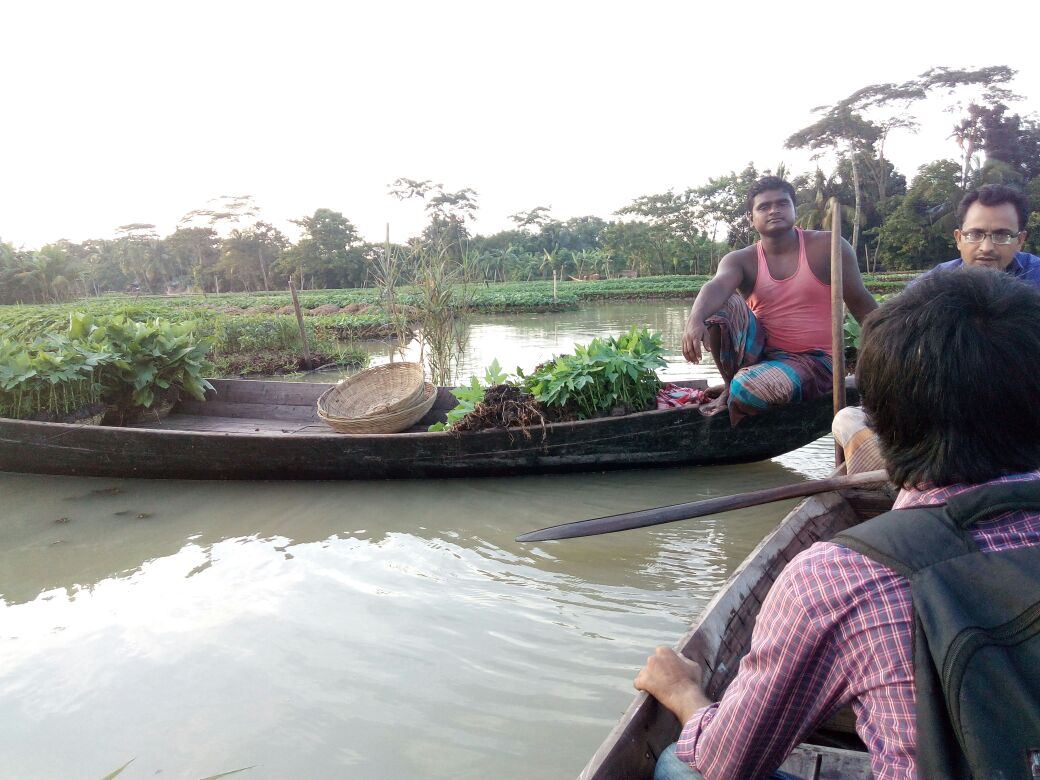
- 📍 Bisarkandi, Nazirpur
- 🗓 2017-07-07
- 📷 Naznin Imrana