
Lining the bottom of the channel with polyethylene film
Type: Technologies
Creation: 2018-08-29 14:04 Updated: 2020-02-04 22:27
Compilers: Rustam Ibragimov
Reviewers: Elizaveta Soloveyva, Olga Andreeva, Alexandra Gavilano
Country/ region/ locations where the Technology has been applied and which are covered by this assessment
- Country: Uzbekistan
- Region/ State/ Province: Yangiarik district / Khorezm region
- Map: View Map
Description of the SLM Technology
Short description of the Technology
Covering the bottom of the channel and slopes with polyethylene film reduces water infiltration losses during transportation from the source to the field and increases the water use efficiency from 0.50 to 0.89 points
Detailed description of the Technology
There are about 4.3 million hectares of irrigated lands that are served by irrigation canals with a length of over 180 thousand km in Uzbekistan.
Large trunk and inter-farm channels have concrete insulation, intra-farm canals are mostly laid in an earthen bed. Water losses due to infiltration reach 50-60% in the ground channels, which is a huge amount, given the scale of irrigation systems. Channel infiltration losses are the main source of groundwater supply and the reason for their high level. As a result of evaporation, salts from groundwater rise to the surface and accumulate in the topsoil. Fields located in the rear of the channels receive insufficient water volume due to high losses. Consequently crop yields are reduced, wind erosion processes are intensifying. The fact that half of the water taken from rivers is lost from canals requires decisive and urgent action. Sheathing/ lining the channels with concrete is a very expensive solution. In the 80s of the last century, various measures to reduce infiltration were used: compaction, gleying, colmatation with chemicals, colmatization with clay particles and bentonite, bitumen, etc. Lining the bottom of the channel with plastic film could be an alternative. The only opponent of polyethylene is ultraviolet rays, and this requires constant monitoring and sprinkling of film on the sides of the channel. Otherwise, the duration of such waterproofing is almost unlimited. The Technology was tested by representatives of Urgench State University with the support of the GEF SGP on the Navruz-Yap channel in the Yangyaryk district of the Khorezm region (2009-2012). The 2.6 km long channel provided 400 hectares of irrigated land with water and provided water to more than 2500 local people. Before taking measuresа to reduce water infiltration losses, the channel efficiency changed seasonally from 0.43 to 0.52 (0.49 on average). With a channel capacity of 1.5-2 m3 / s, a lack of irrigation water was constantly observed due to infiltration. In the Khorezm region, channels without infiltration coverage, such as Navruz-Yap, occupy more than 98% of the territory.
The Technology includes:
1.Сleaning works with the use of an excavator
2.Construction of small hydraulic structures to ensure gravity flow of water in the channel
3.Manual preparation of slopes and the bottom of the channel to ensure gravity flow of water.
4.Creation of a 10-15 cm sand layer for laying a plastic film
5.Laying a plastic film 100 microns thick.
6. Filling the bottom and the edges of the channel over the film with a 10-15 cm sand layer to avoid film damage.
7.Backfilling the bottom of the channel with soil, 1 m thick, and the edges of the channel 0.5-0.6 m thick
The total cost of waterproofing 1 km of the channel is 15324 USD.
Savings were achieved through the delivery of material (9575 USD). Energy savings (no need for pumps) are 3207 USD (2013).
An additional cotton crop and, accordingly, additional income were obtained due to the extra irrigated area (water can reach the end of the canal) and due to an increase in productivity (decrease in the groundwater level in nearby fields). The total Technology benefit is 13,252 USD (calculations per 1 km of the channel, 2013). Estimated payback is 1-2 years. However, not every farmer can invest 15324 USD per 1 km of canal. Nevertheless, there are already farmers who intend to apply this technology. They hope that this will provide sufficient watering, especially in conditions of low water, which has become more frequent in recent years.
Photos of the Technology
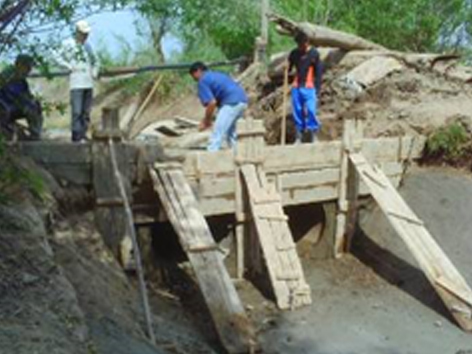
- 📍 Navruz-Yap channel Yangiarik district, Khorezm region
- 🗓 2026-06-05
- 📷 Eshchanov R.A.
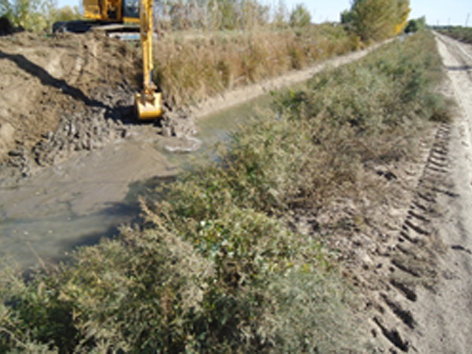
- 📍 Navruz-Yap channel Yangiarik district, Khorezm region
- 📷 Eshchanov R.A.
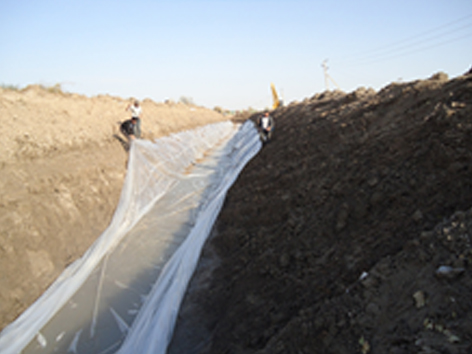
- 📍 Navruz-Yap channel Yangiarik district, Khorezm region
- 🗓 2026-06-05
- 📷 Eshchanov R.A.
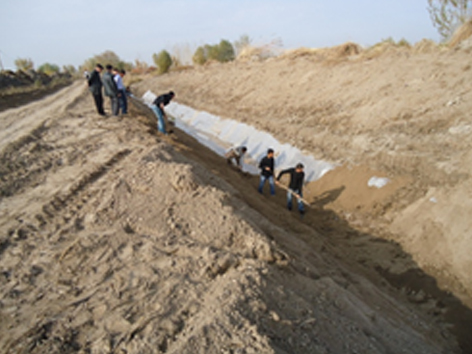
- 📍 Navruz-Yap channel Yangiarik district, Khorezm region
- 🗓 2026-06-05
- 📷 Eshchanov R.A.
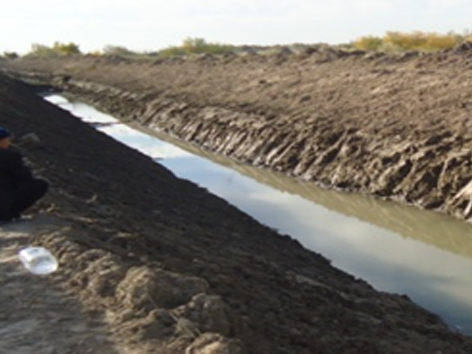
- 📍 Navruz-Yap channel Yangiarik district, Khorezm region
- 🗓 2026-06-05
- 📷 Eshchanov R.A.