
Slope erosion control using wooden pile walls
Type: Technologies
Creation: 2018-10-01 09:53 Updated: 2019-03-21 15:14
Compilers: Hanns Kirchmeir
Reviewers: Ursula Gaemperli
Country/ region/ locations where the Technology has been applied and which are covered by this assessment
- Country: Armenia
- Region/ State/ Province: Aragatsotn and Shirak Marzes (Provinces)
- Further specification of location (e.g. municipality, town, etc.), if relevant: Lusagyugyh, Hnaberd, Ghegadhzor, Saralandj, Mets Mantash
- Map: View Map
Description of the SLM Technology
Short description of the Technology
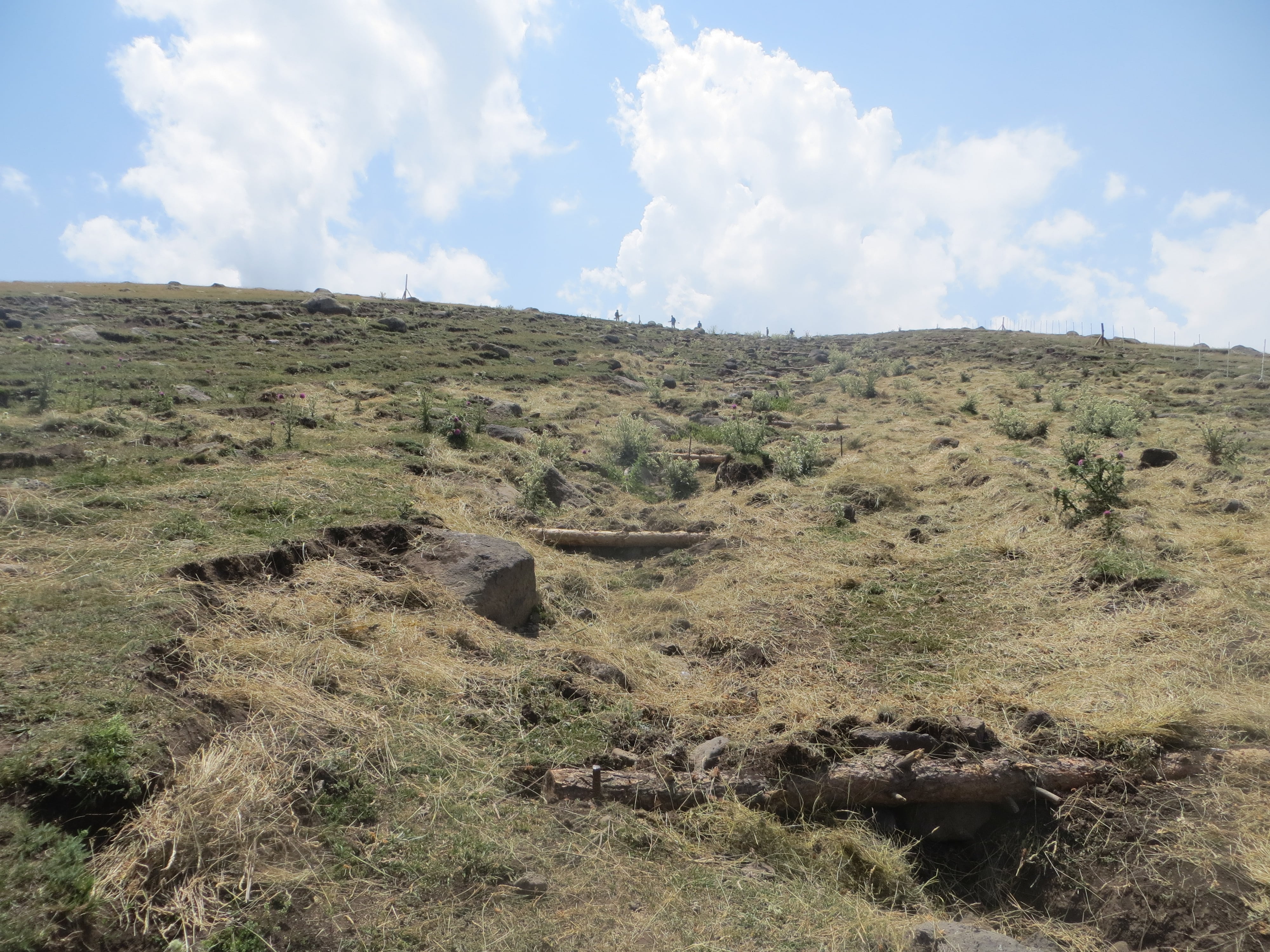
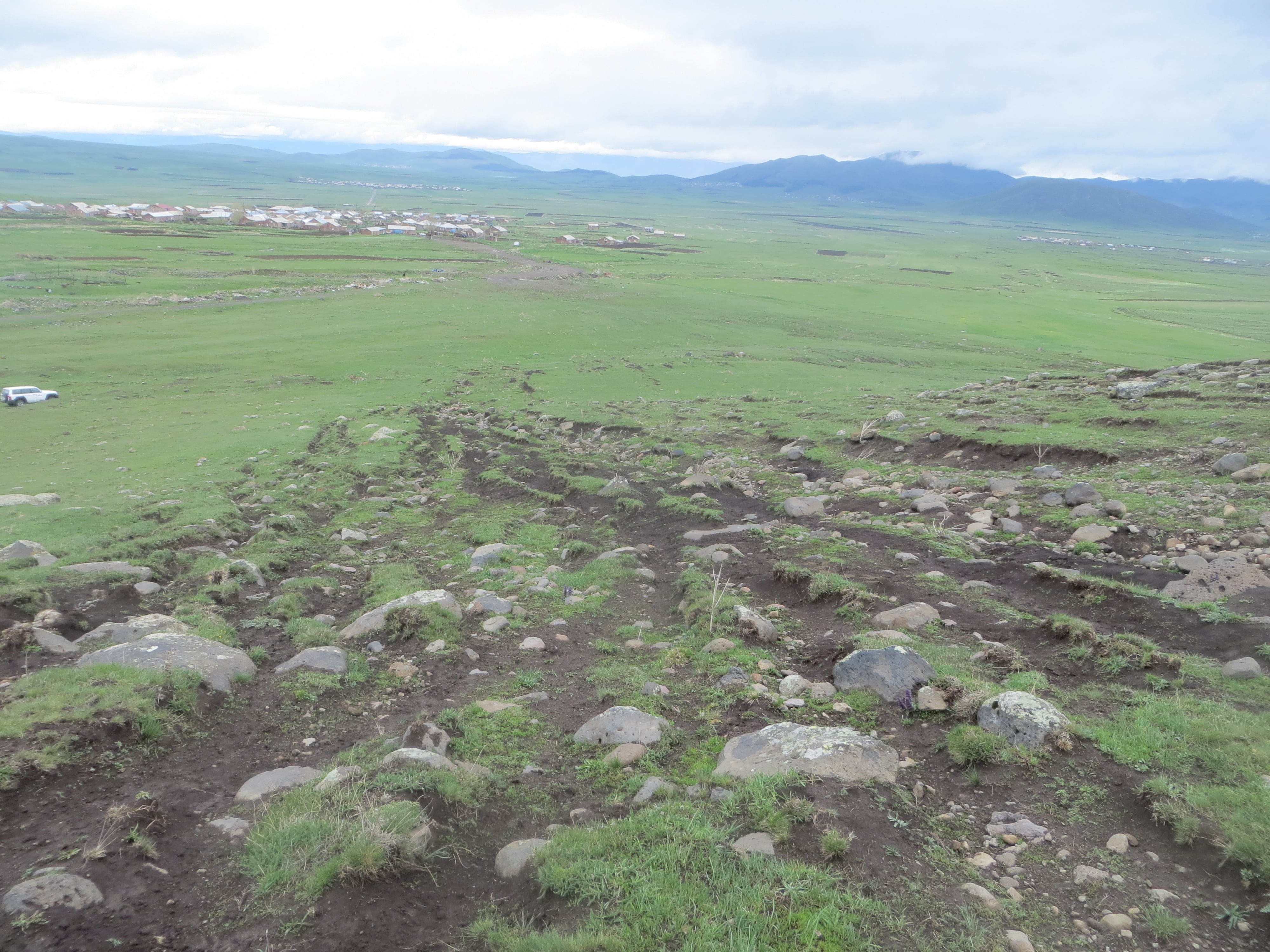
Small horizontal wooden structures and terraces on eroded slopes built to mitigate sheet or rill erosion and slow down water run-off. The technology is easy to apply and efficient to mitigate erosion processes of the upper soil layer and to stop small rock falls.
Detailed description of the Technology
In the provinces of Aragatsotn and Shirak in Armenia, the weather is cold and temperate with dry summer. Steep slopes, pastures and some autochthonous oak forests make up the area. Farmers make most of their income with grazing by manual labour. The carrying capacity of pastures in the vicinity is regularly exceeded, and they degrade more and more. In order to stabilize the steep eroded slopes, pile walls were established. Pile walls are horizontal constructions along a slope, functioning as erosion control measures by slowing down the superficial water runoff, retaining materials and supporting the rehabilitation of vegetation.
The major advantages are: It is not expensive since mostly locally available materials can be used, and a positive effect can already be observed within a year. Also, the pile walls can be established relatively easy without any need of heavy machinery or specific knowledge and, therefore, allow the involvement of the local population.
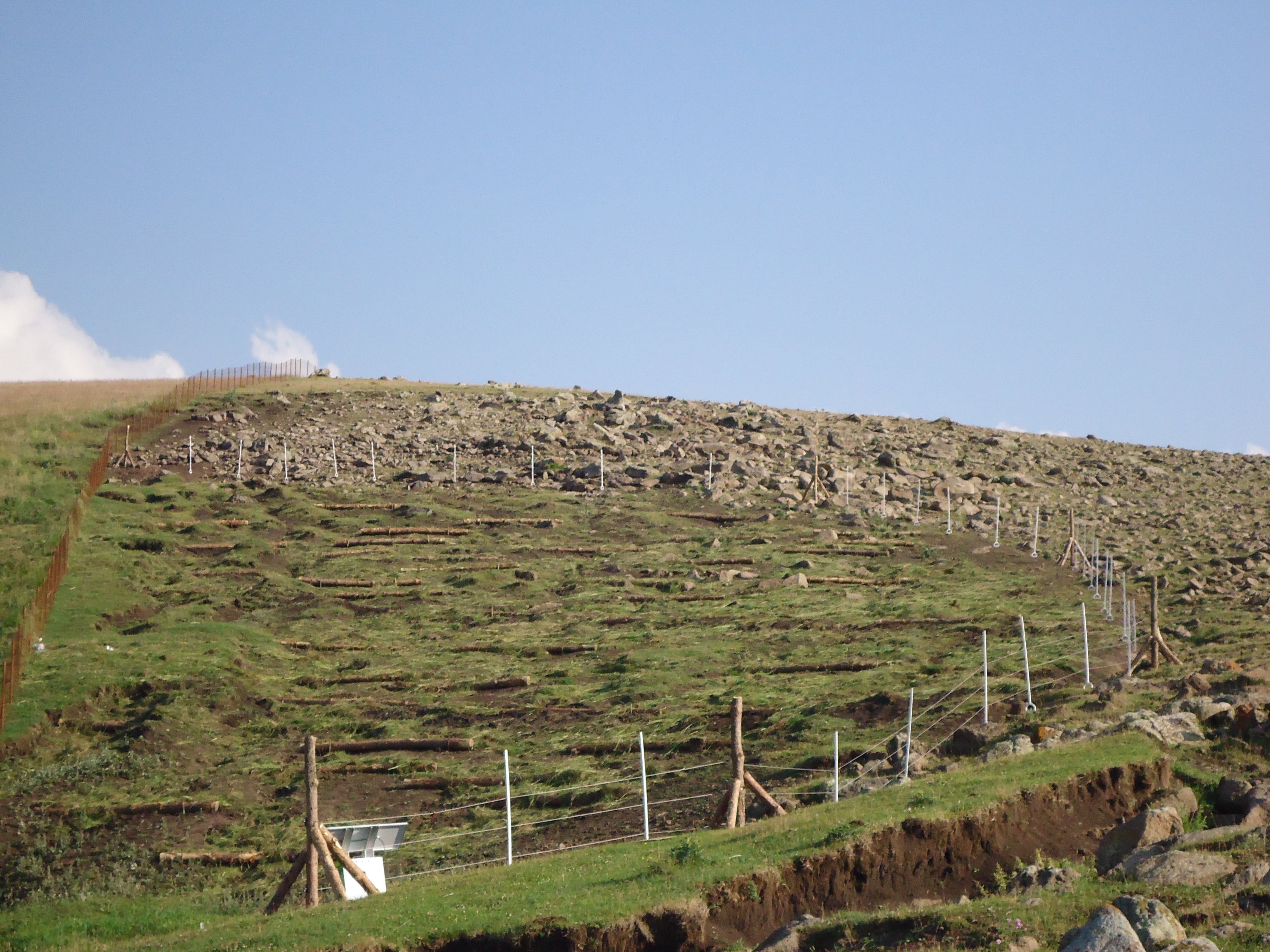
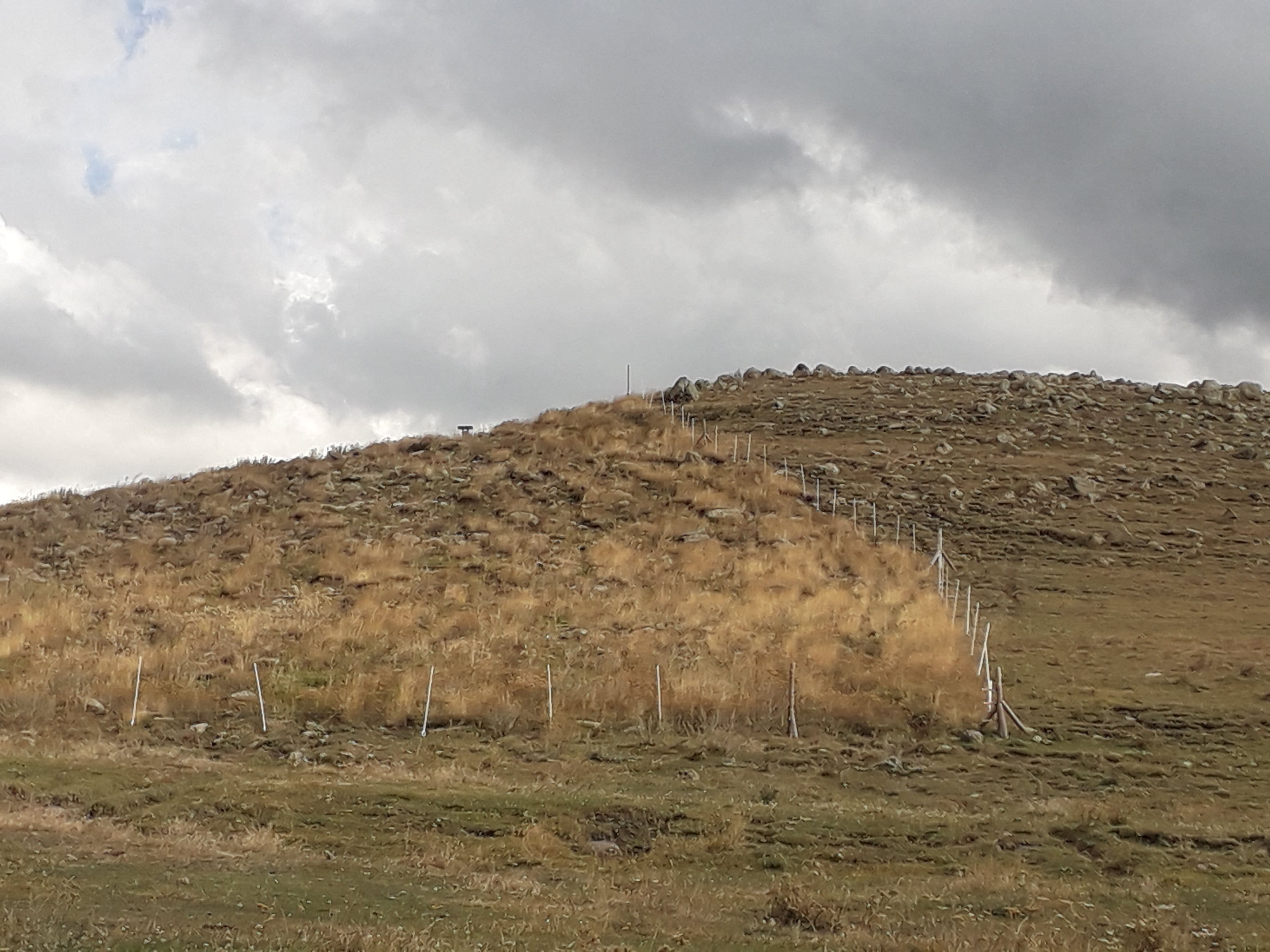
In the case of the implementation in Armenia, the exact location for the pilot measures was selected in such a way that grazing activities were almost not impaired. For temporary exclusion of livestock, electric fencing was used. Within the fenced area, pile walls were established in the washed-out rills along the slope to address the water erosion phenomena.
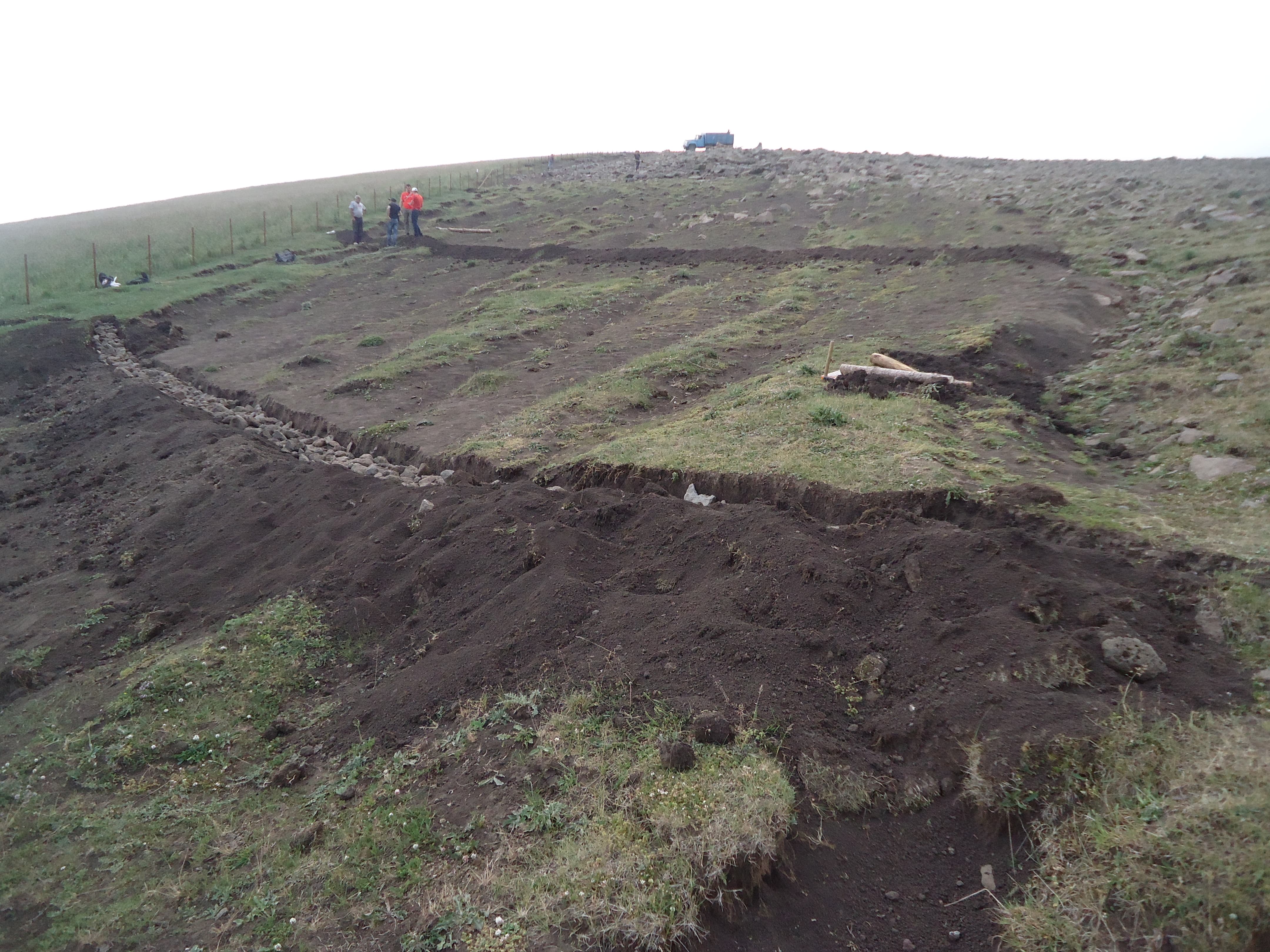
The technical requirements and workload for the construction of a pile wall are relatively low. The needed resources require iron piles, a hammer, wooden logs (or a bundle of branches) and tree cuttings. First, the wooden logs were cut in 1-2 m length to fit into the irregular rills of the slope. After identifying the locations of individual pile walls, the team fixed the logs with iron poles of about 70-100cm length. The distance between the pile walls varies between 1-3m, depending on the topography: the steeper the slope, the closer the distance. The space behind the logs was filled with soil, plant material and rocks to stabilize the construction and to reduce the risk of water washing out the soil and passing below the logs. As a last step, the terraces were covered with hay to provide protection against precipitation and to accelerate re-growth of grass through the seeds contained in the hay residuals.
Community members were surprised how easy and quick the pile walls could be established. A team of two workers established a pile wall within 30 min. Since these areas are usually intensively used and thus are of high importance for the community, even a temporary exclusion from use must be thoroughly discussed and agreed upon.
The measure slows down vertical water-run off and provides steps for cattle. Due to temporary fencing and the application of hay mulch vegetation is recovering on these parts.
Photos of the Technology
- 📷 Michael Huber
- 📷 Michael Huber
- 🗓 2017-10-07
- 📷 Michael Huber
- 🗓 2017-06-07
- 📷 Michael Huber
- 📷 Michael Huber

- 📷 Michael Huber