
Planting Eucalyptus on rice bunds to lower saline groundwater
Type: Technologies
Creation: 2018-10-03 08:19 Updated: 2020-12-29 11:17
Compilers: Areerat Wangkaew
Reviewers: Rima Mekdaschi Studer, Samran Sombatpanit, Pitayakon Limtong, William Critchley
Country/ region/ locations where the Technology has been applied and which are covered by this assessment
- Country: Thailand
- Region/ State/ Province: Khon Kaen
- Further specification of location (e.g. municipality, town, etc.), if relevant: Ban Phai
- Map: View Map
Description of the SLM Technology
Short description of the Technology
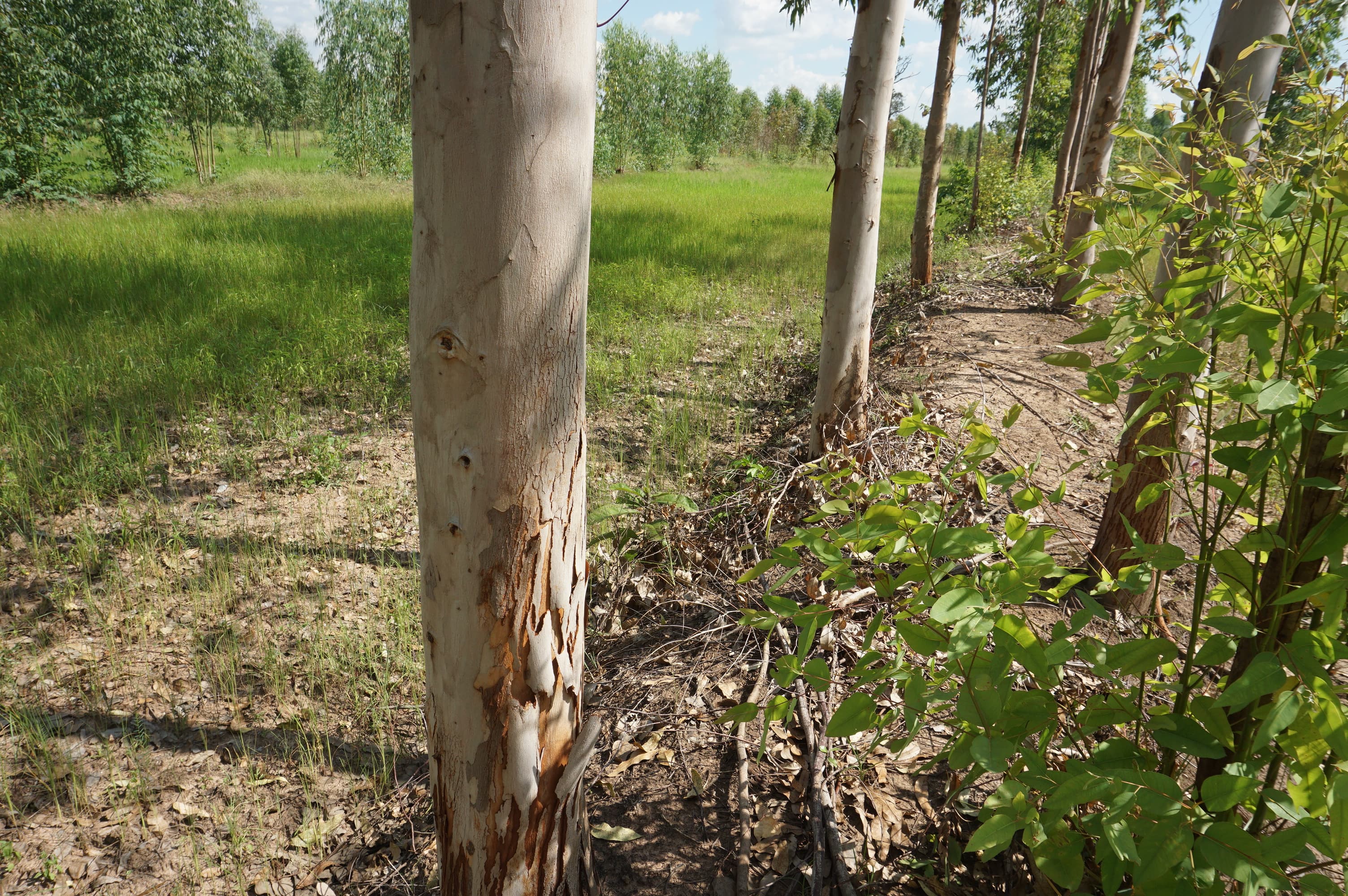
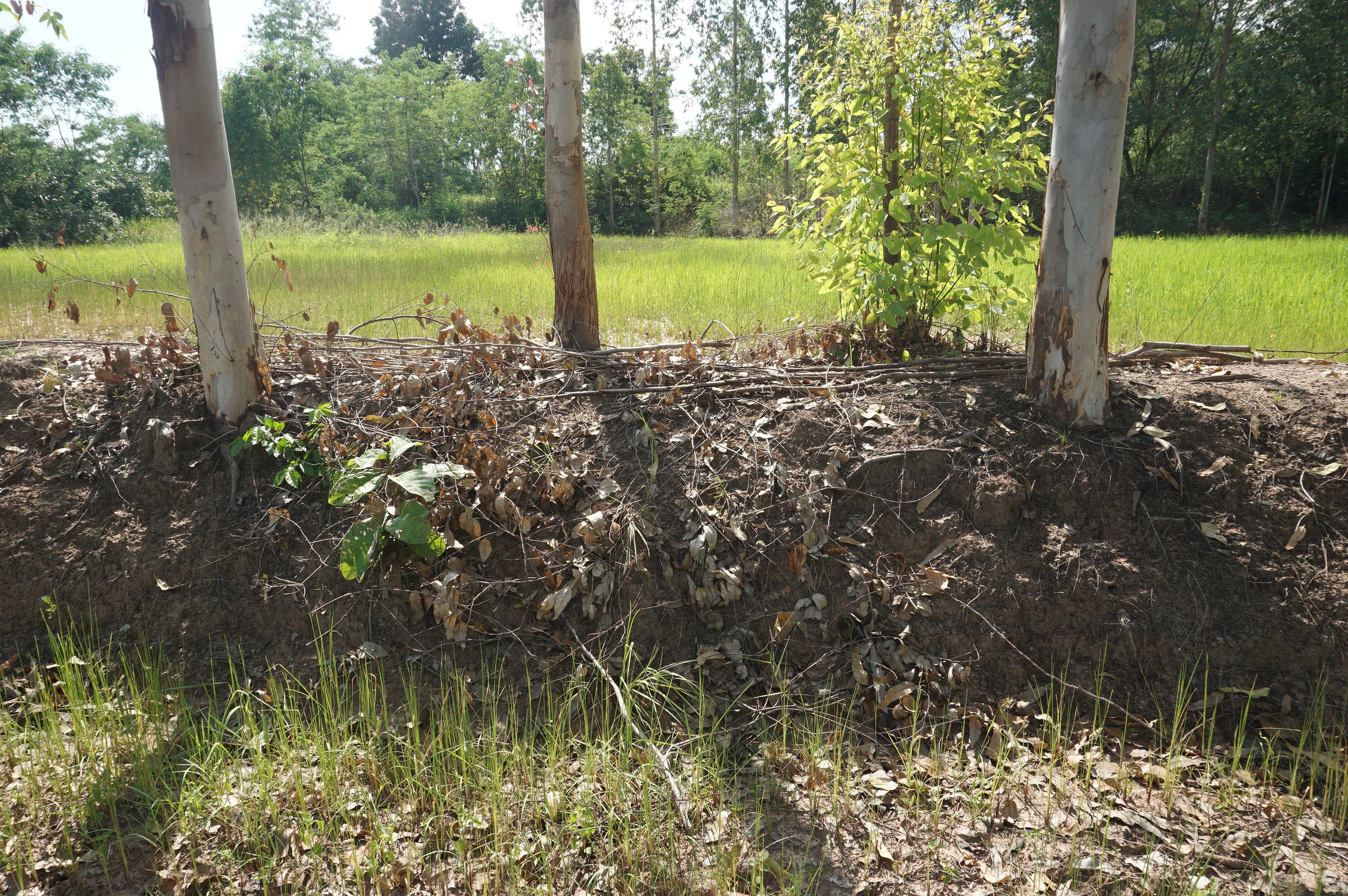
Eucalyptus camaldulensis variety H4 is salt tolerant and has the ability to lower shallow saline groundwater levels; as a result salinity is controlled. Planting eucalyptus on one or two sides of the rice bund in an east-west direction (in single or double rows) at a spacing of 2 m between trees is the most effective technique and well accepted by farmers.
Detailed description of the Technology
Eucalyptus camaldulensis cultivation on rice bunds to lower shallow saline groundwater levels in low-lying areas is a technology used on salt-affected land. The LDD Perennial Tree Planting project to promote the technology of planting Eucalyptus camaldulensis on rice bunds has been implemented since 1996. The land user interviewed cultivates a moderately salt-affected rice field at Ban Muang Pia District, Khon Kaen Province. The land is used for rice production both glutinous (variety RD 6) and non-glutinous fragrant rice (Hom Mali 105). The average yield of rice is 200-250 kg/rai (1 ha = 6.25 rai). The farmers have planted eucalyptus on bunds in the rice cultivated areas on about 10,000 rai in more than 10 years with the objectives of remedying and preventing salination by lowering shallow saline groundwater levels, through "bio-drainage" as well as increasing income and better utilization of lands on rice bunds for growing trees.
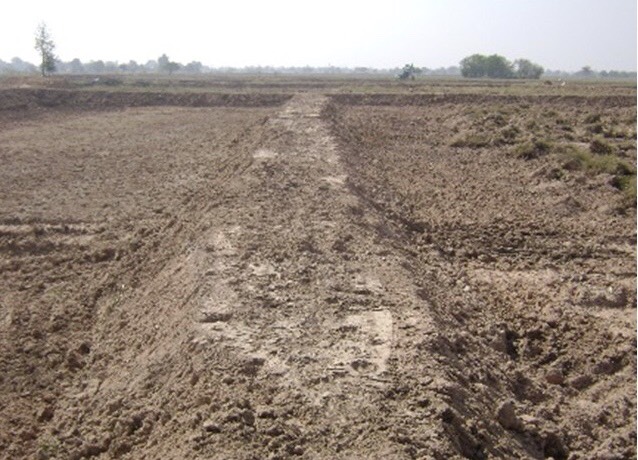
The technology of eucalyptus cultivation on rice bunds has been implemented in farmers' fields in the low-lying salt-affected rice area common in the Northeast of Thailand. It is widely accepted by farmers through the joint partnership between the Land Development Department (LDD), Siam Forestry Co., Ltd. and the local district administration. Eucalyptus seedlings are provided by LDD and are planted in a single or double rows - double rows with trees planted on two sides of the rice bunds in a zigzag manner following an east-west direction to prohibit a shadow effect. The spacing between the trees in a row is 2 m: the rice bund was adapted to be 1.5 m wide and 0.5 m high. This provides more space and convenient access to the rice field. The project provides labour costs for farmers to prepare the land before planting. Many farmers outside the project transplanted their own eucalyptus seedlings on the bunds of 0.5 m or more in width. Farmers buy the seedlings at 1 THB each and plant in pits of 0.3 x 0.3 x 0.3 m with 0.5 kg compost and 0.5 kg rice husks from farm by-products. This technology is well accepted by farmers because of the effective control of salinity in the rice fields as well as the higher income obtained from selling eucalyptus wood. Farmers observed the dead patchy spots of rice plants with salt crusts before planting eucalyptus: after 2 cutting cycles no salt patches were observed anymore, and rice yields increased noticeably. There was also extra income from selling poles of eucalyptus every 4 years. The average yield of eucalyptus trees of 2.5-3.0 inches in diameter was 16 tons per rai for the first cutting.
Based on 7 years (2 crops of eucalyptus coppicing), the average additional income was 1,087 THB/rai/yr (according to the farmers' and Siam Forest's information). The main investment was in the first year of planting; later on, the maintenance cost was on labour for weeding, pruning and thinning to 3 stems after coppice/cutting, including adding 15-15-15 fertilizer for each tree. The average income is increased through better rice yields. The benefits of the technology according to interviews are creating a cooler microclimate from eucalyptus trees and changes in biodiversity through better soil quality resulting in more species of flora and fauna such as grasses, wildflowers, dragonflies, earthworms in the rice field and on the bund. Some farmers wanted more trees by planting at closer spacing of 1 m, but this resulted in too great a density of trees thus consuming more surface water and competing with rice for water consumptive use.
Photos of the Technology
- 📍 Ban Muang Pia, Khon Kaen
- 🗓 2018-01-10
- 📷 Weera Rophandung
- 📍 Ban Muang Pia, Khon Kaen
- 🗓 2018-01-10
- 📷 Supranee Sritumboon
- 📍 Ban Muang Pia, Khon Kaen
- 🗓 2018-01-10
- 📷 Supranee Sritumboon