Pitcher irrigation for the management of moderately saline soils
Type: Technologies
Creation: 2018-10-11 20:22 Updated: 2019-12-12 15:05
Compilers: Md Babul Hossain
Reviewers: Udo Höggel
Country/ region/ locations where the Technology has been applied and which are covered by this assessment
- Country: Bangladesh
- Region/ State/ Province: Khulna region
- Further specification of location (e.g. municipality, town, etc.), if relevant: The region consists of Bagerhat, Satkhira, Khulna, Jessore and Kustia districts.
- Map: View Map
Description of the SLM Technology
Short description of the Technology
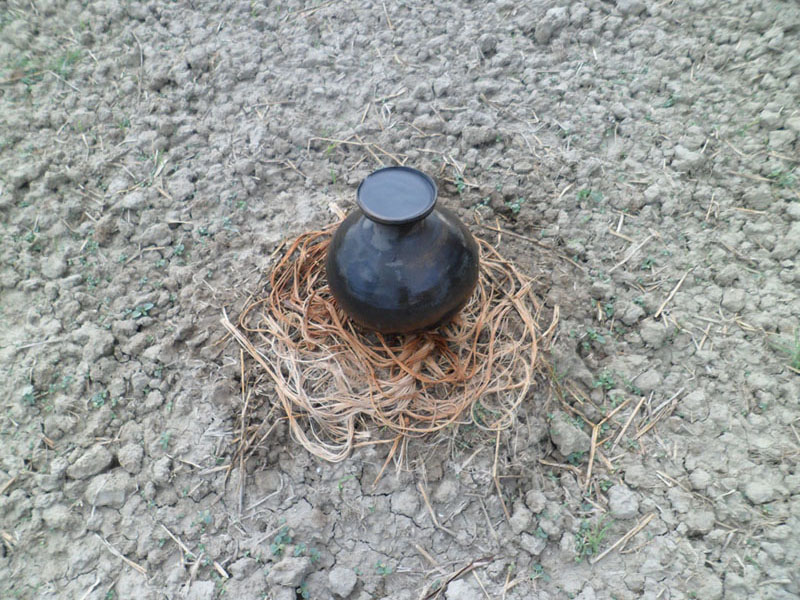
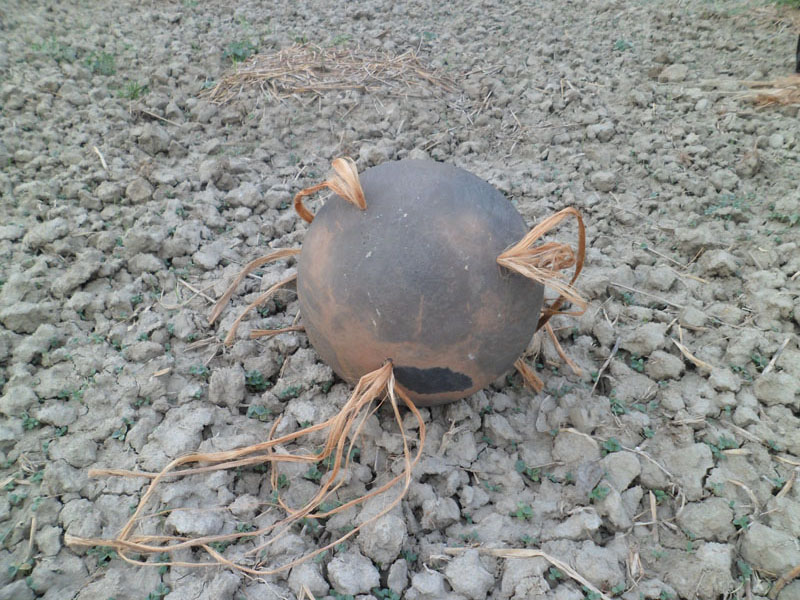
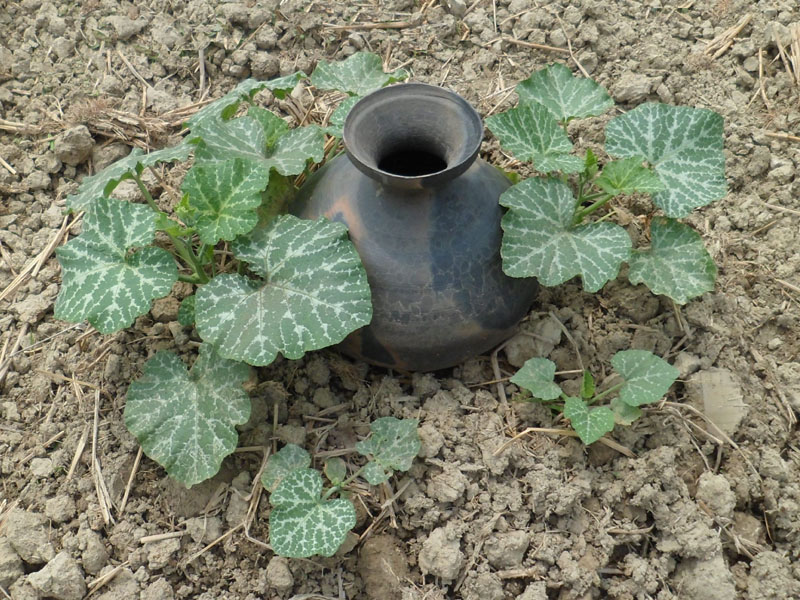
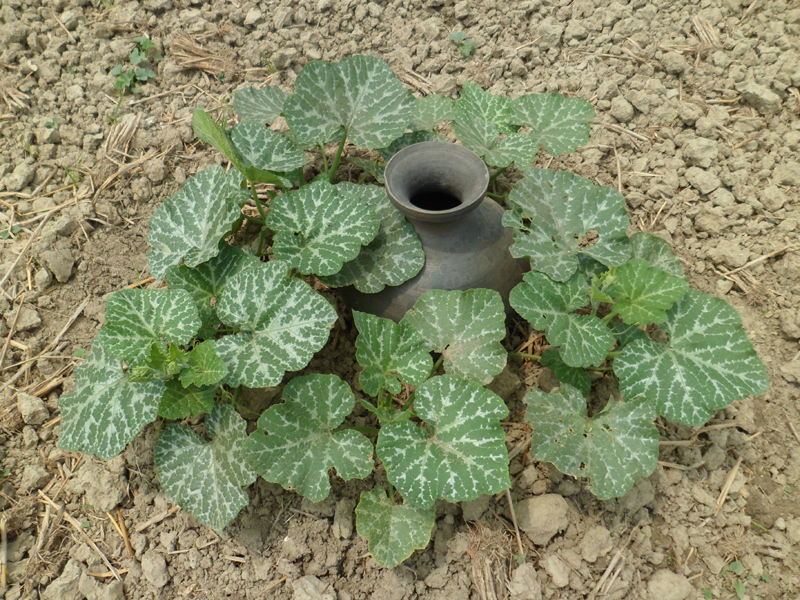
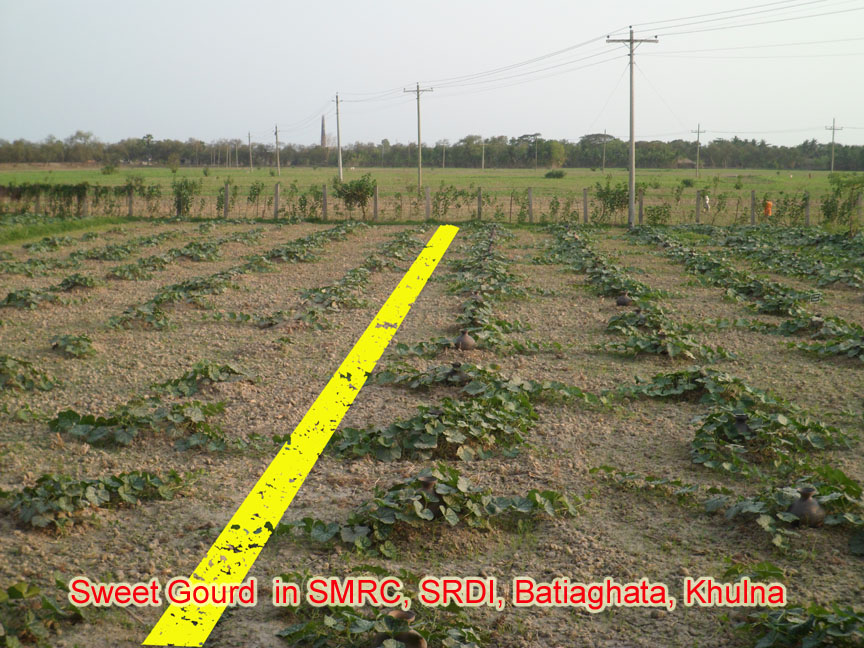
The technology is called pitcher irrigation technology because irrigation water is provided from an earthen pitcher which has several small holes on its bottom. The earthen pitcher is placed on a raised bed which is filled with fresh irrigation water having several pores on its bottom. Then jute fibres are entered into the pores.Then, the pitchers are filled with fresh irrigation water to reduce soil salinity, increase irrigation water use efficiency, increase land cover as well as soil productivity. The technology is popular in case of vegetable cultivation in moderately salt affected area in Bangladesh.
Detailed description of the Technology
Agriculture is a major sector of Bangladesh's economy and the coastal area of Bangladesh is suitable for growing rice. More than 30% of the cultivable land in Bangladesh is in the coastal area. Out of 2.86 million hectares of coastal and off-shore lands, about 1.056 million ha of arable lands are affected by varying degrees of salinity. Farmers mostly cultivate low yielding, traditional rice varieties during wet season. Most of the land remain fallow in the dry season (January- May) because of soil salinity, lack of good quality irrigation water and late draining condition ( Karim et al., 1990; Mondal,1997 and SRDI, 2001). Crop production of the salt affected areas in the coastal regions differs considerably from non saline areas. Because of salinity, a special environmental and hydrological situation exists, that restricts the normal crop production throughout the year. In the recent past, with the changing degree of salinity of some areas due to further intrusion of saline water from the sea, normal crop production becomes very risky. Crop yields, cropping intensity, production levels and people’s quality of livelihood are much lower than that in other parts of the country, which have enjoyed the fruits of modern agriculture technologies based on high-yielding varieties, improved fertilizer and water management and improved pest and disease control measures ( BBS, 2001). At the same time food demand in the area is increasing with the steady increase in human population.
In this circumstances, Salinity Management and Research Centre( SMRC) of the Soil Resource Development Institute, located in Batiaghata, Khulna has developed some technologies which can reduce soil salinity, increase irrigation water use efficiency, increase land vegetative cover as well as soil productivity. Now the pitcher irrigation technology is popular in Khulna, Satkhira and Bagherhat districts of Bangladesh.
In this irrigation method, at first, several pores ( 2.2 mm in diameter) are made on the bottom of an earthen pitcher. Then, some jute fibres ( 30 cm long) are entered into the holes keeping 20 cm outside of the pitcher. After that, the pitcher is placed on a raised bed and fill it up with fresh water. Some seed / seedlings (Lagenaria siceraria, Solanum spp, Abelmoschus esculentus, Cucumis sativus, Benincasa hispida) are sown on different corners of the raised bed. It is done before setting the pitcher on the bed. Then water comes out / seeps very slowly through the fibres. It has several benefits as concerns the scientific point of view. First of all, it reduces irrigation water loss at least 70% as compared to flood irrigation due to reduced run off and evaporation . It supplies irrigation water continuously at the surface of the plant bed and rootzone of the crops. The pitcher needs to be refilled at 15 days interval. As a result, the salt movement is hampered / hindered to rise to the surface through capillary pores because of continuous drip irrigation. So, salinity level in the soil doesn't increase throughout the cropping season. Secondly, this technology enhances the seed germination percentage and creates a favourable environment for uptaking soil nutrient by plants and increasing the crop yield.
The farmers responded quickly to adopt the technology, because thousand hectares of land remain fallow in coastal areas in the dry season. During this period, there are two major problems: soil salinity, water salinity and scarcity of suitable irrigation water. The pitcher irrigation technology is playing an important role to reduce soil salinity as well as increasing the efficiency of irrigation and increasing crop yield.
Photos of the Technology