Land Use Change from Rice to Vegetables
Type: Technologies
Creation: 2018-10-30 09:44 Updated: 2021-05-06 12:04
Compilers: supranee sritumboon
Reviewers: Samran Sombatpanit, Rima Mekdaschi Studer, William Critchley
Country/ region/ locations where the Technology has been applied and which are covered by this assessment
- Country: Thailand
- Region/ State/ Province: Northeast/Khon Kaen
- Further specification of location (e.g. municipality, town, etc.), if relevant: Ban Kaonoi is in Non Sila Sub-district, Banphai District, Khon Kaen Province.
- Map: View Map
Description of the SLM Technology
Short description of the Technology
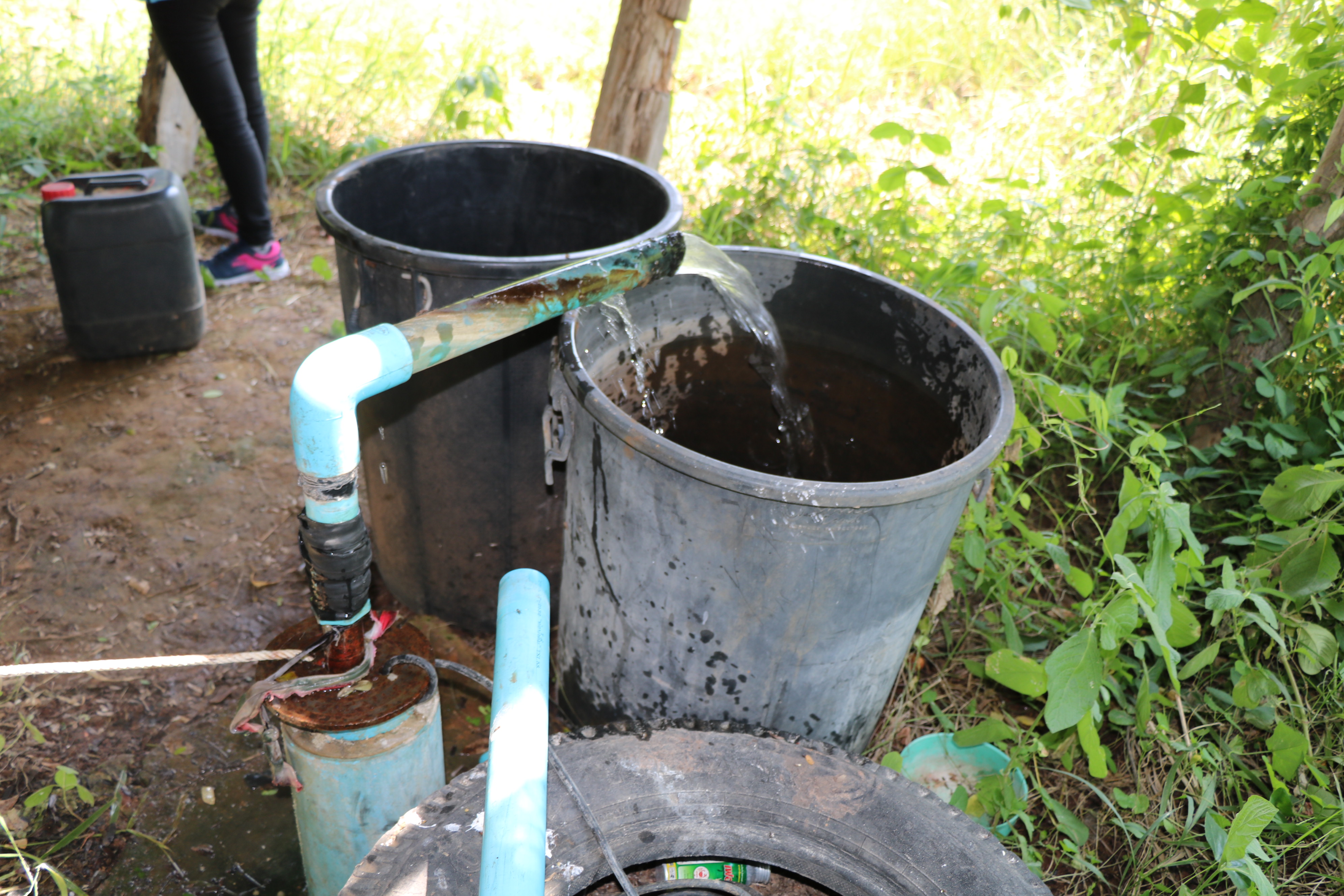
Land use change from rice to vegetables was started by a group of farmers with the help of the LDD who provided irrigation from groundwater through a 28m deep bore hole. This enables the groundwater level to be lowered preventing salination in the discharge area lower down.
Detailed description of the Technology
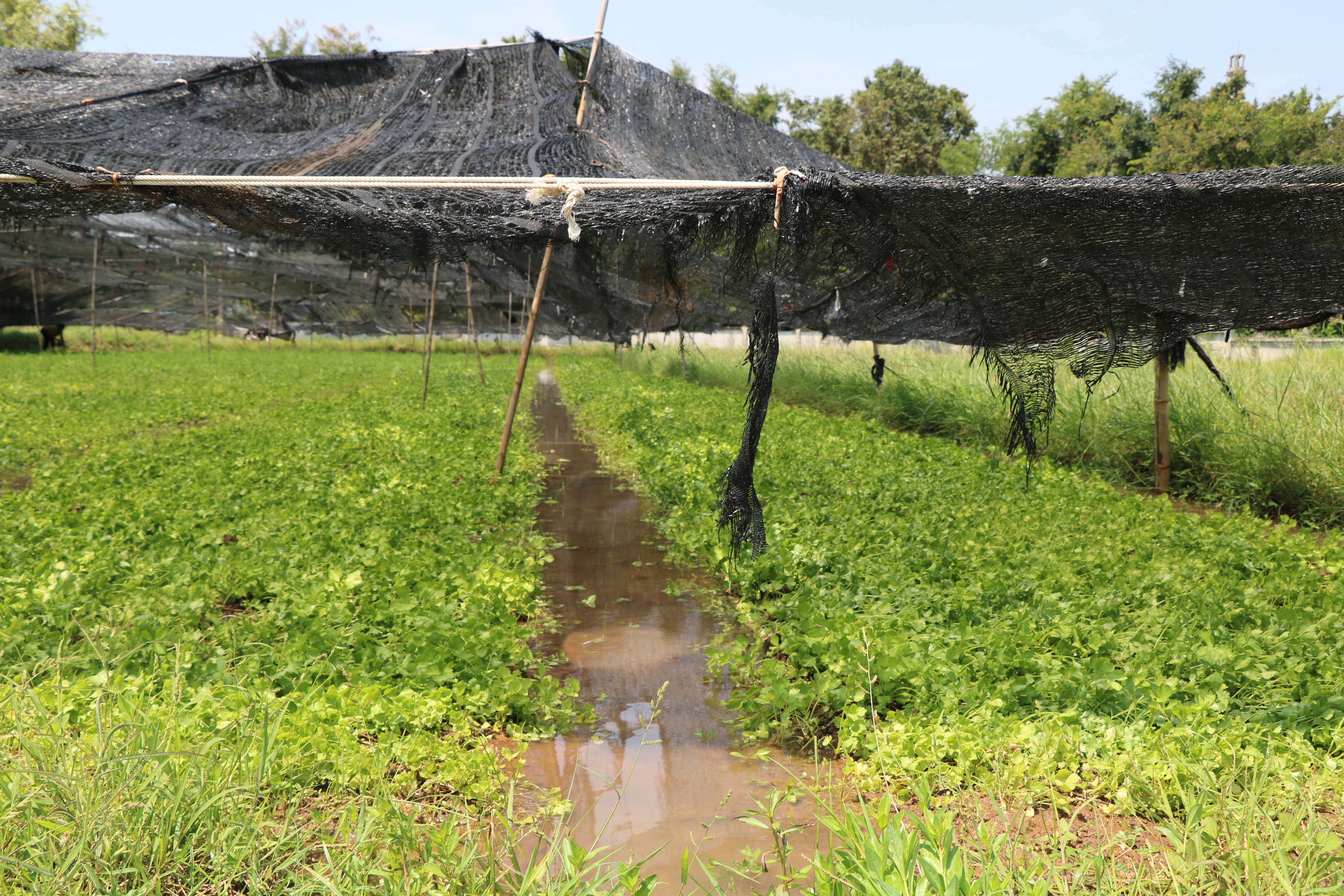
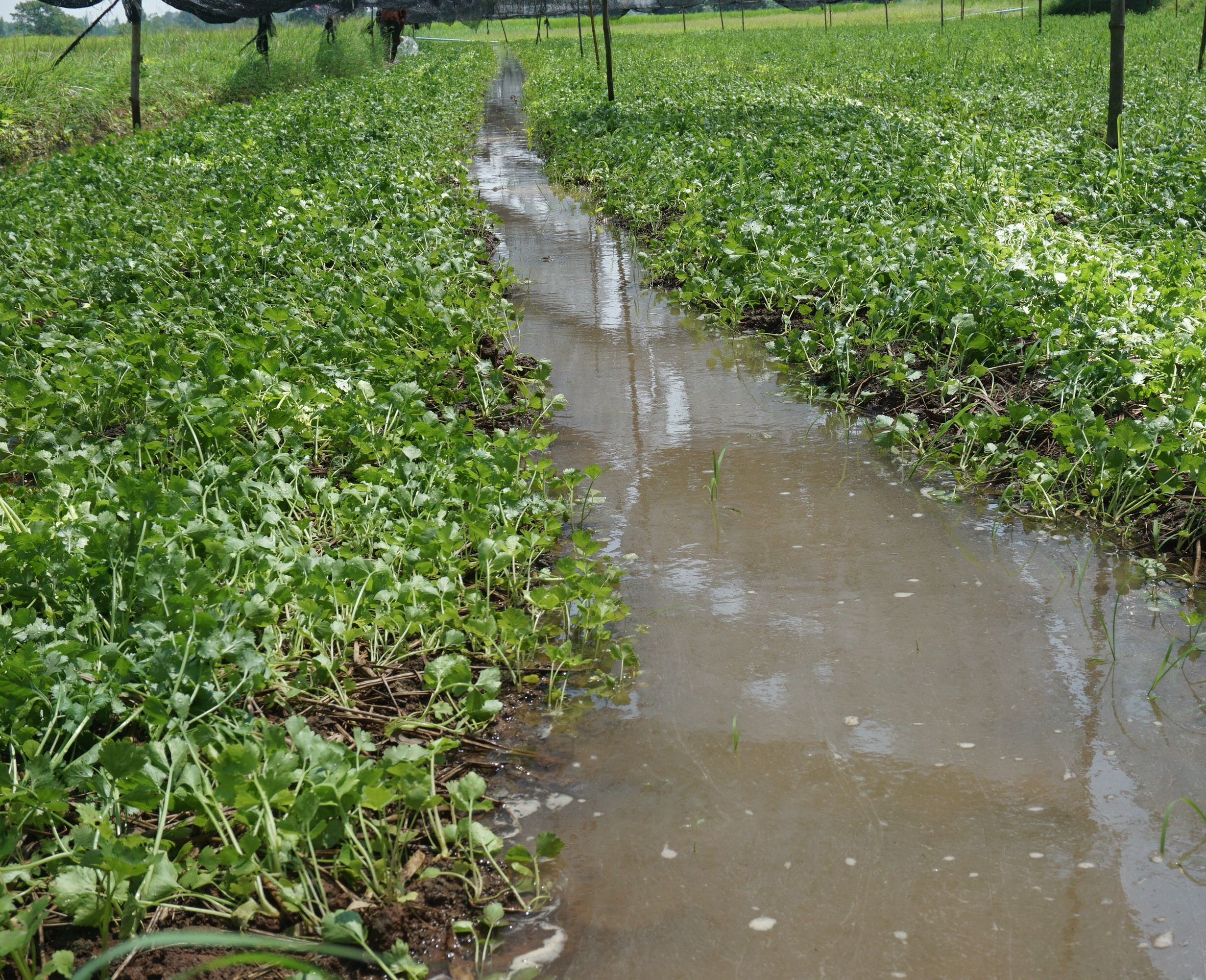
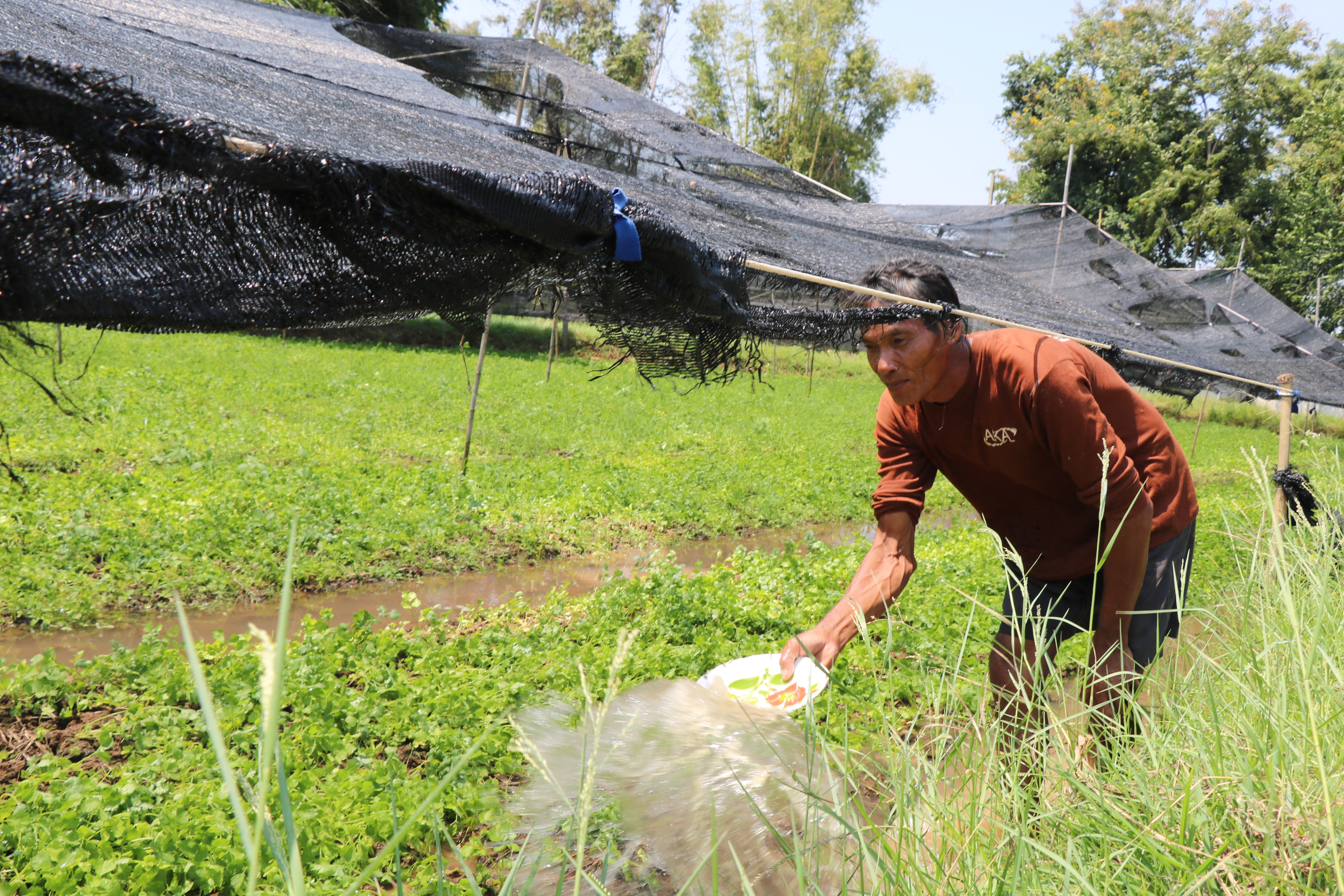
Changing flooded rice to salt-tolerant vegetable production as recommended by LDD researchers was started 25 years ago by a group of farmers at Ban Kaonoi Village, Pueaiyai Sub-district, Non Sila District, Khon Kaen Province. The land is located in the recharge area, which is nonsaline, with groundwater that has a salinity level of 0.7 dS/m. Groundwater that moves downslope picks up salt - and deposits salt in low-lying areas, causing off-site salinization. The LDD supports the land use change from rice to vegetables for higher income while at the same time lowering groundwater levels. When rice is grown through flood irrigation the groundwater level rises. With vegetables, farmers try to use minimal amounts of water to prevent salt accumulation – a weekly rate of 90 m3/rai (560 m3/ hectare). The objectives of changing rice to vegetables are to (a) decrease water use (b) get higher incomes from growing salt-tolerant vegetables, and (c) prevent off-site salinization. Without a drainage system, the following slightly to moderately salt-tolerant vegetables are recommended: varieties of basil (Ocimum spp), celery (Apium graviolens) and coriander (Coriandrum sativum). Planting starts with land preparation and making beds 1 m wide and 0.3 m high, mixed with 500 kg/rai (3125 kg/hectare cow dung, with 0.3m wide irrigation furrows between the beds.
The vegetables are divided into two groups: long- and short-duration crops. Long-duration crops (e.g. basil) take 5 months before harvest. The first crop is planted mid-January and harvested at the end of May; the second crop is planted mid-July, and harvested mid-December. The short-duration crops of coriander and Chinese celery need a 75-80 day growing period. The first sowing starts late January/ February and harvest is mid-April; the second sowing is late July, with harvest early October. Only short-duration crops can be planted after the rice harvest in December or earlier. Maintenance includes weeding (by hand) and fertilizer application. Labour is required for supplementary irrigation - by spraying water on the leaves as required – and once a week irrigation is applied through the furrows. The costs and benefits are calculated; the costs include seed, fertilizer, and labour for land preparation, planting, irrigation, maintenance, and harvesting. The farmers favor the technology because the crops can grow well in such circumstances and the products meet the market’s demand. In such way, farmers get higher income compared with rice, while crop residues and weeds can be used as animal feed.
Photos of the Technology
- 📍 Ban Kaonoi
- 🗓 2018-02-10
- 📷 Siyapa Suwunchana
- 📍 Ban Kaonoi
- 🗓 2018-02-10
- 📷 Supranee Sritumboon
- 📍 Ban Kaonoi
- 🗓 2018-02-10
- 📷 Supranee Sritumboon
- 📍 Ban Kaonoi
- 🗓 2018-02-10
- 📷 Supranee Sritumboon