
Dyke and Ditch multi-cropping system
Type: Technologies
Creation: 2018-11-26 04:37 Updated: 2020-04-21 11:17
Compilers: Fazlay Arafat
Reviewers: Nicole Harari, Rima Mekdaschi Studer, Ursula Gaemperli
Country/ region/ locations where the Technology has been applied and which are covered by this assessment
- Country: Bangladesh
- Region/ State/ Province: Barishal Division
- Further specification of location (e.g. municipality, town, etc.), if relevant: Atghor Kuriana, Swarupkathi, Pirojpur
- Map: View Map
Description of the SLM Technology
Short description of the Technology
Landform changes to dyke and ditch to introduce multiple crops.
Detailed description of the Technology
Marshy land covers most of the area of southern Bangladesh in the estuaries of the big rivers, including Swarupkathi Upazila. This area typically floods for more than 9 months, is perennially wet, and is covered by Hogla (Typha), Reed plant, and weeds. Crop cultivation has been difficult due to unfavourable drainage conditions. Local people previously cultivated paddy only in small areas by clearing the swamp vegetation. Now, however, some of the marshy land has been converted to a dyke and ditch multi-cropping system, which has been practiced for the last 200 years. Through this practice, the marshlands have provided valuable harvests for generations and currently yield vegetables, fruits, timber and fishes for farmers and that support local livelihoods. The marshland ecosystem, that converted to terrestrial ecosystem now support habitat for a wide range of flora and fauna. The technology reduces the pressure on arable land through construction of dykes which also plays a crucial role in flood mitigation. The continuous series of dykes and ditches with diverse vegetation increases the aesthetic beauty of the region and conserve biodiversity as well.
The dykes are elevated beds of soil constructed to 4-6 feet height and 12-14 feet width. The dykes are constructed with soils collected from ditches and on the top of the bed water hyacinth composed are used. Along with increasing fertility, water hyacinth compost also increases the soil holding capacity of the dykes. Though water hyacinth is normally one of the most dangerous invasive species, it can be converted to useful resource by this system. The ditches are 10-11 feet wide canals and deep enough for fish culture. According to size of land owned by farmer the length of each dyke and ditch varies. All the ditches are interconnected with a regular flow of water. Once the dyke preparation is complete, crops including brinjal (eggplant), turnip, red amaranth, coriander, spinach, cowpea, chili, cornflower, tomato, papaya are planted. On the bed, 1 foot wide drain is constructed after every 3 feet intervals. Creepers and vines are planted on sticks along the sides of the dyke to prevent erosion. Trellis crops like bottle gourd, bitter gourd, ash gourd, sweet gourd, cucumber, etc. are cultivated in between two dykes and over the ditches. Guava, Hog plum, banana, lemon, pineapples and other fruit trees planted are in the bed after three years of establishment. Timber trees are also introduced in the dykes over time though some beds are only managed for crop cultivation. Through this way, they establish a multi-crop and agro-forestry system. In the ditches, farmers cultivate local fish varieties that generate extra income for them. Water hyacinth also managed in the ditch that used as fertilizer in the bed. Farmer add soil to the dyke from the ditches once in every year to raise the dyke and make it stable. The local community also developed a large floating market of guava, which now attracts tourism in this area and facilitates alternate income.
The initial investment of establishing dyke and ditch technology is expensive due to huge labour requirement for dyke preparation and often difficult for farmers to manage the required money. Usually they take loans from neighbours or micro credit organizations with high interest to initiate the work. Almost 80% of the households are involved with micro credits in Swarupkathi because loans from the national bank is much more time-consuming. If the farmers can get easier access to loan and marketing facilities from the government, they will benefit more from the dyke and ditch system.
Photos of the Technology
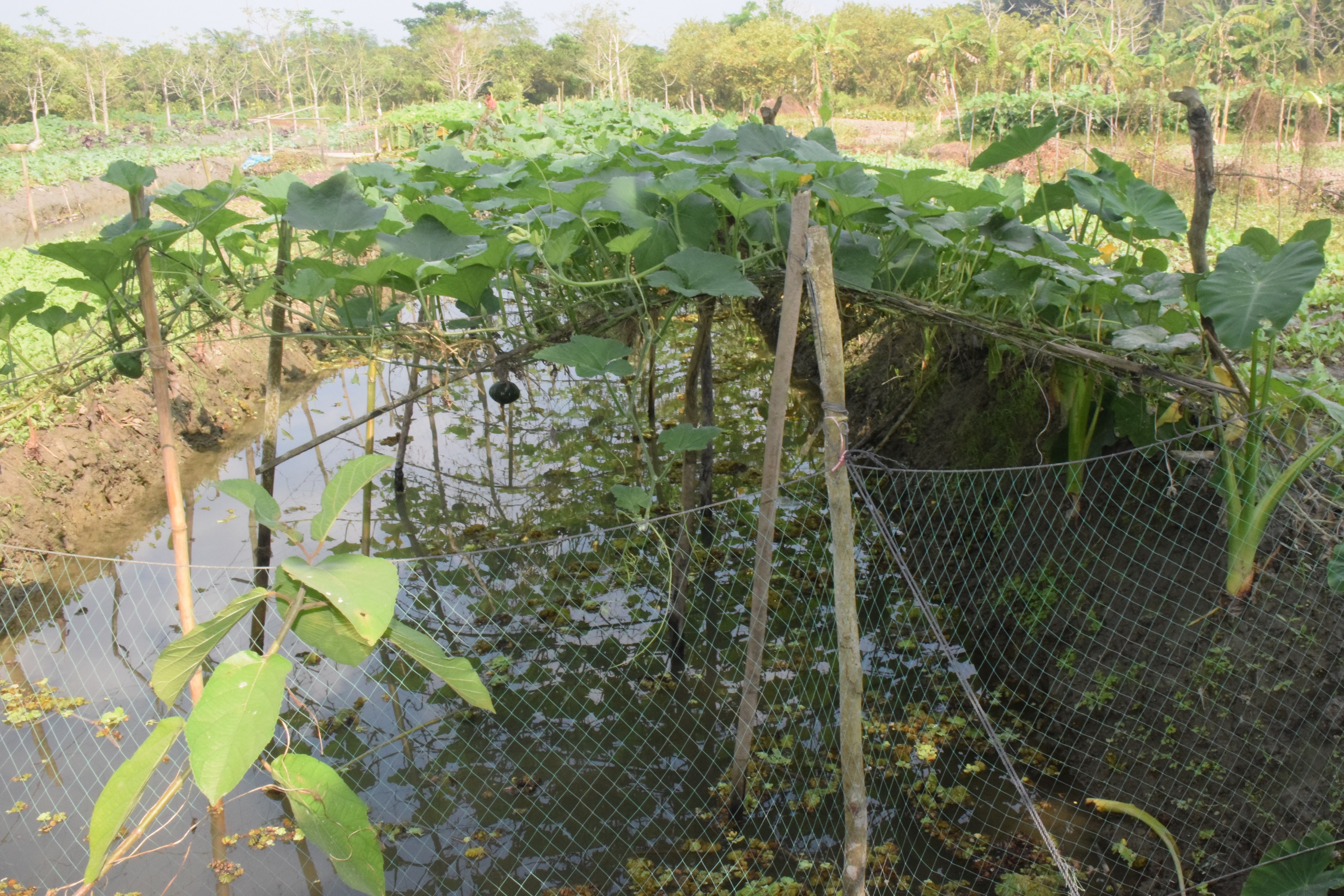
- 📍 Atghor Kuriana, Swarpkathi, Pirojpur
- 📷 Md. Mutasim Billah
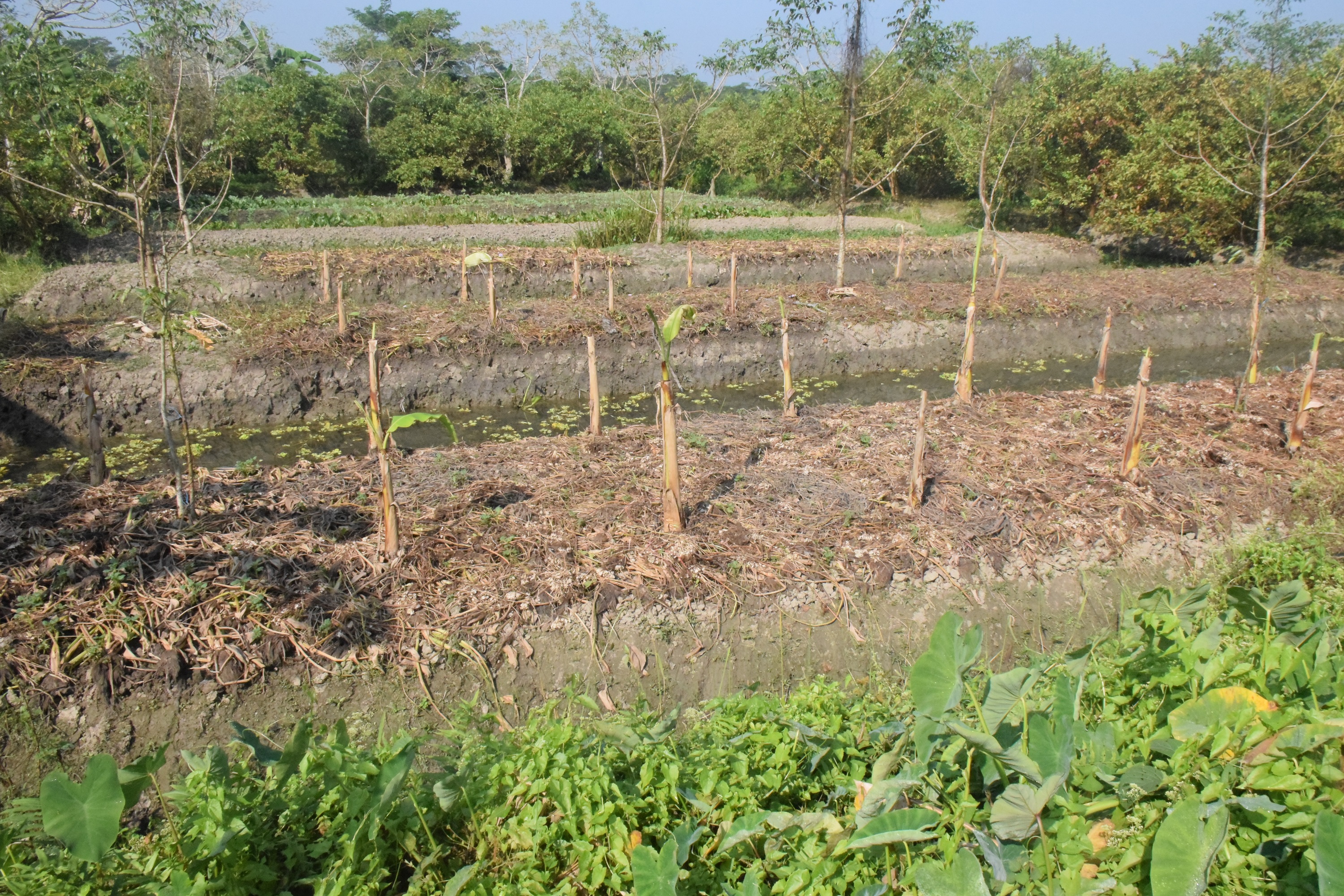
- 📍 Atghor kuriana, Swarupkathi, Pirojpur
- 📷 Md. Fazlay Arafat