
Pasture-weed control by thistle cutting
Type: Technologies
Creation: 2018-12-18 15:27 Updated: 2019-08-07 15:49
Compilers: Hanns Kirchmeir
Reviewers: Ursula Gaemperli
Country/ region/ locations where the Technology has been applied and which are covered by this assessment
- Country: Georgia
- Region/ State/ Province: Kakheti
- Further specification of location (e.g. municipality, town, etc.), if relevant: Shenako
- Map: View Map
Description of the SLM Technology
Short description of the Technology
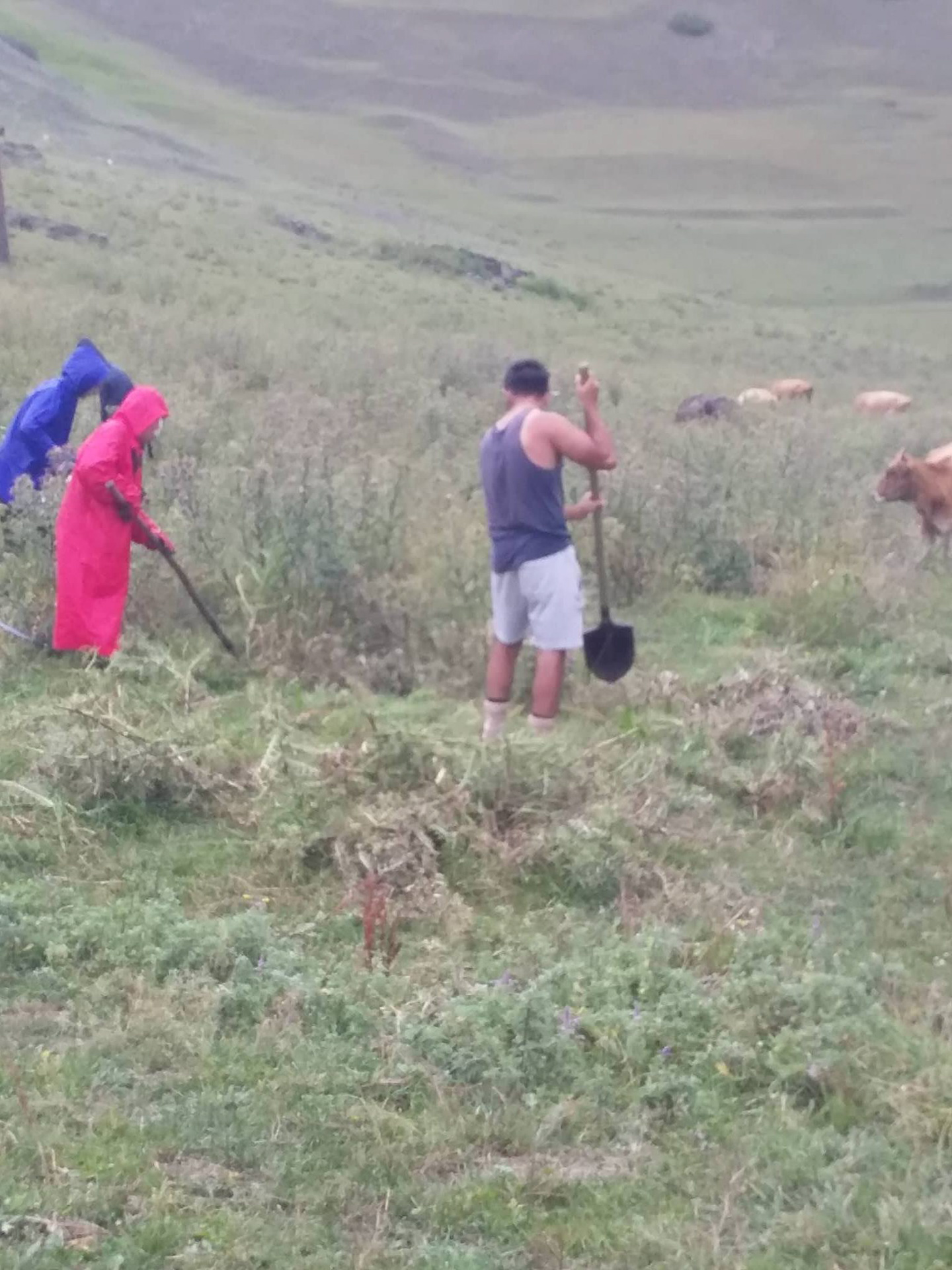
Thistles invaded massively into village pasture land at 1800m elevation in the Caucasus. By cutting the thistles with a motor-cutter the cover of thistles have been reduced.
Detailed description of the Technology
The technology was applied in flat sub-alpine pasture land at an elevation of about 1800 m in the village of Shenako in the Tusheti Protected Landscape, Georgia. Precipitation is 750-900mm and mean annual temperature is 2-4°C. Thistles (Cirsium sp.) were invading especially in those sections of the pasture that are rich in nutrients and have medium soil water content. This site conditions can be found mainly at the valley bottom.
There are no big machines available in this mountain villages. So the removal was done by motor-cutters. In this particular case STIHL petrol brush cutters were used with a 3 blade bush knife.
The removal of the thistles, which were covering up to 20% of the pasture land will increase the productivity of valuable fodder grass and herbs. The thistles are growing up to 1m height and taking up significant amount of nutrients from the soil and are shading other grass and herbs in their neighborhood. Because of their spices they are not eaten by cows or sheep, while the grazing pressure is increasing on the remaining grass and herb species. This leads to positive selection of thistles and a permanent increase of the thistles number and biomass in comparison to the high quality fodder plants.
The thistles have been cut in mid-June/beginning of July just at the begin of blossom. At this stage, the thistles mobilized most of the nutrients from their root system and spent them in leaf and blossom biomass. By cutting the thistles at this time, the highest impact on the nutrient balance can be reached and no new seeds will be produced in this year. It was observed, that the thistles have been eaten by the livestock when it was cut and dried up.
The motor brush cutter increases significantly the speed of cutting the thistles compared to hand scythe. The thistle has a powerful root system and is re-sprouting from the roots within the same summer. So it is important to repeat the cutting 2-3 times a year and to continue several years until the amount of thistles is permanently reduced.
The reduction of thistles will give more space, nutrients and moisture to other fodder plants and increase the productivity of the pasture land.
The challenge is the coordination of the work load within the users of the community pasture land. It needs a (written) agreement to share the workload for pasture maintenance between the families according to their number of livestock.
Photos of the Technology
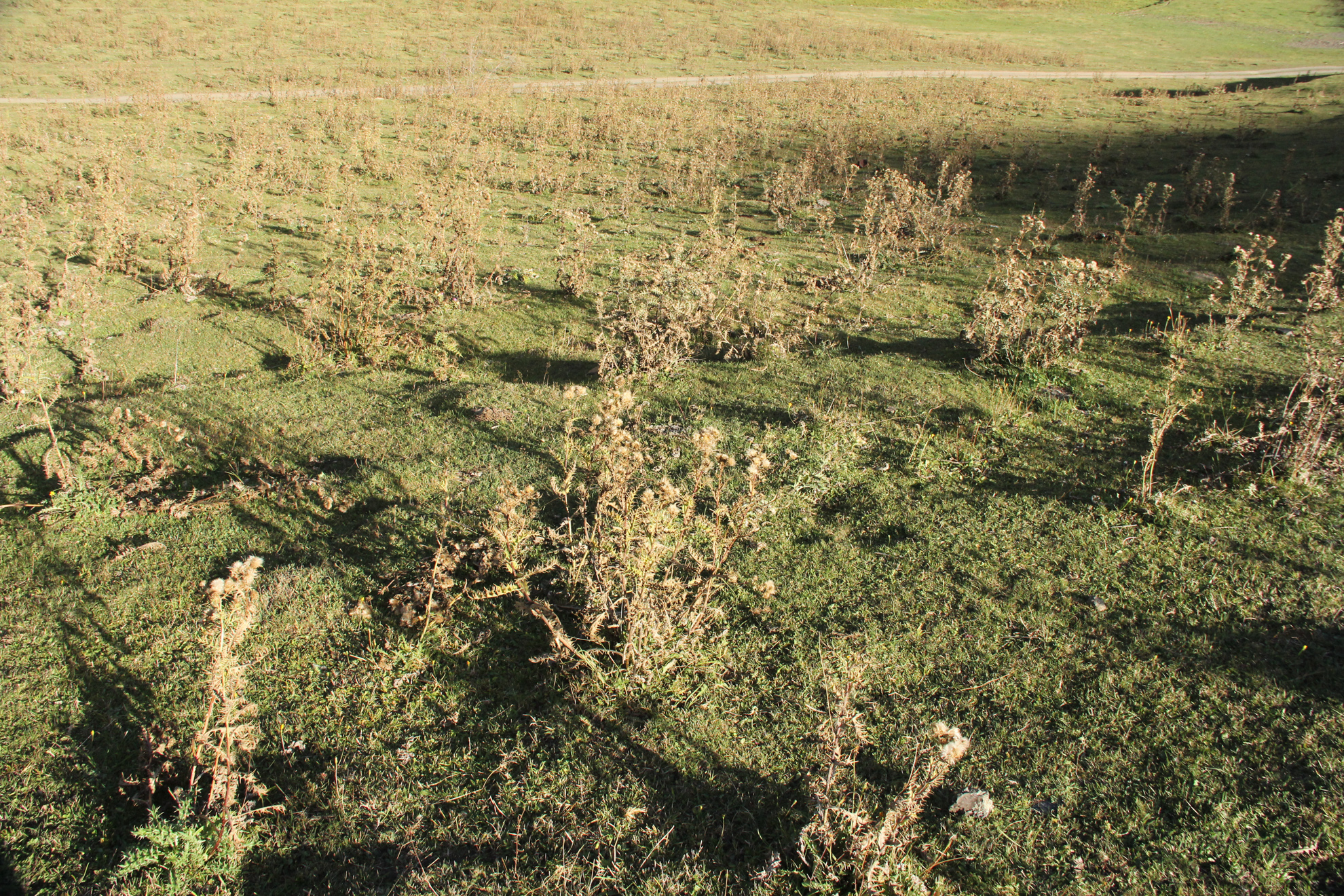
- 📍 Shenako, east of the village. Tusheti Protected Areas, Georgia
- 🗓 2018-12-09
- 📷 Hanns Kirchmeir
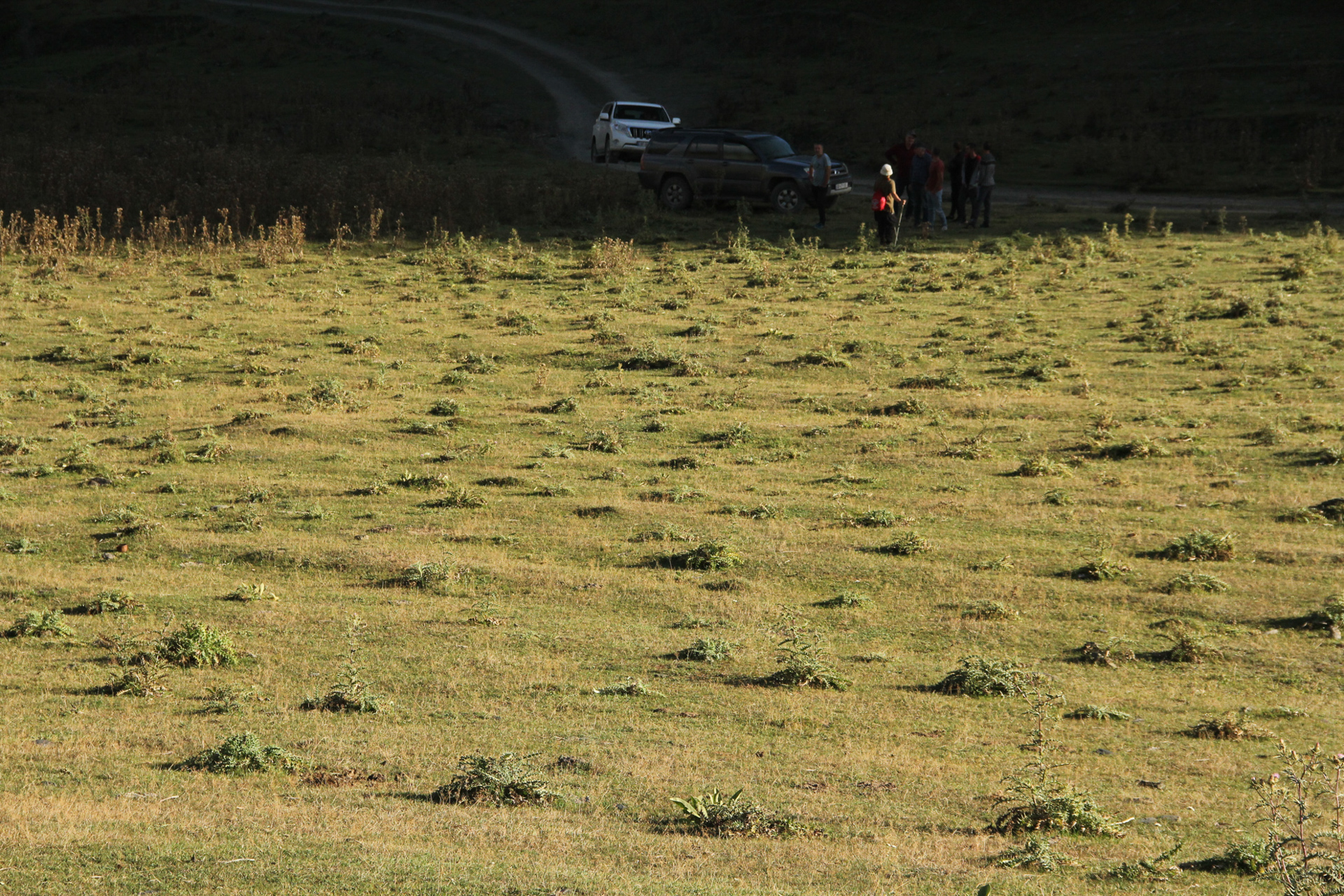
- 📍 Shenako, east of the village. Tusheti Protected Areas, Georgia
- 🗓 2018-12-09
- 📷 Hanns Kirchmeir
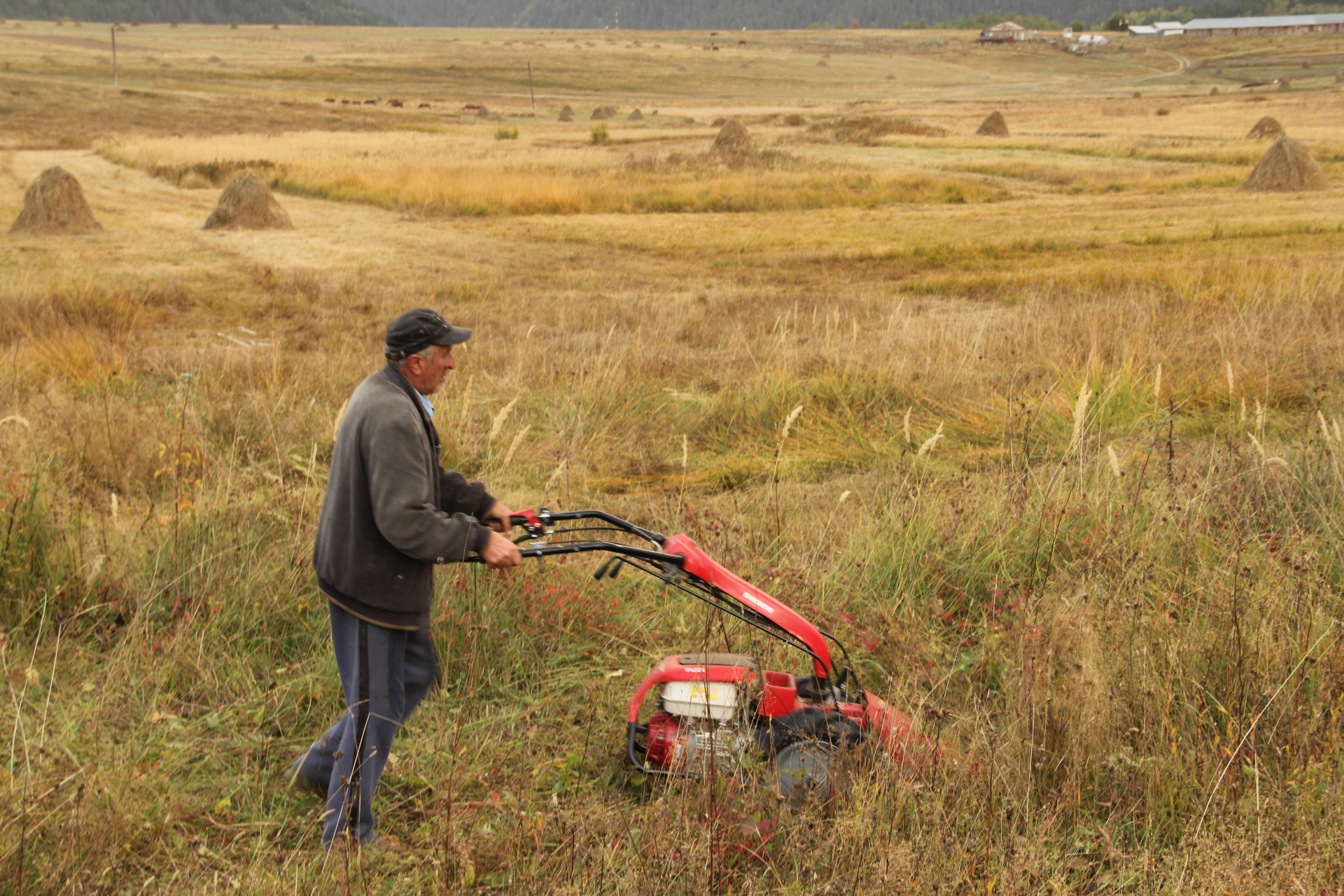
- 📍 Omalo, Tusheti Protected Landscapes, Georgia
- 📷 Hanns Kirchmeir
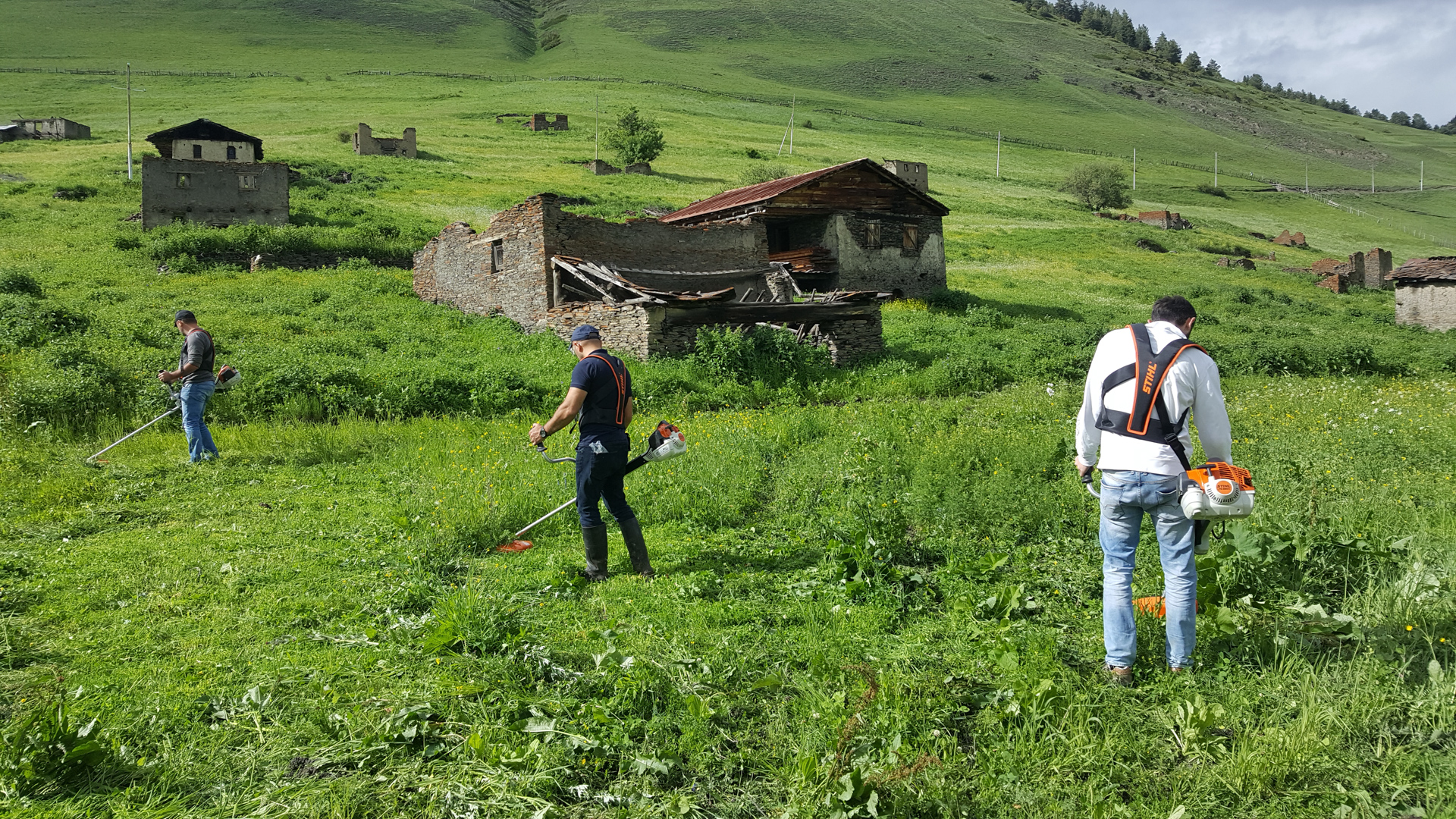
- 📍 Shenako
- 🗓 2018-09-06
- 📷 Amiran Kodiashvili
- 🗓 2018-09-06
- 📷 Amiran Kodiashvili