
Rehabilitation of Windbreaks
Type: Technologies
Creation: 2018-12-18 15:34 Updated: 2020-02-19 15:55
Compilers: Hanns Kirchmeir
Reviewers: Rima Mekdaschi Studer
Country/ region/ locations where the Technology has been applied and which are covered by this assessment
- Country: Georgia
- Region/ State/ Province: Kakheti
- Further specification of location (e.g. municipality, town, etc.), if relevant: Dedoplistskaro
- Map: View Map
Description of the SLM Technology
Short description of the Technology
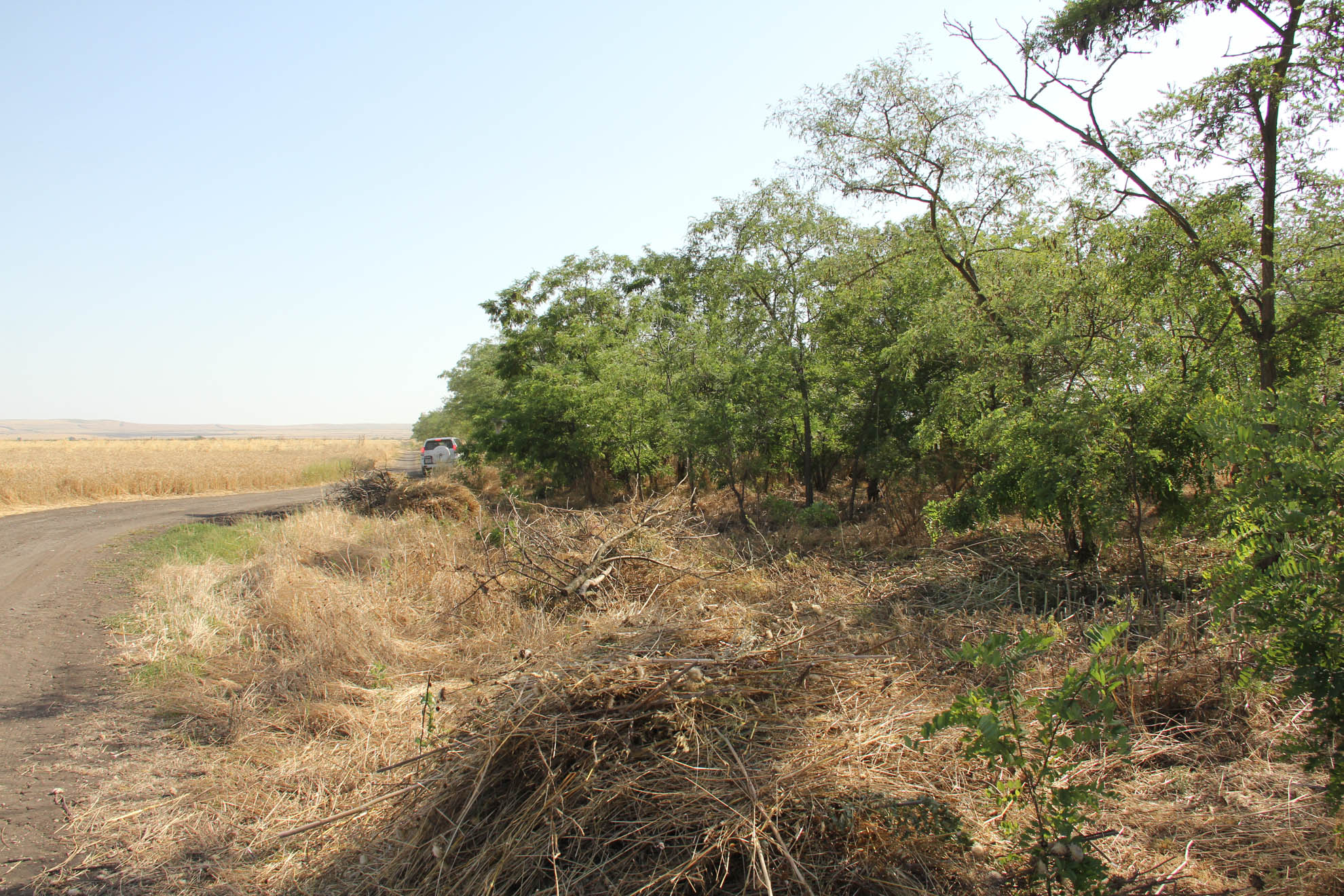
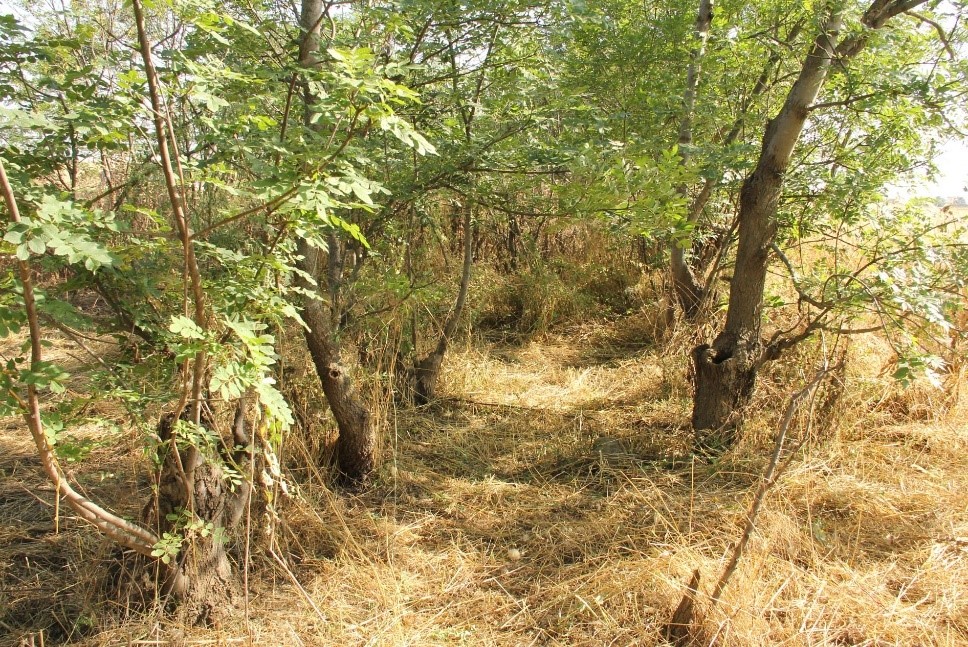
Windbreaks are an integrated technology to increase land productivity and biodiversity at different levels. Along six kilometres, located between a road and agricultural fields, windbreaks were rehabilitated or newly established to protect the soil wind erosion. Four lines of seedlings including seven tree species were planted in two meters distance to each other. The survival rates of different tree species have been accessed and evaluated.
Detailed description of the Technology
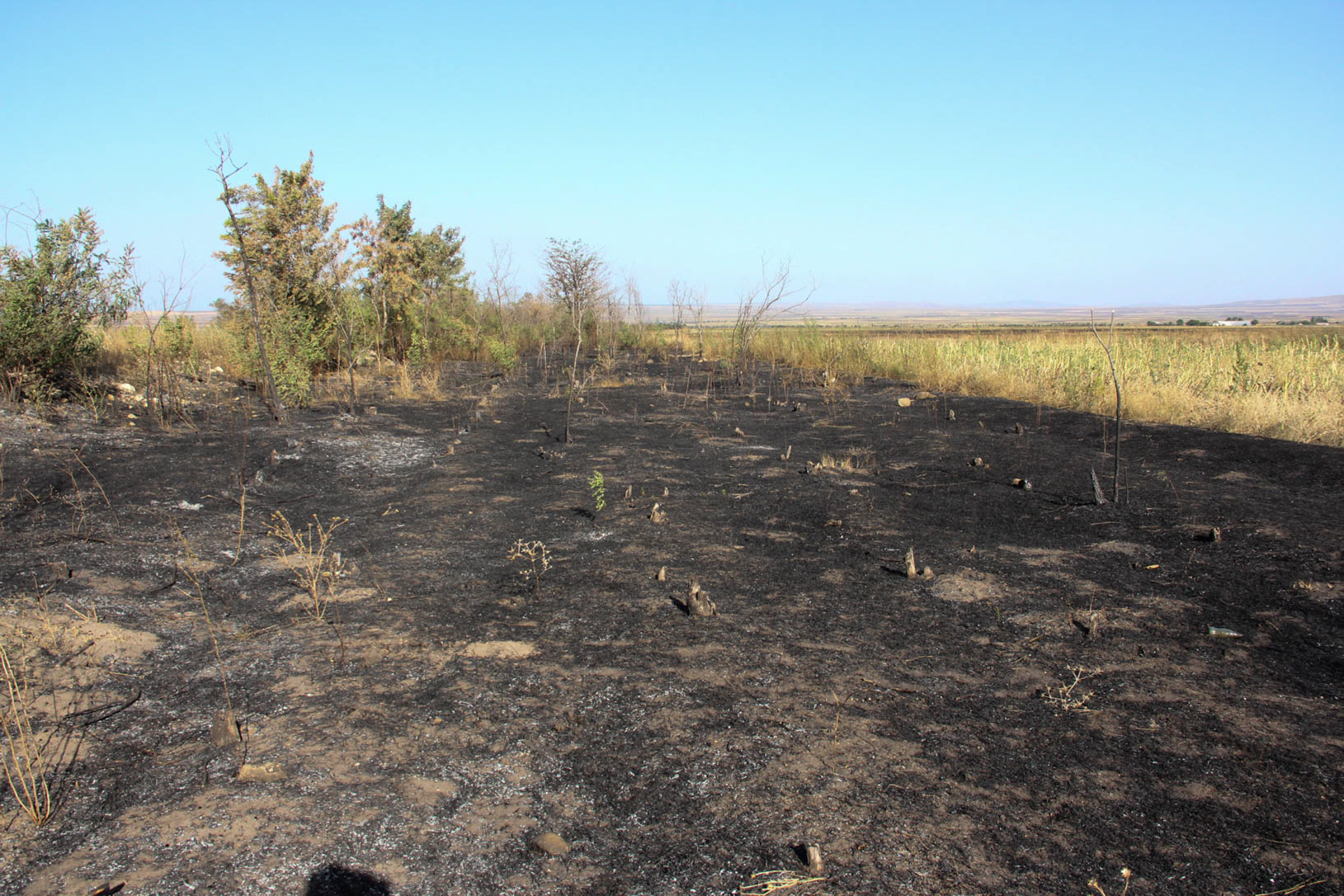
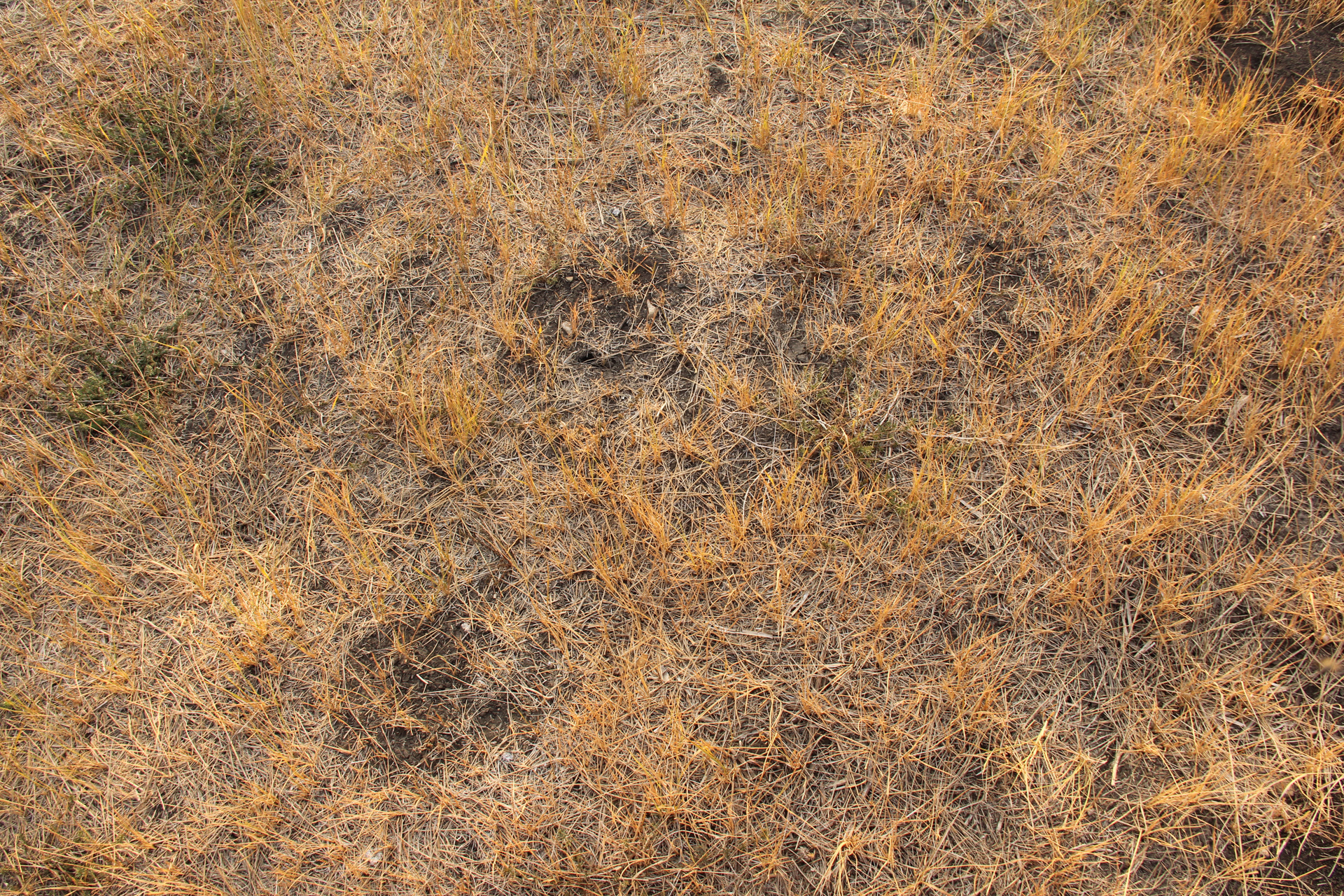
Agriculture plays a key role in the economy of Georgia. 74% of wheat is produced in Kakheti. Within the region, the main wheat-growing area is Shiraki valley located in Dedoplistskaro Municipality in Eastern Georgia. The valley has deep soil with high humus content offering significant potential for high agricultural yields. Among others, wind erosion and increase of evaporation due to degradation of windbreaks have led to reduced agricultural yields. At the end of the Soviet Union, there were 1.800 km of tree windbreaks in Shiraki. More than 90% of them were destroyed either by fire or illegal cuttings for firewood. Fires are caused by farmers burning harvest residues and by shepherds burning pastures and windbreaks to facilitate the growth of new grass and clear land. Today, fire still pose the greatest threat to the rehabilitation of windbreaks. Grazing by migrating sheep and by local (cattle) herds as well as firewood extraction is still causing additional damage to windbreaks in specific areas of Shiraki valley.
In Dedoplistskaro, the SLM-pilot activities focus on the establishment of a windbreak/agroforestry system to reduce wind erosion, which is here the main degradation factor and threatens agricultural production. Windbreaks are a well-known measure against wind erosion. They consist of several rows of trees and bushes on the edges of agricultural fields to reduce the wind-speed on the surface level. Slowing down of wind-speed protects the topsoil from wind erosion. Windbreaks improve the micro-climate for crops growing in their shelter by reducing moisture loss. Windbreaks also provide shelter and habitats for a wide range of plants, pollinating insects, wildlife and birds, including predators of agricultural pests.
Selection of seedlings:
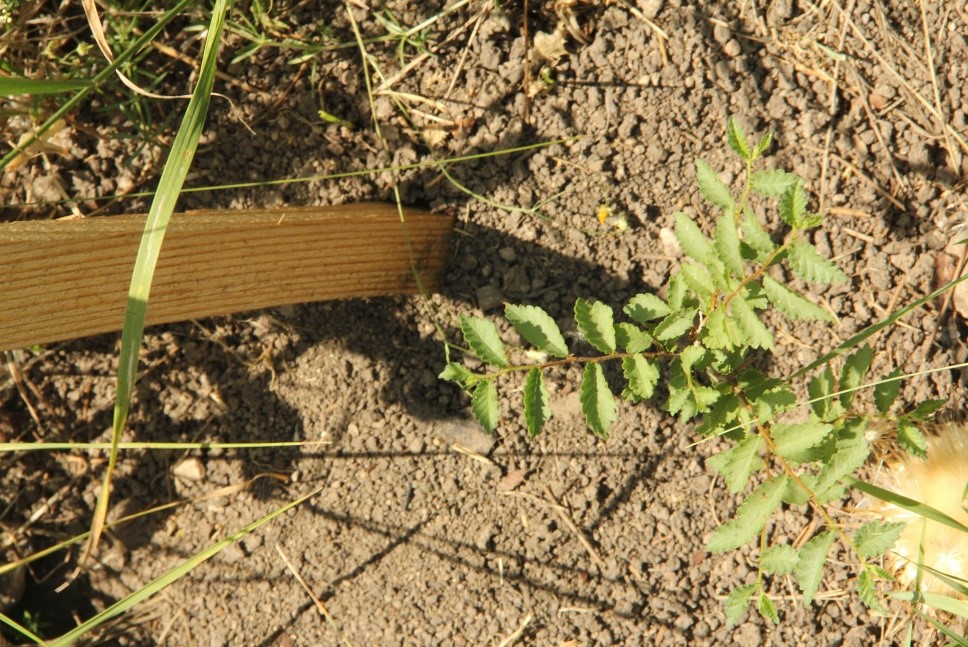
Tree species well adapted to the regional conditions (climate, soil, etc.) were selected such as Pinus (Pinus eldarica, survival rate: 90%), Pistacia (Pistacia mutica, survival rate 60%) and Elm (Ulmus minor, survival rate 60%), Wild Almond (Prunus argentea, survival rate 40%), Persian olive (Eleagnus angustifolia, survival rate: 40%) and Robinia (Robinia pseudoacacia, survival rate 16%). The survival rates are based on the assessment in September 2018, 6 months after planting.
The seeds were prepared for planting in a nursery. Seedlings to be transported over long distances must be grown in special containers to ensure good root system development and minimise damage during transport. If they are grown near the planting site and the transport time is short, seedlings may also be bare-rooted.
Preparation of soil and planting:
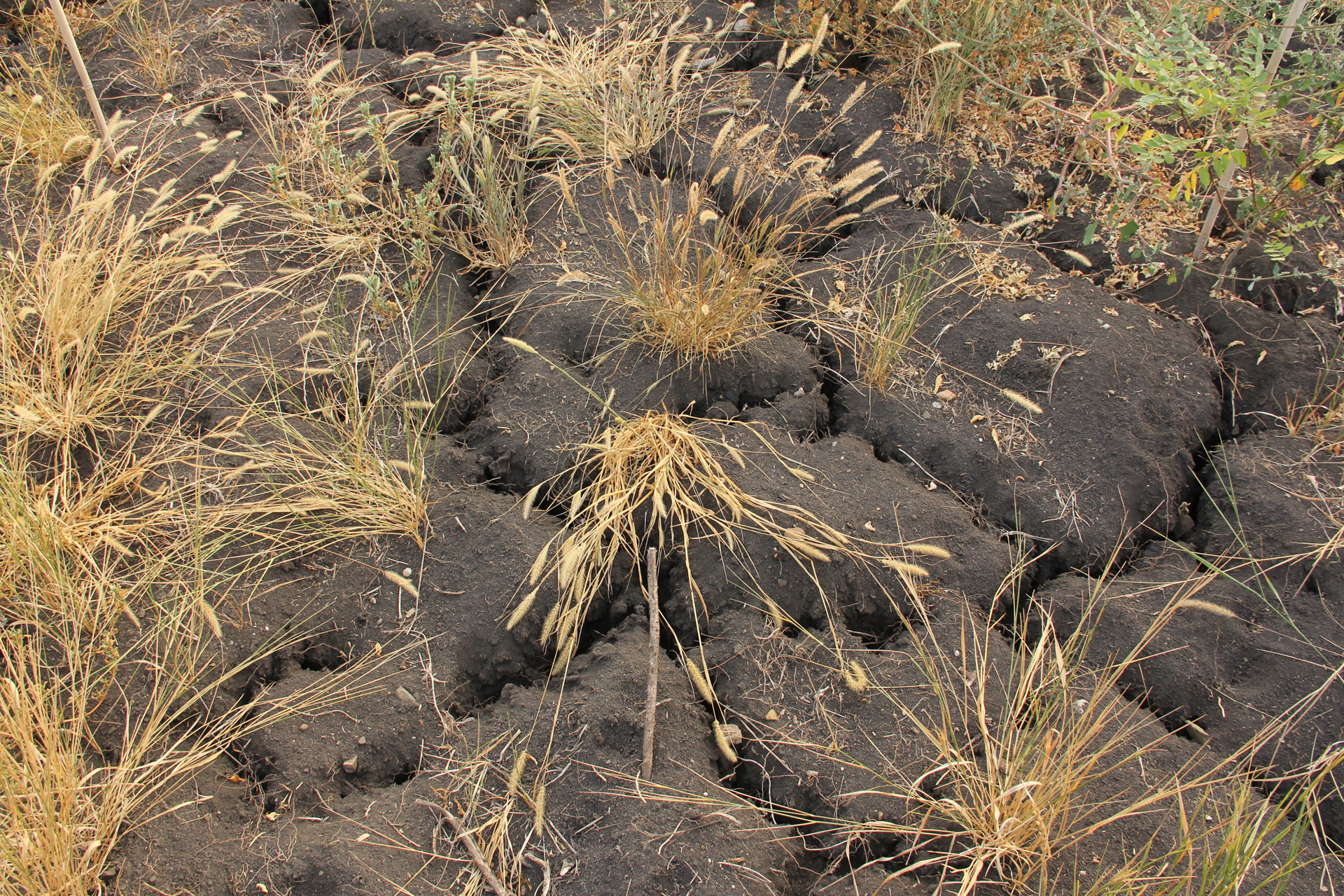
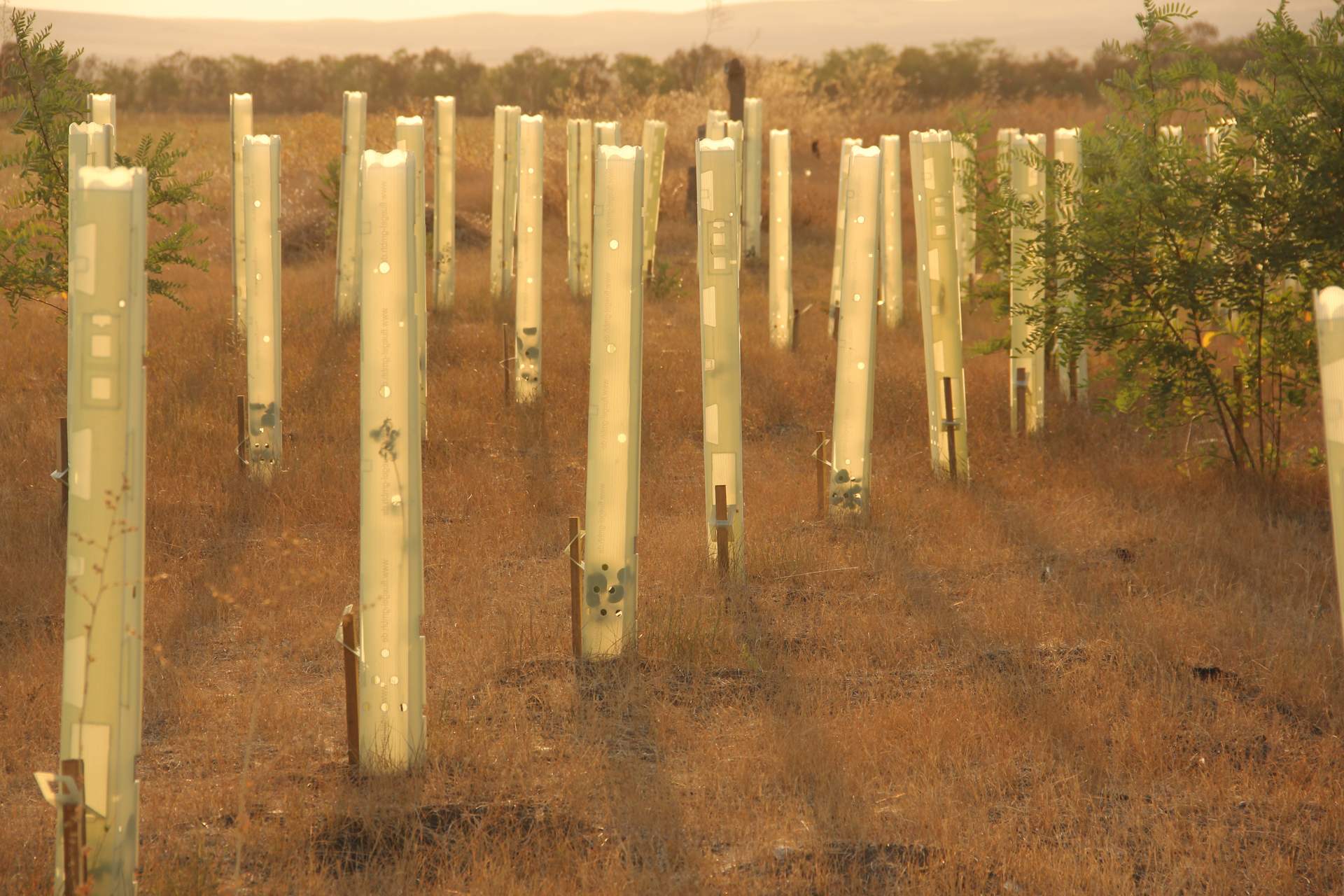
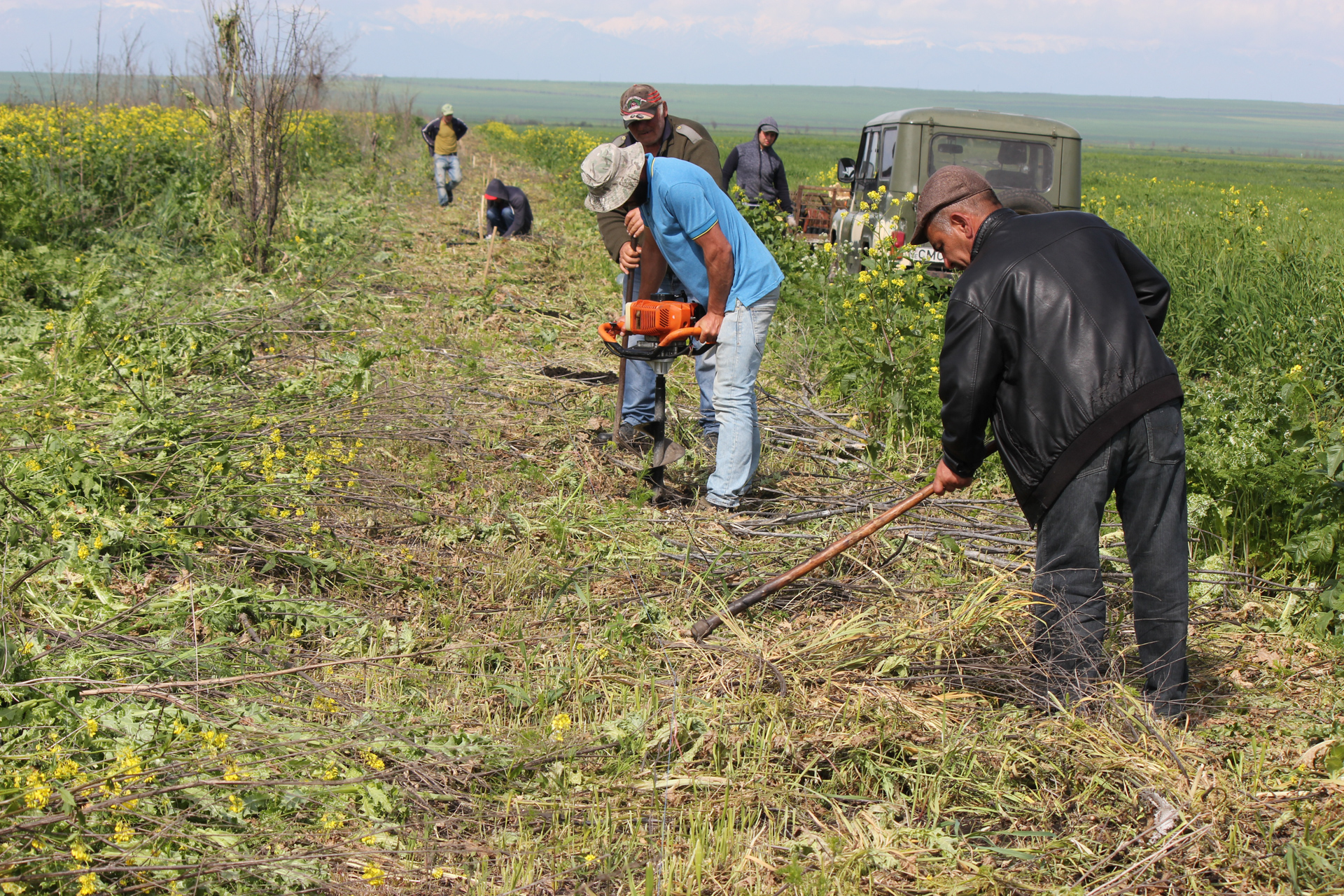
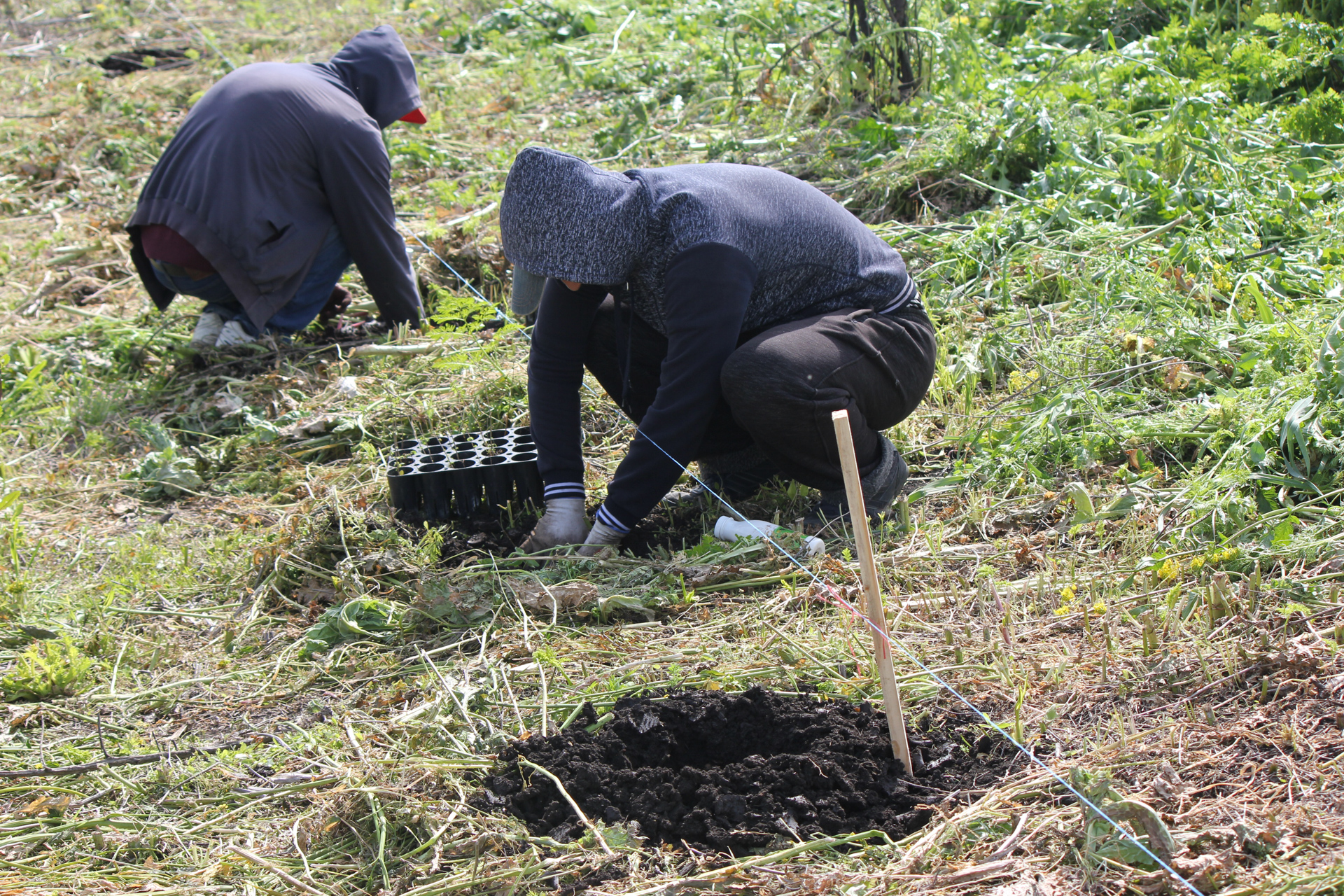
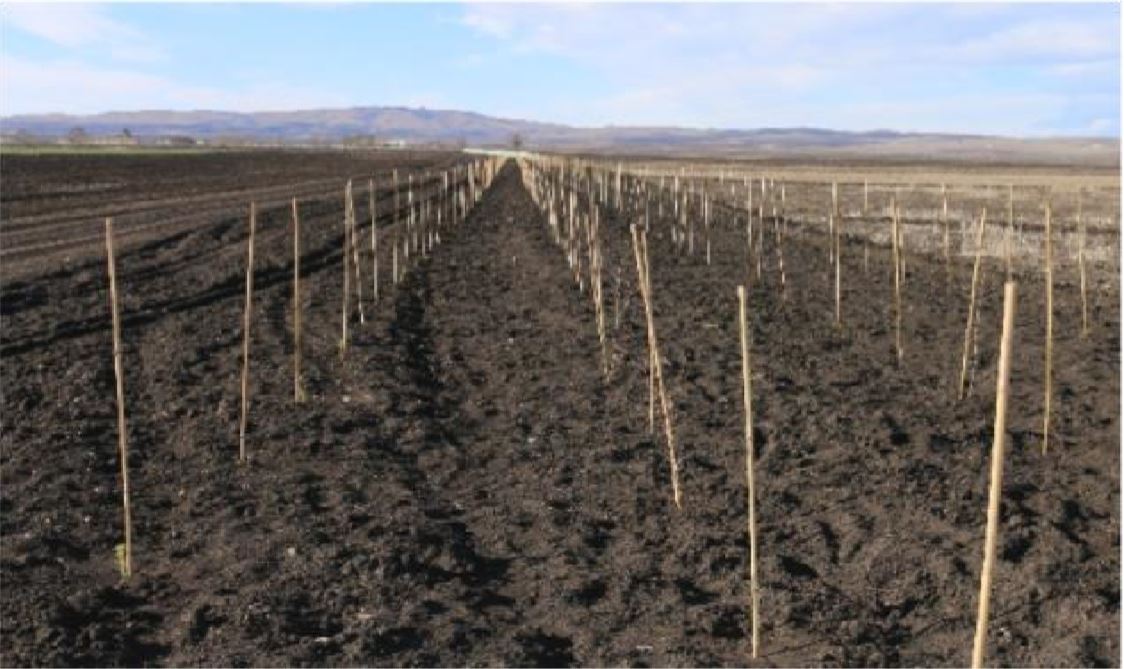
The pilot site of the project "Applying Landscape and Sustainable Land Management (L-SLM) for Mitigating Land Degradation and Contributing to Poverty Reduction in Rural Areas", implemented by the Regional Environment Centre for the Caucasus, is six km long and located on the main road on state-owned land. Before planting the seedlings, the vegetation (grass and herbs) was cut and removed. No ploughing was done. During the implementation in 2018, the design of the site was changed to a 6 km long U-shaped form with three 10 m wide segments of windbreaks. The total area of the pilot site is 6 ha, but since there were already intact hedges in some parts, the total area where windbreaks were either newly planted or rehabilitated is 3 ha. Each windbreak consisted of four lines of tree seedlings of different species in two meters distance to each other (inter-row spacing) and 2 m distance between the seedlings within a row (intra-row spacing). First, holes were dug (30 cm diameter, 40 cm deep), then water accumulation granulate was added to keep the water better, then the seedlings of 10-40 cm height and 2-3 years old depending on species were inserted. No compost or fertiliser was used. The seedlings were protected by plastic tubes from the cold and dry winter season. Every 2nd seedling was marked with a wooden pole to distinguish them from weeds and to control the survival rate. If the survival rate falls below 50%, the trees should be replaced. After the planting of the seedling, the herbs and grass were cut again. Further cuttings took place several times to avoid shading and competition.
Maintenance
Besides cutting of weeds for 2 times in the main growing season (Mai-July) regular watering was applied. Young seedlings should be watered 2-4 times per year (first 2 years) – about 15-20l per tree. After 2 years the root system should be established in such a way that it can take care of itself. The implementation area was not fenced, but there is no pastureland around and pressure by browsing is low.
The Regional Environment Centre for the Caucasus (REC) in cooperation with GIZ has conducted a cost-benefit analysis to estimate the value of protecting remaining windbreaks, the economic impact of banning crop residue burning and the benefits of straw as a fertilizer. The survey data shows that a ban on crop residue burning will help to protect the existing windbreaks. Consequently, shredding of straw during the harvest and subsequent incorporation of straw into the soil builds up soil organic matter and helps to retain the moisture in the ground. Unclear ownership and institutional responsibility are the most relevant constraints for sustainable windbreaks management as a measure. At the political level, issues were noted, and steps were taken: A working group under the National Forest Programme selected windbreaks restoration and protection as their key topics. The Ministry of Environmental Protection and Agriculture with the support from REC and GIZ developed a policy for rehabilitation and protection of windbreaks. Based on this, a new law on windbreaks was initiated which will clarify the situation by ascribing clear responsibilities on windbreak maintenance and management. This law is still at the stage of preparation in the Agrarian Committee.
Photos of the Technology
- 📍 Dedoplistskaro, Shiraki Valley
- 📷 Hanns Kirchmeir
- 📍 Dedoplistskaro, Shiraki Valley
- 📷 Hanns Kirchmeir
- 📍 Dedoplistskaro, Shiraki Valley
- 📷 Hanns Kirchmeir
- 📍 Dedoplistskaro, Shiraki Valley
- 📷 Hanns Kirchmeir
- 📍 Dedoplistskaro, Shiraki Valley
- 📷 Hanns Kirchmeir
- 📍 Dedoplistskaro, Shiraki Valley
- 📷 Hanns Kirchmeir
- 📍 Dedoplistskaro, Shiraki Valley
- 📷 Hanns Kirchmeir
- 📍 Dedoplistskaro, Shiraki Valley
- 📷 Amiran Kodiashvili
- 📍 Dedoplistskaro, Shiraki Valley
- 📷 Amiran Kodiashvili
- 📍 Dedoplistskaro