
Cultivation of local juniper species for rehabilitation of degrading woodland pastures
Type: Technologies
Creation: 2019-01-03 11:56 Updated: 2019-01-31 16:52
Compilers: Stefan Michel
Reviewers: Umed Vahobov
Country/ region/ locations where the Technology has been applied and which are covered by this assessment
- Country: Tajikistan
- Region/ State/ Province: Sughd
- Further specification of location (e.g. municipality, town, etc.), if relevant: Shahriston district; Shahriston Forestry Enterprise
- Map: View Map
Description of the SLM Technology
Short description of the Technology
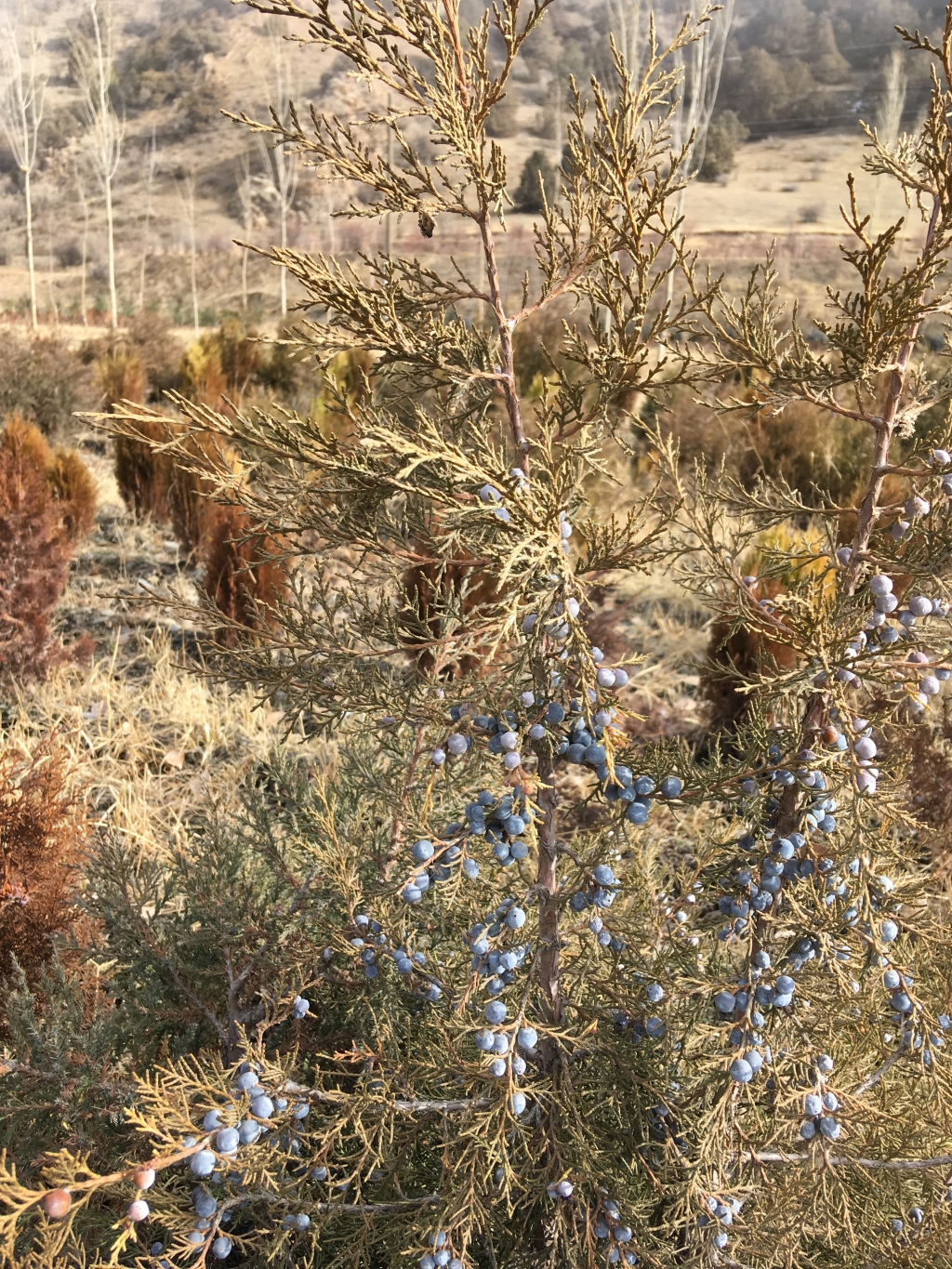
The local species of juniper trees (Juniperus seravschanica, Juniperus turkestanica and Juniperus semiglobosa) are rarely rejuvenating under conditions of intensive grazing and are difficult to propagate in nurseries. The technology describes the propagation of these important trees from locally collected seeds and their cultivation.
Detailed description of the Technology
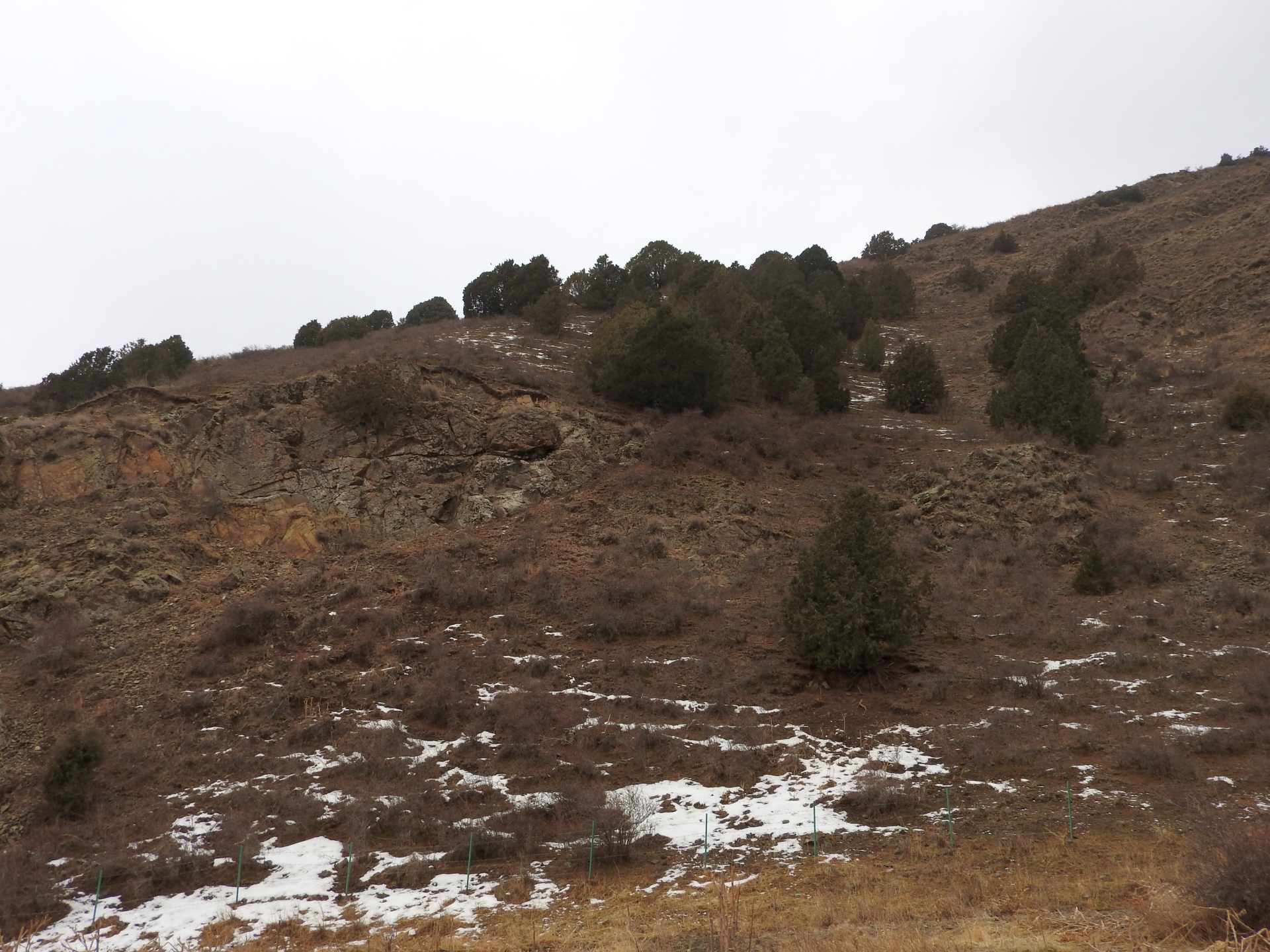
The technology is used to produce seedlings of juniper trees in the forestry nursery for further replanting in the natural juniper woodlands of the local forestry enterprise. Juniper woodlands are important ecosystems of the mountains of Central Asia, which are typically used for livestock grazing. The tree cover fulfills important functions for the maintenance of ecosystem services – local microclimate, regulation of water infiltration and surface runoff, biodiversity, esthetic value and recreation, fuelwood etc. The local juniper species rarely rejuvenate naturally. Factors hampering natural rejuvenation include intensive grazing, competition by other plant species and weather conditions. Loss of old juniper trees due to natural losses, damage and cutting combined with lacking rejuvenation causes the degradation and loss of juniper stands. Forestry enterprises in Central Asia often in such situations instead of the difficult to cultivate and slowly growing native juniper often plant non-native arborvitae Thuja spec. These non-native species do not provide the natural ecosystem functions of native juniper and are less adapted to the local site conditions.
The purpose of the described technology is therefore the provision of planting material for the rehabilitation of degraded juniper woodland pastures with native trees.
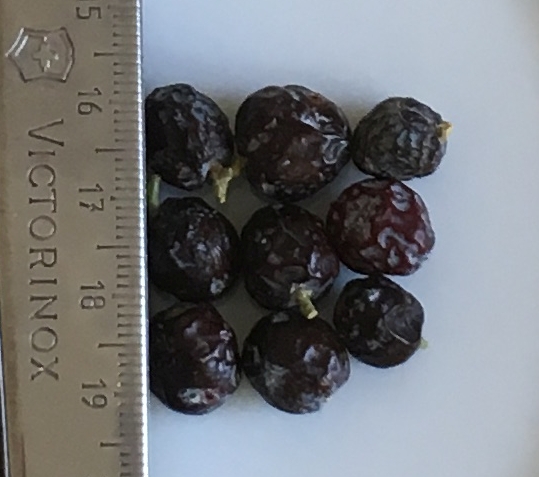
Forestry workers collect ripe juniper fruits from their natural stands during late fall (November – December). The fruits are than mixed with sand and stored in a cold place until spring, or they are further processed to accelerate germination.
In the first case in spring the fruits are crushed on a clean concrete surface either by trampling with boots or by using a vehicle. Afterwards the crushed fruits are washed and air-dried. With the help of wind and a sieve the dried seeds are cleaned from other parts of the fruits. The seeds are then stored under a 5 cm layer of sand until fall and sown in fall (October-November)
In the second case the fruits are initially for one month stored in a barrel with water. Then the fruits are crushed and cleaned as described above. The cleaned seeding material will be stored in a pit, covered with moist sand mixed with some dung from horses or cattle. After one month the seeds are sown into the nursery.
In the area of the forestry enterprise brown bears feed on juniper fruits. In the bear feces many juniper seeds can be found, sometimes directly germinating. This “natural stratification” is sometimes used by forestry workers if they find substantial amounts of bear feces consisting of juniper fruits.
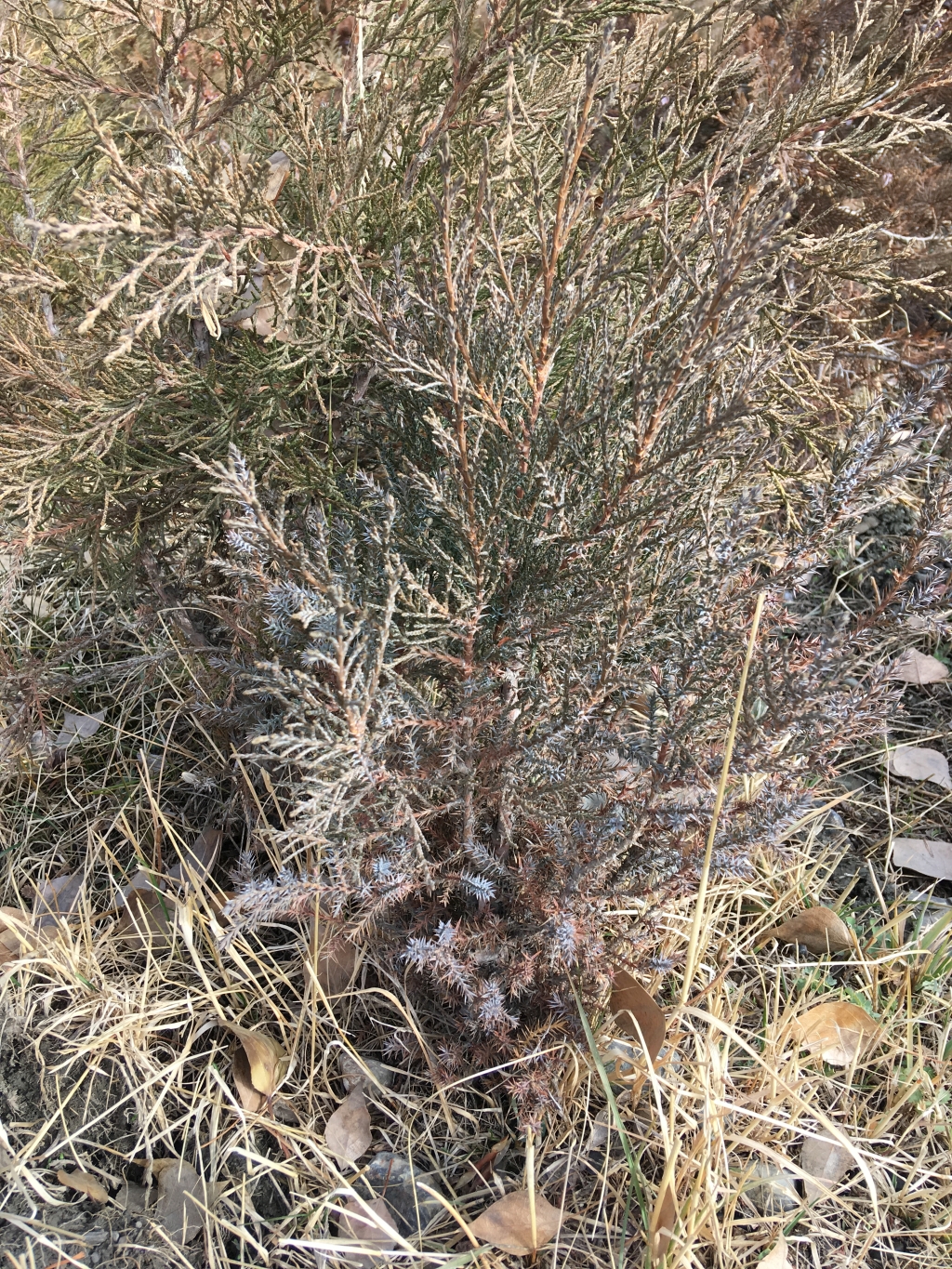
The seeds are sown directly into the soil in the nursery. Each, germination rate and survival are 90%. After five years the seedlings have grown to a height of about 20-30 cm, their roots reach 20 cm deep into the soil and they are ready for replanting.
The seedlings are carefully dug out, deep enough not to damage the root system and together with the earth covering the roots. They are wrapped in plastic bags for keeping the earth cover of the roots during transportation. During the planting the seedlings are put into the tree pits together with the soil from the nursery still covering the root system. The planted seedlings are watered.
After planting the seedlings are five years cared for, including weeding and if necessary watering either from a canal, if available, or with barrels.
The use of containers for seeding and replanting has not yet been tried. It may protect the root system during replanting and reduce the amount of soil to be used for this purpose. On the other hand the technology without containers is not dependent on their availability, no garbage in form of plastic containers is left in the tree pits and the larger amount of soil from the nursery may ease establishment of the seedlings at the woodland rehabilitation site.
Photos of the Technology
- 📍 Shahriston Forestry Enterprise
- 📷 Stefan Michel
- 📍 Shahriston Forestry Enterprise
- 📷 Stefan Michel
- 📍 Shahriston Forestry Enterprise
- 📷 Stefan Michel
- 📍 Shahriston Forestry Enterprise - Shamoli
- 📷 Stefan Michel