
The application of marl to improve acid soils
Type: Technologies
Creation: 2019-01-12 08:26 Updated: 2021-01-15 10:30
Compilers: Bunjirtluk Jintaridth
Reviewers: Rima Mekdaschi Studer, Pitayakon Limtong, William Critchley
Country/ region/ locations where the Technology has been applied and which are covered by this assessment
- Country: Thailand
- Region/ State/ Province: Patumthani
- Further specification of location (e.g. municipality, town, etc.), if relevant: Thung Rangsit area in the past was planted mainly to rice. Previously, the area of Moo 8, Moo 9, Salakru sub-district, Nong Suea district was Ratchaphatsadu land (state property) whereby the government allocated the land for not more than 4 hectares per farmer in 1969.
- Map: View Map
Description of the SLM Technology
Short description of the Technology
Acid soils are problematic, and the use of alkaline materials such as marl - agricultural lime that is excavated - helps to reduce the acidity and make the soil more productive.
Detailed description of the Technology
Adding marl to soils helps to manage acidity. Acidity is a problem in soil caused by iron sulphate that becomes sulfuric acid (H2SO4) upon oxidizing when exposed to the air. Therefore, it requires agricultural lime that are hydroxide, oxide compounds or carbonate with calcium or magnesium as the main component to neutralize or partly reduce the acidity. Agricultural lime is available mainly in the forms of slaked lime, marl, or ground limestone.
Acid sulfate soils are formed from the sediments of seawater or brackish water containing pyrite that changes to sulfuric acid upon oxidizing and accumulate in the soil. Acid sulfate soils are highly acidic, with low fertility. They are severely deficient in nutrients essential for plant growth such as phosphorus and nitrogen. Moreover, there are certain elements that are harmful to the plant growth such as iron, aluminium, manganese. Acid sulfate soils in Thailand occur along the East Coast, the West Coast and in the east part of the southern peninsula. Land Development Department reported that 35% of areas with acid sulfate soils are medium to severely acidic, limiting rice yields to between 625 and 1,560 kg/ha. When the Land Development Department started in 1963, it put the Acid Sulfate Soils Improvement as one of its prominent programs - and work still goes on up to now. The general practice has been to furnish farmers in the affected area with 1 ton of marl (CaCO3 deposit, excavated from the marl pit in Saraburi Province) per rai ( 6.25 rai = one ha). The objectives of using this technology are to (1) improve soils of acid property as soils are the basic resource for plant production, and (2) to increase the production of rice. Before applying marl, the land should be well levelled so that marl can react with acid soil efficiently. Tractors can enter and drop marl sacks over the paddy area, which is then spread by hand. The rate of marl to apply is around 6-12 tons/ha, depending on the soil pH.
Photos of the Technology
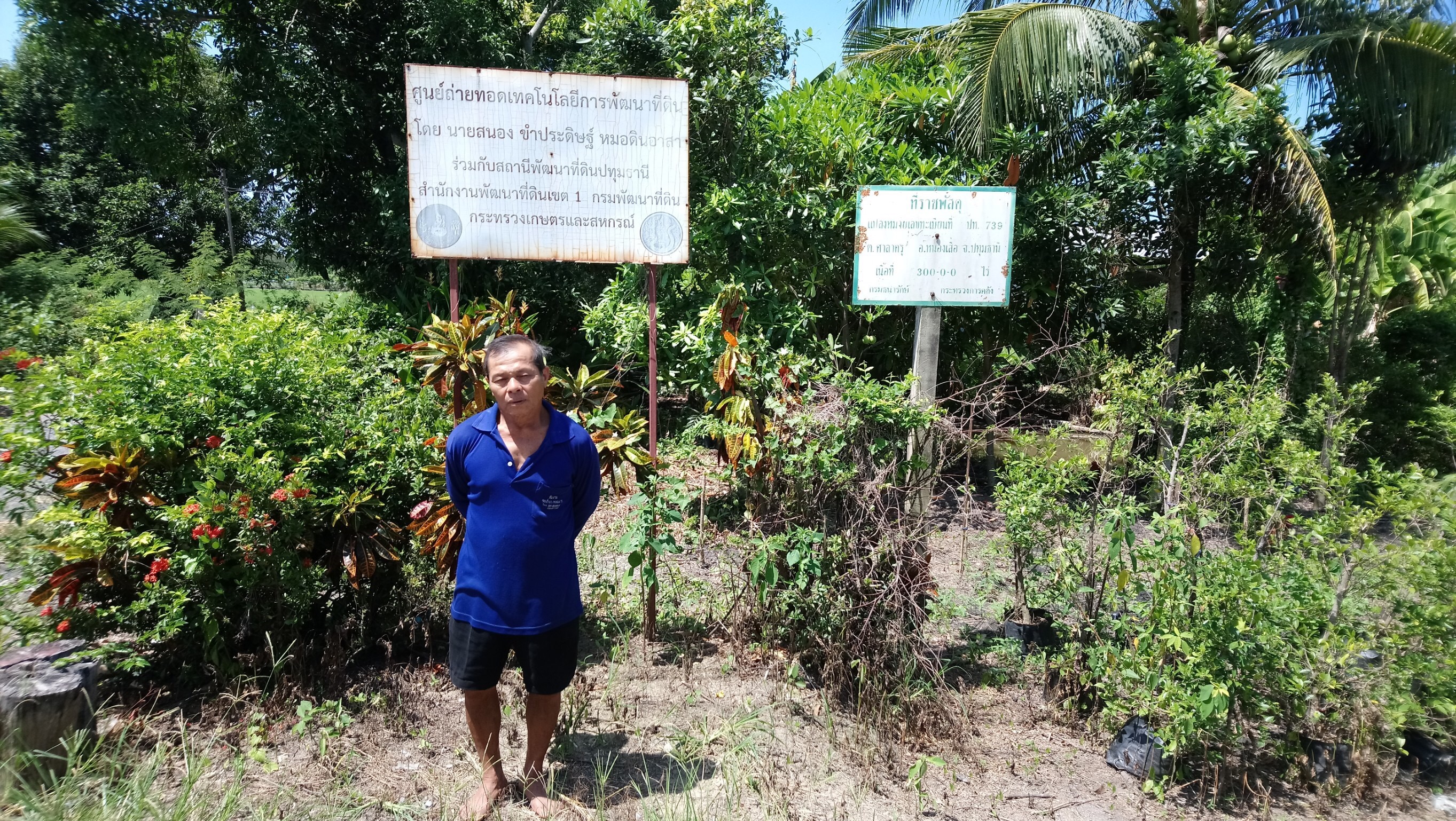
- 📍 Pathum Thani province
- 🗓 2018-07-12
- 📷 Ms.Kanjaraj Lachidavong
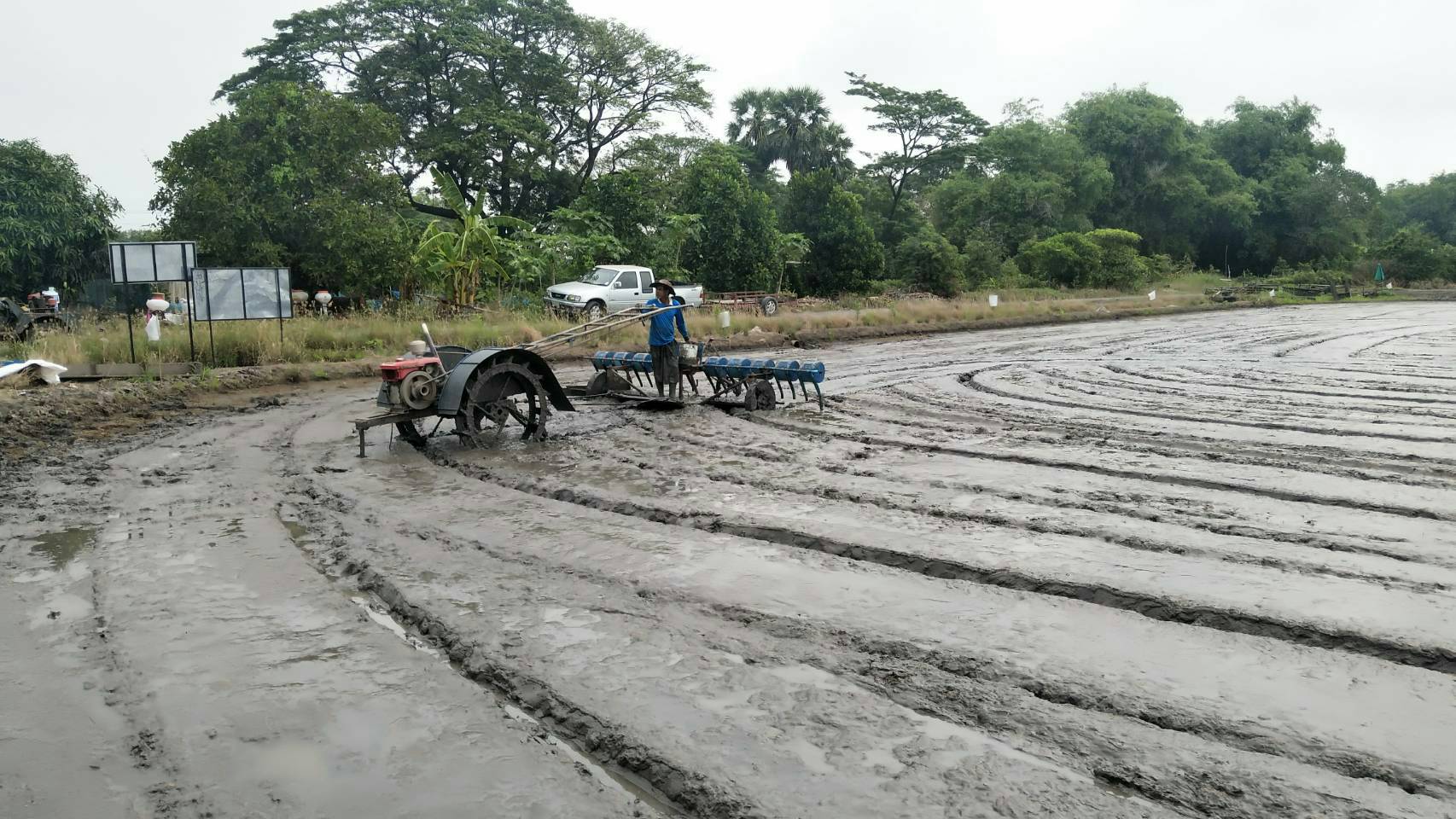
- 📍 Thung Rangsit area in the past was planted mainly to rice. At Moo 8-9, Salakru Sub-district, Nong Suea District, Patumthani province, Central Thailand, which is state property, the government in 1969 had allocated the land to the farmers, 25 rai or 4 ha for each family.
- 📷 Ms. Kanjaraj Lachidavong