
Creating green shelter-belt through Jhau (Casuarina equisetifolia) plantation in coastal area
Type: Technologies
Creation: 2019-02-06 06:49 Updated: 2020-04-09 15:14
Compilers: Fazlay Arafat
Reviewers: Nicole Harari, Rima Mekdaschi Studer, Ursula Gaemperli
Country/ region/ locations where the Technology has been applied and which are covered by this assessment
- Country: Bangladesh
- Region/ State/ Province: Cox's Bazar, Chittagong
- Further specification of location (e.g. municipality, town, etc.), if relevant: Hiimchari
- Map: View Map
Description of the SLM Technology
Short description of the Technology
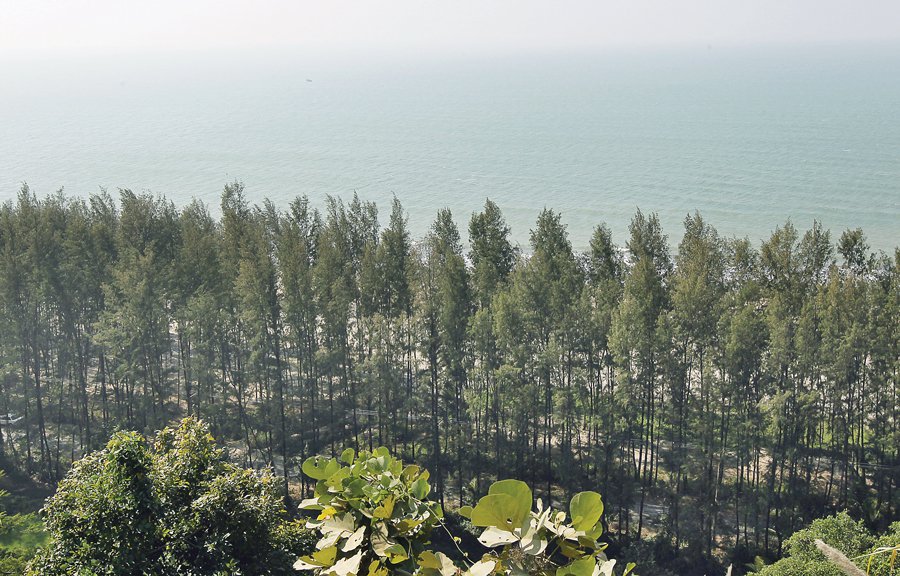
Creation of green shelter-belt along the coast line through plantation of Jhau (Casuarina equisetifolia) to reduce vulnerabilities and hazards of extreme weather events like cyclones.
Detailed description of the Technology
The coastal zone of Bangladesh is extremely vulnerable to the impact of climate change. The coastal populations are mostly poor and some of them are landless with livelihoods connected to agriculture, fishing, shrimp farming, salt farming etc. Past devastating cyclones have killed thousands of people and destroyed homes and infrastructure. Creation of green shelter-belts, including mangrove and non-mangrove plantations, reduces the vulnerabilities and hazards related to extreme weather events like cyclones and storm surges. Afforestation along coastal areas is usually cheaper and ecologically more beneficial than other measures and serves to conserve biodiversity and stabilize newly accreted land. As a general guideline, a shelter-belt protects an area over a distance up to its own height on the windward side and up to 10 times its height on the leeward side, depending on the strength of the wind.
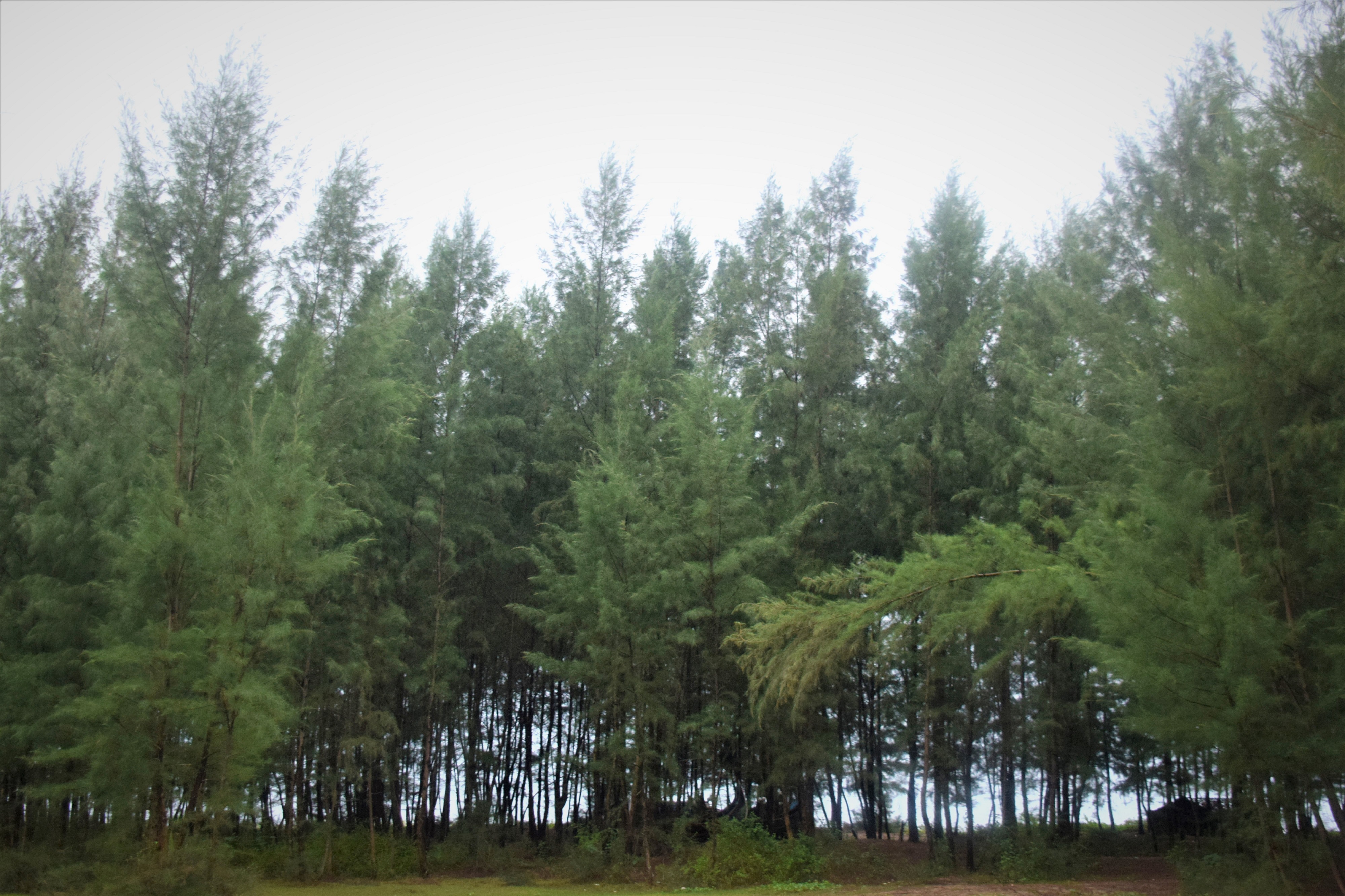
The current sustainable land management practice takes particular account of the Jhau plantation along the coastline of Himchari National Park of Cox's Bazar. Jhau (Casuarina equisetifolia) is one of the most promising non-mangrove species for creating shelter-belts and the Bangladesh Forest Department has been planting them in raised coastal lands and embankments since the 1990s. Casuarina equisetifolia is an evergreen tree with a finely branched, feathery crown and usually growing around 35 meters tall. It is fast growing, salt tolerant, grows in sand and can also tolerate occasional inundation by sea water at extremely high tides. Many areas where the species naturally occurs are susceptible to tropical cyclones, and its general tolerance to strong winds has encouraged its use in protective planting. The most common uses of C. equisetifolia are for coastal sand dune stabilization, shelter-belts, land reclamation and erosion control. The wood is hard and used for house posts, rafters, electric poles, tool handles, etc. It has been called ‘the best firewood in the world’ and also produces high-quality charcoal.
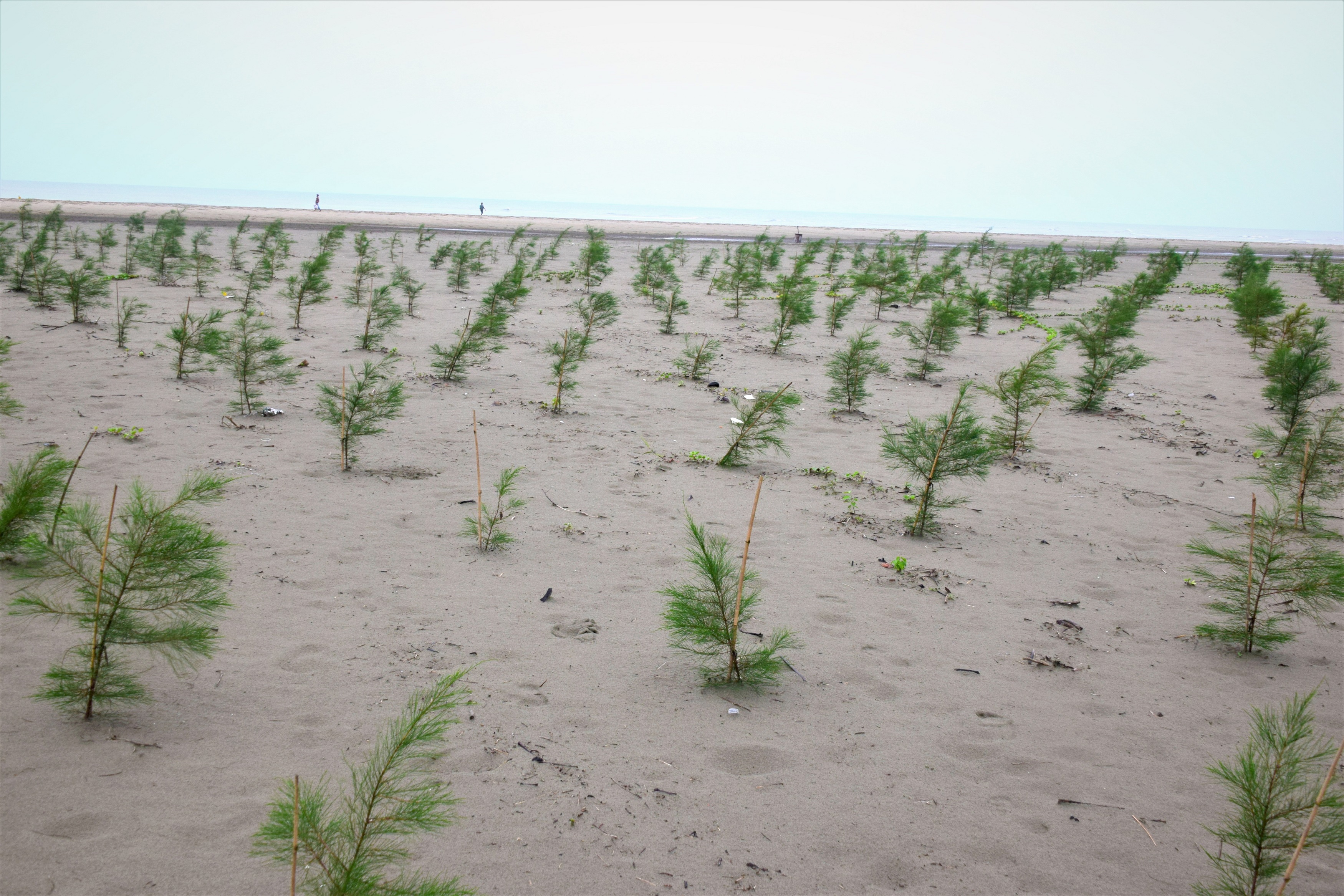
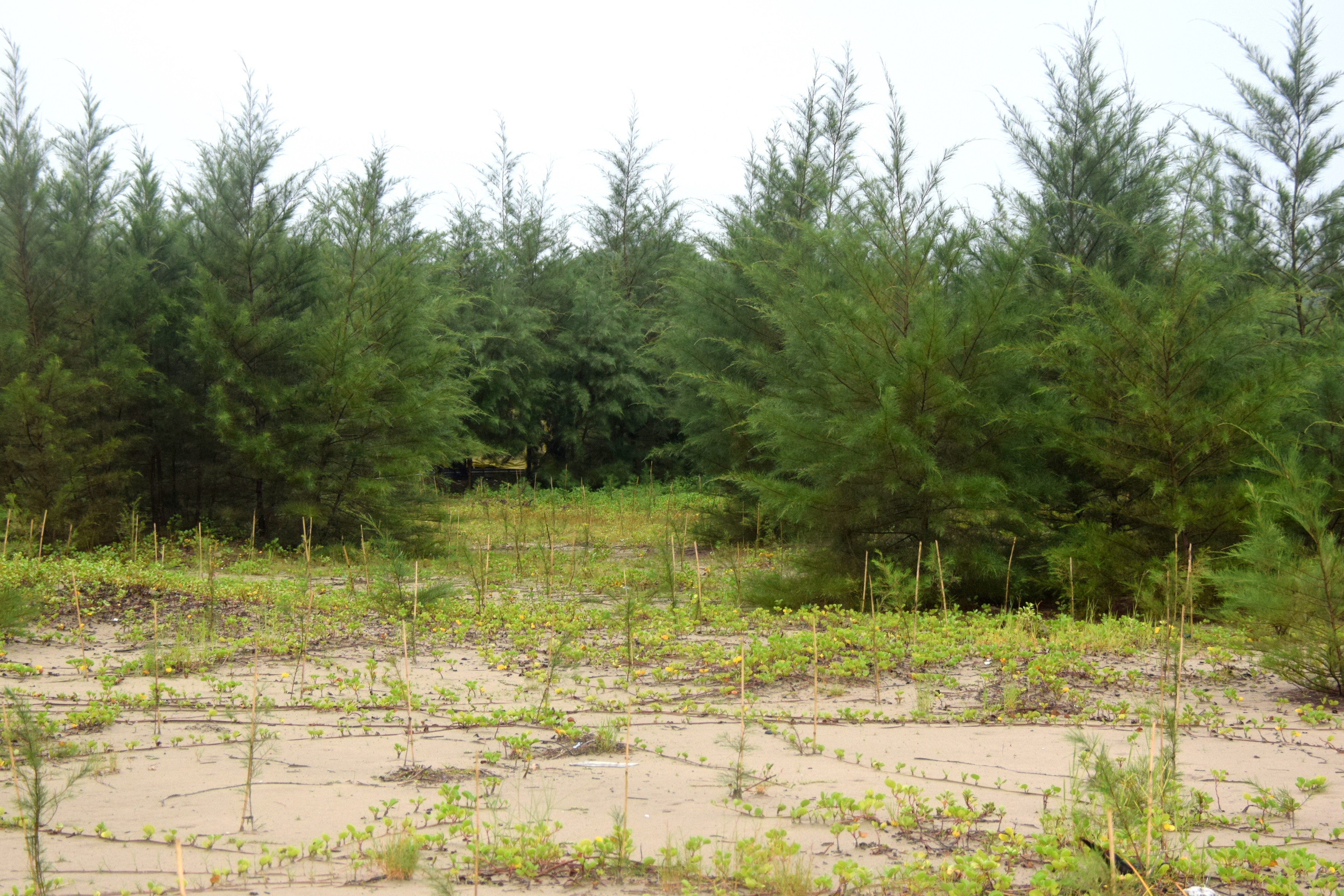
Coastal plantation with Jhau is a soft adaptation measure that has significantly contributed to reduce the loss of lives and properties against tropical cyclones and storm surges in the coastal areas. This species can be planted in coastline, roadside, embankment and marginal lands for creating dense vegetation, which can function as windbreak and combat tidal surges. The spacing used in this shelter-belt plantation along the coastline of Himchari National Park is 2m x 2m and 2500 trees are planted per hectare area. The examined shelter-belt plantations are approximately 1.5km long and 150m wide. The major activities required to establish the plantation were: nursery development (seed collection, site clearing, leveling and fencing, drainage arrangement, bed preparation, making overhead shed, poly-bag preparation, potting seeds, manuring, irrigation, weed control), site preparation (prepare plantation site map with GPS, weeding, marking pit location with sticks, carrying of seedlings to the site) and tree planting (digging of planting holes, tying up of plants with stick for support, application of fertilizers and compost). Weeding and vacancy filling were the maintenance activities which required up to three years after plantation establishment. All those activities carried out by the forest department with the financial help from world bank project fund. The local communities were involved as paid labour for nursery development, plantation and maintenance activities. Local people can only collect fuel wood from the plantation as its soul purpose is to act as shelter-belt from cyclones and tidal surge.
As the plantation site is on the coastline and beside the Himchari National Park, it turns to a tourist spot now for its scenic beauty. Local people involved with various sorts of tourist oriented small-scale business here e.g. parasailing, boating, restaurant, cottage industries, shops, etc. Though the initial establishment of Jhau stand need intensive care, it is functioning as a good wind breaker and combating with tidal surge along with creating alternate livelihood opportunities for local people.
Photos of the Technology
- 📍 Himchari, Cox's Bazar
- 📷 Md. Fazlay Arafat
- 📍 Himchari, Cox's Bazar
- 📷 Md. Fazlay Arafat
- 📍 Himchari, Cox's Bazar
- 📷 Md. Fazlay Arafat
- 📍 Cox's Bazar