
Assisted Natural Regeneration
Type: Technologies
Creation: 2019-02-18 12:03 Updated: 2020-04-22 14:16
Compilers: Fazlay Arafat
Reviewers: Nicole Harari, Rima Mekdaschi Studer, Ursula Gaemperli
Country/ region/ locations where the Technology has been applied and which are covered by this assessment
- Country: Bangladesh
- Region/ State/ Province: Chittagong division
- Further specification of location (e.g. municipality, town, etc.), if relevant: Medakacchapia National Park under Cox's Bazar North Forest division
- Map: View Map
Description of the SLM Technology
Short description of the Technology
Assisted natural regeneration (ANR) is a simple, low-cost forest restoration method that can effectively convert deforested lands to more productive forests.
Detailed description of the Technology
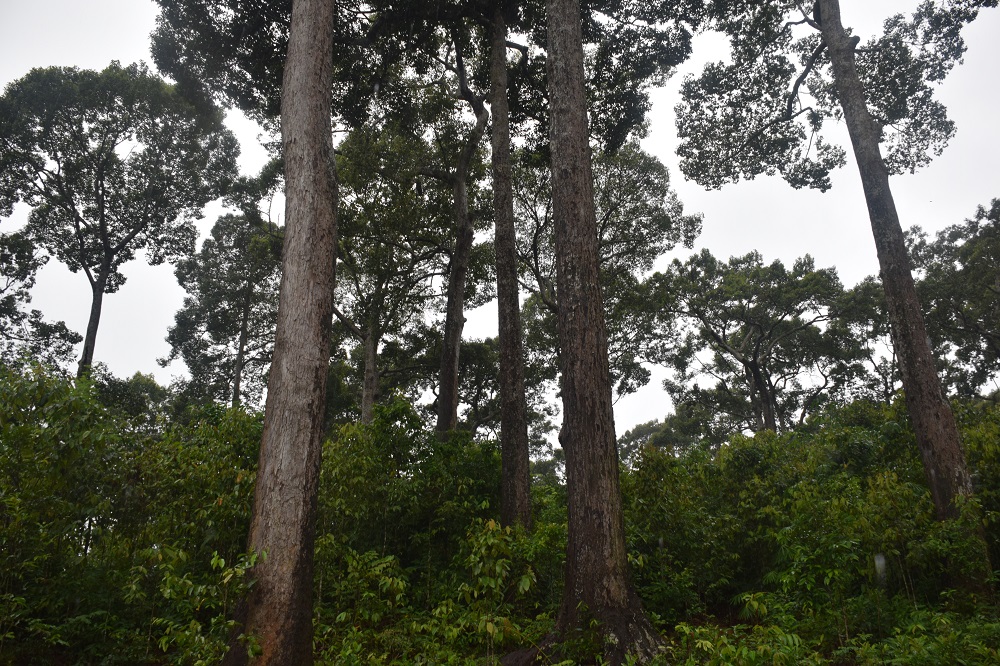
Medhakachapia National Park (MKNP) is nationally known for protecting the most extensive stands of mature critically endangered Garjan (Dipterocarpus turbinatus) trees in Bangladesh. Other native trees present in MKNP include Telsur Hopea odorata, Boilam Anisoptera scaphula, Gamar Gmelina arborea and Chapalish Artocarpus chaplasha. MKNP is tropical semi-evergreen forest in the low hills of the Fulchari Forest Range and covers 396 hectares. The park is located in Chakaria Upazila, not far from Cox’s Bazar in the southeast part of the country. Originally, the entire park area was densely covered with Garjan forest, but now there are about 9000 mature Garjan trees as many parts have been encroached upon with agriculture. MKNP is bordered by 13 villages where most of the people depend directly or indirectly upon the forest. Encroachment by settlements and agriculture has been associated with illegal tree cutting, hunting, and collection of fuel wood, bamboo and cane and other forest products. These activities are encouraged by sawmills in the vicinity and unemployment. Due to reduced canopy coverage, the forest soils have been exposed degraded. In order to restore forest health, the Bangladesh Forest Department introduced Assisted Natural Regeneration (ANR) practice. The access for public recreation and education and research is allowed inside national park. However, the collection of fuel woods and non-timber forest product from national park area by the local communities is a common scenario here.
ANR aims to accelerate, rather than replace, natural succession processes by removing or reducing barriers to natural forest regeneration such as competition with weedy species and recurring disturbances (e.g., fuel wood collection, grazing, fire and wood harvesting). Compared to conventional reforestation methods, which involve planting tree seedlings, ANR offers the significant advantage avoiding costs associated with propagating, raising, and planting seedlings. ANR is most effectively utilized at the landscape level in restoring the forest protective functions, such as soil protection, and is most suitable for restoring areas where some level of natural succession is already in progress. ANR offers distinct advantages over other forest restoration methods but also has some limitations. ANR is much cheaper to implement and can be applied over larger areas than other restoration planting approaches, but may be less effective in enhancing floristic diversity at the initial stages. Some of ANR’s disadvantages can be overcome by enrichment planting with desirable species. ANR aims to accelerate, rather than replace natural succession process by removing or reducing barriers to natural forest regeneration.
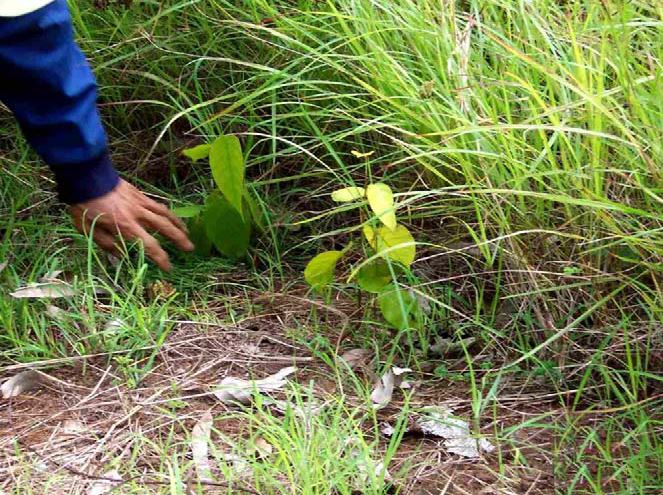
Soil degradation of MKNP has been greatly reduced through practicing ANR and co-management. In MKNP co-management was established on 2009 engaging local communities. As a part of co-management activities, the Forest Department (FD) formed a Community Patrolling Group (CPG) with 35 members from the local community to protect the Garjan trees and look after the whole forest along with forester officers. Under the support from Climate-Resilient Ecosystems and Livelihoods (CREL) project of USAID, the CPG along with FD intensively patrol the forest in rotating groups to ensure that no harm is done to the mature trees and natural seedlings. As a result, sufficient tree regeneration is now taking place and their growth is accelerating. Even where weeds dominate, seedlings of pioneer tree species are often found. The minimum required number of preexisting seedlings to implement ANR depends on the acceptable length of time for the forest to be restored and site-specific conditions that influence the rate of forest recovery. As a general reference, a density range of 200–800 seedlings/ha (>15 cm in height; counting clumps in 1 m2 as one seedling) has been suggested for ANR reforestation, and it has been estimated that at least 700 seedlings/ha are needed during the early treatment period in order to achieve canopy closure within three years. Although the forest restored through ANR in MKNP will have lower commercial value in terms of timber, it will support greater biodiversity and more effectively provide for the subsistence needs of the local people compared to commercial plantations.
Photos of the Technology
- 📍 Unknown
- 📷 Unknown
- 📍 Medakochhopia NationalPark
- 📷 Md. Fazlay Arafat