
Strip tillage wheat production in degraded terraces of High Barind Tract, Rajshahi
Type: Technologies
Creation: 2019-04-07 09:16 Updated: 2020-05-07 10:12
Compilers: Mutasim Billah
Reviewers: Nicole Harari, Rima Mekdaschi Studer, Ursula Gaemperli
Country/ region/ locations where the Technology has been applied and which are covered by this assessment
- Country: Bangladesh
- Region/ State/ Province: Rajshahi
- Further specification of location (e.g. municipality, town, etc.), if relevant: Paba
- Map: View Map
Description of the SLM Technology
Short description of the Technology
Strip tillage wheat cultivation is a climate-smart technology to save water and improve soil health
Detailed description of the Technology
The High Barind Tract (HBT) situated in north-western region of Bangladesh consisting Rajshahi, Chapai Nawabganj and Naogaon Districts where the underlying Madhupur clay soil has been uplifted and cut into by deep valleys. The topsoil of HBT is grey silt loam to silty clay loam, is strongly puddled and has a compact ploughpan at the base. Deep grey terrace soils and grey valley soil are the major components of the general soil types of this area.
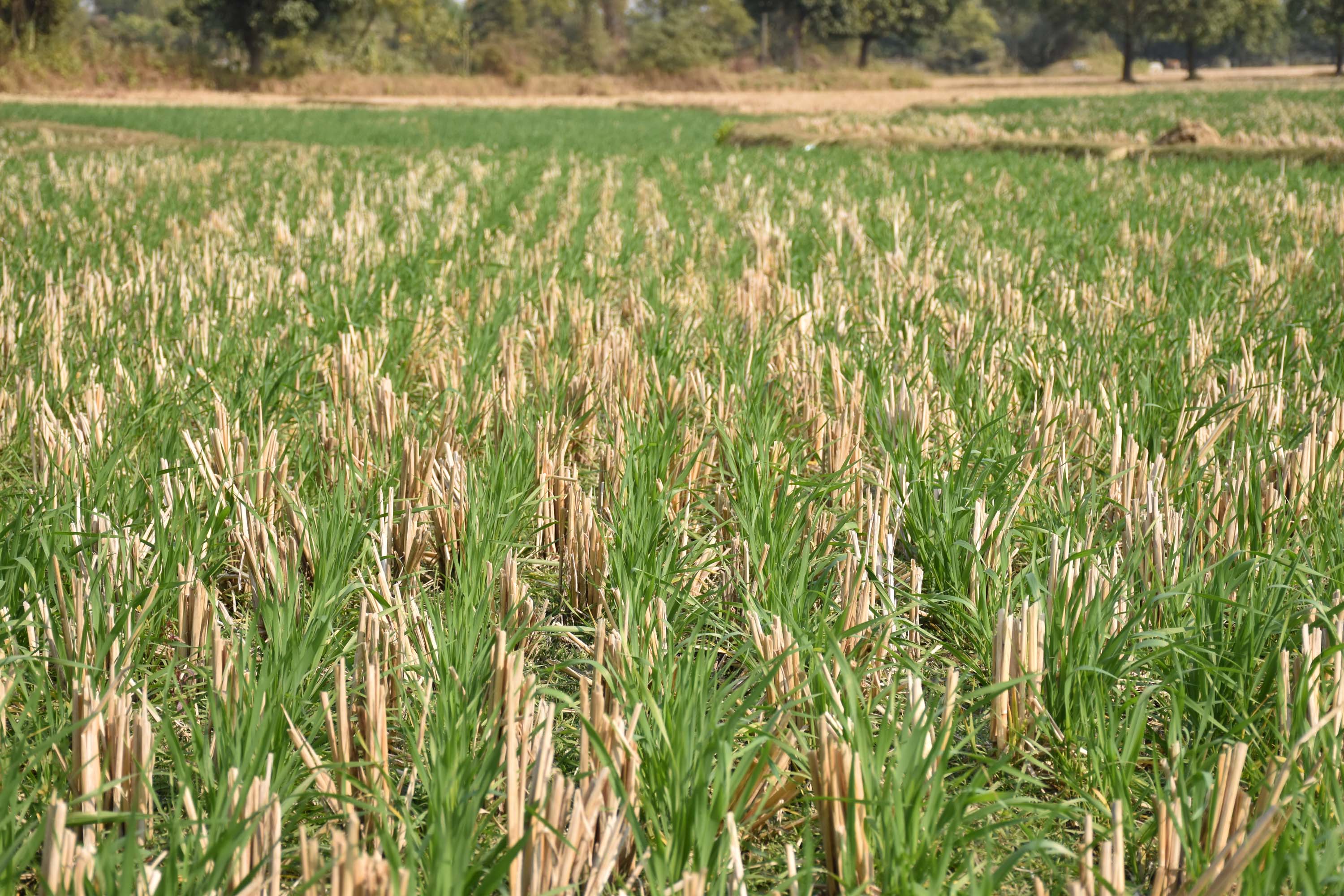
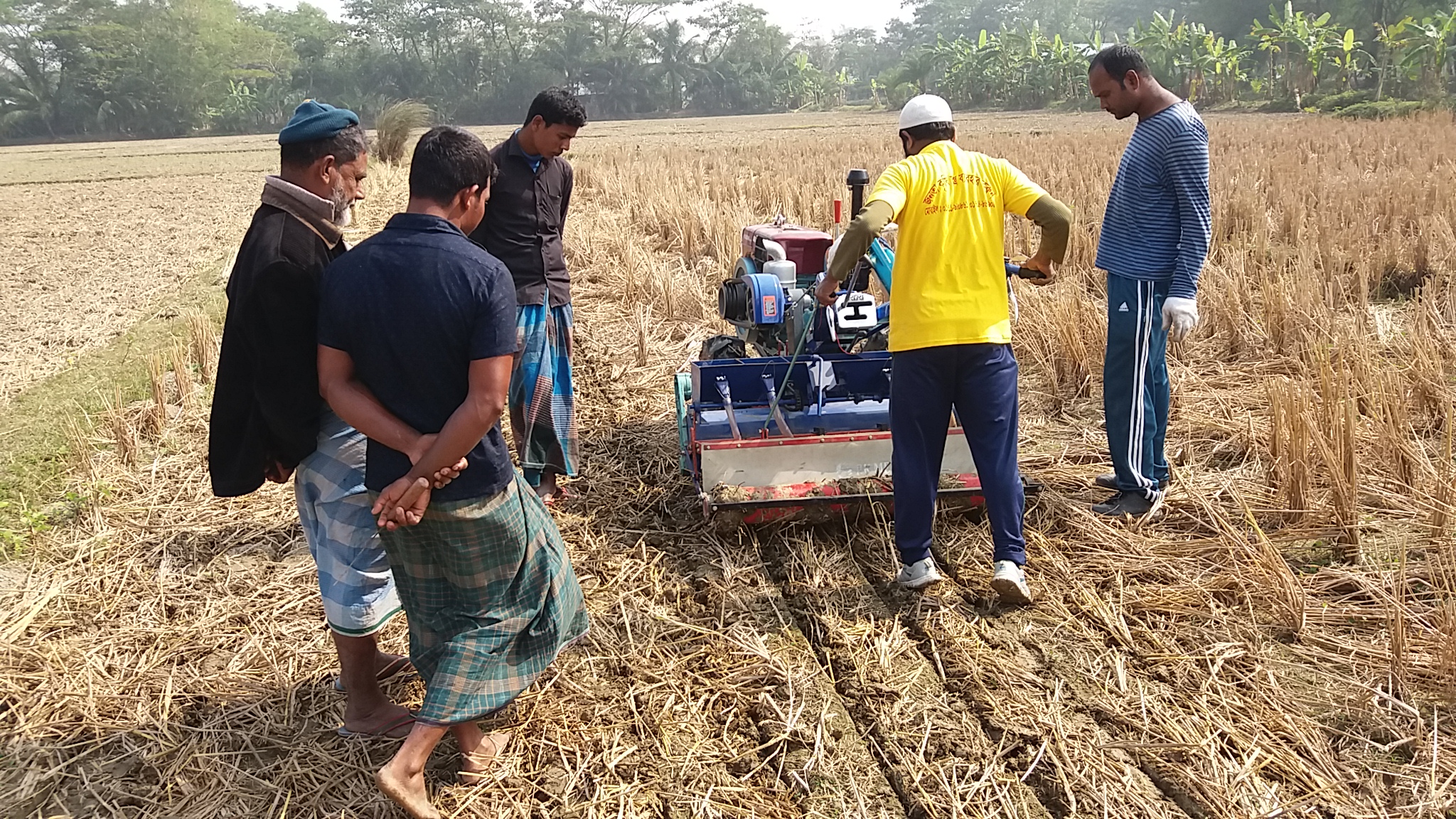
Strip tillage wheat cultivation is being adopted in farmers field on which wheat has been cultivated for decades. Bangladesh Agricultural Research Institute (BARI) developed this technology/innovation, and Department of Agricultural Extension (DAE) and International Maize and Wheat Improvement Center (CIMMYT) disseminated the technology also among farmers of Rajshahi region. In brief, strip tillage wheat is a water saving technology, and requires wheat to be planted in rows. Traditionally, farmers cultivated wheat using the broadcast method, after deep tilling the land 3-4 times and after flood irrigation. In this new method, farmers can use a strip tiller that sows seeds and fertilizer simultaneously immediately after T. Aman rice (Transplanted rice, Aman is the Kharif 2 season from June to November) harvesting. This implies that retained soil moisture can germinate the wheat seeds. Because the wheat seeds are sown in a row, sunlight and air penetrate very well; and weed infestation remains low because of minimum tillage. Farmers report that rodent infestation in strip tillage is lower than conventional broadcast cultivation.
As stated, a strip tiller is needed for this operation, and the machine is a modified version of traditional power tiller developed by BARI. The tiller has thin ploughs in parallel rows (four to a machine), and drops the fertilizer and seed – another wheel-like device presses the seed into the soil. The other parts of land remain unplowed that keep moisture and resist weeds to grow. Retention of rice crop residue increases soil organic matter which in turn increases the soil water retention/holding capacity and loosens the soil (for free drainage).
Overall, this water saving technology has increased livelihood options for tiller machine service providers, decreased on-farm input costs (e.g., irrigation, rodenticide), and increased wheat productivity (by improve weather – storm/wind – resistance of crops and reducing rodent infestation). Moreover, it produces quality wheat, increases the grain weight, and makes wheat easy to harvest. The yield of strip cultivated wheat is reported to be 1.25 times higher than conventional wheat.
Photos of the Technology
- 📍 Godagari, Rajshahi
- 🗓 2018-10-11
- 📷 Md. Shakhawat Hossain, PhD. Bangladesh Agricultural Research Institute (BARI), Rajshahi
- 📍 Godagari, Rajshshi
- 🗓 2016-05-11
- 📷 Md. Shakhawat Hossain, PhD. Bangladesh Agricultural Research Institute (BARI), Rajshahi