Recharge Ponds and Recharge Trenches
Type: Technologies
Creation: 2019-07-18 06:40 Updated: 2021-06-27 22:16
Compilers: Jaclyn Bandy
Reviewers: Hanspeter Liniger, Rima Mekdaschi Studer
Country/ region/ locations where the Technology has been applied and which are covered by this assessment
- Country: India
- Region/ State/ Province: Uttarakhand
- Further specification of location (e.g. municipality, town, etc.), if relevant: Nakina Village, Pithoragarh Bloc
- Map: View Map
Description of the SLM Technology
Short description of the Technology
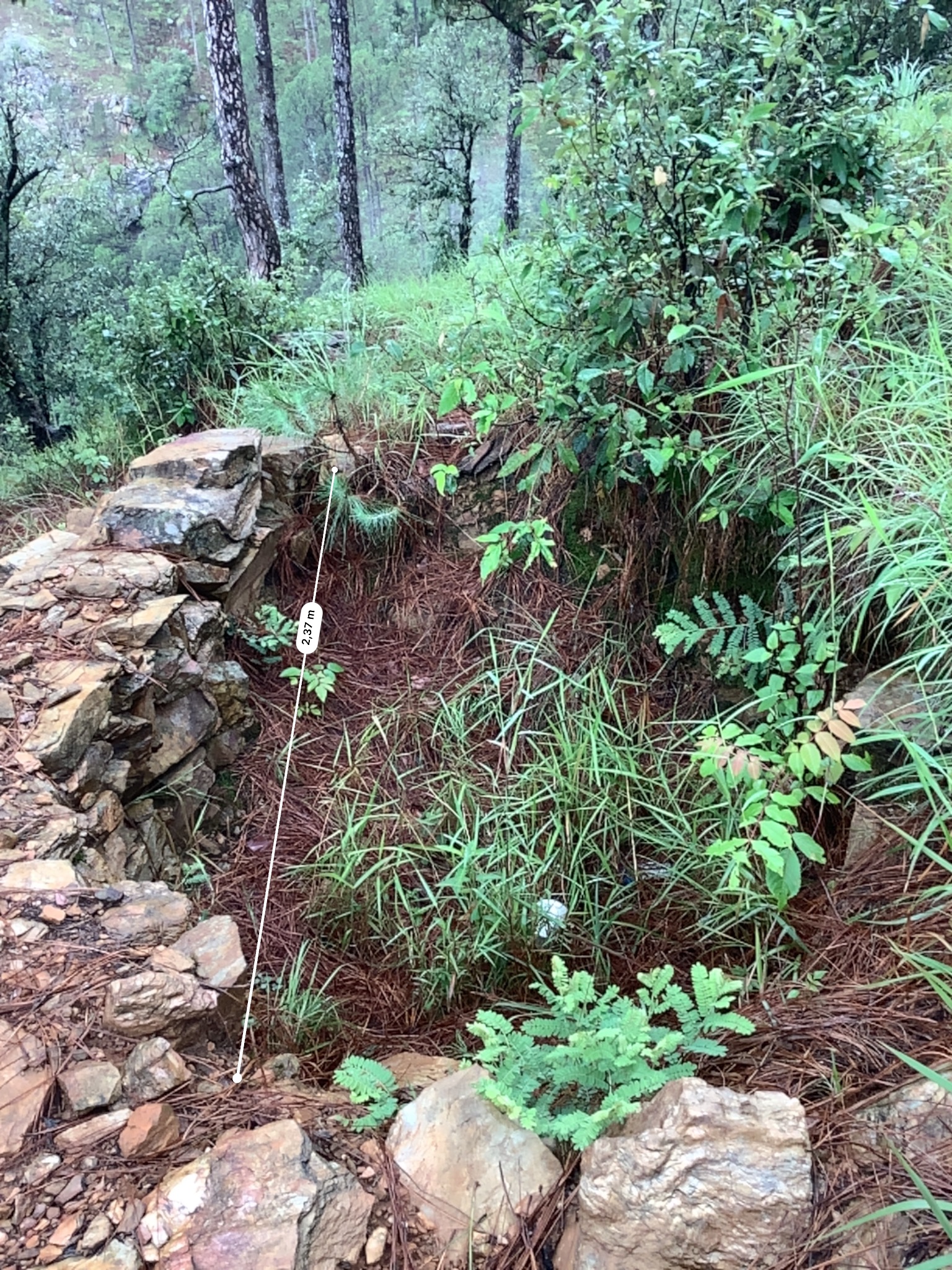
Recharge ponds (Chaals or khals) and recharge trenches (khanti) are common methods to catch the surface runoff and increase the infiltration to recharge groundwater and aid in natural spring recharge in the middle mountain regions.
Detailed description of the Technology
1. The recharge ponds and trenches have been applied in mountainous community forests. There have been about 60 trenches, 1 large and 4 small recharge ponds constructed in the specific sites in the community forest of Naikina. These are ideal areas to implement these technologies, as they encompass the microwatershed/springsheds of 3 springs.
a. Recharge ponds are circular or rectangular dugout structures which were constructed a natural depression area on sloping land. The standard size is usually as follows: Length =3 m, Width =3 m and Depth = 0.7 m, with site specific modifications. Water feeder channels which flow to the ponds helps to harvest additional surface flow. The walls are not vertical but have a 45 degree slope to prevent cave in.
b.Recharge trenches are small rectangular structures of typical dimensions: Length=1.5 m, Width= 1m , Depth= 0.7 m, constructed on sloping land in a staggered manner. The slope of the walls should be not more than 45 degrees, and the size of the trenches and their spacing depends on the slope of the land. In higher slope areas, one should construct smaller staggered trenches with closer spacing. These are generally made in high rainfall areas, as there is an increased danger of overflow. In staggered trenching, the trenches are located directly below one another in alternate rows and in a staggered fashion. These may be 2 m to 3 m long and the spacing between the rows may vary from 3 m to 5 m.
2. Aims/Objectives: The central focus of the technology is water conservation and harvesting of surplus monsoon runoff to recharge groundwater reservoirs, which is otherwise going un-utilized. Additionally, land degradation by water erosion is decreased due to slowing of runoff and increased soil infiltration. Water erosion after intense rainfall affects both onsite and offsite sites, causing soil displacement, increased frequency of landslides, damage to vegetation, agriculture land, and village settlements.
3. Methods: Due to decreased spring discharge in the dry season and high dependency on the springs for drinking water (humans and livestock), the community has implemented these technologies within in catchment areas of 3 essential springs (Bhind, Vaishnavi, and Bagawoti) in the last 3 years.
4. Stages of Implementation: Awareness building, community mobilization, and central planning was done by the head of the Forest Council (Gram Panchayat), Mr. Jagdamba Joshi. Recharge pond and trench construction was done over the course of a month by different villagers that were available to participate. They were incentivized to work with a small compensation of 5.30 USD (400 INR)/day. Activities and inputs included time and manual labor (about 3 days for the large recharge pond, 0.5-1 day for each of the small recharge ponds, and 4 days for 60 recharge trenches) and appropriate land-use planning and management. Primarily, the strategic construction of these technologies and selection in appropriate springshed recharge/catchment areas has led their success. The structures have been placed below the pine forest, (which generates high runoff) and reside in a restored broadleaf forest, which acts like a sponge to retain the runoff water flowing down from the pine forest above. The ponds lies in a natural, leveled depression with gentle slopes around. Broadleaf/oak dominated forest areas have been increasingly supported as technology construction sites, as the placement further improves of groundwater recharge.
To assure long-term effectiveness, maintenance and re-digging of the recharge ponds and trenches is carried out by villagers annually, pre-monsoon.
5. Gram Panchayat, Mr. Joshi has played a key role in informing the villagers of technology design, function and importance for supporting the community forest and subsequent spring recharge. He has previous knowledge of the application of these technologies through first-hand experiences working in the army. The villagers were solely responsible for construction with Mr. Joshi's guidance. The men were mainly responsible for making recharge ponds and the women dug trenches and removed weeds.
6) Technology benefits/impacts acknowledged by the community: moisture conservation, long-term groundwater recharge, spring recharge, reduction of soil-water erosion, improved infiltration and support for vegetation cover and broadleaf/oak forest.
Like: Relatively simple and inexpensive, little external inputs required, effective in short and long-term (provided site appropriate selection and regular seasonal rainfall)
Dislike: Drudgery, time consuming, maintenance required, distance (site of implementation may also be far from village).
Photos of the Technology
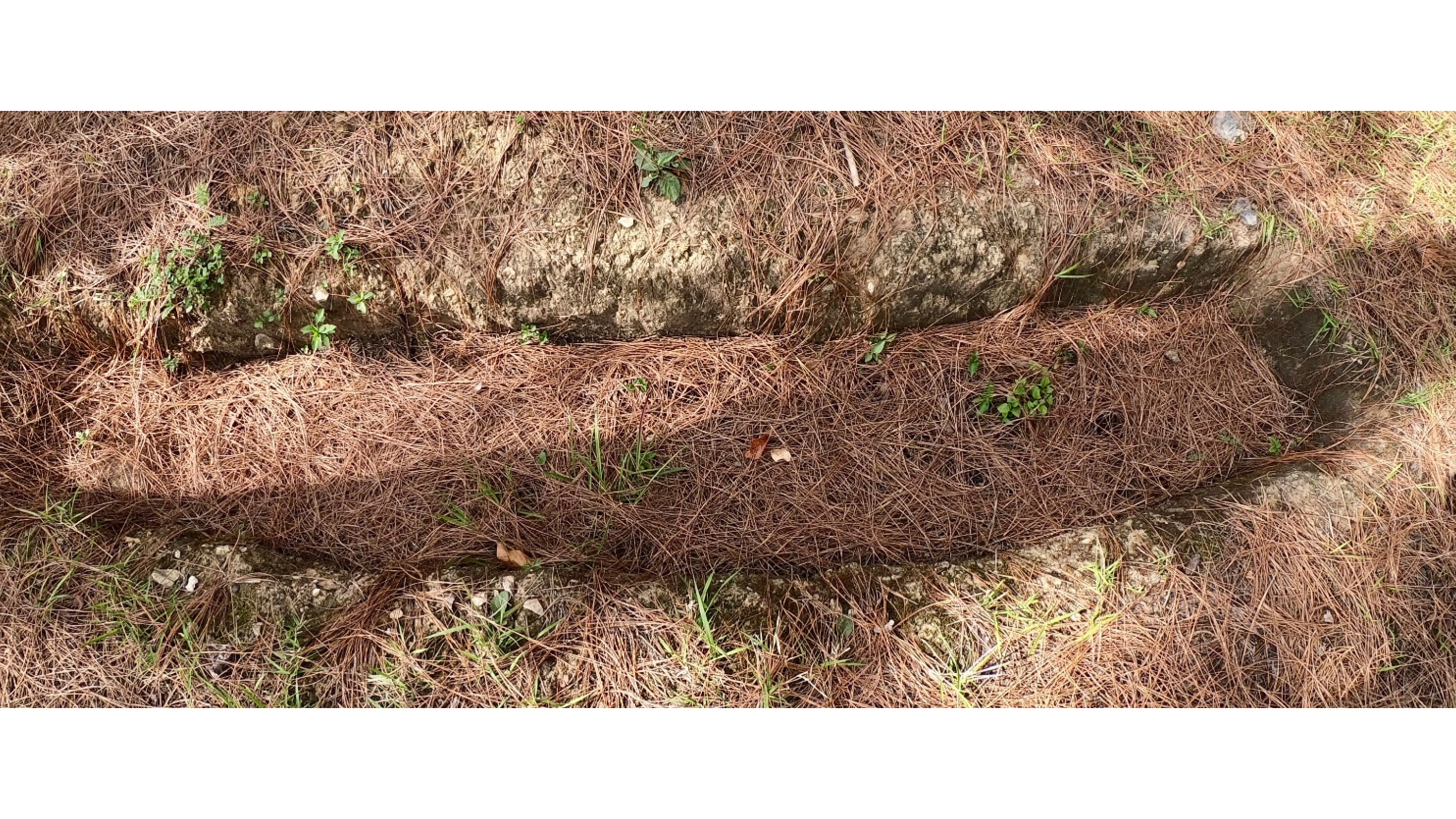
- 📍 29°37'32.00"N, 80°10'29.00"E
- 🗓 2019-04-07
- 📷 Jaclyn Bandy
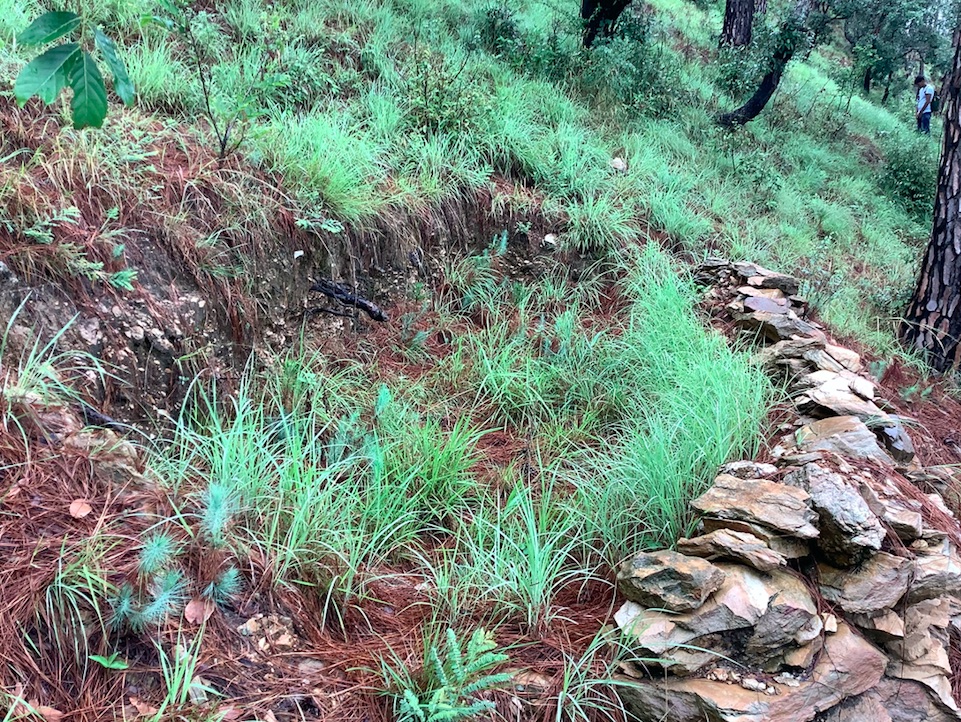
- 📍 Nakina Van Panchayat Community Forest
- 📷 Jaclyn Bandy