
Stone Wall Fencing and Firebreak for Forest Protection
Type: Technologies
Creation: 2019-07-26 08:57 Updated: 2021-06-27 15:27
Compilers: Jaclyn Bandy
Reviewers: Hanspeter Liniger
Country/ region/ locations where the Technology has been applied and which are covered by this assessment
- Country: India
- Region/ State/ Province: Uttarakhand
- Further specification of location (e.g. municipality, town, etc.), if relevant: Naikina Village, Pithoragarh Bloc
- Map: View Map
Description of the SLM Technology
Short description of the Technology
A rubble stone wall demarcates the community forest of Nakina Village and acts as a protective barrier against wildfire, wildlife, grazing, and human encroachment. The stone wall fencing is complemented by a firebreak, which is a gap of 2 meters. Firebreak establishment requires the removal of pine needles and debris from the border of the wall, so as to reduce the fuel load and possibility of fire spreading to the community forest.
Detailed description of the Technology
1. The technology has applied in the natural environment (Nakina Van Panchayat)
2. Characteristics of the technology:-
It is a dry stone wall in the community forest.
The wall (3.15km, 1m height, 80 cm width) is 40 years old and is being regularly maintained. The community is currently extending it to 4km.
3. Purpose and function of the technology:-
To protect the forest from forest fires.
To protect the fodder grasses from grazing animals
To protect the community forest from encroachment
To make a margin between two community forests.
4. Major activities and inputs needed to establish and maintain the technology:
Obtaining funding and external support to make the stone wall from other agencies (JICA, Forest Department)
The Forest department and Nakina Van Panchayat were the implementing agencies, and received approval from the District Magistrate to build the wall.
Nakina Van Panchayat organized the community people to construct the wall, paying each person 400 INR ($5.20 USD) a day for their work.
The community pooled their own construction materials and rocks were gathered on site.
5. Benefits and impacts of the Technology:
-Helps to protect forest fires from spreading to the Nakina community forest (physical barrier)
-Protect the fodder grasses from grazing animals
-Avoid conflict between two community forests and deter outsiders from crossing the wall
6. Impacts of the technology:
The wall is successful in protecting the forest from wildfire and it inhibits wildlife/livestock movements or passage.
The people of Nakina village are restricted to a particular area to collect fodder and forest products, which helps them regulate and realize their specific resource demands. This helps them avoid overexploitation of forest resources and set limits.
People views about the technology:-
Like: People are very positive about this technology and they believe that extending its length from 3.15km to 4km will further benefit the forest.
Dislike: The aesthetic of the forest is slightly compromised due to the construction wall.
During construction period, the people realized that some noise pollution from breaking stones could have disturbed neighbors grazing their livestock or other wildlife
Photos of the Technology
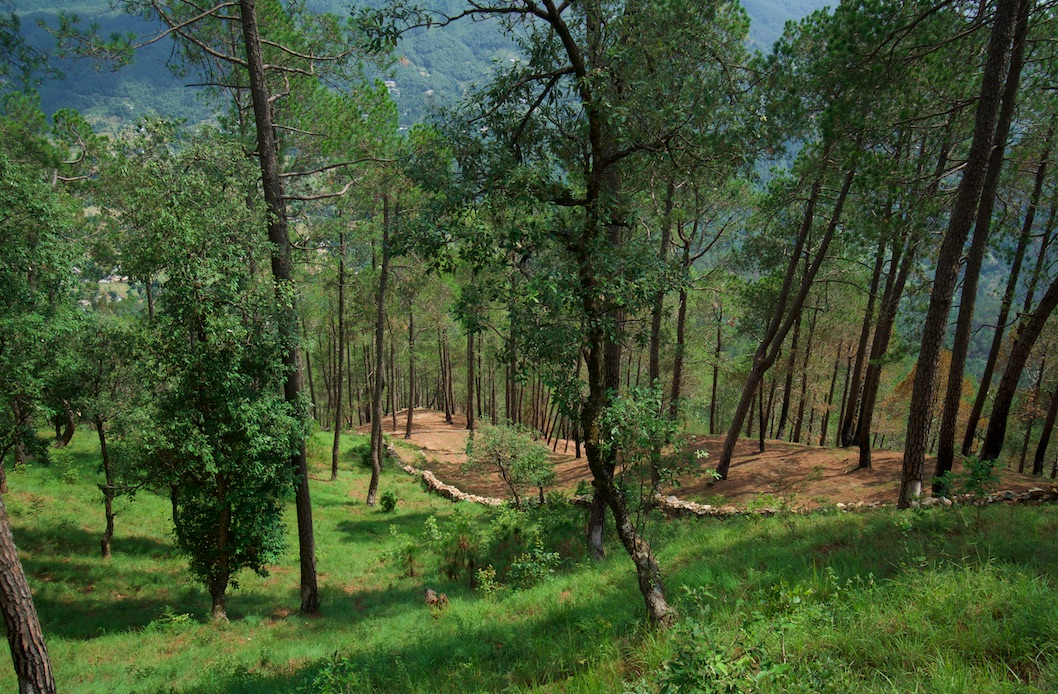
- 📍 Naikina Community Forest, Pithoragarh Bloc, Uttarakhand, India
- 📷 Hanspeter Liniger
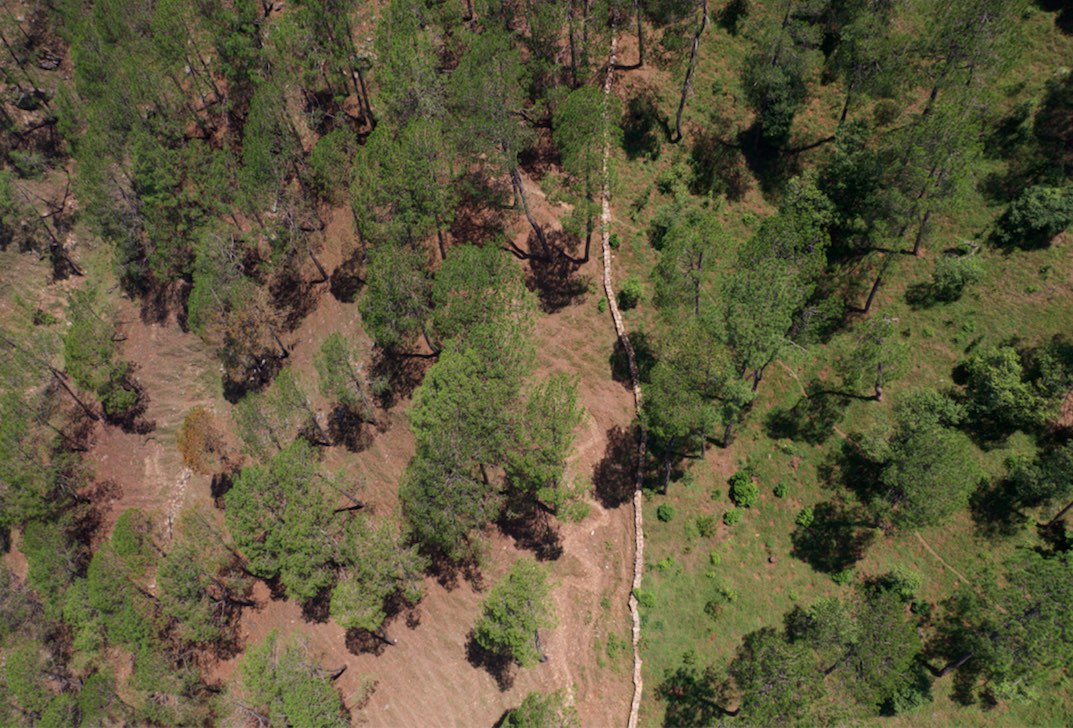
- 📍 Nakina Community Forest
- 📷 Hanspeter Liniger