
Minimizing soil erosion through Natural Vegetative Strip (NVS) practice in slope cultivation
Type: Technologies
Creation: 2019-09-09 08:06 Updated: 2020-04-16 12:41
Compilers: Fazlay Arafat
Reviewers: Rima Mekdaschi Studer, Ursula Gaemperli
Country/ region/ locations where the Technology has been applied and which are covered by this assessment
- Country: Bangladesh
- Region/ State/ Province: Bandarban District
- Further specification of location (e.g. municipality, town, etc.), if relevant: Soil Conservation and Watershed Management Center, Meghla, Bandarban
- Map: View Map
Description of the SLM Technology
Short description of the Technology
Natural Vegetative Strips (NVS) are narrow strips of naturally growing grasses and herbs intentionally left unploughed along the contours of slope land to serve as buffers that prevent soil erosion during heavy rains.
Detailed description of the Technology
The Chittagong Hill Tracts (CHT) covers an area about 13,181 km2 and occupies about 76% of total 12% upland areas of the country and is endowed with natural beauty and potential economic benefits. Shifting cultivation or jhum has been practiced in CHT for many hundreds of years by the local people. Shifting cultivation is a form of agriculture, in which an area of ground is cleared of vegetation, and cultivated for a few years and then abandoned for a new area until its fertility has been naturally restored. Many cultivators practice slash-and-burn in jhum as one element of their farming cycle. Shifting cultivation and its associated fires destroyed about two thirds of the previously existing forests in CHT, which has accelerated soil erosion. While it was an environmentally suitable land use in the past when population pressure was low, it has gradually become an environmentally incompatible land use system with the shortening of fallow periods. In addition to increasing population pressure, low investment in agricultural technology, and poor management of land rights have also negatively impacted the forests. One of the best ways of adapting to these issues is the adoption of Natural Vegetative Strip (NVS) technique on cultivated slopes.
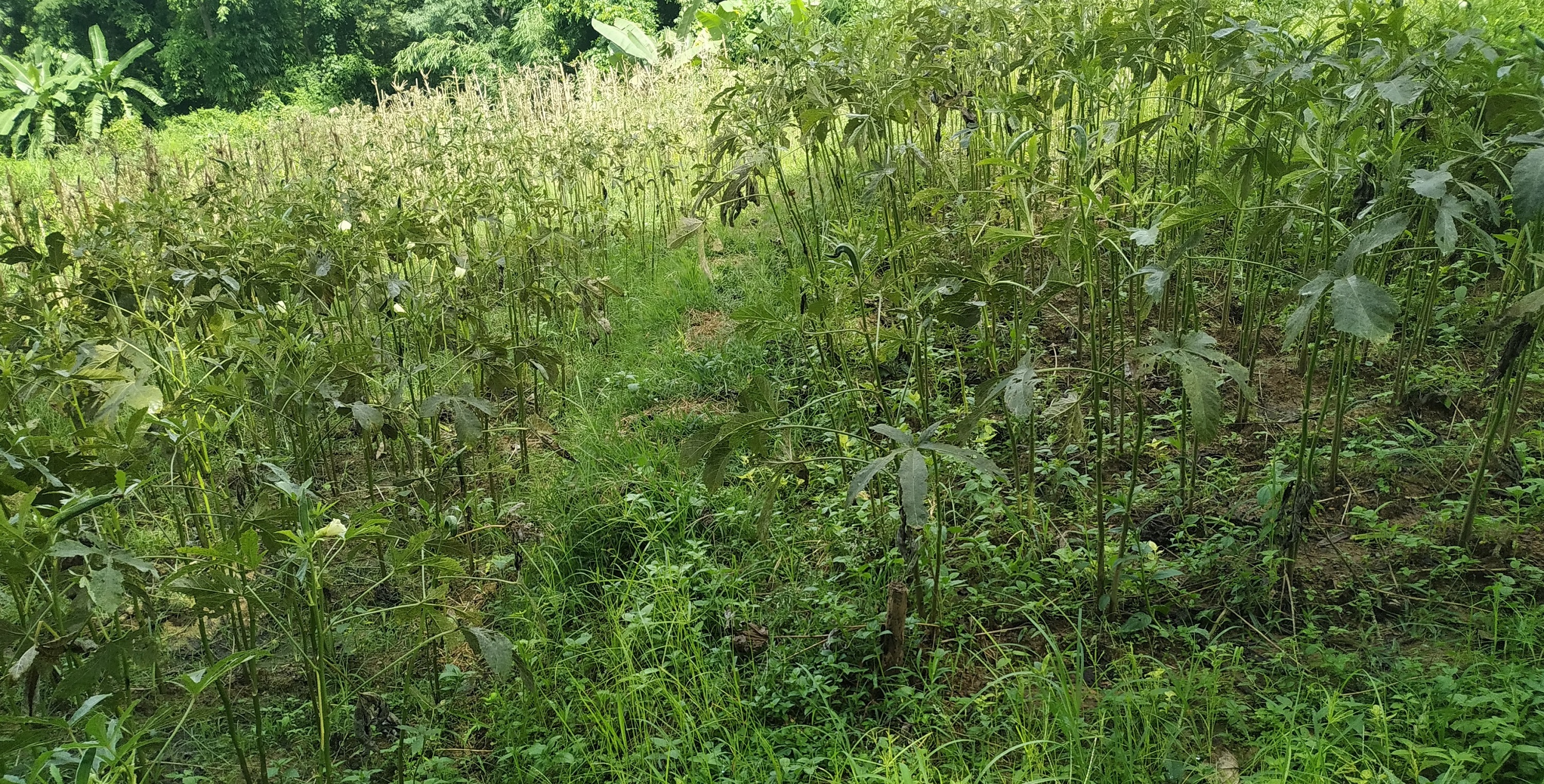
NVS are narrow strips of naturally growing grasses and herbs intentionally left unploughed along the contours of hilly-sloped lands. On gentle slopes, every 4-meters a 1-meter wide strip of NVS is made along the natural contours of the slope. These strips serve as buffers that prevent the soil from eroding during heavy rains and intensive cultivation. Over time, these strips form stable terraces along the contours. Vegetables and other crops can be cultivated in between two NVS.
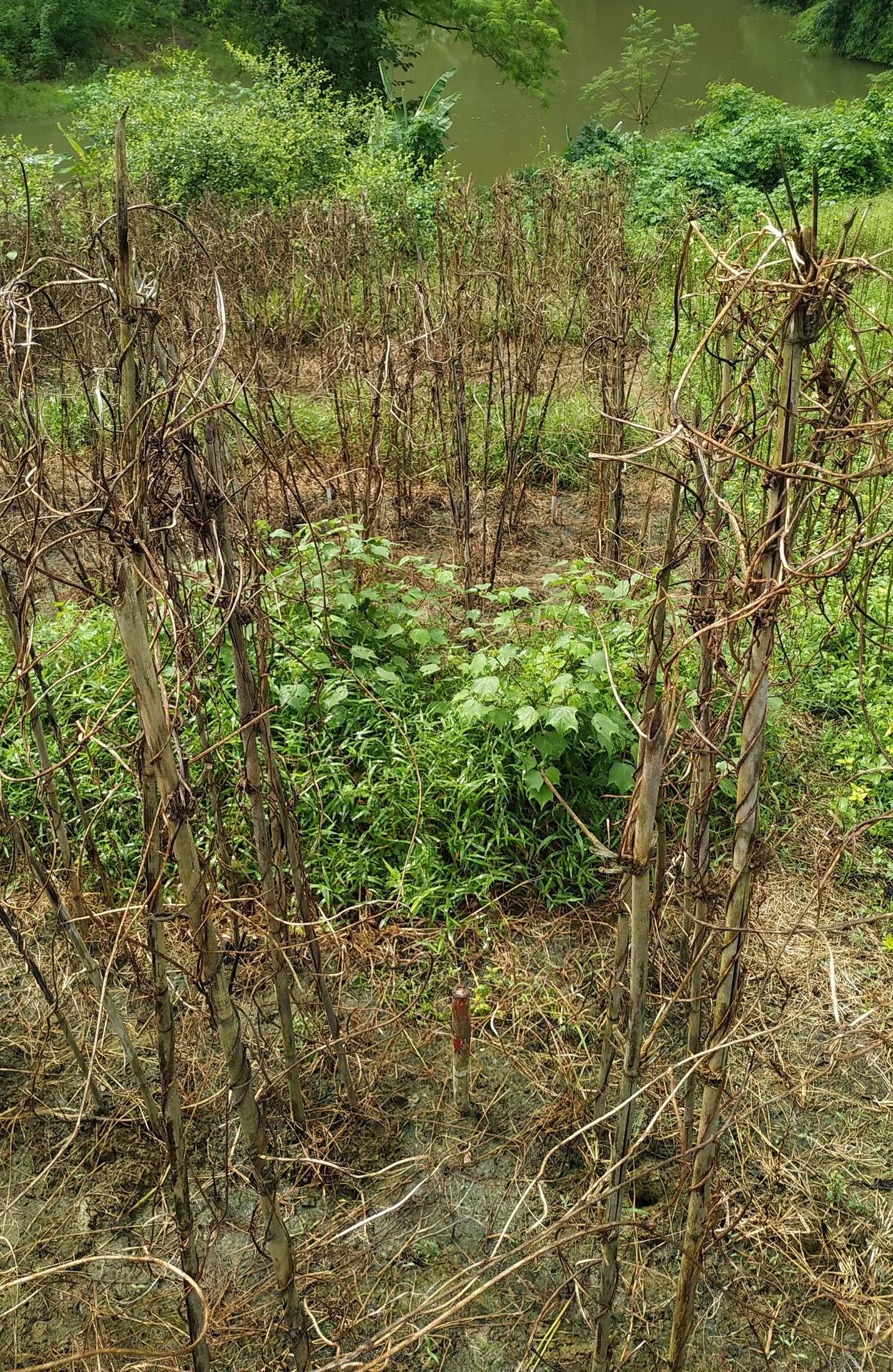
The Soil Conservation and Watershed Management Center in Meghla, Bandarban has implemented demonstration plots of this sustainable land management technique. Here the use of NVS has improved morphological and reproductive characteristics. They reduced soil erosion by more than 90% and NVS’s were easy to establish as they were incorporated during land preparation, and thus required minimal labour. They did not entail additional cost, as there was no need for additional planting materials, since the grasses naturally grew on the farm.
In addition to minimizing soil erosion, NVS plays a vital role in improving plant growth, crop productivity, and fruit length and weight. The strips also filter pesticides, nitrates and soluble phosphorus thus prevent runoff. As they improve water infiltration during heavy rains, subsequent land preparation and crop management become easier. One limitation of NVS is that it reduces the available cropping area by about 10 to 15%, depending on the steepness of the slope. The steeper slope require more wide vegetative strips for erosion protection. Typically the strips do not cause weed problems as long as the farmers regularly cultivate within the NVS area and maintain a 50 cm buffer around the area. If farmer-maintenance is good, no weed problems occur. NVS is a promising practice to mitigate soil erosion and improve crop cultivation in CHT.
Photos of the Technology
- 📍 Meghla, Bandarban
- 🗓 2019-03-09
- 📷 Md. Fazlay Arafat
- 📍 Meghla, Bandarban
- 🗓 2019-03-09
- 📷 Md. Fazlay Arafat