
Sorjan - growing vegetables on raised beds in waterlogged areas
Type: Technologies
Creation: 2019-10-03 09:47 Updated: 2020-05-09 12:04
Compilers: Wolfgang Duifhuizen
Reviewers: Ursula Gaemperli, Rima Mekdaschi Studer
Country/ region/ locations where the Technology has been applied and which are covered by this assessment
- Country: Bangladesh
- Region/ State/ Province: Chittagong Division, Noakhali District
- Further specification of location (e.g. municipality, town, etc.), if relevant: Char Nangulia
- Map: View Map
Description of the SLM Technology
Short description of the Technology
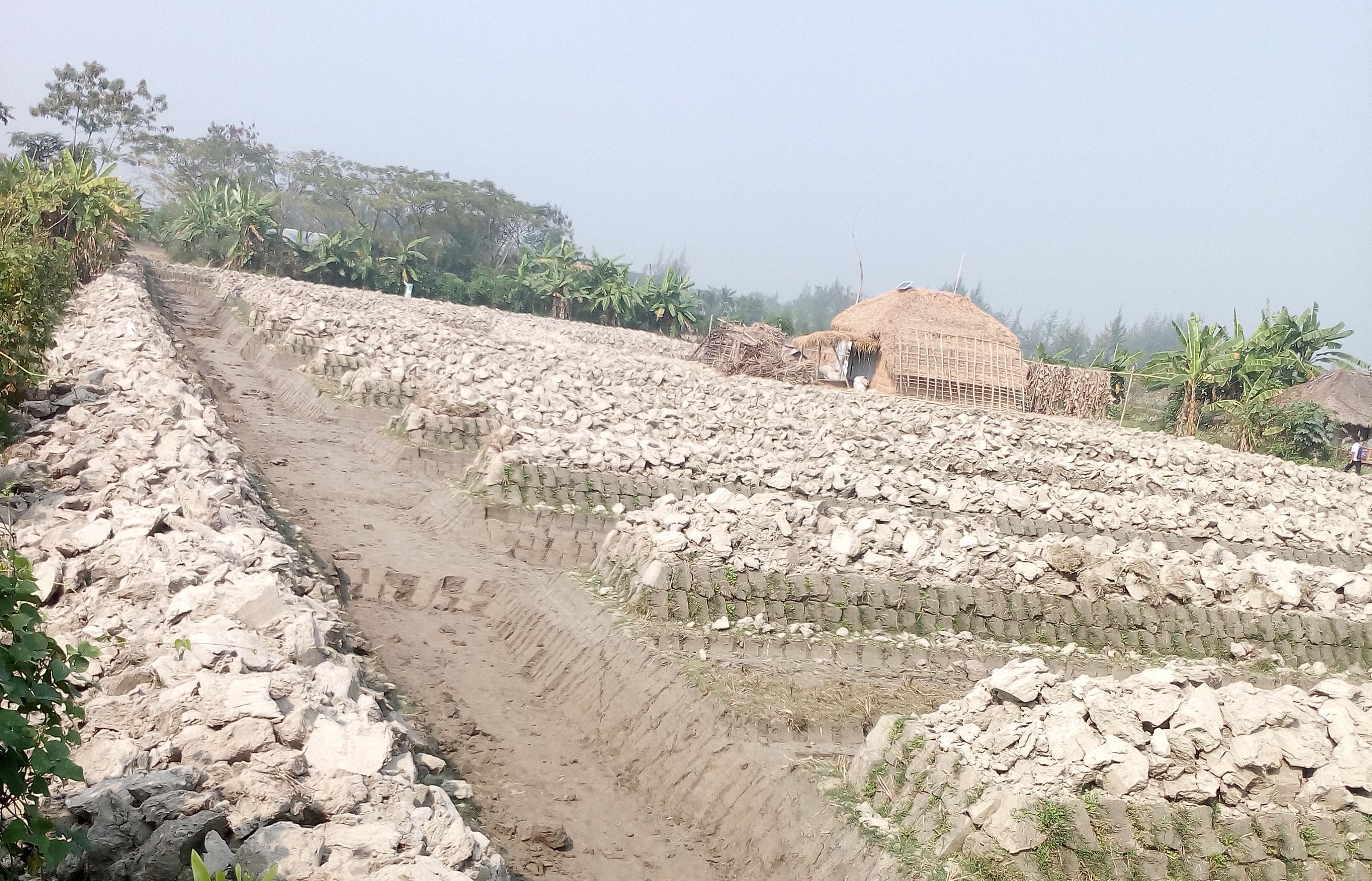
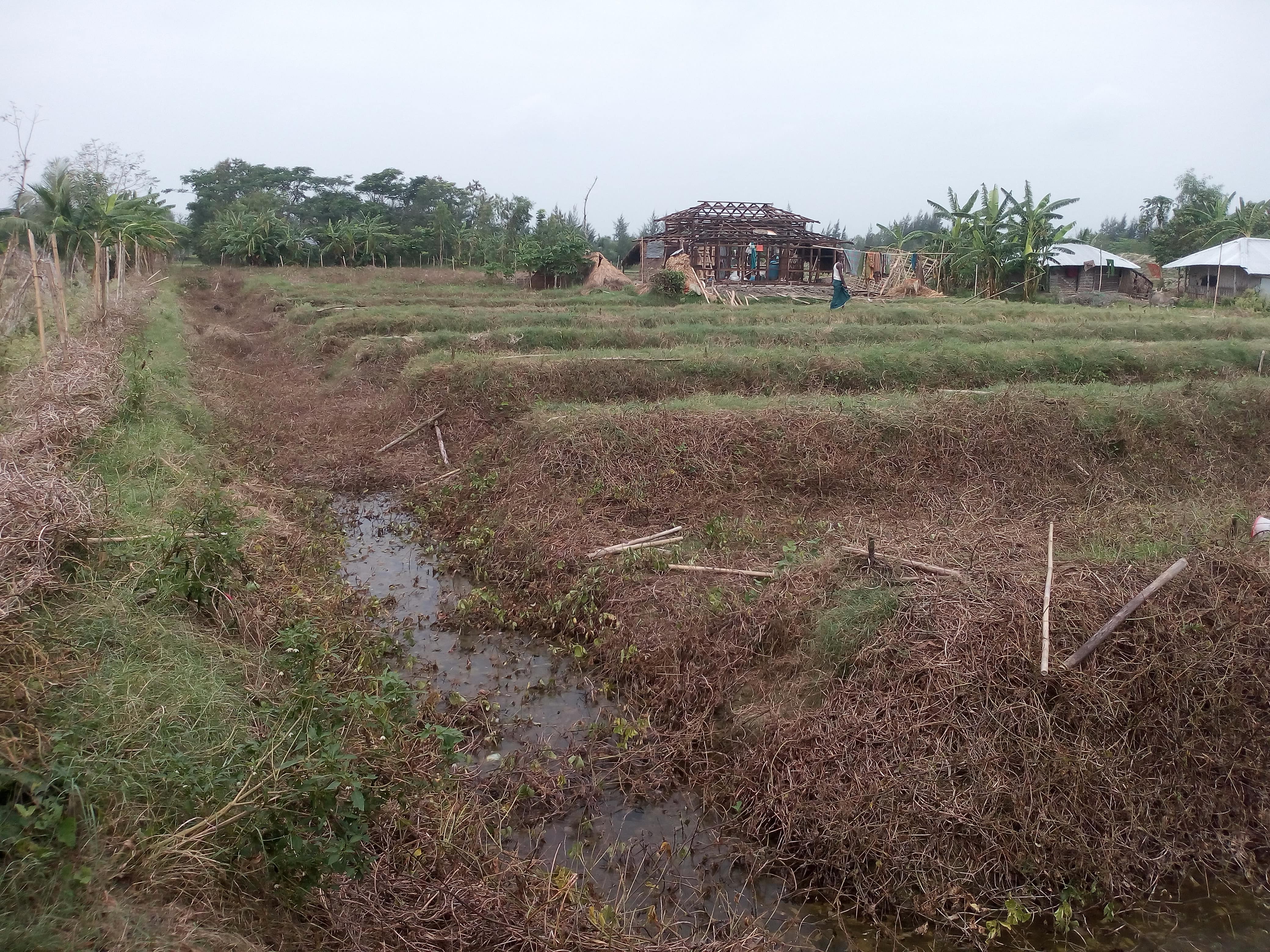
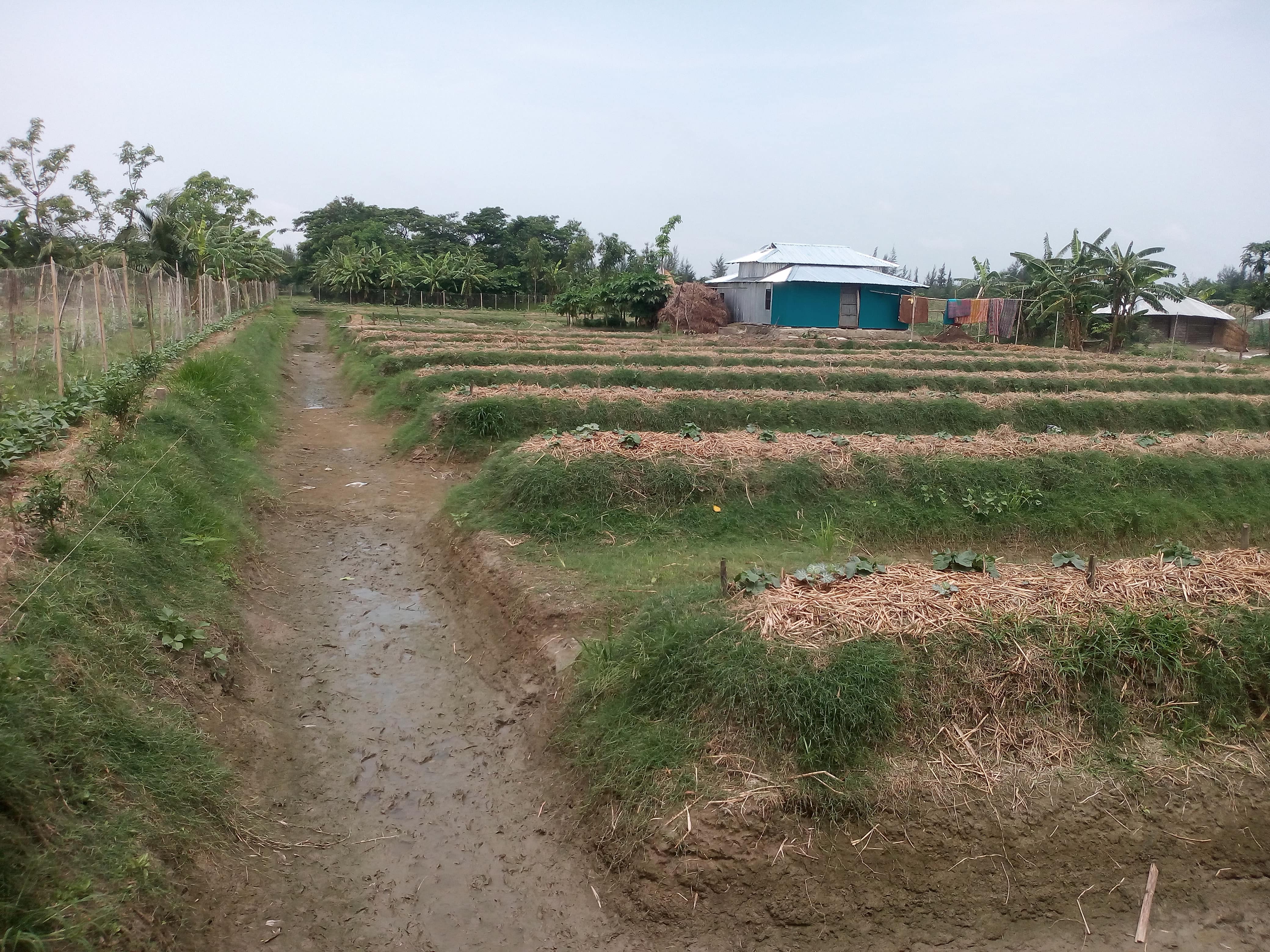
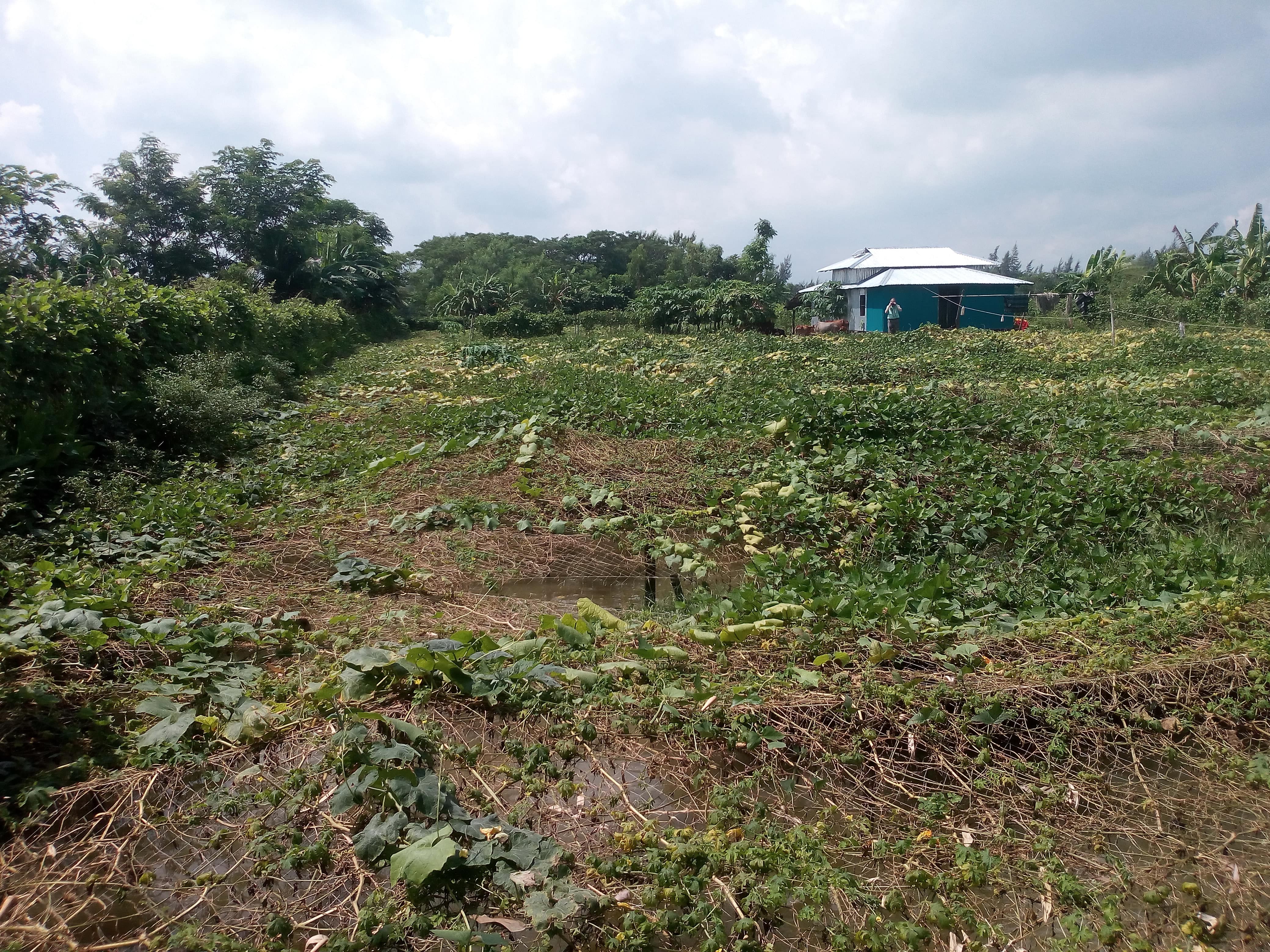
The sorjon system is the cultivation of vegetables on raised beds. Ridges are about 60 to 90 cm high, which means crops are kept above the water, even during the wet season. The ditches between the ridges hold water for six to eight months per year and can be used to keep fish as well as being a source of water to irrigate the crops.
Detailed description of the Technology
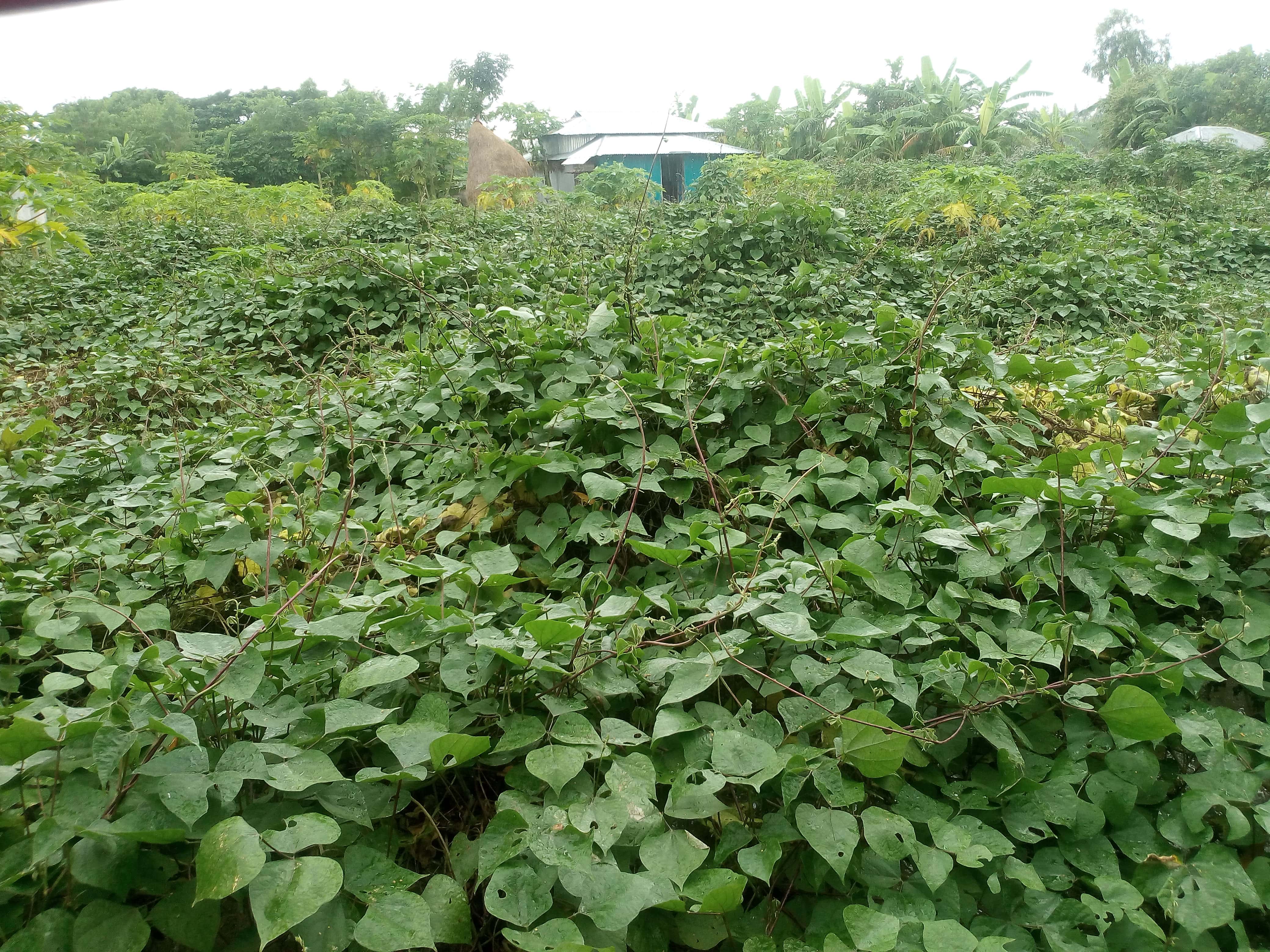
The Sorjan is a system that serves as an alternate of deep drains (ditches) and raised beds for crop cultivation and fish rearing. In coastal Bangladesh the ridges are mostly around one meter wide at the top and spaced two meters apart – although in places ridges and spacing can be wider than this. The Sorjan system is applied in lowland areas which suffer from water logging and salinization. The widely spread technology is also practiced in Char Nangulia, Noakhali district in the Meghna estuary in Bangladesh. The main economic activities in this area are small-scale agriculture, livestock keeping, fish rearing and informal business. Before introduction of the Sorjan system (by the Bangladesh by Department of Agriculture Extension) only deep-water tolerant traditional low-yielding paddy could be cultivated during the rainy season and in the dry season, the capillary rise of salty ground water led to poor yields for most crops, if they survived at all.
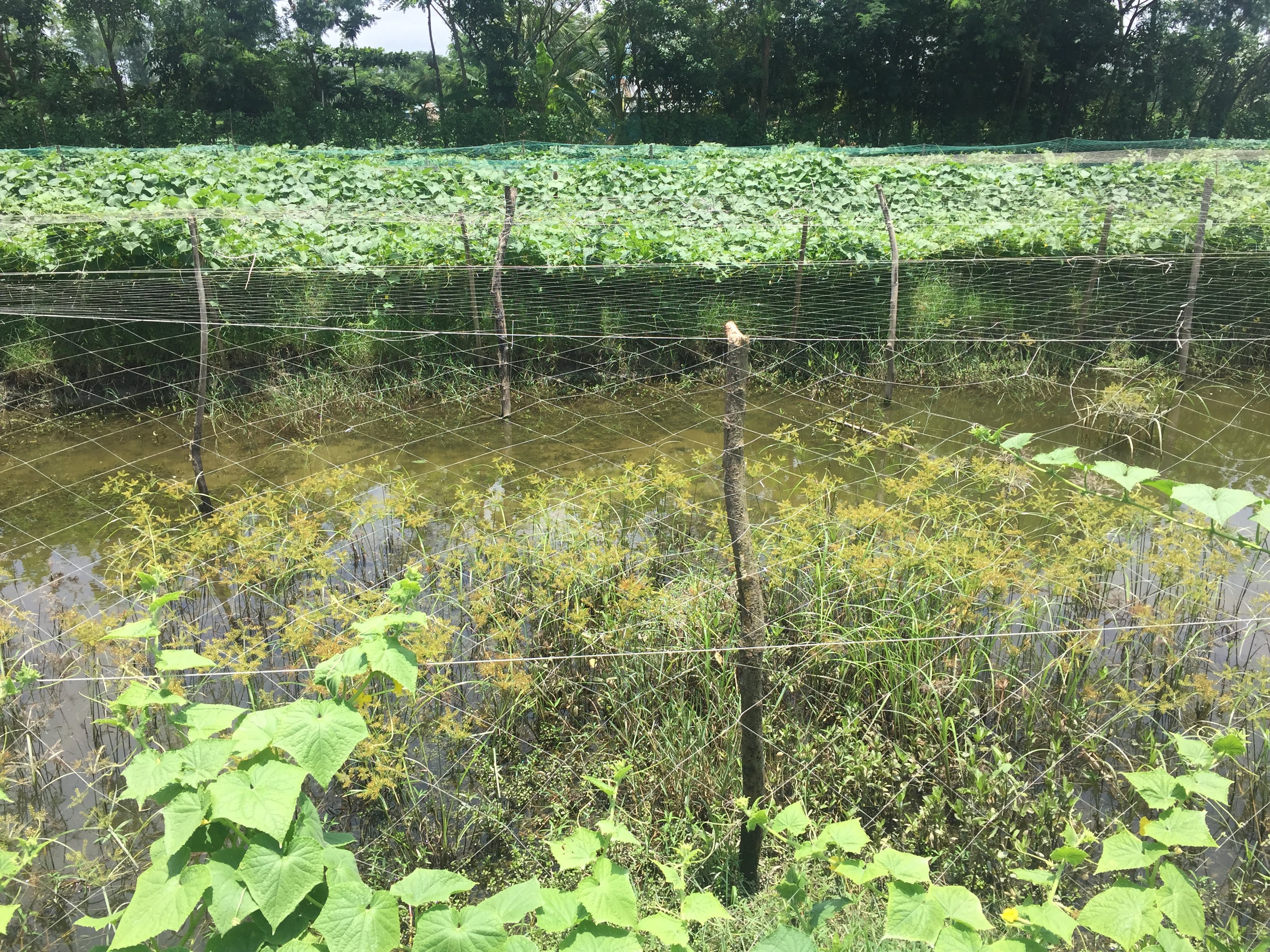
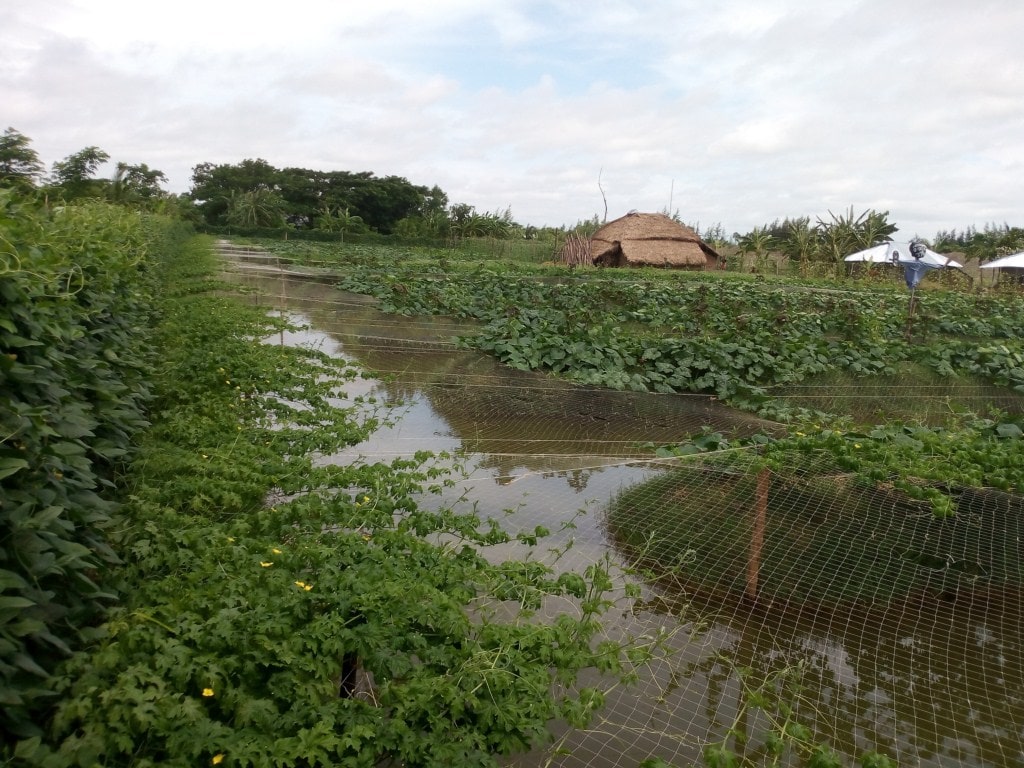
The beds are about 60 to 90 cm high, which means crops are kept above the water, even during the wet season. The ditches between the ridges hold water for six to eight months per year and can be used to rear fish and ducks as well as being a source of water to irrigate the crops. In most cases nets are spanned over the ditches, allow climbing plants to grow over them utilizing the space in an efficient way. The sorjan system is is applied in low land areas and frequently suffer from water logging and sometimes salt water intrusion. This system with raised bed enables the cultivation of vegetables in these locations.
The main function of Sorjan is to grow crops on raised beds so that roots are protected against stagnant water. As the area is partially excavated, the deeper areas can be used for fish rearing whenever inundated and crops such as cucumber and gourds can grow vines on supporting nets spanned over the ditches to maximize productivity of limited space available. In the Philipines Sorjan system, it has also been reported that rice is cultivated in the ditches with shallow water and at the same time, other crops on the beds.
To install Sorjan a farmer needs to make raised beds for planting the crops and rear fish in the deep drains. This is usually done by hand with help of local laborers, in some cases an excavator is rented to do the job. To support the crop to be planted , a framework of bamboo, string and netting is built over the ditches to support a sequence of climbing plants.
Maintenance of the beds is done regularly whenever necessary and the crop netting is replaced every 3 years. In the area farmers predominantly use urea and other chemical fertilizers to lesser extent, few farmers use animal manure and compost. Most Sorjan ridges have a permanent undergrowth of grass to keep the slopes stable. In some cases, during dry season, goats graze the grass in the ditches and slopes.
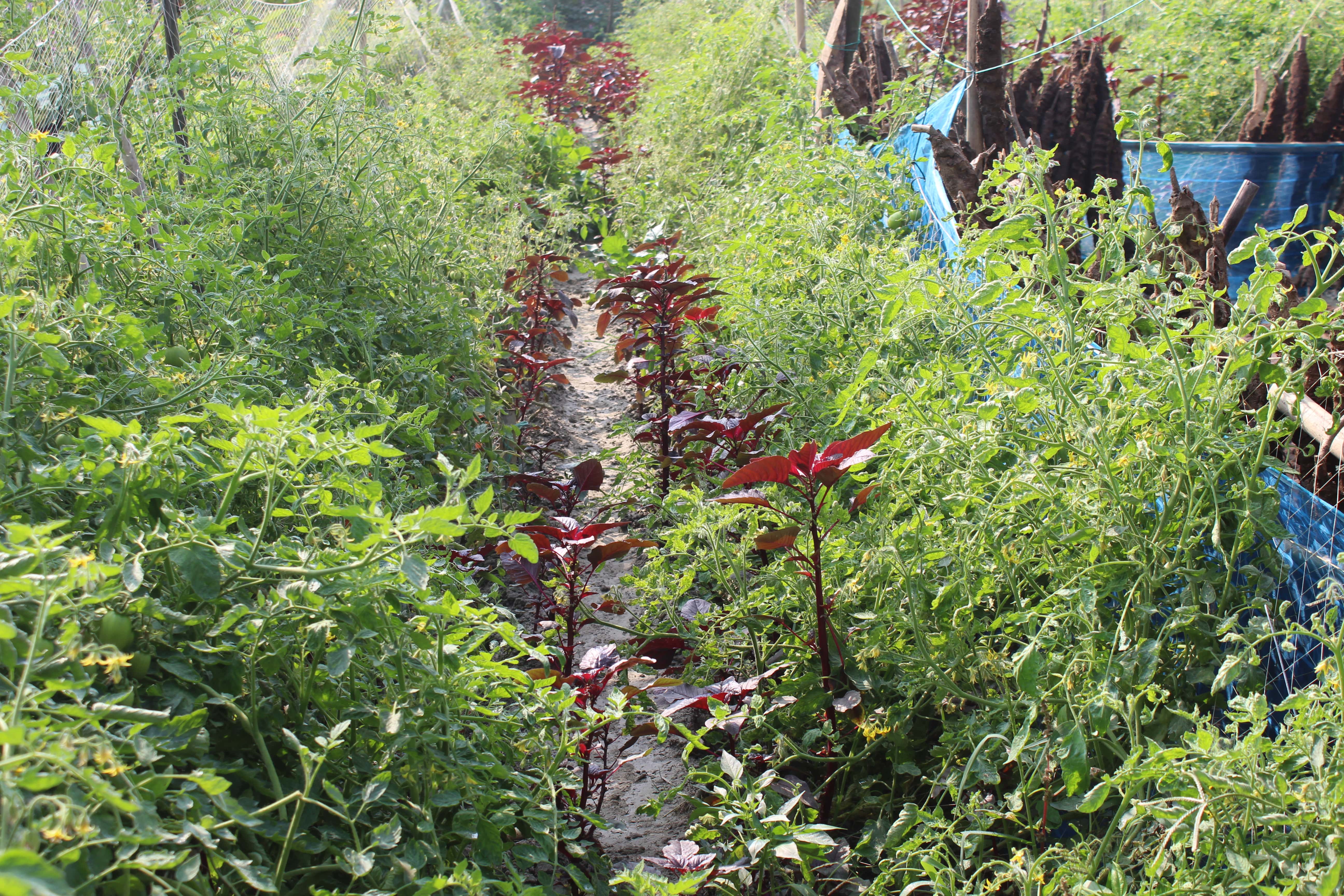
Before the rains start in March, cucumbers are planted, and these are followed by a variety of gourds (including snake, bottle, bitter and ribbed gourds) in the early monsoon, with yard long bean (asparagus bean) and country bean (lablab bean) in the later monsoon, with country beans continuing to be harvested through the dry season up to the following March. During dry season the beans are sometimes intercropped with chillies, tomatoes and amaranth. These crops overlap with each other, with relay cropping allowing continuous harvesting for 9 or 10 months per year (early June to March).
The significant increase of income a small-holder farmer can make in the area alongside having fresh fish and vegetable for the greater part of the year have been reasons for farmers taking up Sorjan. The Sorjan system is propagated as a measure to mitigate effects of increased salinity and/or water logging due to sea-level rise. Sorjan does not facilitate any mechanization as the narrow beds and ditch bottoms are only accessible by foot.
Photos of the Technology
- 📍 Soleiman Bazar, Char Nangulia, Noakhali district, Chittagong Division, Bangladesh
- 📷 Kiran Sankar Sarker
- 📍 Soleiman Bazar, Char Nangulia, Noakhali district, Chittagong Division, Bangladesh
- 📷 Kiran Sankar Sarker
- 📍 Soleiman Bazar, Char Nangulia, Noakhali district, Chittagong Division, Bangladesh
- 📷 Kiran Sankar Sarker
- 📍 Soleiman Bazar, Char Nangulia, Noakhali district, Chittagong Division, Bangladesh
- 📷 Kiran Sarkar Sanker
- 📍 Soleiman Bazar, Char Nangulia, Noakhali district, Chittagong Division, Bangladesh
- 📷 Kiran Sankar Sarker
- 📍 Soleiman Bazar, Char Nangulia, Noakhali district, Chittagong Division, Bangladesh
- 📷 Kiran Sankar Sarker
- 📍 Soleiman Bazar, Char Nangulia, Noakhali district, Chittagong Division, Bangladesh
- 📷 Kiran Sankar Sarker
- 📍 Soleiman Bazar, Char Nangulia, Noakhali district, Chittagong Division, Bangladesh
- 📷 Kiran Sankar Sarker
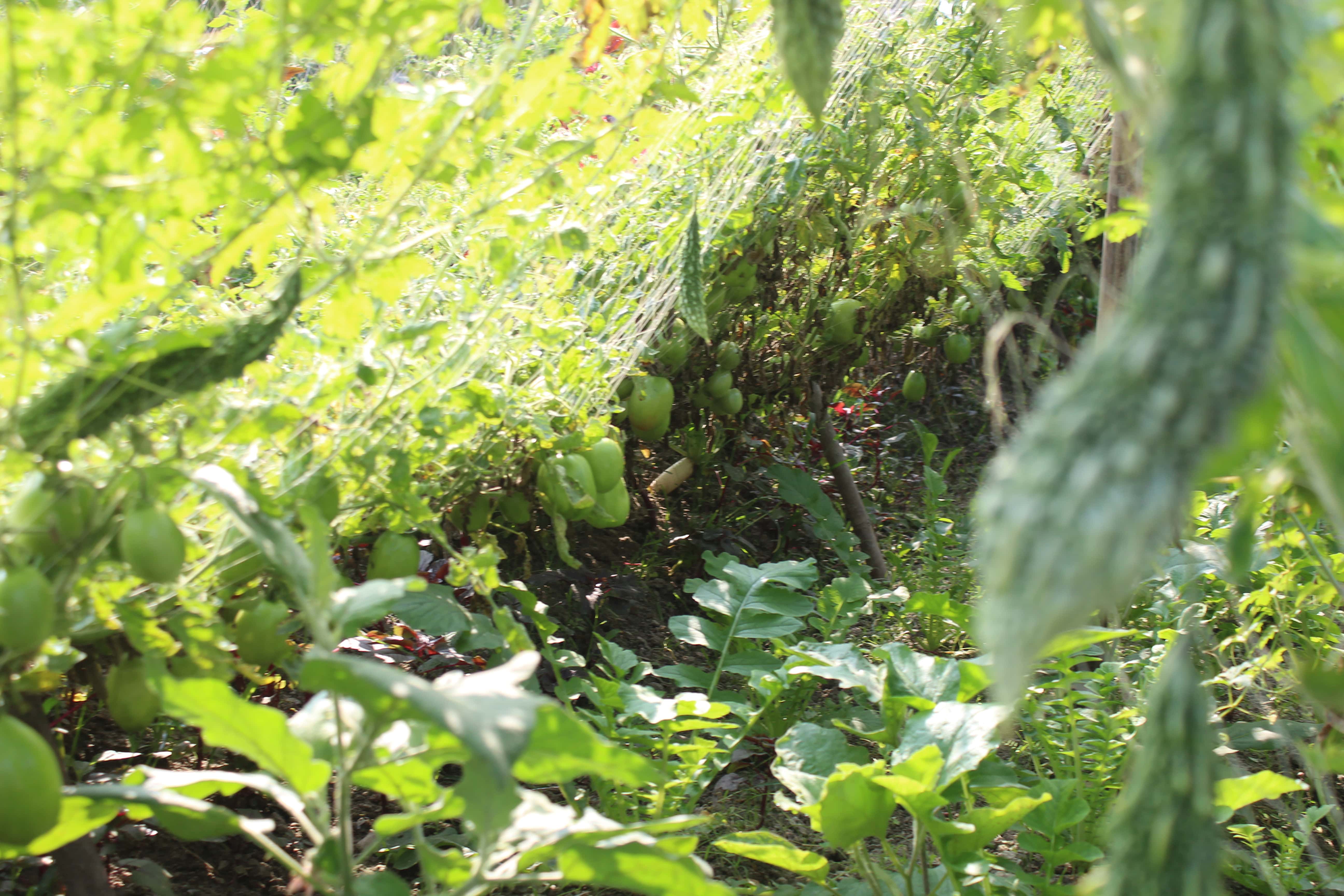
- 📍 Soleiman Bazar, Char Nangulia, Noakhali district, Chittagong Division, Bangladesh
- 📷 Kiran Sankar Sarker