
Individual platforms and contour platforms
Type: Technologies
Creation: 2019-10-15 18:55 Updated: 2020-04-08 18:42
Compilers: Bandara Rotawewa
Reviewers: Ursula Gaemperli, Rima Mekdaschi Studer
Country/ region/ locations where the Technology has been applied and which are covered by this assessment
- Country: Sri Lanka
- Region/ State/ Province: Central
- Further specification of location (e.g. municipality, town, etc.), if relevant: Doluwa
- Map: View Map
Description of the SLM Technology
Short description of the Technology
Construction of individual platforms or contour platforms to control soil erosion in the home gardens (HG) to cultivate vanilla as a cash crop
Detailed description of the Technology
Doluwa is located in the Central Highlands of Sri Lanka. This area belongs to the Wet zone mid-country agro-ecological region according to Sri Lankan classification. The elevation of the area is 575 meters. The mean temperature of the area is about 24 °C. The area receives rainfall from two monsoons. North-east monsoon rain comes from November to January with an annual rainfall of 1800 mm. The South-west monsoon rain lasts from May to September and contributes a major portion of the annual rainfall. February, March, and July months receive lower rainfall. The Central Highlands have excellent agro-ecological conditions for tea plantations, spice crops like cloves, nutmeg and cardamom, fruit crops such as avocado, durian, coffee, banana, and black pepper. Paddy cultivation is practiced in the valleys. Areas over 50% of slope inclination are covered by protected forests. The main livelihood activity is agriculture: mainly cultivation of tea, spices, and vegetables. About 43% of the land is under tea cultivation; and around 15% is marginalized or abandoned land, due to land degradation and low productivity of soils.
The average land size of home gardens in the Central Highlands of Sri Lanka is about 0.25 – 0.5 acres. Fruits and spice trees randomly exist in these land plots. The topsoil is always disturbed due to daily human activities. Apart from run-off water from upper lands, rooftop rainwater flows in all directions causing heavy soil erosion in these home gardens. The home gardens are the least attended land plots in terms of conservation due to low-income generation.
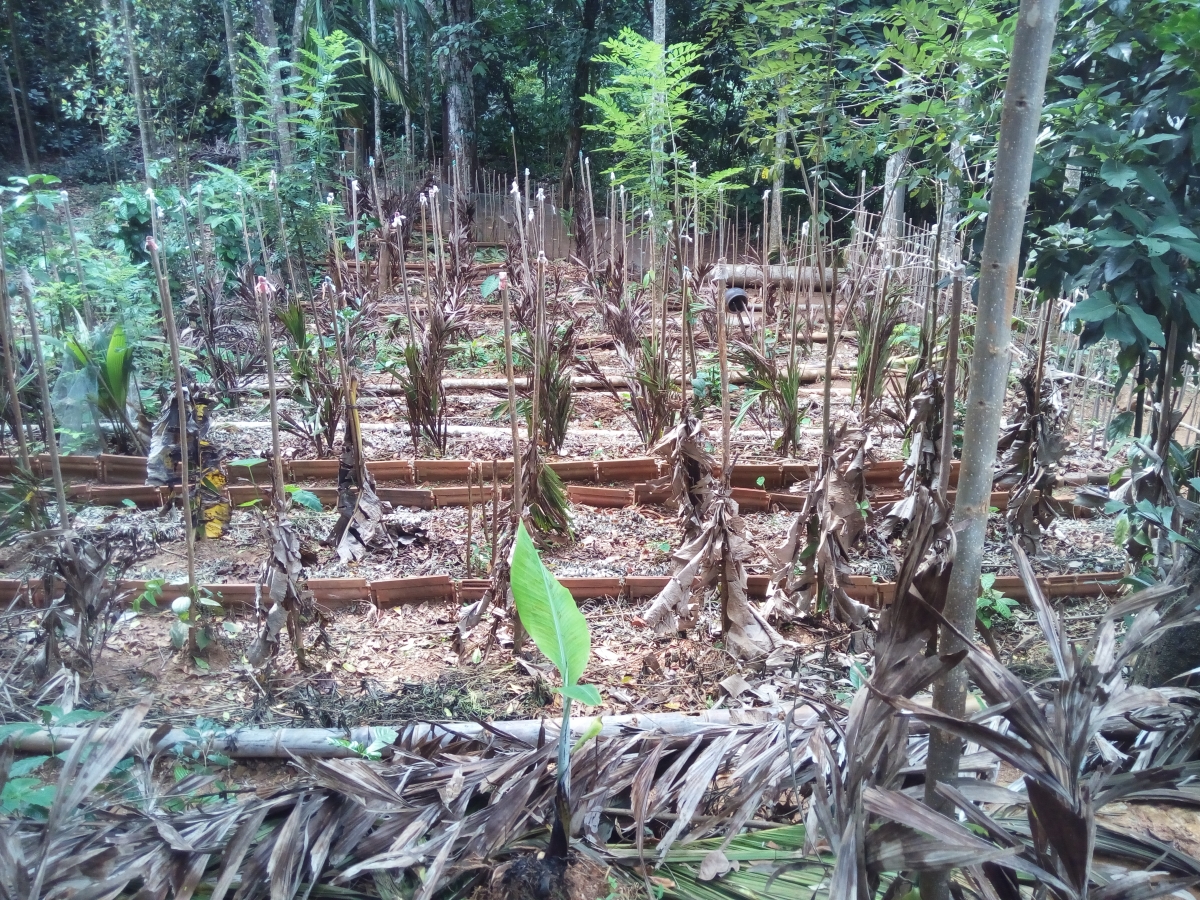
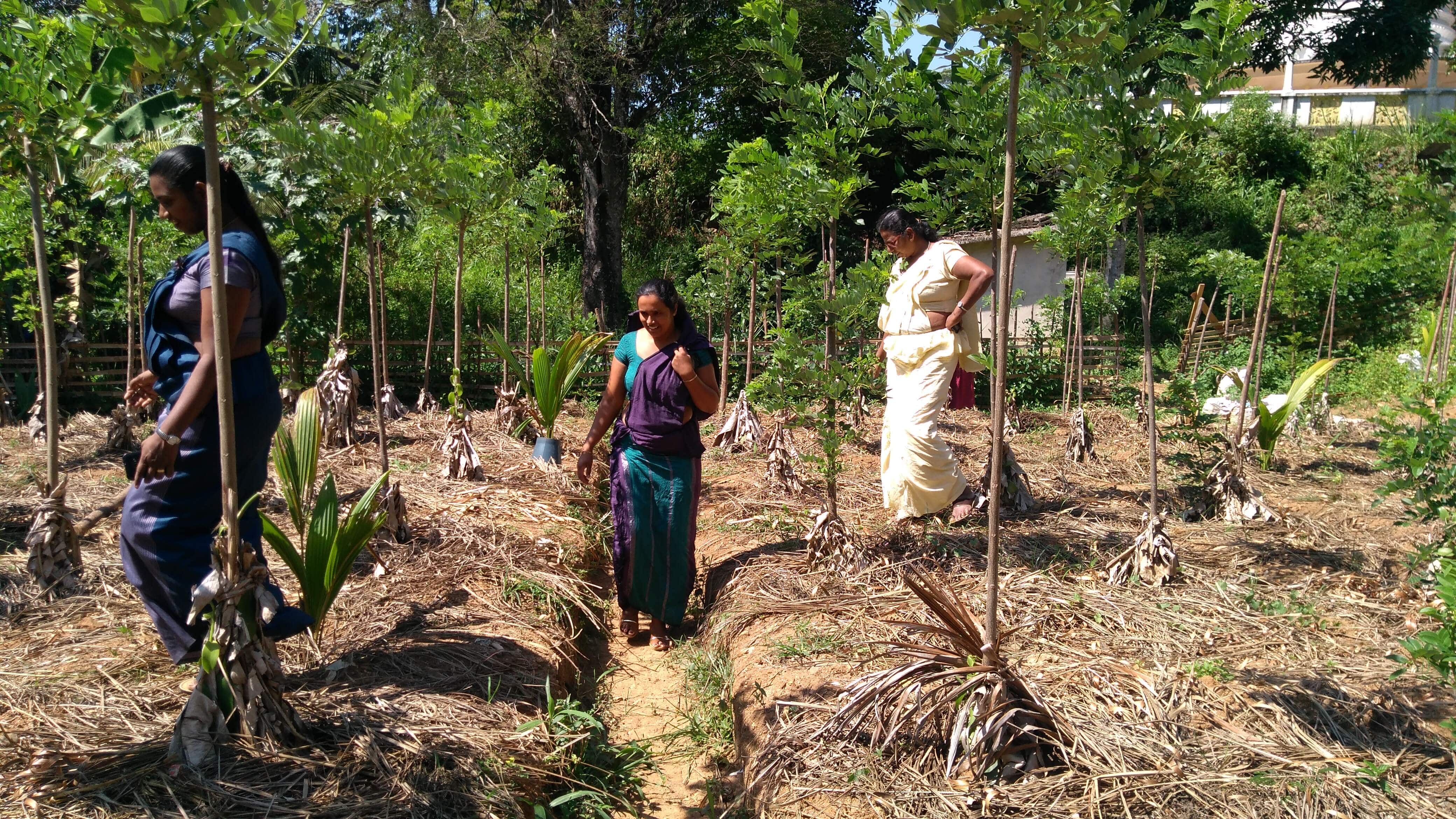
Traditionally, home gardens with randomly planted perennial trees are usually shady. Therefore, farm families generally believe that cultivation of cash crops in their home gardens is impossible. The introduction of Individual Platforms and Contour Platforms as a soil conservation methodology, piloted in the Doluwa area by an FAO project on Rehabilitation of Degraded Agricultural in several Districts of the Central Highlands of Sri Lanka has proven the contrary, as mainly vanilla is known as a shade-preferring crop. Furhter, vanilla is economically highly valuable and has the potential to generate good income. Consequently, adequate platforms (small soil terraces) were constructed and used for vanilla cultivation. Vanilla grows particularly well where the soil organic matter content is high. Organic matter required to enrich the soil can be collected directly from the home gardens (leaves and residues) and is also coming from organic kitchen waste. These organic residues are recycled into compost and finally used for the cultivation of vanilla. Additionally, mulching is practiced to control topsoil erosion. Each vanilla plant as a tropical climbing vine grows up a previously planted two-meter-high Gliricidia stick. Gliricidia serves on the one hand as a living fixing stick and provider of shade and, as a leguminous tree (Fabaceae family) the plant has the potential to fix nitrogen in the soil.
Construction of the platforms:
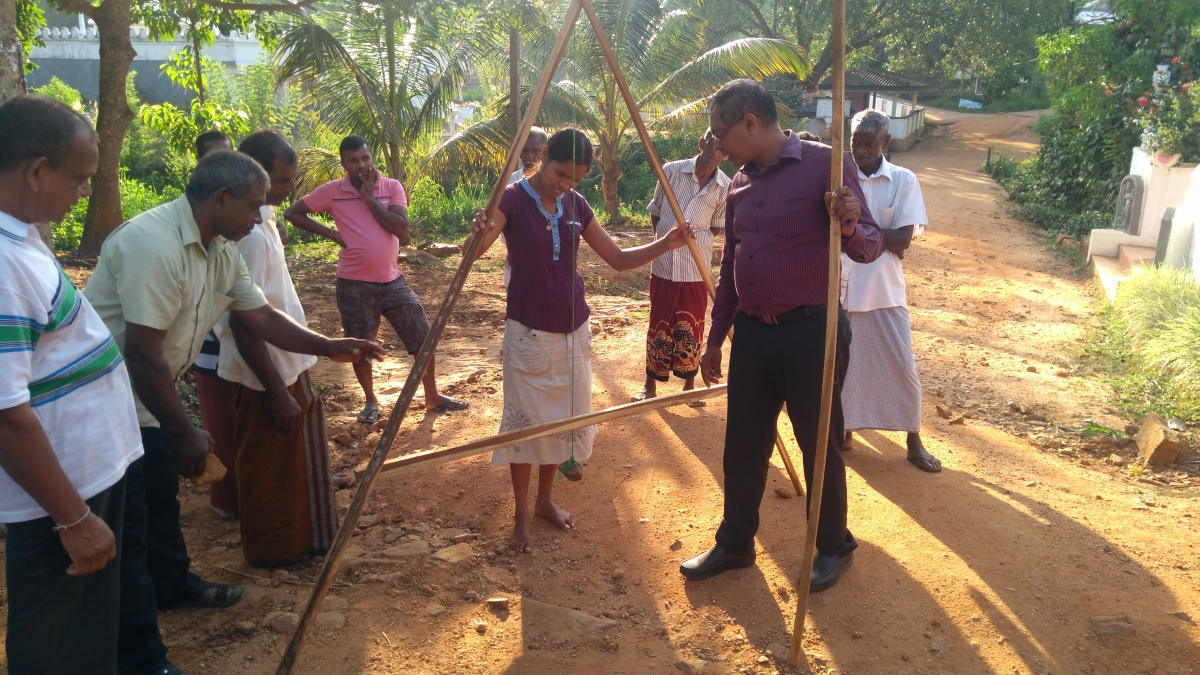
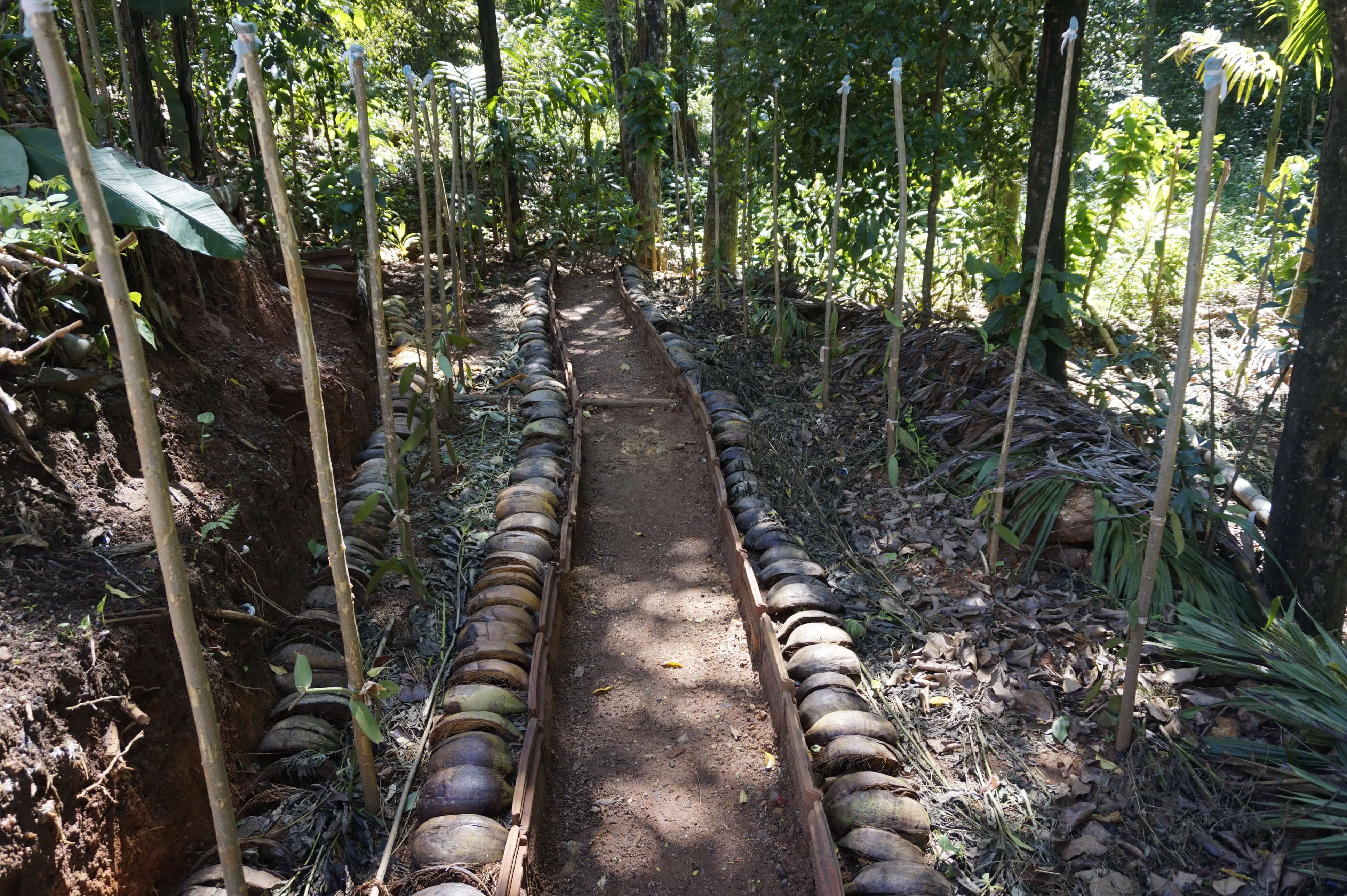
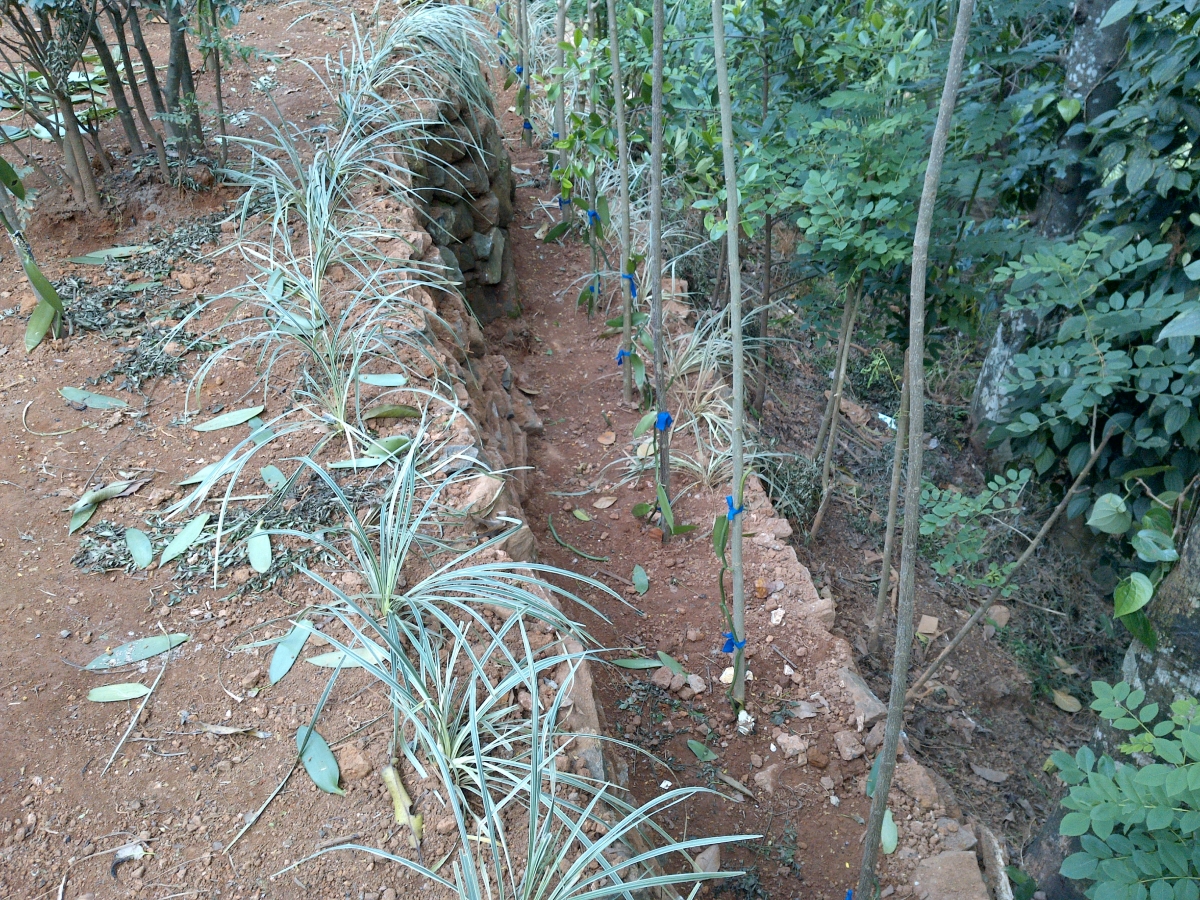
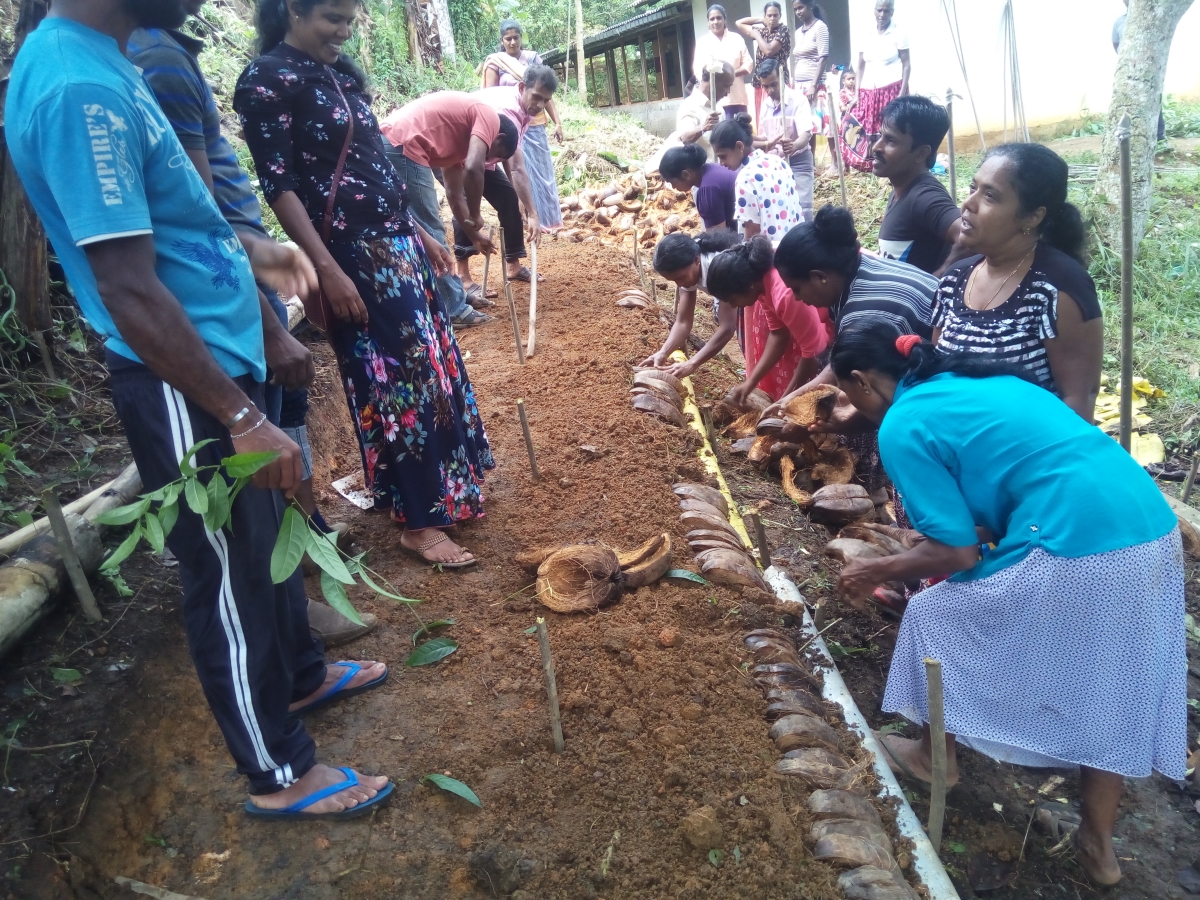
The individual platforms are constructed around the planting hole and are one meter wide and two meters in length. The distance between the two platforms is the same (minimum 2 meters) as the space for the vanilla plant. The lower side of the platform (lower edge) has a shoulder bund, stabilized with coconut husk, tree logs, and stones.
The contour platforms are 1.75 meters in width and length depending on the land size and other characteristics. The platform is constructed with a slightly inverted gradient. A small drain with a suitable gradient along the length on the upper side of the platform is constructed to drain out excess water during rain. These small drains are connected to a leader drain. The edges of the platforms are well stabilized again by coconut husk, tree logs or stones (shoulder bund measure: height x width = 20cm x 30cm).
This sustainable land management (SLM) technology is highly accepted by the farm families, as the Vanilla SLM model is an economically attractive opportunity especially for women; but only where the environmental conditions are suitable for vanilla growing.
Photos of the Technology
- 📍 Doluwa - Sri Lanka
- 🗓 2019-05-06
- 📷 Bandara Rotawewa
- 📍 Doluwa - Sri Lanka
- 📷 Bandara Rotawewa
- 📍 Doluwa - Sri Lanka
- 📷 Bandara Rotawewa
- 📍 Doluwa - Sri Lanka
- 📷 Bandara Rotawewa
- 📍 Doluwa - Sri Lanka
- 📷 Gamini
- 🗓 2019-01-10
- 📷 Gamini Warusamana