
Soil Cement Water Collection Pond for Supplemental Irrigation Purpose in Dry Season
Type: Technologies
Creation: 2020-02-26 10:17 Updated: 2021-01-21 16:47
Compilers: Kabita Nhemhafuki
Reviewers: Rima Mekdaschi Studer, Isabelle Providoli
Country/ region/ locations where the Technology has been applied and which are covered by this assessment
- Country: Nepal
- Region/ State/ Province: Province no: 3
- Further specification of location (e.g. municipality, town, etc.), if relevant: Namobuddha Municipality, Kavrepalanchowk District, Nepal
- Map: View Map
Description of the SLM Technology
Short description of the Technology
A soil cement water collection pond to store rainwater, runoff and household kitchen waste water free from soap and detergent for supplemental irrigation purpose during dry seasons.
Detailed description of the Technology
In Nepal's mid-hills mountain farmers face problems during dry seasons to irrigate their fields, as they entirely depend on rain- water. Soil cement water collection pond are ideal to tackle this challenge, as they can capture excess rainfall during monsoon, which is later available during prolonged seasonal water shortage.
The Resilient Mountain Village (RMV) project of ICIMOD together with its local partner, CEAPRED tested and demonstrated soil cement ponds with a capacity of 24000 liters. The conservation ponds were used for irrigating high value off-season horticultural crops (vegetables, fruit, and spices). These crops were irrigated with drip irrigation and micro sprinklers. The ponds were fed from rainwater, upland springs and taps, and household wastewater from kitchen free from soap and detergent. They were established during the dry season during 3 months. They were prepared by selecting a suitable site with a sufficient catchment; mapping out the area and depth of the pond; digging out the soil; removing protruding stones and roots; and compacting and smoothing the sides and bottom of the pond. Then gravel and pebbles were used for the base and the floor and side walls were leveled off. Initial mixture of soil, sand and cement (3:3:1) was applied to roughly plaster all the side walls and gravel was mixed in the mixture while plastering the floor. The following day, the roughly plastered pond was watered and was covered with wet jute sack to keep it moist. This was continued for 3-4 days. Then again a second mixture of soil, sand and cement (2:2:1) was applied to smoothly plaster the floor and side walls. The pond was watered for the next 3-4 days and was covered with wet jute sacks. Around 4-5 days after the second plaster, the pond was filled with water. For safety, pond was enclosed with a gabion wire/ bamboo fence (or using any locally available material). The total establishment cost for a soil cement pond with 24000 liters capacity was USD 311.
The main maintenance activity was to maintain the gabion wire/bamboo fence to prevent livestock and people from entering the pond, and to remove the sediment that accumulates in the pond. The sediment has to be removed once a year carefully by hand and if cracks occur, it should be sealed with a mixture of soil, sand and cement (3:3:1). The total annual maintenance cost for 24000 liters soil cement tank was USD 68.
This technology has somehow helped small-land holding farmers to irrigate their rain-fed land during dry months which has increased the crop production and their income as well.
Land user's particularly liked that their production increased and that they were able to grow up to three crops per year. Trough this the farmers were able to diversify their crops, and they were less vulnerable to the dry season. In addition, soil cement water ponds are more efficient than plastic-lined conservation ponds which are easily damaged by rats. Although cost effective, the fixed price for this technology is quite high, particularly for smallholder farmers. To lessen this financial burden, local governments can provide subsidies to women and marginalized groups interested in this technology. Self-help groups with a revolving grants system would help expand the use of these ponds and ensure sustained use across Nepal.
Photos of the Technology
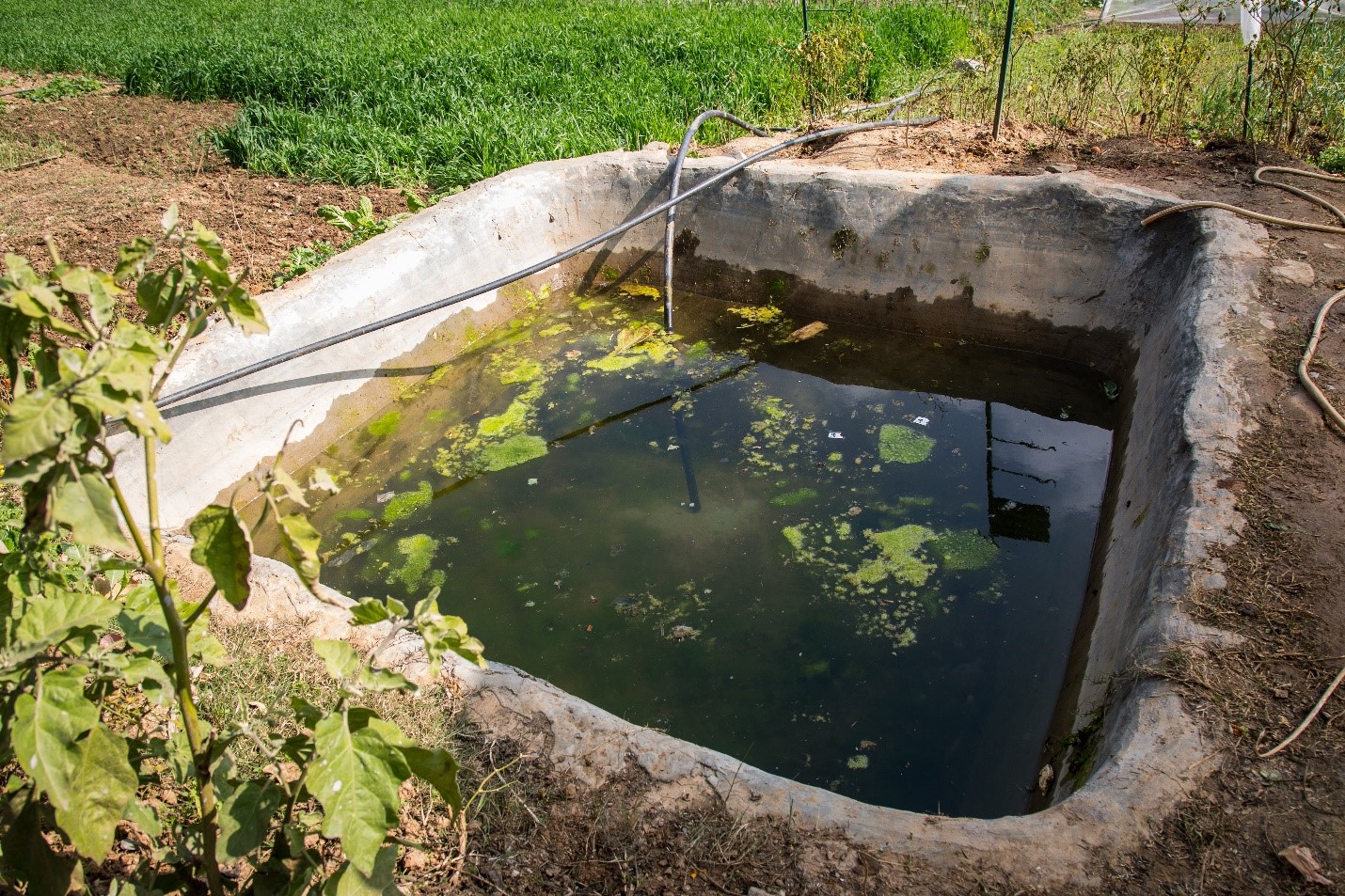
- 📍 Kharibot, 06, Namobuddha Municipality, Kavre
- 📷 Jitendra Bajracharya, ICIMOD
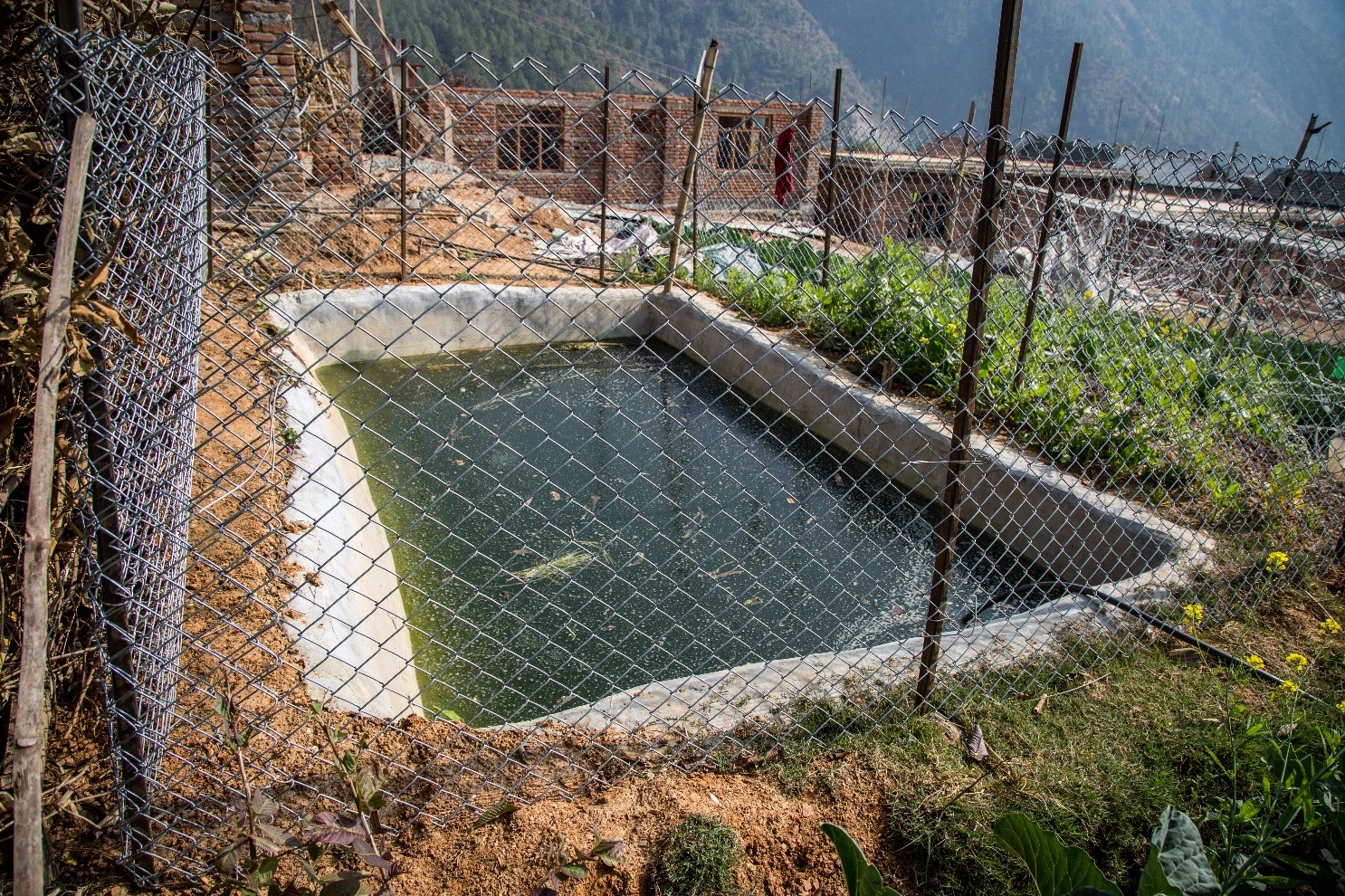
- 📍 Charangefedi, Namobuddha Municipality, Kavre
- 📷 Jitendra Bajracharya, ICIMOD
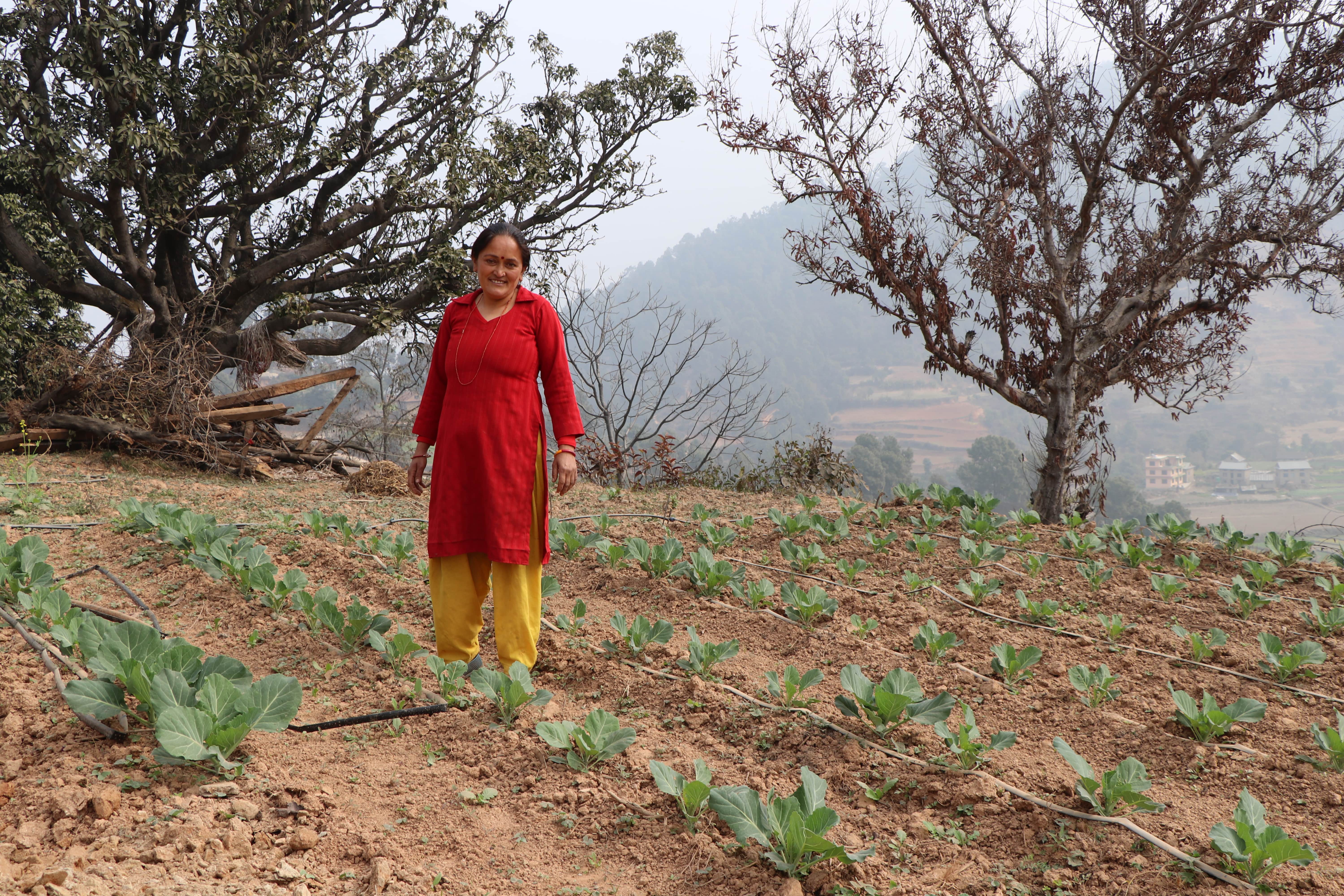
- 📍 Buchhakot, 02, Namobuddha Municipality, Kavre
- 📷 Sanjeev Bhuchar, ICIMOD