
Choi cultivation- a profitable crop for saline areas of Bangladesh
Type: Technologies
Creation: 2020-05-09 07:15 Updated: 2021-12-21 10:01
Compilers: Jalal Uddin Md. Shoaib
Reviewers: Rima Mekdaschi Studer, William Critchley
Country/ region/ locations where the Technology has been applied and which are covered by this assessment
- Country: Bangladesh
- Further specification of location (e.g. municipality, town, etc.), if relevant: It is spread over most of the districts of Khulna division
- Map: View Map
Description of the SLM Technology
Short description of the Technology
Choi Jhal (Piper chaba), locally called morich lota is a creeping vine that is grown in homesteads of saline areas. It is adapted to soil salinity, grows under shade and is a very high value crop. It remains green throughout the year, reducing evapotranspiration from the soil and hence reduces capillary rise of salinity from shallow ground water.
Detailed description of the Technology
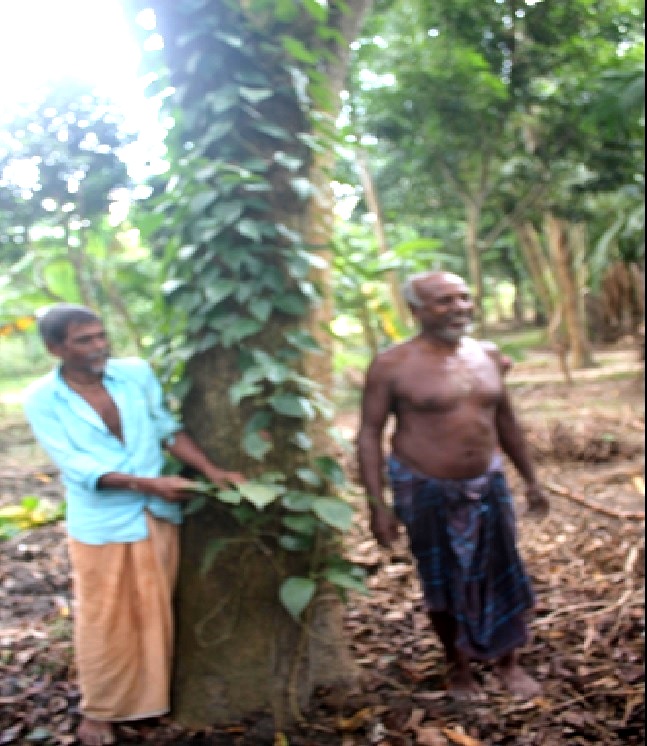
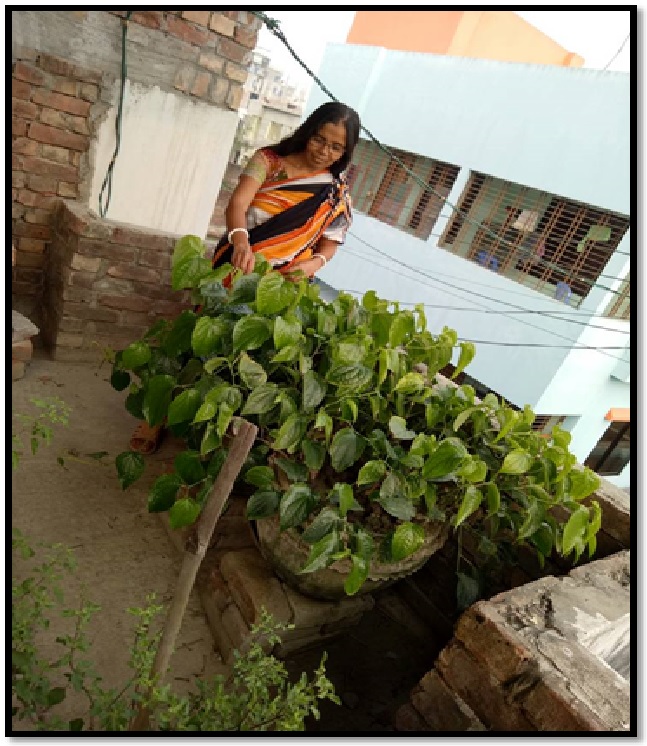
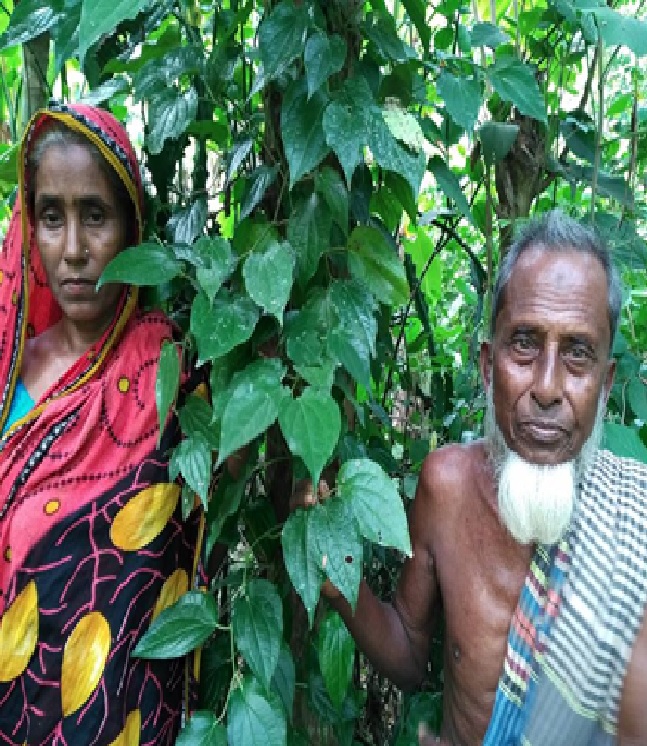
Choi Jhal (Piper chaba), locally called morich lota is a creeping vine that is grown in homesteads of saline areas. It is adapted to soil salinity, grows under shade and is a very high value crop. It remains green throughout the year, reducing evapotranspiration from the soil and hence reduces capillary rise of salinity from shallow ground water. Choi Jhal locally called morich lota, is one of the most popular and unique spices in the south-western region of Bangladesh. It is a flowering vine grown in southern-western districts like Khulna and Satkhira. There are two types of choi found in these areas. One is a narrow vine (20 - 25 mm diameter) and the other is about 2. 5 - 5 cm in diameter. It creeps up to 8-10 meters when allowed to extend on ground. On the other hand it also climb up large trees like Mango (Mangifera indica), Jam (Syzygium cumini), Betel nut (Areca catechu), Coconut (Cocos nucifera) and Kafula (Lannea coromandelica), etc. Leaves and stems of the choi vine look like betel leafs (local name Paan; scientific name: Piper betle). Betel and choi are two species of the same family, Piperaceae. The leaves of choi are oval-shaped and about 5-6 cm long. The flowers are monoecious and blossom during the monsoon. The fruit looks similar to other varieties of long pepper, with an elongated shape that can grow up to 6 cm inches long. The fruit is red when ripe, and turns dark brown or black when dry. Chopped parts of the plant are cooked them with meat and fish, especially with mutton. The spicy pungent flavor of Choi Jhal is a year-round additive spice. In Thailand, P. chaba is known commonly as "Dee Plee”.
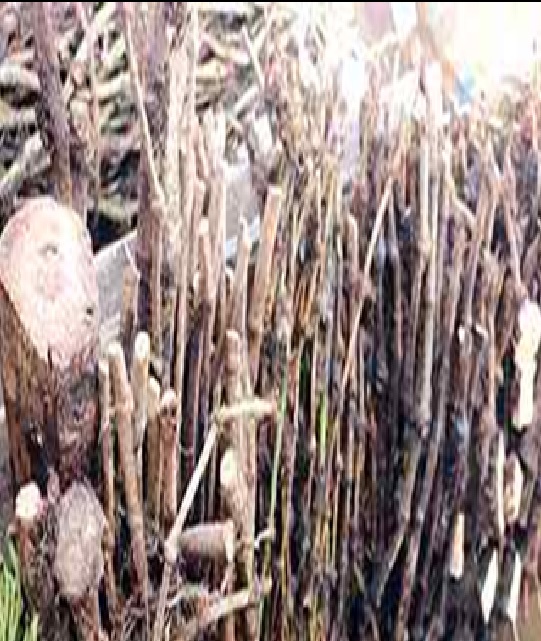
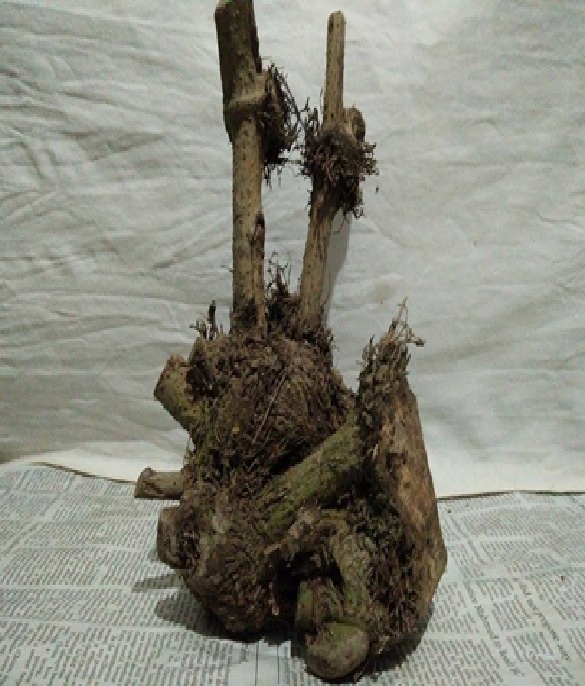
This technology was documented as one of the best practices that supports improved livelihoods of farmers who have no, or very little, cultivable land except their home yards. It is adapted to seasonal salinity in the dry season and waterlogging in monsoon. Pankhali is a village of Dacop Upazalia, Khulna where most of farmer practiced choi cultivation as their main income source. It is easy to propagate with cuttings of vines ideally of 50-75 cm with at least 4-5 nodes. Generally no chemical fertilizer is used for its cultivation, rather domestic waste or compost is used in ‘pits’ at the time of planting vine cuttings. The cuttings of vines are planted in April-May or November-December in relatively higher areas of the home gardens, with loamy soils. Choi is shade-loving. Approximately 2-2.5 ton/ha could be harvested after 5-6 years. It could be harvested after one year, but ideally it is better to harvest after 5 years. Farmers earn 1,000-1,500 BDT (US$1= 84 BDT) per kg from 5-year old choi. The mature roots are more valuable than the green vine. These days this product is marketed by many departmental stores of the city.
This expensive spice has great medicinal value, and tastes like pepper. It has been used to treat different kinds of diseases and it has a number of herbal uses, specially the antimicrobial and antioxidant active ingredients, Choi has 7% aromatic oil, 5% alkoloid and pepertin and in roots 13-15% peperin. The people of the area believe that it helps to remedy various diseases. One inch of choi can be used as medication for coughs. Its price depends on its thickness, and different thicknesses of Piper chaba taste different. Thicker ones are popular for its flesh and thinner ones for their spicy heat.
Commonly the twigs, stems or roots both fresh and dried forms are used in this area as a spice. Sometimes it is ground and used as an ingredient in a variety of sauces and pastes. It is a relatively expensive spice and the roots are usually more expensive than the stems because of their stronger aroma. It is mainly used as a taste enhancer. It makes the food spicier. It is also used in Jhalmori, Pickles, Halim and for making tasty soups.
Photos of the Technology
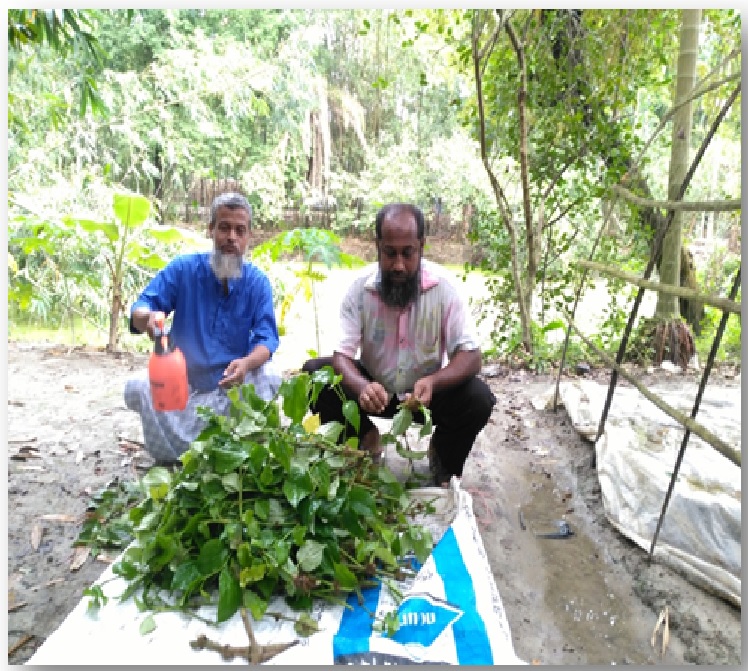
- 📍 Pankhali, Dacope
- 🗓 2020-07-01
- 📷 Mr. Nazrul Islam
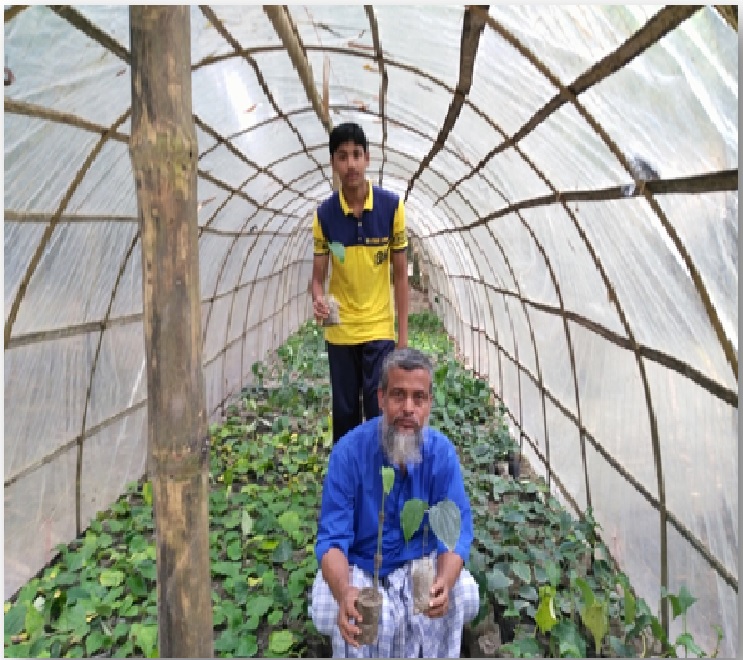
- 📍 Dacope, Khulna
- 🗓 2020-07-01
- 📷 Mr. Nazrul Islam
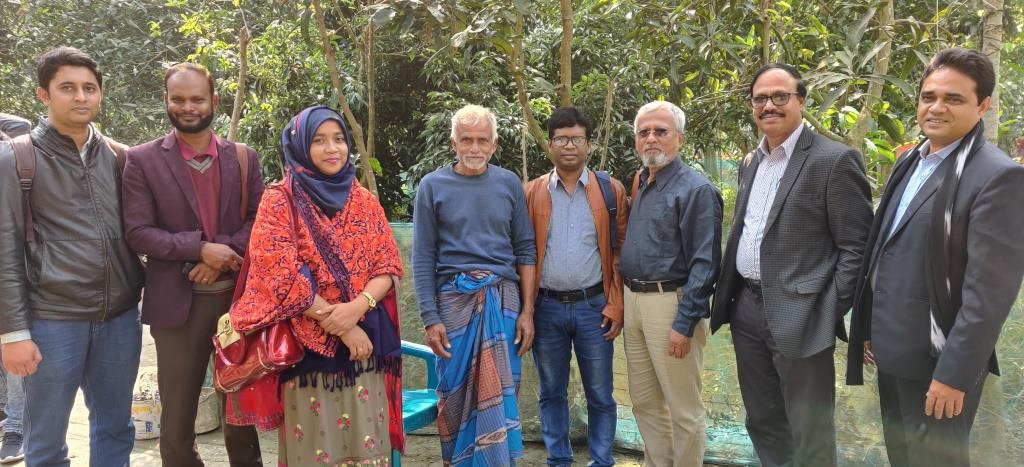
- 📍 Pankhali, Dacope, Khulna
- 🗓 2020-07-01
- 📷 Jalal Uddin Md. Shoaib
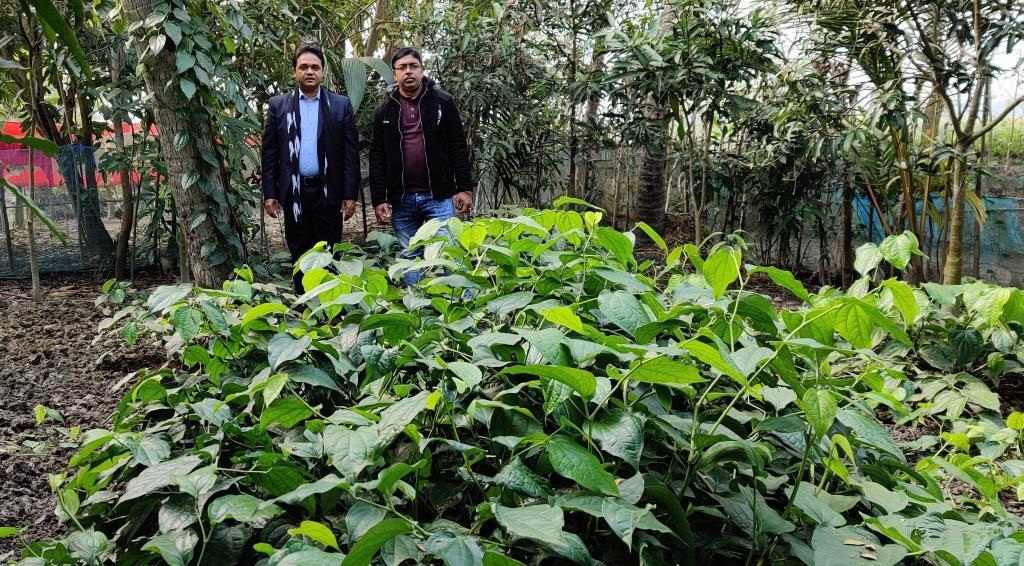
- 📍 Pankhali, Dacope, Khulna
- 🗓 2020-07-01
- 📷 Jalal Uddin Md. Shoaib
- 📍 Dacope, Khulna
- 🗓 2020-07-01
- 📷 Mr. Nazrul Islam
- 📍 Dacope, Khulna
- 🗓 2020-07-01
- 📷 Mr. Nazrul Islam
- 📍 Dacope, Khulna
- 🗓 2020-07-01
- 📷 Mr. Nazrul Islam
- 📍 Khulna
- 🗓 2020-07-01
- 📷 Mr. Nazrul Islam
- 📍 Dacope, Khulna
- 🗓 2020-07-01
- 📷 Mr. Nazrul Islam