
Enriching pastures through phytomelioration
Type: Technologies
Creation: 2022-03-24 12:22 Updated: 2025-08-09 10:21
Compilers: Rustam Ibragimov
Reviewers: Rima Mekdaschi Studer, Olga Andreeva
Country/ region/ locations where the Technology has been applied and which are covered by this assessment
- Country: Uzbekistan
- Region/ State/ Province: Kashkadarya region
- Further specification of location (e.g. municipality, town, etc.), if relevant: Breeding Farm ‘Guzar’, ‘Abdukhamid’ Area (massif) Kashkadarya region
- Map: View Map
Description of the SLM Technology
Short description of the Technology
Strip seeding of desert drought-resistant plants on degraded pastures creates an improved and stable structure of pasture phytocoenoses composed of natural and cultivated forage plants, and increases forage potential of desert pastures.
Detailed description of the Technology
This technology was developed and adapted by the Samarkand Scientific Research Institute of Karakul Sheep Breeding and Desert Ecology on a 2,100-ha area, with the aim of restoring and improving natural ephemeral–ephemeroid vegetation on degraded pastures. The approach is highly relevant for livestock farms, as more than 80% of Uzbekistan’s pastures are located in desert zones, characterized by a very hot, dry climate and low precipitation. Desert ephemeral vegetation completes its growth cycle within a very short, moist spring period.
In addition to harsh natural conditions, pastures are subject to excessive stocking rates, overgrazing, and the absence of pasture rotation, all of which accelerate degradation. Due to unfavorable natural and climatic factors, disturbed vegetation cover recovers very slowly through natural regeneration. Meanwhile, the growth of livestock production requires increasing pasture productivity to secure adequate forage resources. This technology offers an effective method for natural pasture improvement.
The method involves sowing seeds of various local drought-resistant plant species (such as 'Haloxylon persicum', 'Salsola arbuscula', 'Calligonum' spp., and others) in 10-meter-wide strips alternating with strips of natural pasture of equal width. On the plowed strips, seedlings are planted in furrows spaced 1-m apart, with seeds additionally sown in the same furrows to ensure reliable germination. Over time, shrubs and subshrubs expand into the interstrip areas, while natural vegetation reestablishes on the plowed strips. This results in the formation of a complete agro-phytocoenosis: grasses + subshrubs + shrubs.
The technology is inexpensive - approximately USD 100–150 per ha, and yields positive results within 3–4 years. Farmers can later expand and enrich pastures by distributing seeds without incurring additional costs. The established plantations allow for year-round grazing.
Key stakeholders in pasture phytomelioration include farmers, agricultural clusters, forestry enterprises, rural citizen assemblies, farmers’ associations, agricultural and land management departments and environmental protection agencies.
It is recommended to carry out sowing of desert plants during the wet season (December–February), taking into account weather forecasts. Sowing may be done using seed drills or manually. To improve germination, seeds are mixed with manure and dry sand in a 1:5 ratio. Recommended seeding rates are: 'Halothamnus subaphyllus' – 10–12 kg/ha, 'Calligonum' spp. – 8–10 kg/ha, 'Haloxylon ammodendron' – 6–7 kg/ha.
Photos of the Technology
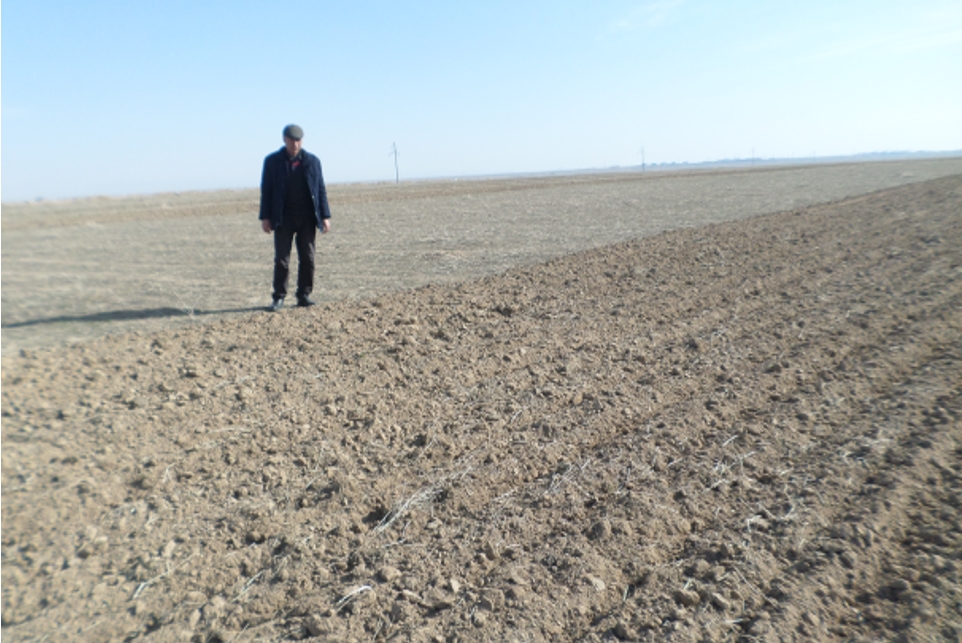
- 📍 Breeding Farm ‘Guzar’, ‘Abdukhamid’ Area (massif)
- 🗓 2021-04-01
- 📷 T. Mukimov
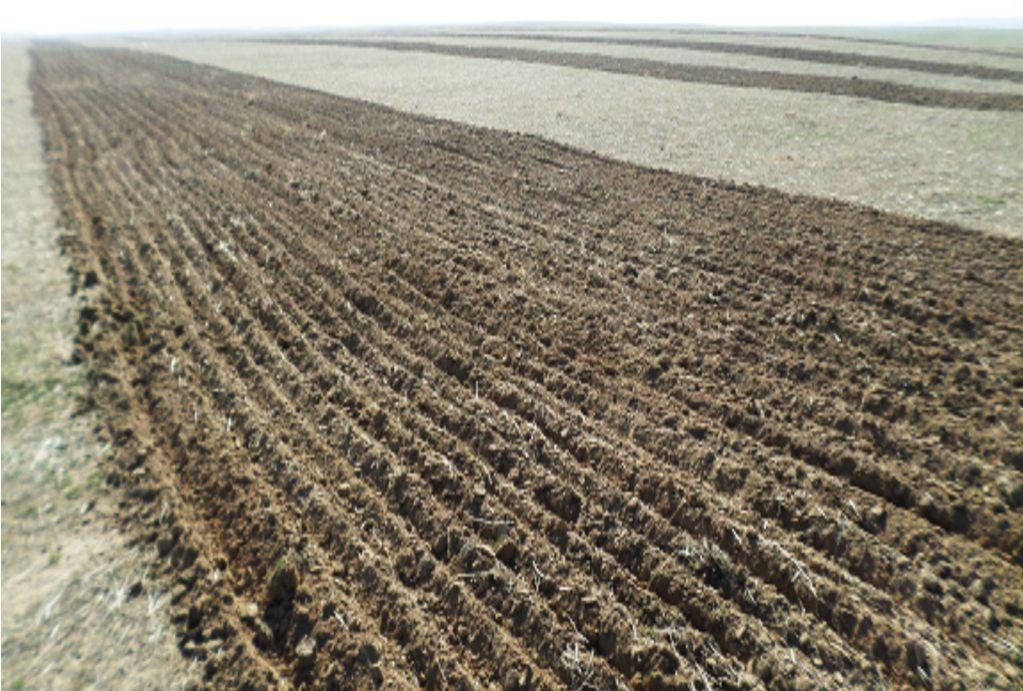
- 📍 Breeding Farm ‘Guzar’, ‘Abdukhamid’ Area (massif)
- 🗓 2021-04-01
- 📷 T. Mukimov