
Application of hydrogels for growing agricultural crops under low soil moisture conditions [Uzbekistan].
Type: Technologies
Creation: 2022-03-28 12:51 Updated: 2025-08-09 12:30
Compilers: Rustam Ibragimov
Reviewers: Olga Andreeva, Rima Mekdaschi Studer
Country/ region/ locations where the Technology has been applied and which are covered by this assessment
- Country: Uzbekistan
- Region/ State/ Province: Kashkadarya region
- Further specification of location (e.g. municipality, town, etc.), if relevant: Kamashi District, agricultural site of the Kashkadarya branch of the Research Institute of Grain and Leguminous Crops
- Map: View Map
Description of the SLM Technology
Short description of the Technology
The technology of cultivating agricultural crops with the use of hydrogels ensures optimal soil moisture and plant nutrition by accumulating soil water and nutrients and gradually releasing them to the plants, thereby increasing crop yields and improving harvest quality.
Detailed description of the Technology
The use of hydrogel technology in crop production was demonstrated under the FAO/GEF (CACILM-2) project at the agricultural site of the Kashkadarya branch of the Grain and Legume Research Institute, located in Kamashi district of the Kashkadarya region.
In arid climates, soil moisture is the main limiting factor for crop cultivation. In irrigated zones, the lack of precipitation is compensated by artificial irrigation. However, rainfed farmland depends entirely on precipitation, which is distributed extremely unevenly throughout the year. Under such conditions, measures to improve crop water availability become increasingly important.
In global agriculture, one of the methods for conserving soil moisture is the use of hydrogels, which can retain water in amounts 300 to 1,000 times their own weight. Unlike most water-absorbing substances, hydrogels can gradually release the absorbed water and nutrients to plants. Thanks to these unique properties, the hydrogel functions as a water reservoir that maintains normal soil moisture. Although it cannot replace water, it enables the most efficient use of rainfall and existing soil moisture reserves.
Hydrogel is applied to the soil in dry form, evenly spread over the surface and then plowed in. In this case, the effect appears later, as the hydrogel needs to absorb water before it starts working. Once swollen, the hydrogel improves soil structure and its water-retention capacity. Hydrogel can also be applied after pre-hydration—up to a 100-fold increase in polymer mass (about one hour)—by spraying the mixture onto the soil. This method can be used immediately before plowing.
The use of hydrogels helps save irrigation water by reducing surface evaporation caused by the soil’s inability to retain moisture.
Photos of the Technology
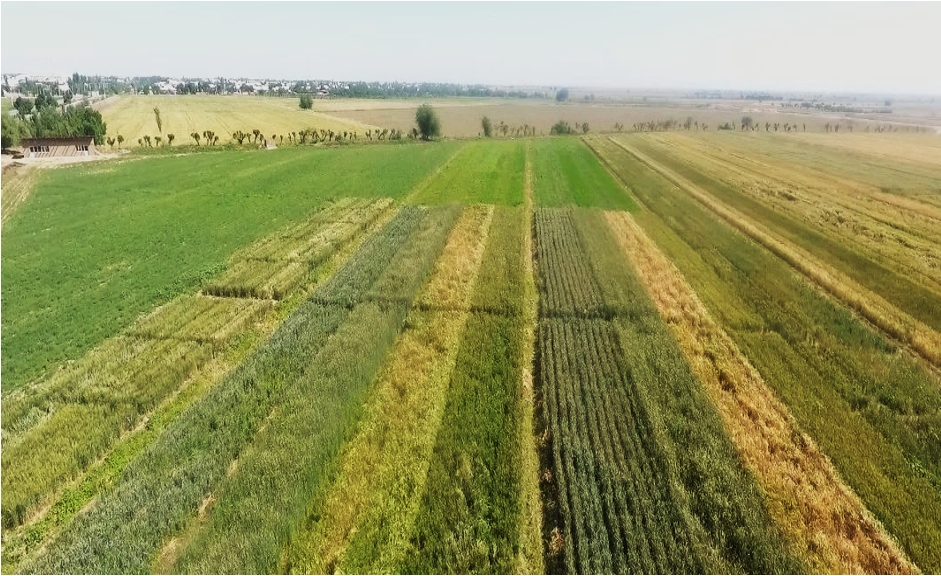
- 📍 Kamashi district, Kashkadarya region
- 📷 D. Zhuraev
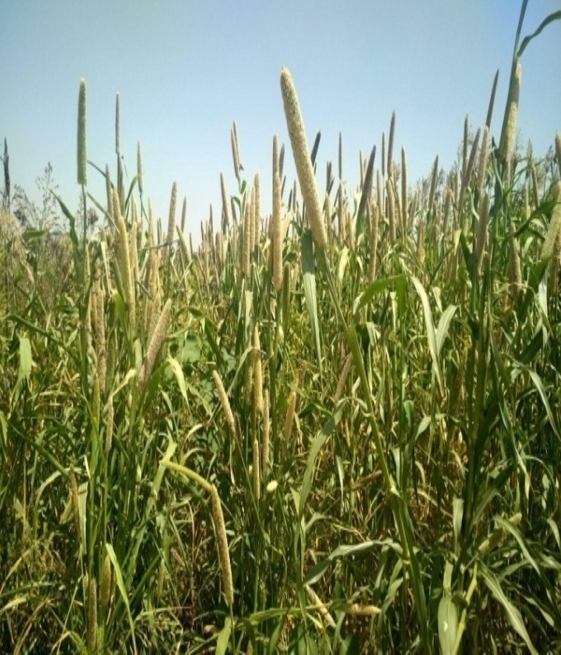
- 📍 Kamashi district, Kashkadarya region
- 📷 D. Zhuraev