
Floating Garden
Type: Technologies
Creation: 2016-10-09 11:31 Updated: 2019-03-06 15:18
Compilers: Shamim Ahamed
Reviewers: Alvin Chandra, Alexandra Gavilano
Country/ region/ locations where the Technology has been applied and which are covered by this assessment
- Country: Bangladesh
- Region/ State/ Province: Sylhet division, Sunamganj district
- Further specification of location (e.g. municipality, town, etc.), if relevant: Paschim Pagla, Patharia and Shimulbak unions under South Sunamganj sub-district, Charnarchar and Rajanagar unions under Derai sub-district
- Map: View Map
Description of the SLM Technology
Short description of the Technology
Floating Garden is a traditional technology, practiced in the southern parts of Bangladesh locally called “Baira” or “Dhap”. The technology allows producing crops, vegetables and seedlings in areas where farming land is scarce and where the land is flodded or water logged for more than six months in a year.
Detailed description of the Technology
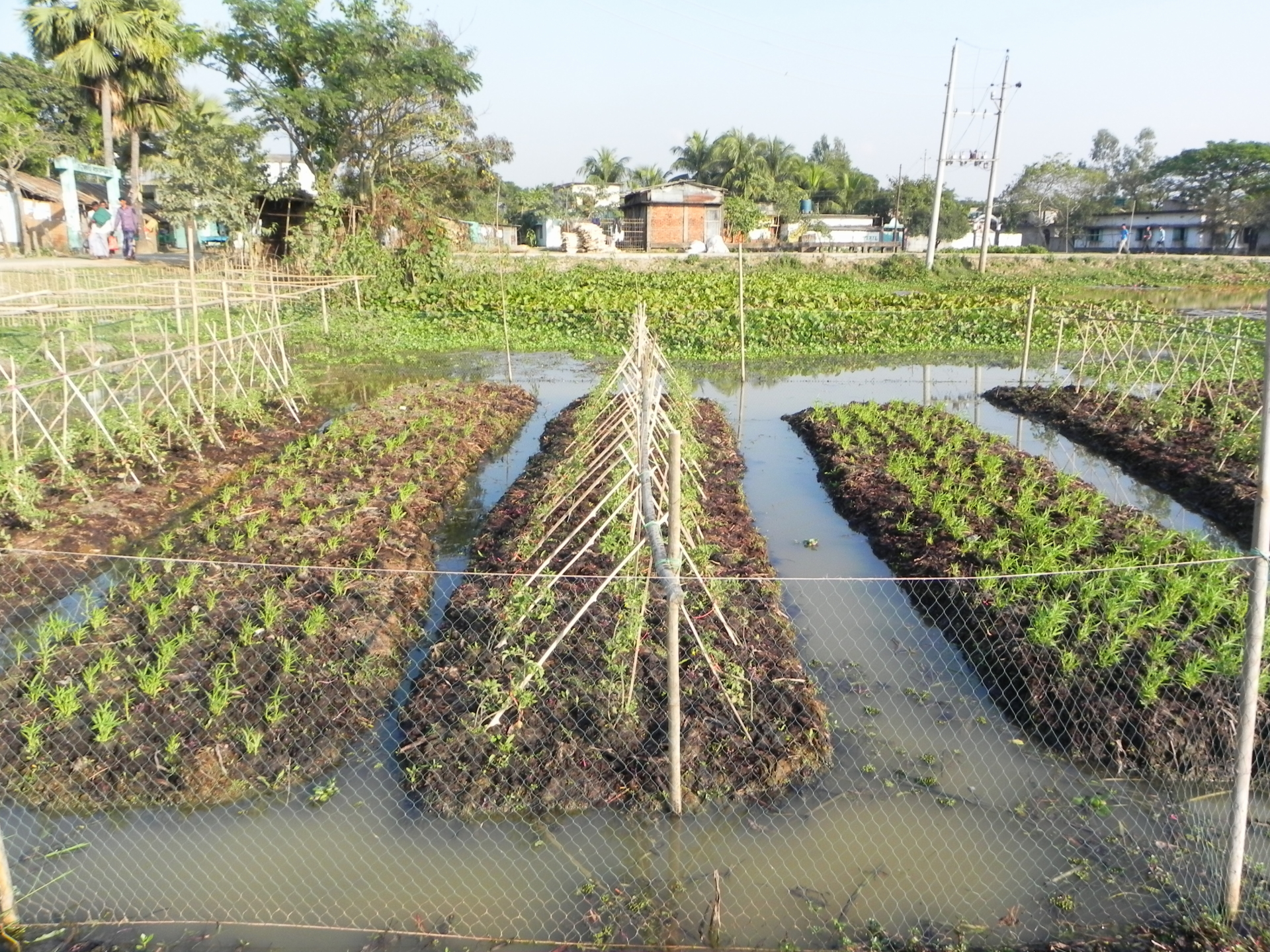
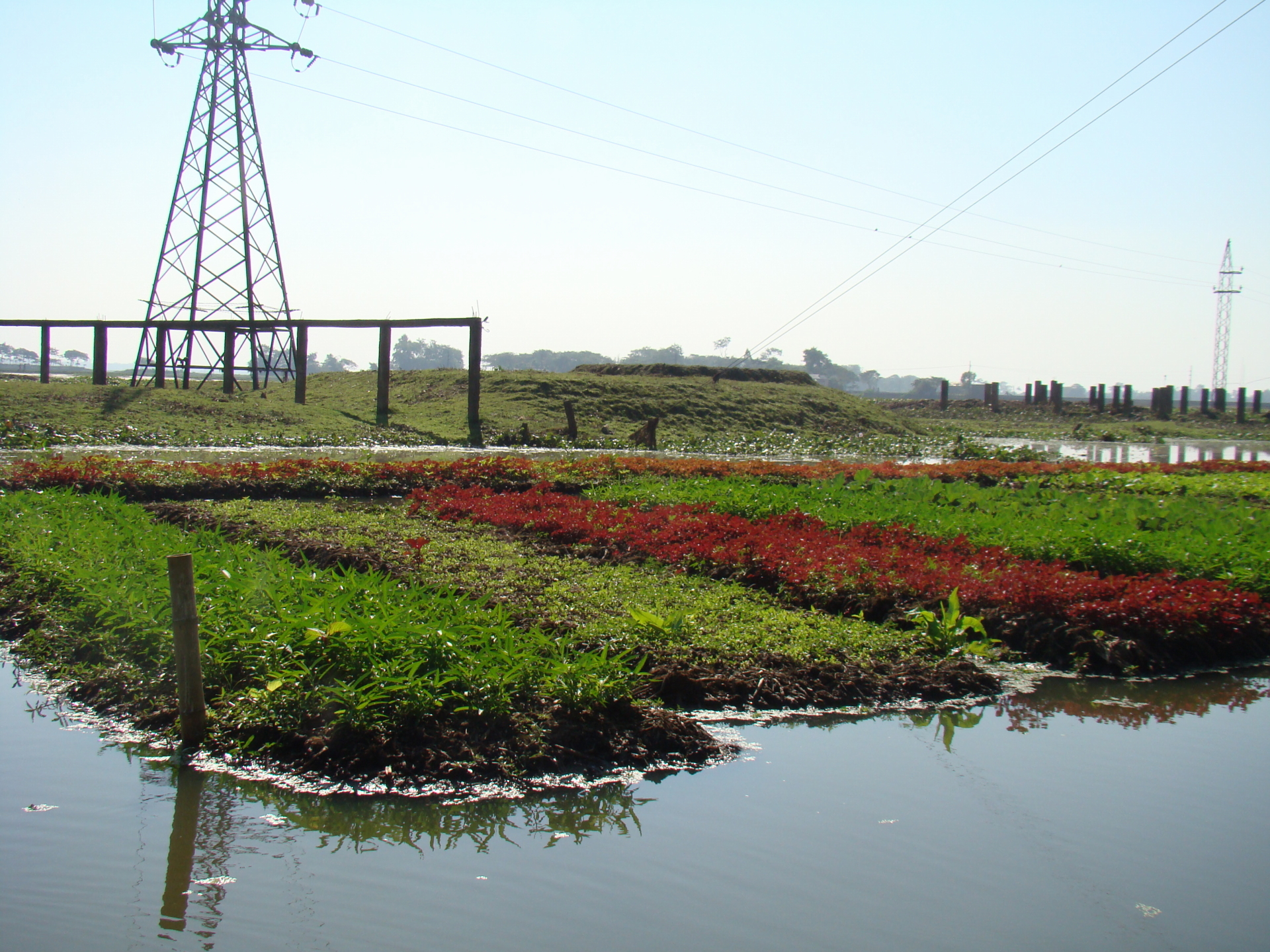
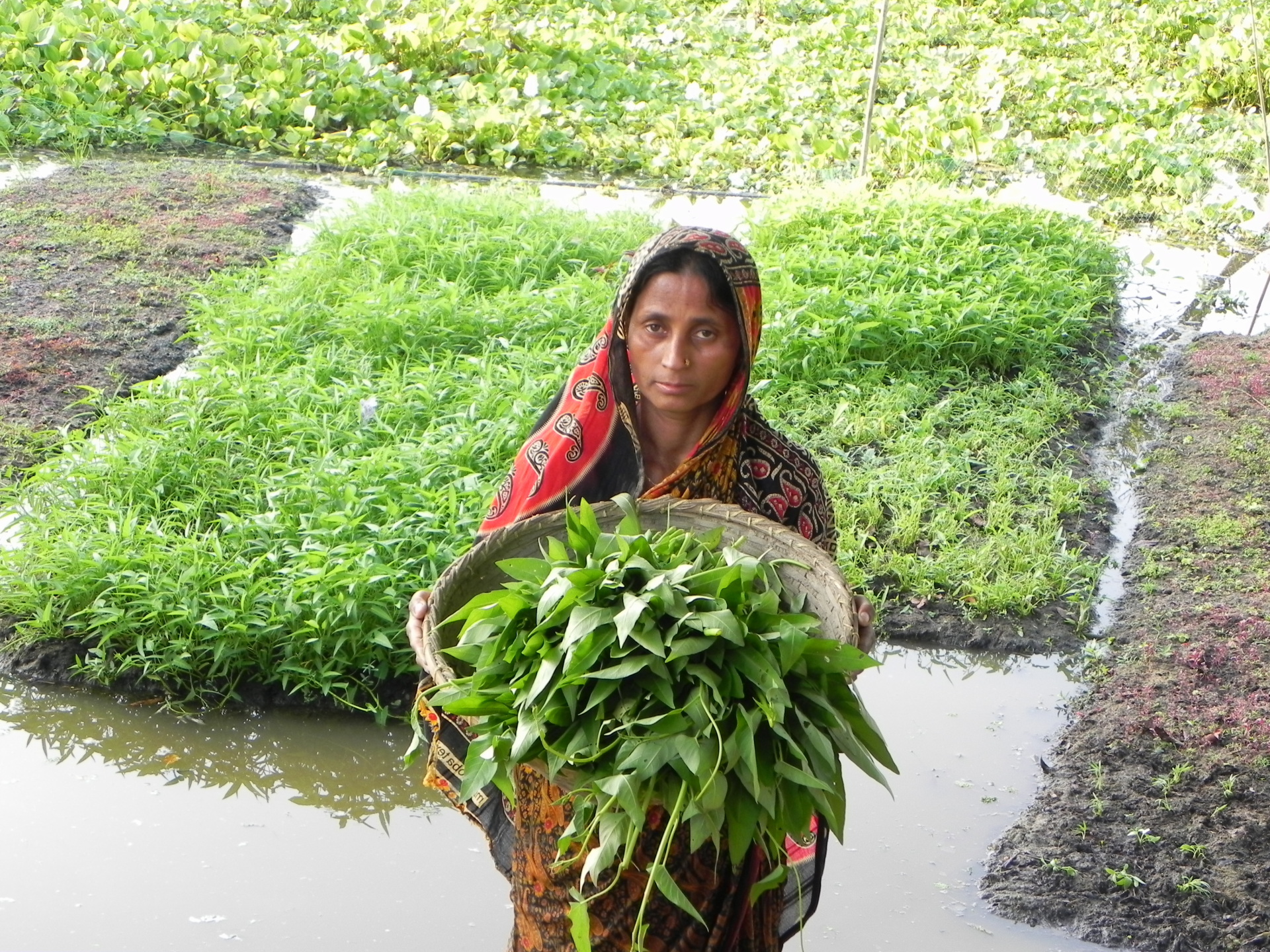
Floating gardensa are a traditional practice in south central districts of Bangladesh since long time, and has been promoted by government extension agency and development organizations in different parts of the country with technical improvements. With this technology, crops (mainly vegetables) are cultivated on floating garden beds in areas where the land inundated for more than six months in a year.
Establishment:
The basic input and main raw material to prepare the floating garden bed are water hyacinths (Eichhornia crassipes). In some cases bamboo sticks are also used to make the floating beds more resistant. The floating gardens are of different size, with a standard size per bed during preparation of 1.5 - 1.8 meter wide, 10 -11 meter long and 1 - 1.3 meter above water level. However, considering local context- such as wave action, size of water body, presence of a wetland - the bed size may vary, also depending on whether compost is added on the top. The establishment of the floating gardens are very cheap in terms of raw material and require mainly human manual labour for its establishment, without material costs for maintenance.
The garden can be used for two purposes: for vegetable production and for vegetable seedling production.
In water logged areas (where water remains for the whole year) floating beds are mainly used for vegetable production. Almost any type of vegetables can be grown in the floating bed. Production of leafy vegetables proofed to be most profitable. In addition, all types of vegetable seedlings and rice seedlings can produced in floating garden based on demand. In other areas, which are only inundated temporarily, floating garden can be used for both vegetable and seedling production. In this second case seedlings can be transfered from the garden to the fields on the main land immediately after receding of the water. This practice can save 2 to 3 weeks time of vegetable or rice production in winter season. This is a crucial advantage considering the trend to shorter growing periods due to unpredictable early spring rains.
A key advantage of floating gardening is the fact that heavy rainfalls usually do not have any negative effect on culture of the floating gardens, which are a highly effective and beneficial risk reduction and climate change mitigation technology. Floating gardens can further contribute to food security and improved nutrition for poor households, and it is a source for additional income by making use of cheap and abundant local input resources. Different NGOs improved and promoted this technology in north-west and north-east parts of Bangladesh since 2000. Since 2011 also the public agricultural extension agencies promote this technology.
As an overall goal this technology aims at protecting people’s assets for agricultural production from damages due to seasonal floods and provide options for alternative income resources. The floating garden technology is designed as measure to protect effectively from yearly floods. It might not be robust enough for extreme events with heavy storms and waves. Smaller repairing can be done by the owners themselves. In case of major damages the beds can be replaced by new ones, since the investment costs are very low. In the shallow areas the floating beds may become ordinary garden beds or fields during dry season.
Photos of the Technology
- 📍 Sunamganj, Bangladesh
- 📷 Md. Zahid Hasan
- 📍 Sunamganj, Bangladesh
- 📷 Md. Zahid Hasan
- 📍 Sunamganj, Bangladesh
- 📷 Md. Zahid Hasan