
Agroforestry reclamation of rainfed areas
Type: Technologies
Creation: 2022-04-09 10:08 Updated: 2025-07-26 19:31
Compilers: Rustam Ibragimov
Reviewers: Olga Andreeva, Hayot Ibrakhimov
Country/ region/ locations where the Technology has been applied and which are covered by this assessment
- Country: Uzbekistan
- Region/ State/ Province: Kamashi district, Kashkadarya region
- Further specification of location (e.g. municipality, town, etc.), if relevant: Kamashi town
- Map: View Map
Description of the SLM Technology
Short description of the Technology
Planting drought-resistant tree species on sloping rainfed areas will increase the productivity of rainfed land and local incomes. Local afforestation of rainfed arable land will provide environmental benefits such as reducing the risk of water erosion, mitigating the impact of climate change by sequestering CO2 in wood biomass and soil, and will also contribute to overall environmental health.
Detailed description of the Technology
This technology was implemented within the framework of the GEF/FAO project "Decision Support for the Promotion and Dissemination of Sustainable Land Management" (DS-SLM) (2015-2018) on a plot of rainfed arable land in the Kamashi district of the Kashkadarya region. Rainfed arable land in Uzbekistan occupies about 743 thousand ha, located in the foothill zone on the adyrs (foothills). The slopes of rainfed land are subject to water erosion, and hence, implementation of special techniques and specific measures to grow crops is needed to preserve the upper fertile soil layer and conserve soil moisture. The technology of agroforestry reclamation of rainfed arable land consists of creation of drought-resistant tree species plantations on small terraces. Implementation of the technology includes the following activities:
1. Traditional land preparation – plowing, harrowing, leveling and compaction of upper soil layer,
2. Manually preparing small, 1 m wide terraces at a distance of 5 m to each other, with a sloping opposite to the general slope,
3. Fencing an isolated agroforestry plot with a metal fence or other means to prevent damaging by livestock,
4. Planting seedlings during spring (in March), in 5 x 5 m plots,
5. Further activities include caring for the plantings:
- simple drip irrigation using polyethylene bottles (during the first 2-3 years),
- application of fertilizers (manure, compost),
- implementation of measures to combat pests and diseases. In early spring (before the buds appear), trees are treated against pests with copper sulfate at the rate of 100-150 grams per 10 liters of water. In March, tree trunks are whitewashed with lime. The row spacings are treated with 57% fufanon at 0.6-1.0 l/ha, or 30% benzophosphate at a rate of 2.0-2.3 kg/ha.
The cost of implementing the technology is quite high - about 1200 US dollars, which acts as a deterrent factor to its widespread use. The main costs relate to the initial period - making terraces, purchasing and planting seedlings. Later, the costs are reduced - there is no need for irrigation, and weed infestation is reduced as a result of competition with matured trees.
A feature of rainfed land conditions in the territory of technology implementation is the low precipitation. Climate and weather determine the low and unstable yield of winter wheat, crop that is traditionally grown on dryland areas. To increase the productivity of dryland farming, areas under drought-resistant crops, such as safflower, are currently expanded. Finding alternative solutions and supporting local communities whose main occupation is rainfed agriculture and livestock breeding is of paramount importance to improving living standards and well-being.
Photos of the Technology
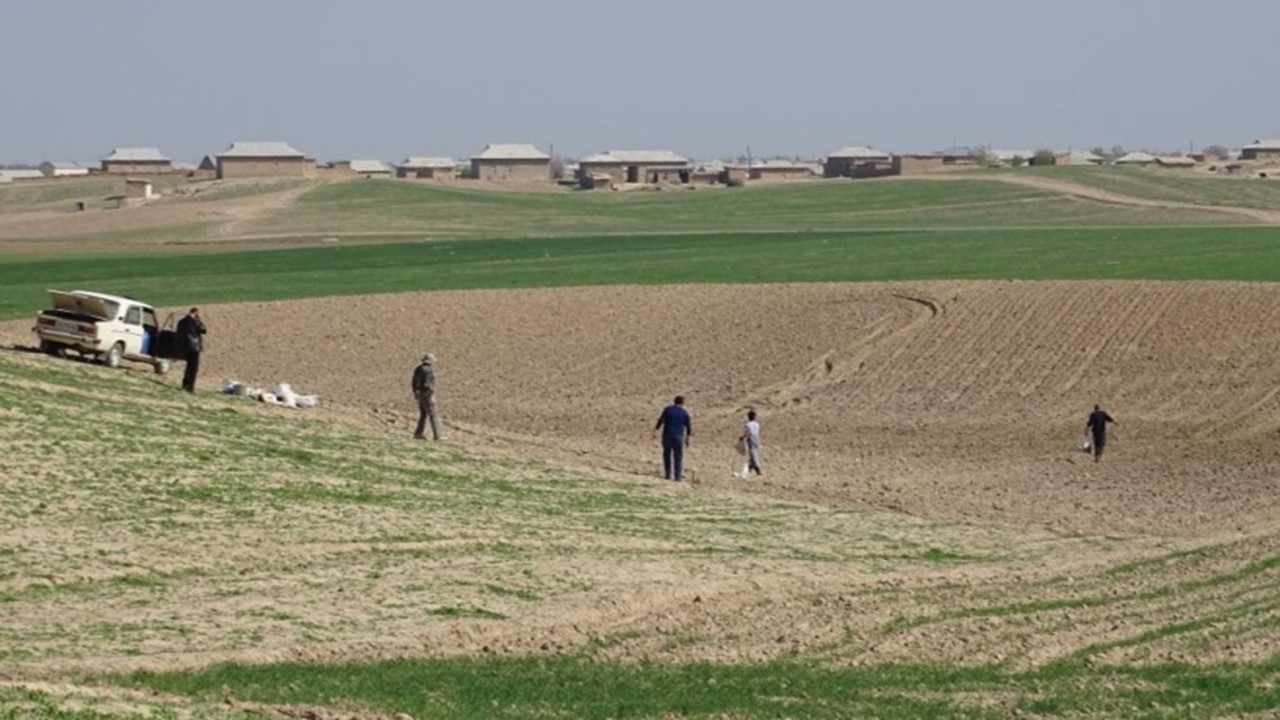
- 📍 "Altinbaev Yeri" farm, Kamashi district, Kashkadarya region
- 📷 Т. Mukimov
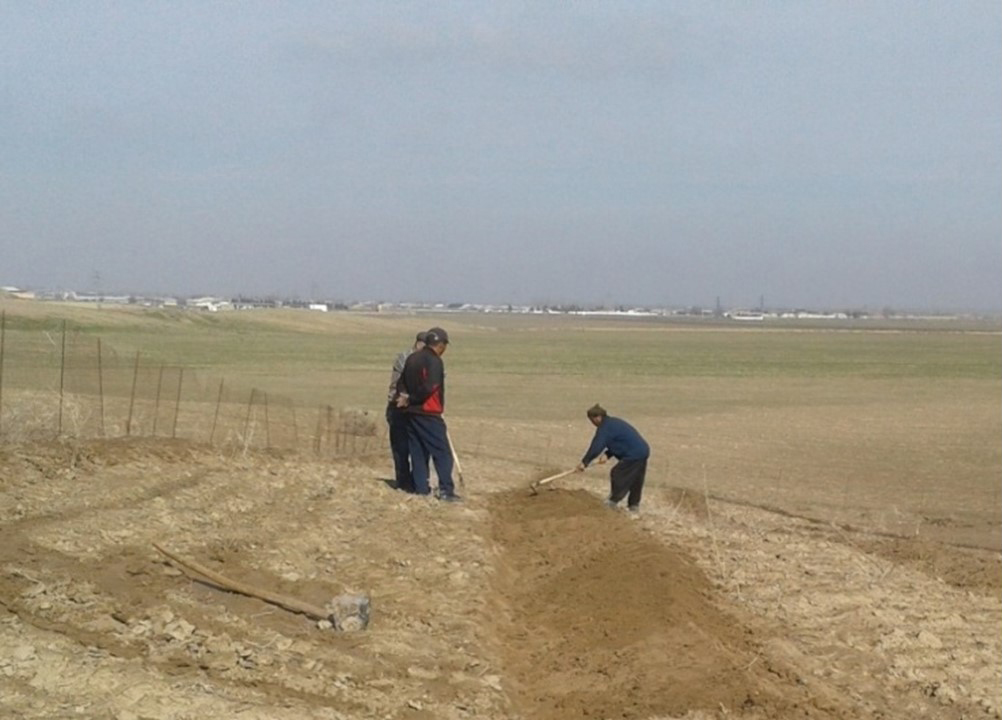
- 📍 "Altinbaev Yeri" farm, Kamashi district, Kashkadarya region
- 🗓 2016-10-03
- 📷 Т. Mukimov
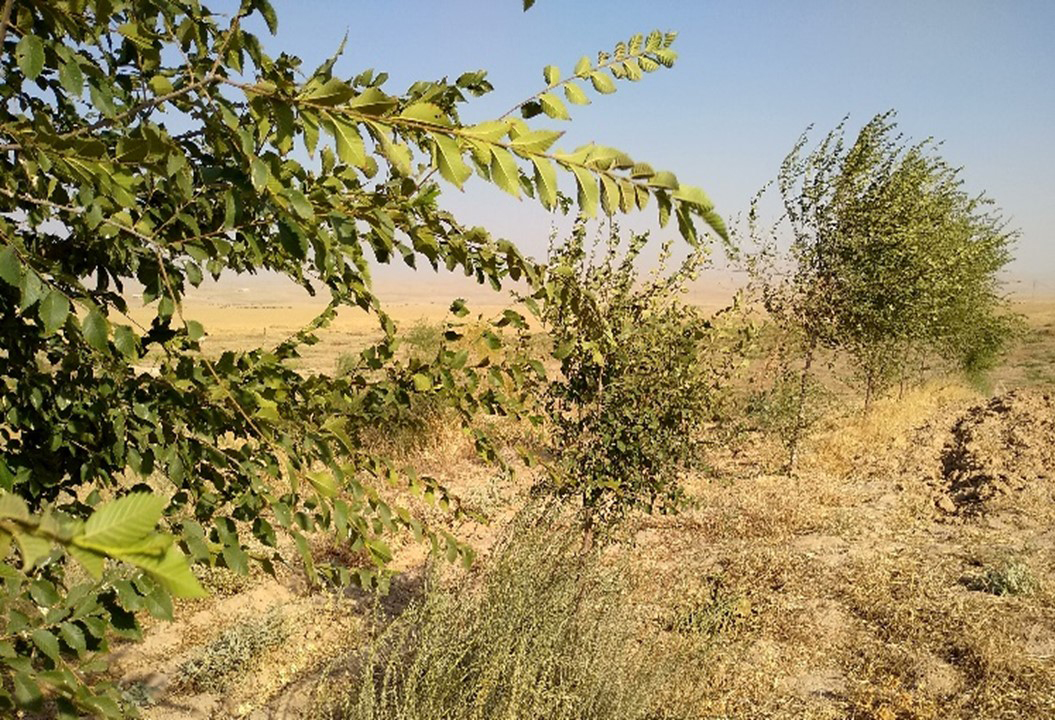
- 📍 "Altinbaev Yeri" farm, Kamashi district, Kashkadarya region
- 📷 Т. Mukimov