Water points for livestock in daily pastures
Type: Technologies
Creation: 2016-10-11 12:46 Updated: 2019-08-04 17:48
Compilers: Nicole Stolz
Reviewers: Nicole Harari, Alexandra Gavilano, Alvin Chandra
Country/ region/ locations where the Technology has been applied and which are covered by this assessment
- Country: Tajikistan
- Region/ State/ Province: Khatlon
- Further specification of location (e.g. municipality, town, etc.), if relevant: Muminabad, Dehbaland
- Map: View Map
Description of the SLM Technology
Short description of the Technology
Water points for daily use in pastures, reducing erosion and enhancing productivity of cattle and other livestock.
Detailed description of the Technology
Bringing water from springs or other sources to water points in pastures greatly increases livestock productivity and improves reproductive performance. Difficult and distant access to water exhausts the animals, reducing production of meat and milk and reproductive capacities by up to 50%.
By providing water points in pastures, negative effects on livestock productivity can be reduced to a minimum. In order to implement the technology, water sources with perennial flow have to be identified with the shortest possible distance to and from the different grazing grounds. As a next step, in Tajikistan, water and land ownership and user rights must be regulated. Rights to pasture users are either given by the community or individual land and water owners. If the water source and a location for construction are found within a reasonable distance of the different pasture grounds, a drinking water system for livestock can be designed and constructed. Construction involves spring water collection , laying of pipes
and finally installation of the water point. Besides the direct benefits (i.e. increased productivity and reproduction), the water points in the pastures reduce erosion from cattle tracks in often critical locations such as steep slopes surrounding springs. Water points also protect springs from being destroyed or spoiled by the animals. Thus the technology has a risk reduction benefit. A potential negative effect of the technology is a reduction of biodiversity, as extracting water from catchment springs may result in fewer natural fauna and flora in the micro-environments around the springs.
Photos of the Technology
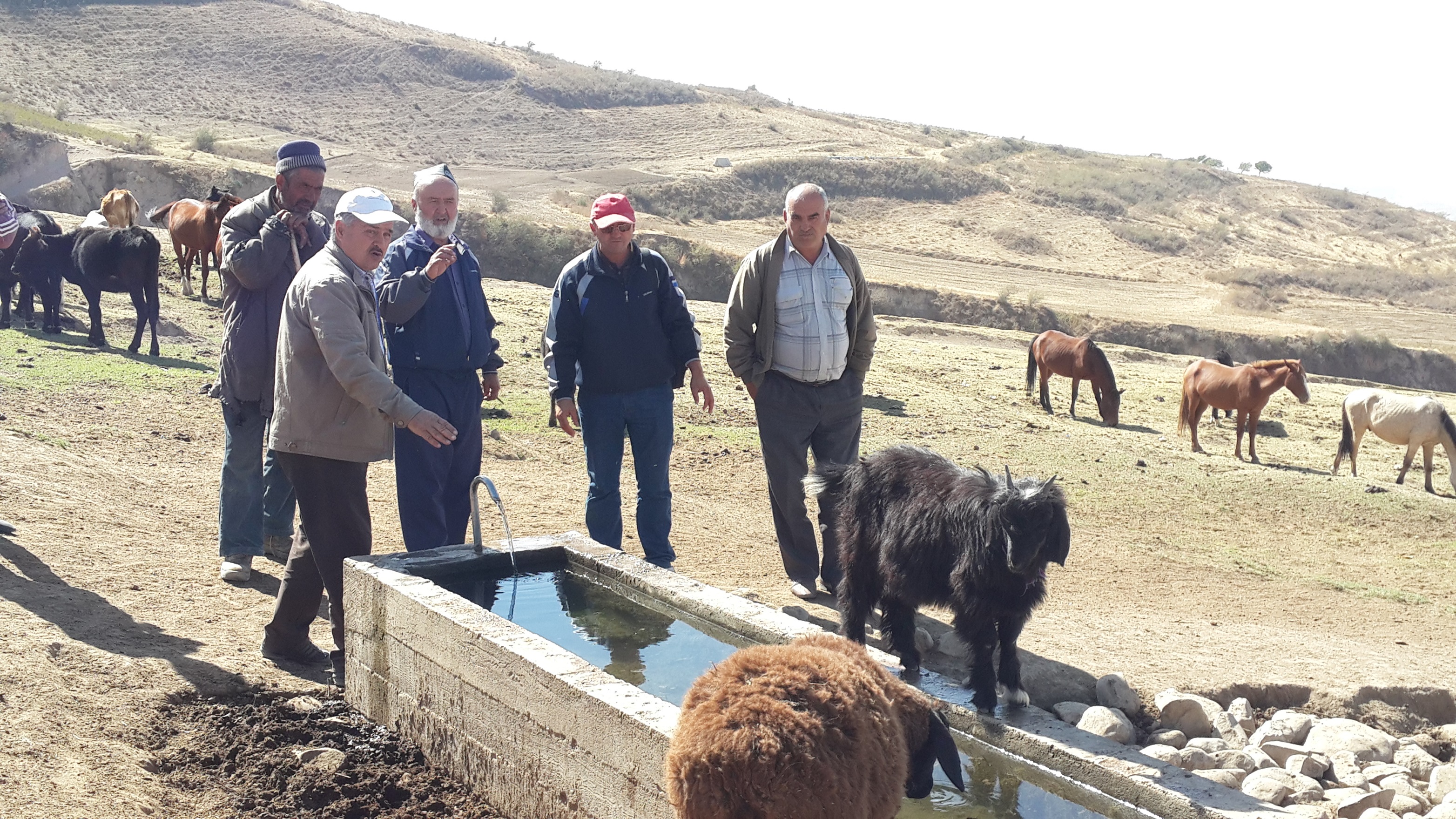
- 📍 Above Dehbaland, Muminabad district
- 🗓 2016-11-10
- 📷 Nicole Stolz
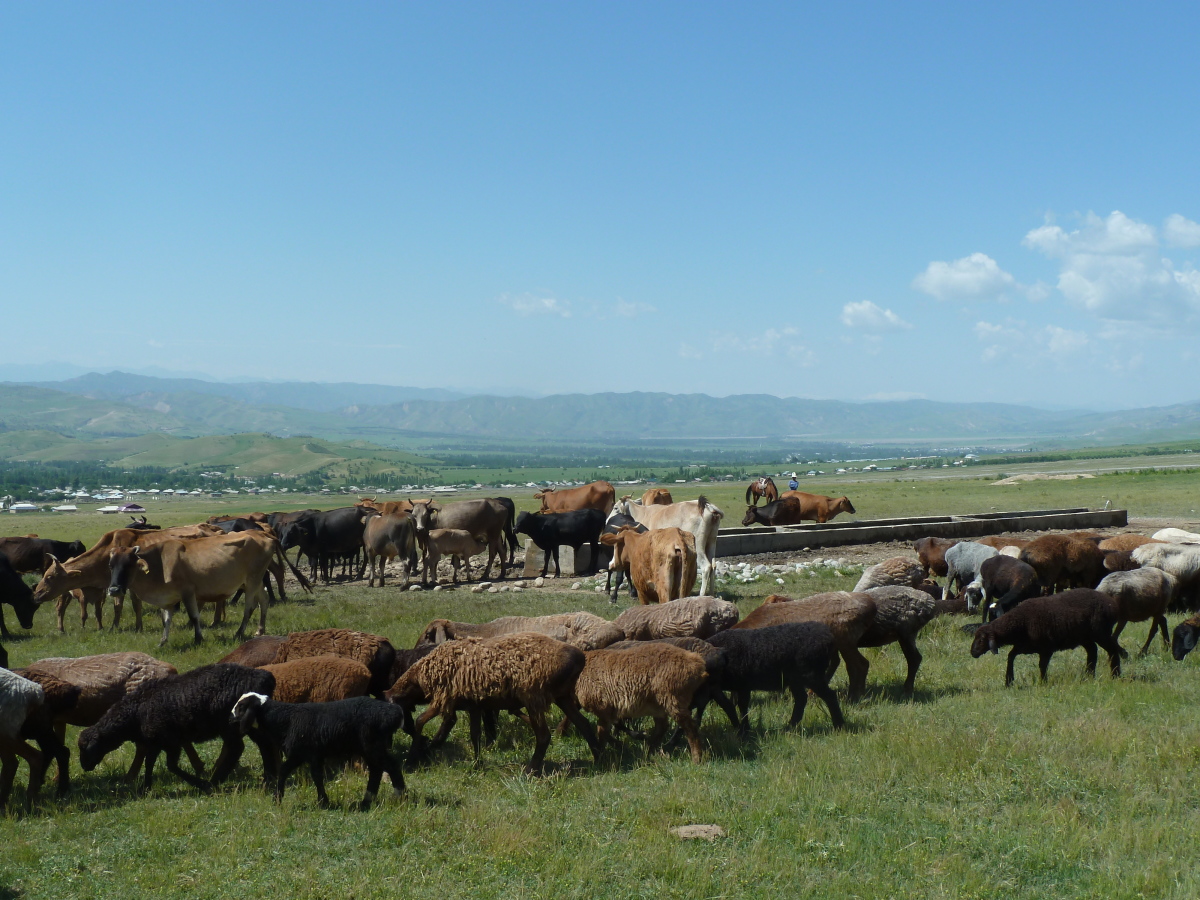
- 📍 Muminabad district
- 🗓 2016-01-06
- 📷 Nicole Stolz
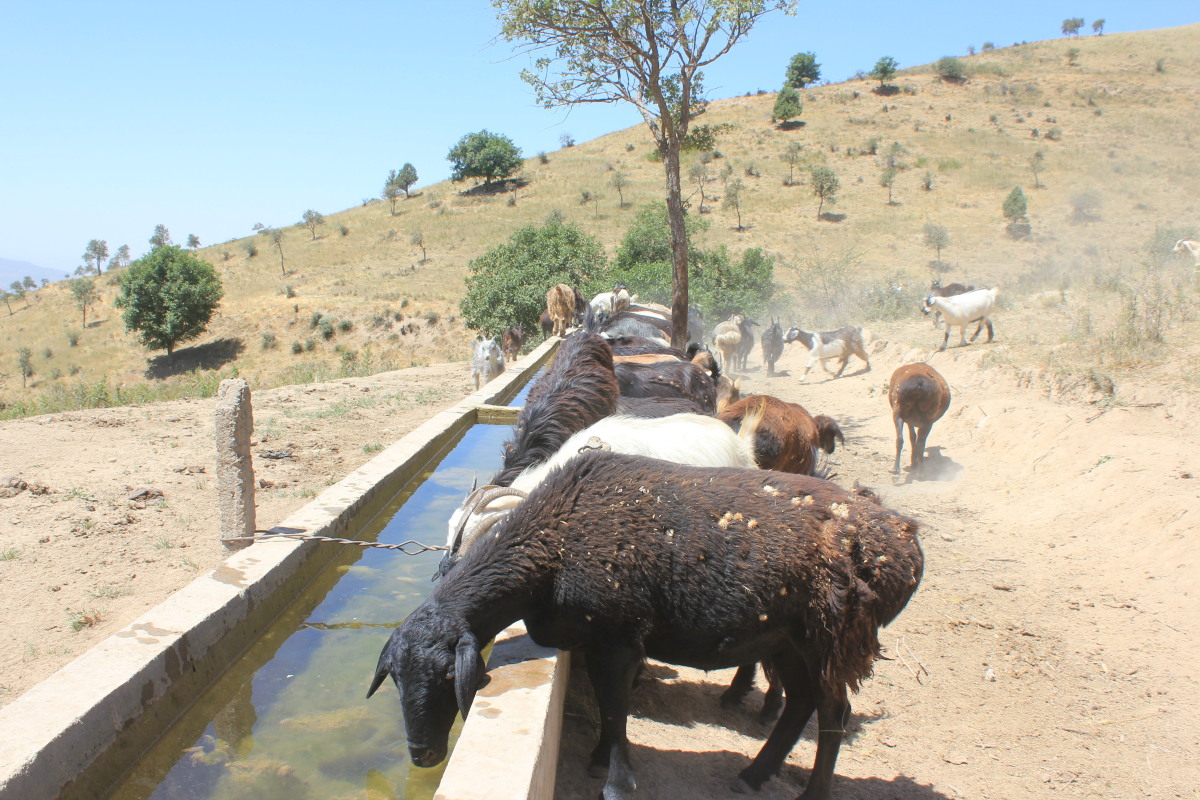
- 📍 Muminabad district
- 🗓 2014-05-08
- 📷 Sady Odinashoev