Runoff Pond Al Yakloum
Type: Technologies
Creation: 2022-07-07 10:13 Updated: 2022-08-01 09:21
Compilers: Nicola D'Alberton
Reviewers: William Critchley, Rima Mekdaschi Studer
Country/ region/ locations where the Technology has been applied and which are covered by this assessment
- Country: Lebanon
- Region/ State/ Province: Mount Lebanon
- Further specification of location (e.g. municipality, town, etc.), if relevant: Municipality of Mrusti
- Map: View Map
Description of the SLM Technology
Short description of the Technology
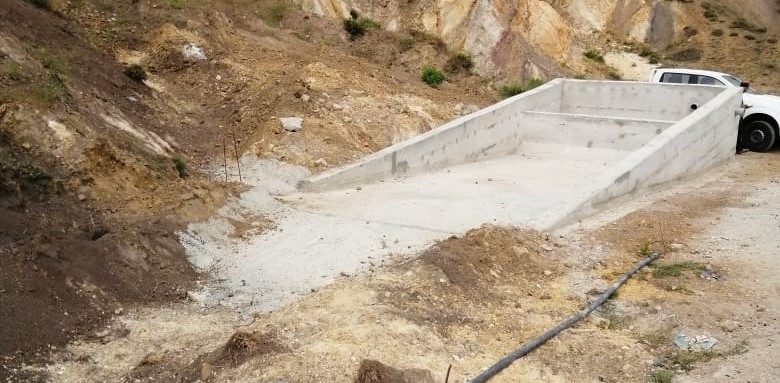
The Al Yakloum pond collects runoff from a local catchment and water is led through a channel system alongside a farm road. Sandy particles are captured in a sediment trap before runoff enters the pond. The pond provides water to approximately 5 ha of orchard - which is irrigated through a precision system.
Detailed description of the Technology
The Al Yakloum Pond is located in a public area within the municipality of Mrusti (Mount Lebanon). Runoff water is collected from a natural catchment and is led to the pond through a channel that runs alongside a farm road. The catchment area is mostly unproductive private land, and extends to approximately 2 ha in total. Sediment is an issue in the catchment due to the fine sandy outcrops. Sandy particles are thus carried in the runoff – and require settling out in a sediment trap to limit the turbidity of water in the pond. Thus runoff first enters a stilling basin (a sediment trap) where the suspended solids are deposited: runoff is then transferred through a pipe leading to the pond.
The pond's volume is around 7500 m3, and it is used to irrigate an orchard of about 5 ha in size, which is planted to apples, cherries and olives. A precision smart irrigation system is used for water application. The system includes IoT sensors that provide real time information about soil humidity and weather conditions that allow to automatize the valve opening depending on the plant needs thus optimizing the water consumptions. The volume of water collected is not enough to fulfil all the theoretical water requirements of the orchard crops, therefore the irrigation is merely supplementary to rainfall, and its impact on production is limited. However, the alternative water resource in the area is groundwater. This is high cost and has negative environmental impacts. Therefore the runoff pond technology is preferable for the sustainability of agriculture in the area. If the efficiency of runoff water collection and its application can be improved, then pump withdrawal requirements from groundwater sources decrease and this will optimize the efficiency of irrigation.
Photos of the Technology