
Legumes in rice-based cropping systems
Type: Technologies
Creation: 2022-11-10 16:17 Updated: 2023-02-22 11:52
Compilers: Joren Verbist
Reviewers: William Critchley, Rima Mekdaschi Studer
Country/ region/ locations where the Technology has been applied and which are covered by this assessment
- Country: India
- Region/ State/ Province: Odisha
- Map: View Map
Description of the SLM Technology
Short description of the Technology
In India, 29 percent of the area cropped with rice remains fallow during the dry "rabi" season. This offers the opportunity to improve farm income and soil health by introducing legumes especially lentils. Diversifying the cropping system in such a way results in higher farm income due to additional crop produce and reduced carbon and water footprints.
Detailed description of the Technology
In India, monsoon-season “kharif” rice is usually grown between June and November, while in the dry winter “rabi” season (from November to February), farmers keep these lands fallow due to lack of irrigation. Another constraint is a suitable crop with available seed for such a short window. Given the World Health Organization’s recommended pulse (legume grain) consumption of 50 g per capita per day, Odisha state needs to produce more. Here, legumes are grown on approximately 2.1 million hectares and total pulse production is 1.06 million tonnes. This results in an annual deficit of 0.22 million tonnes of pulses and a per capita per day consumption of only 11-23 grams. Odisha is exploring the vast potential for fallow cultivation of legumes.
The International Center for Agricultural Research in the Dry Areas (ICARDA) recognised this challenge and tested the introduction of lentils during the fallow rabi period. This resulted in a diversified cropping system as demonstrated in the following case study from the interior of Odisha, which is hilly with a cool winter season. Rice is the most commonly cultivated crop. The climate (1000-1500 mm of annual rainfall) and loamy-silty soil is suitable for lentils (Lens culinaris) - especially short duration varieties that can grow residual moisture of the rice.
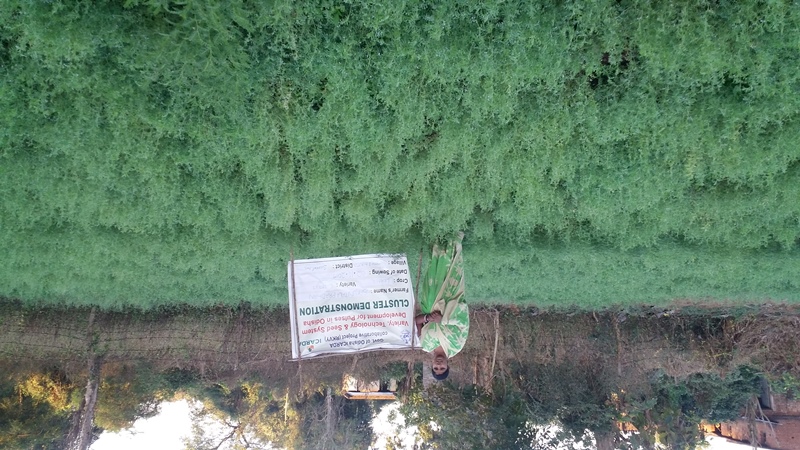
During the 2018-2021 seasons, the lentil-rice cropping system was demonstrated on 165 ha of farmers’ fields involving 1920 farmers. The average yield of lentils was 790 kg/ha which generates traditional net-farm income of around 200 USD/hectare. Lentils have proved to have good potential: rice yields are not reduced and hence, from a cost-benefits perspective, it is a very viable option. Therefore, the state government is now promoting lentils as a fallow crop in rice-based systems in hilly areas with a cool winter season.
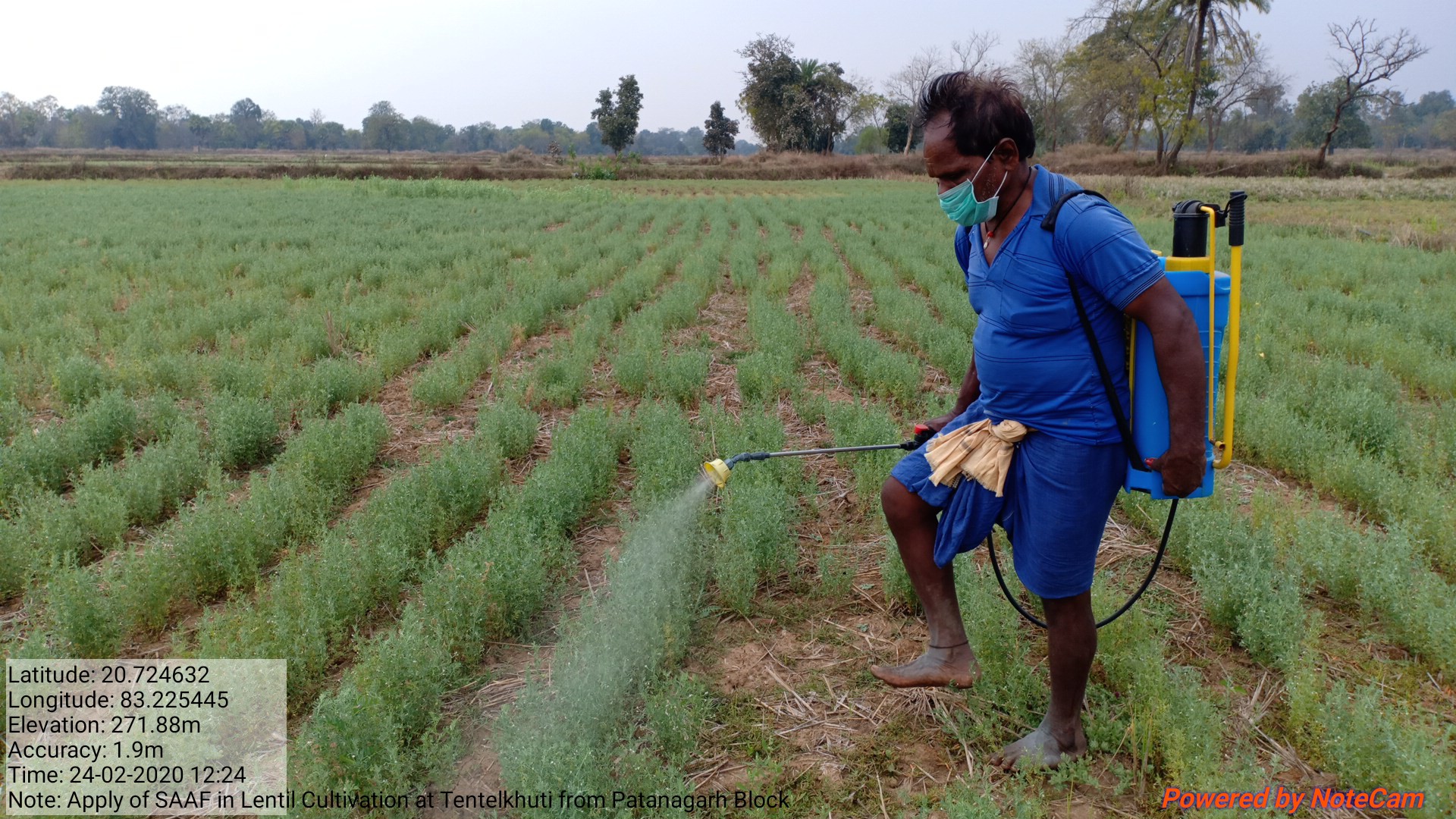
Lentil cultivation is as follows. Firstly, lentils are seeded (40 kg/ha) in the second week of November at a spacing of 30 x 5 cm. 3.5 kilogram of biocides (fungicides, herbicides, and pesticides) per ha are required and 50 kilogram of NPK fertilizer per ha is applied. Manual weeding takes around 20 person-days per ha. The lentils are harvested in February, requiring around 15 person-days per ha. Family labour provides for just over half of the field operations and a quarter of the harvest.
To conclude, growing lentils in the fallow period of rice-based cropping systems offers an opportunity to formulate a more climate resilient cropping system that improves soil health and farm income. This also has positive impact on health due to the inclusion of more pulses in the diet.
Data presented is from the bilateral project on pulses development funded by the Department of Agriculture & Farmers Empowerment, Government of Odisha with financial support from RKVY during 2018-2021 and implemented in collaboration with ICARDA. The work acknowledges the contribution of all scientists and team members in the ICARDA India programme: in the field and at headquarters.
Photos of the Technology
- 📍 Odisha, India
- 🗓 2026-06-04
- 📷 Reena Mehra
- 📍 Odisha, India
- 🗓 2026-06-04
- 📷 Reena Mehra