
Introduction of sweet sorghum into rice crop rotations to restore degraded saline lands and diversify agricultural production
Type: Technologies
Creation: 2023-01-10 08:28 Updated: 2025-08-27 08:36
Compilers: Kulyash Iskandarova
Reviewers: Rima Mekdaschi Studer, Olga Andreeva
Country/ region/ locations where the Technology has been applied and which are covered by this assessment
- Country: Kazakhstan
- Region/ State/ Province: Kyzylorda region
- Further specification of location (e.g. municipality, town, etc.), if relevant: Akzharma village, Syrdarya district
- Map: View Map
Description of the SLM Technology
Short description of the Technology
The introduction of sweet sorghum into rice crop rotations is one of the approaches to restoring degraded lands under conditions of irrigation water scarcity and secondary soil salinization, while also diversifying agricultural production in local communities through the development of a stable fodder base for livestock husbandry.
Detailed description of the Technology
Climate change and the resulting acute water deficit in the Shardara Reservoir and the Koksarai Counter-Regulator in recent years have become one of the main challenges for the agricultural sector of the Kyzylorda region, where rice cultivation is the dominant branch. Improving the socio-economic conditions of farming households is directly linked to the regulation of water consumption volumes and the efficiency of water resource use. One effective way to reduce dependence on water scarcity without compromising productivity and profitability is to diversify the cropping structure. For example, introducing low-water-demand and high-yield crops such as sweet sorghum into rice crop rotations.
1. Natural and Socio-Economic Conditions
The pilot site (Akzharma-1 farm) is located in the village of Akzharma, Syrdarya district, Kyzylorda region.
Agro-ecological conditions: The site lies within a semi-desert to desert arid zone. Soils are alluvial meadow-bog type with humus content of 0.6–0.8%. The average annual precipitation is 127–130 mm. The mean January temperature is –25.4°C, while in July it reaches +36°C. The elevation is 128 m above sea level.
Socio-economic profile of Akzharma village:
Population: 2,800 people
Households: 49
Registered small businesses: 162
Main livelihood activities:
Livestock husbandry: 3,478 head, including 2,150 cattle, 2,494 small ruminants, 1,166 horses, and 1,153 poultry.
Crop production: Rice (3,203 ha), alfalfa (1,472 ha), soybean (34 ha), potato (20 ha), vegetables (10 ha), melons (11 ha).
2. Key Characteristics of the Technology
Introducing sweet sorghum into rice rotations helps restore degraded saline soils, contributes to desalinization, and improves soil physical and chemical properties (pH, porosity, aeration, etc.). The technology supports diversification of local agricultural production, in particular by providing high-quality fodder for livestock, thereby strengthening opportunities for animal husbandry.
The technology has been implemented on a 20-hectare area within Akzharma-1 farm, Syrdarya district, Kyzylorda region.
3. Objectives and Functions of the Technology
Restore the fertility of saline soils by introducing alternative crops, specifically sweet sorghum, into rice crop rotations.
Maintain profitable agricultural production on saline soils under conditions of acute water scarcity.
4. Main Activities and Resources Required
Moldboard plowing to a depth of 25–27 cm (PLN-4-35 plow)
Leveling with MV-6 unit
Application of mineral fertilizers (N/P – 40/60 kg/ha) and incorporation with a BDT-7 harrow
Disking with BDT-7 harrow
Harrowing with BZT-1 harrow
Sowing sweet sorghum (Kazakhstan-16 or Kazakhstan-20) at a rate of 25 kg/ha (sown with SZT 3.6 m seeder in early April); sowing method – continuous row, row spacing 60 cm, seed depth 2–3 cm
Rolling with smooth rollers
Cultivation and additional fertilizer application
Harvesting for hay (late July–early August) with combine harvester
Estimated costs:
The cost of 1 ha, including soil preparation, seed, fertilizer, sowing, fertilizer application, and harvesting, is 94,015 KZT (USD 220.68).
5. Advantages and Impacts of the Technology
Restores degraded saline soils, contributes to desalinization
Promotes water and resource efficiency
Provides stable yields, even in dry years
Supports diversification of production and development of a strong fodder base for livestock husbandry
6. Farmers’ Perceptions
Positive aspects:
Opportunity to use severely degraded saline lands for profitable production under acute water scarcity
Guaranteed hay yields even in drought years
Negative aspects:
Additional costs for purchasing or renting equipment (cultivator, direct-harvest combine)
Limited availability of high-quality seed due to lack of specialized seed farms
Photos of the Technology
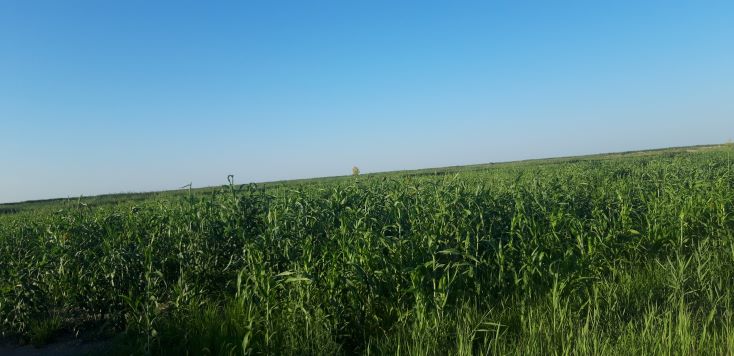
- 📍 Farming enterprise "Akzharma-1", Akzharma village, Syrdarya district, Kyzylorda region
- 📷 Zhanuzak Baimanov
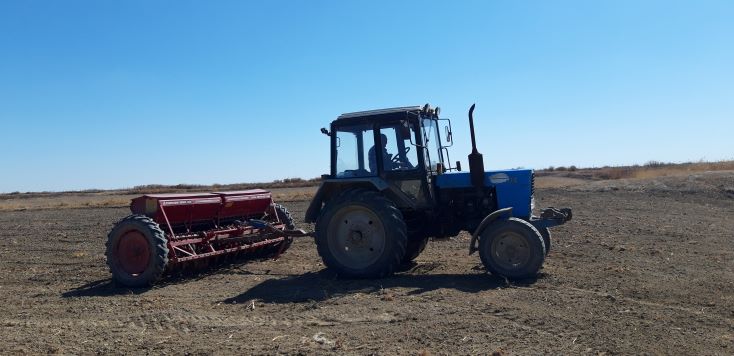
- 📍 Farming enterprise "Akzharma-1", Akzharma village, Syrdarya district, Kyzylorda region
- 📷 Zhanuzak Baimanov
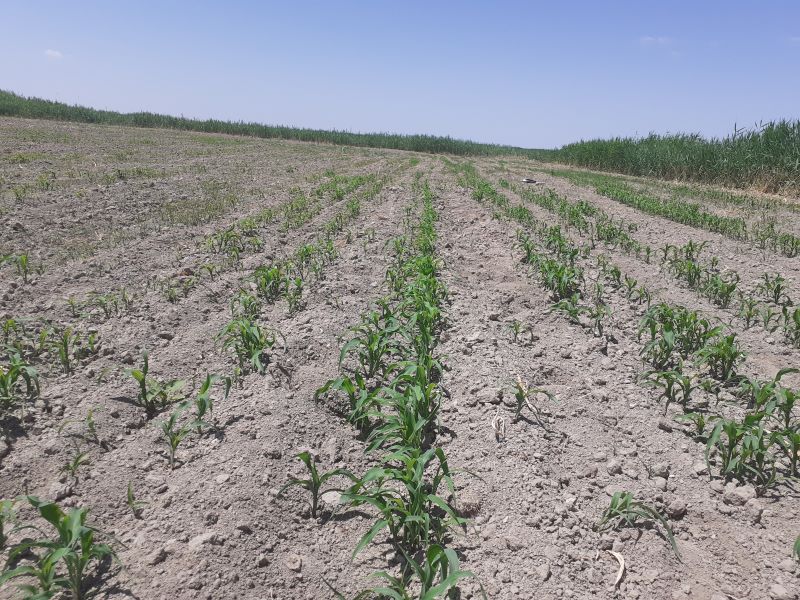
- 📍 Farming enterprise "Akzharma-1", Akzharma village, Syrdarya district, Kyzylorda region
- 🗓 2021-10-05
- 📷 Zhanuzak Baimanov
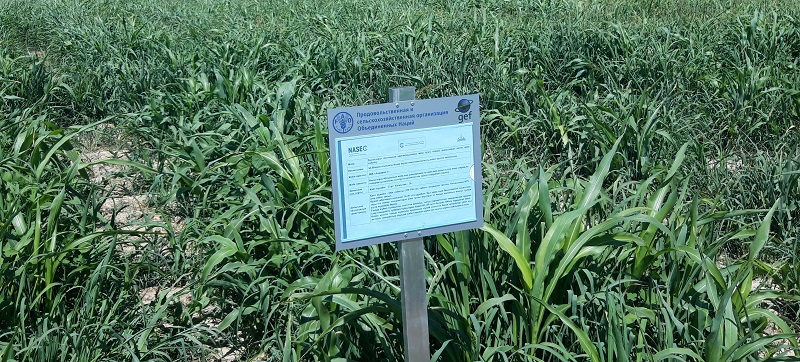
- 📍 Farming enterprise "Akzharma-1", Akzharma village, Syrdarya district, Kyzylorda region
- 📷 Zhanuzak Baimanov
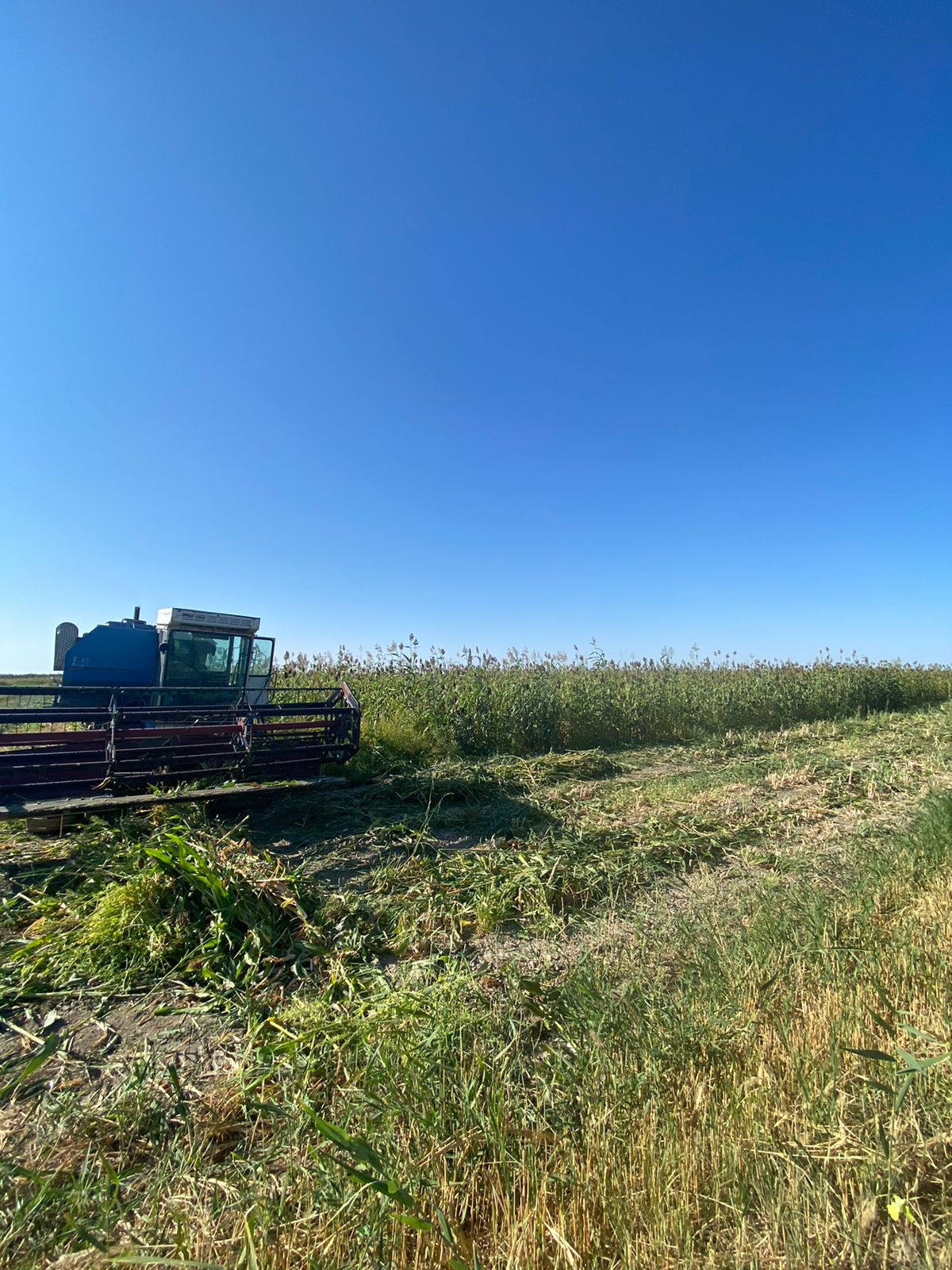
- 📍 Farming enterprise "Akzharma-1", Akzharma village, Syrdarya district, Kyzylorda region
- 🗓 2021-12-08
- 📷 Zhanuzak Baimanov