
Pre-Monsoon Dry Sowing (PMDS)
Type: Technologies
Creation: 2023-03-18 07:02 Updated: 2024-04-11 17:39
Compilers: Santosh Gupta
Reviewers: Udo Höggel, Sally Bunning
Country/ region/ locations where the Technology has been applied and which are covered by this assessment
- Country: India
- Region/ State/ Province: Madhya Pradesh
- Further specification of location (e.g. municipality, town, etc.), if relevant: Bichhiya block
- Map: View Map
Description of the SLM Technology
Short description of the Technology
The Pre-Monsoon Dry Sowing Technology aims to sow 12 to 15 different crop varieties in April without waiting for rain. To achieve this the seeds are pelletized with a mixture of clay soils, bio-inoculants like dried Ghanjeevamruth and Dravajeevamrit, and ash. The main objective of this technology is to empower rainfed farmers by utilizing the initial rainfall in April and May for crop cultivation. By using pelettized seeds, they can maximize the effectiveness of rainfall showers before the arrival of the monsoon season. Such seeds can also survive, if there are delay in the rainfall as the pellets around the seed help it in maintaining the moisture.
Detailed description of the Technology
Pre-monsoon dry sowing (PMDS) is a system of sowing, tilling and tending the land wherein the farmer grows crops in non-farming seasons or whenever there is no crop cover on the land. This can be practised before the advent of monsoon, during summer (April-May), after Kharif and before the beginning of the Rabi season (September and October). PMDS harnesses the water vapor from air that gets settled in the form of early morning dew. The dew supplies the required moisture to the soil. (Reference:-https://apcnf.in/wp-content/uploads/2022/05/IDS-2020-2021-APCNF-PMDS-Report.pdf)
In the study where PMDS was practised before the onset of the monsoon season, typically during the dry month of April. The seeds are pelletized with a mixture of clay soils, bio-inoculants, and ash, which creates a protective coating around the seed and helps it to germinate even in the case of delayed rains or very little rainfall. The coating around the seed, helps it to maintain moisture and support its germination. As the name suggests, the technology is good for utilising the pre-monsoon season by advancing the sowing cycles, using the usually dry months of summer and utilising the pre-monsoon rains.
This technology benefits rainfed areas where farmers rely solely on rainfall for irrigation. PMDS aims to promote an extended duration of crop cover under rainfed conditions, allowing farmers to cultivate crops with a reduced risk of crop failure in the cases of delayed or lower rainfall. Since seeds are germinated before the arrival of monsoon, there are times when they can also survive the heavy rains. This technology is useful in utilising moisture to the best extent possible as seeds are covered with the outer layer of clay and other stuff. In the Mandla District of Madhya Pradesh, farmers utilized seeds from their homes, comprising 12 to 15 crops, including cereals, pulses, and spices. These collected seeds were pelletized, dried for 24 hours, and broadcasted into minimally tilled soil. The diversified crop combination was grown until July and mixed with the soil before paddy transplanting. This process improves the soil's microbial activity, resulting in increased yields in crops grown before paddy and in the paddy crop itself. Therefore, the farmers benefit from increased production and yields through this technique of PMDS.
PMDS not only improves the economics of farmers but it also improves soil health. The covering of the soil with different crops protects it from heat, pounding rain, and wind. It also improves diversity in soil microorganisms, beneficial insects and other species. Covering soil for 365 days with plant diversity is also critical to protect soil health and balance climate change. PMDS can facilitate all these functions.
Photos of the Technology
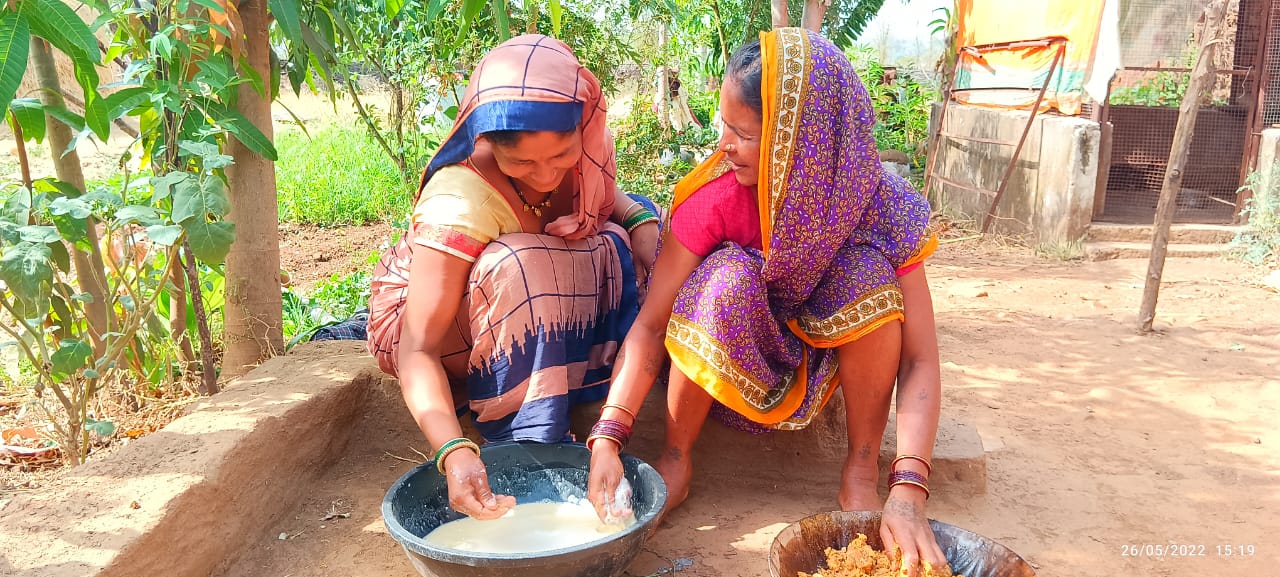
- 📍 Mandala, Madhya Pradesh, India
- 📷 Malay, WASSAN
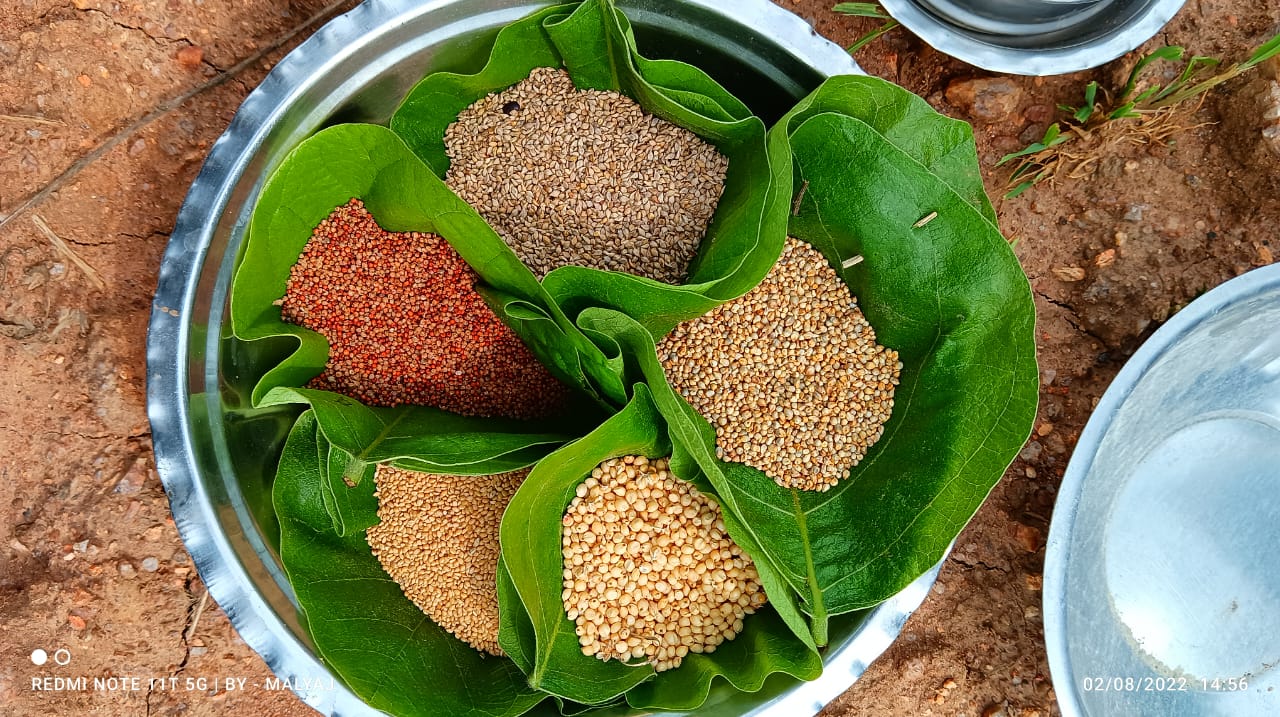
- 📍 Mandla, Madhya Pradesh, India
- 🗓 2022-10-05
- 📷 Malay, WASSSAN
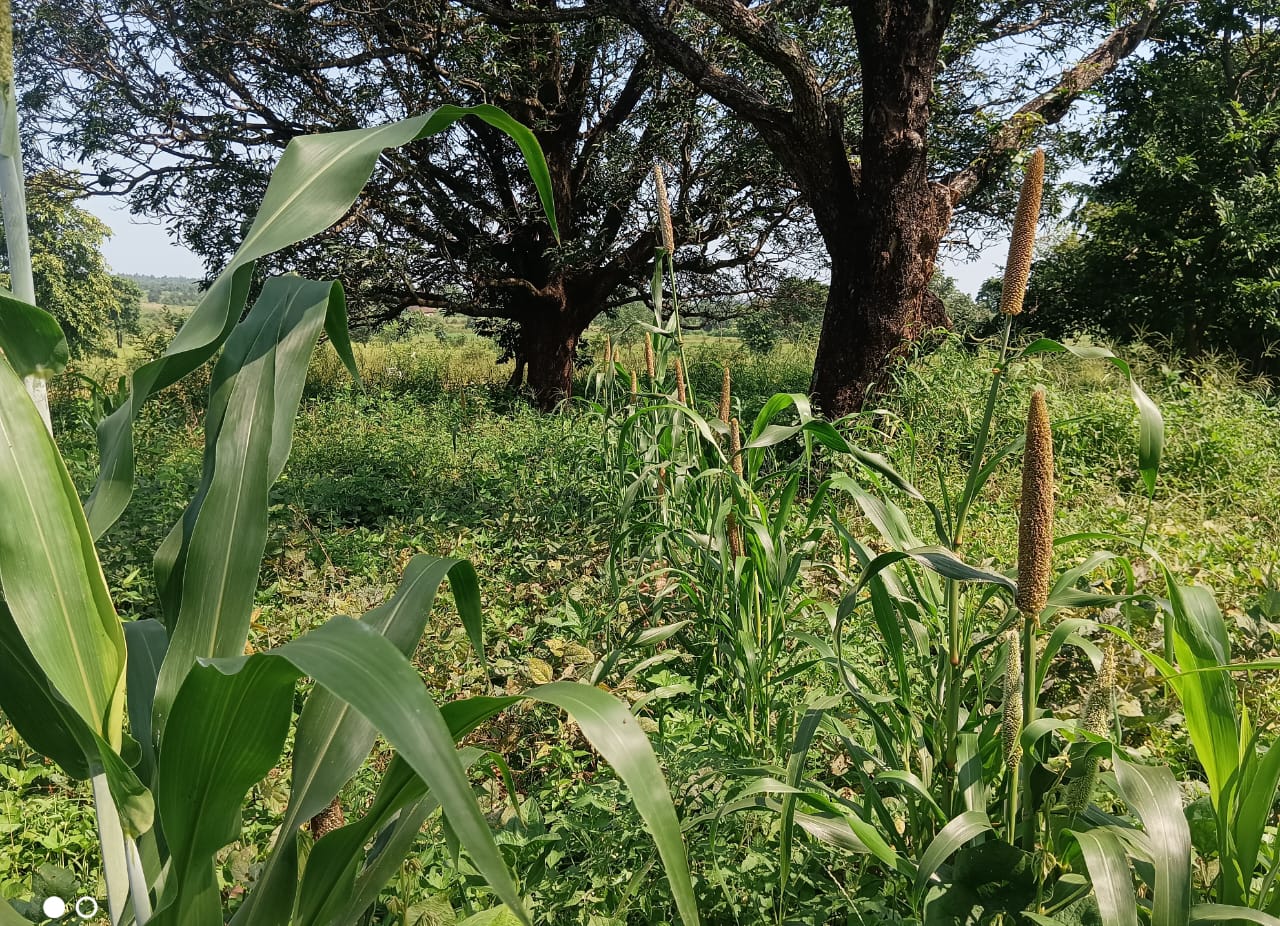
- 📍 Mandla, Madhya Pradesh, India
- 🗓 2022-05-07
- 📷 Malay, WASSAN