
Multilayer Farming Systems For Ensuring Food Diversity And Increasing Resilience
Type: Technologies
Creation: 2023-04-10 03:38 Updated: 2024-04-17 16:37
Compilers: Santosh Gupta
Reviewers: Udo Höggel, Rima Mekdaschi Studer, Sally Bunning
Country/ region/ locations where the Technology has been applied and which are covered by this assessment
- Country: India
- Region/ State/ Province: Maharashtra
- Further specification of location (e.g. municipality, town, etc.), if relevant: Ahmednagar
- Map: View Map
Description of the SLM Technology
Short description of the Technology
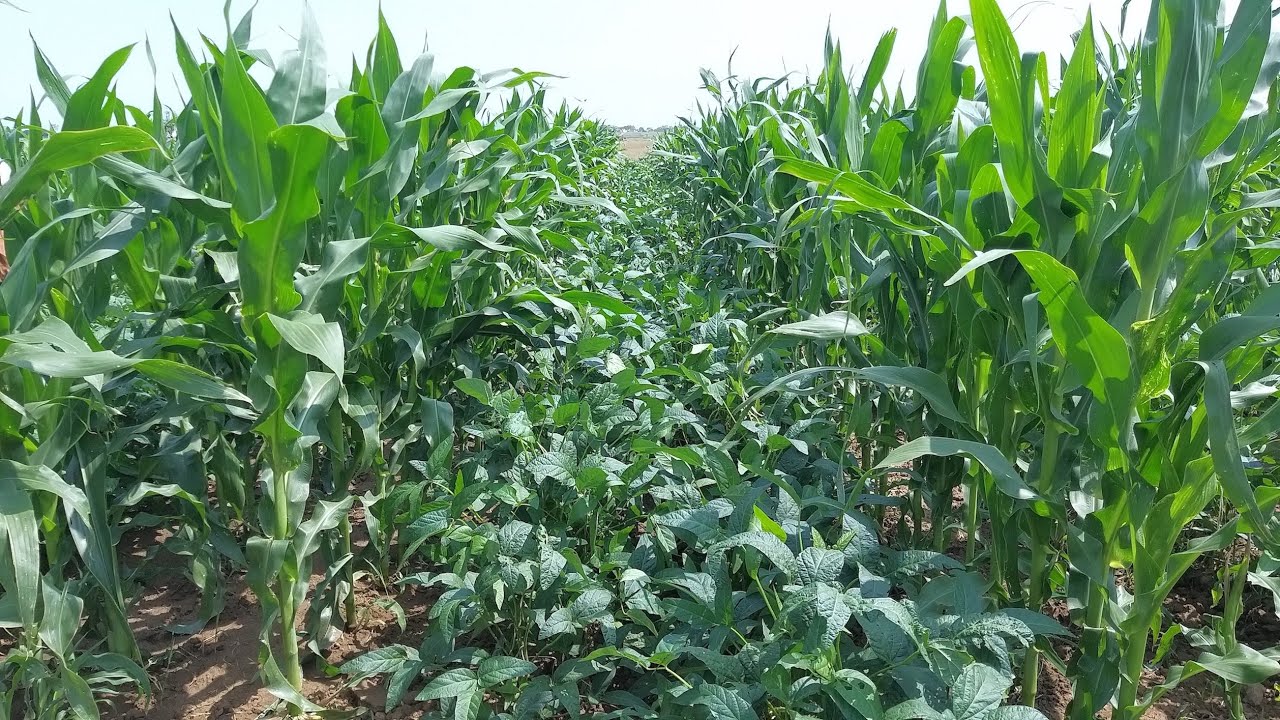
Multilayer farming, also known as multi-tier farming, is a technique of intercropping crops of different heights, root and shoot patterns, and maturation times in small plots of land. This technique is cost-effective, easily adaptive, and participatory, providing a large number of food groups to farmers to improve their nutritional levels, providing insurance against crop failure, reducing pest and disease incidence, and improving soil properties and soil fertility conditions. Multilayer farming minimizes crop-weed competition, and soil erosion, and optimizes resource utilization resulting in higher returns and better nutritional value. It promotes sustainable agriculture, maintains a balanced diet, increases income per unit area, and reduces the risk of crop failure.
Detailed description of the Technology
Multilayer farming is an agricultural model that aims at achieving maximum production per unit area by utilizing water, manure, and land resources to their full potential. This method is based on the synergies between the different crops and plants planted on a given piece of land. This method is cost-effective and yields more benefits than other farming systems. By cultivating four to five crops with the same amount of fertilizer and water required for a single crop, farmers can increase their income, and multiple crops can be harvested yearly using the same piece of land.
Multilayer farming is based on scientific, ecological, and economic principles, promoting crop diversification, maximizing productivity, utilizing resources more efficiently, and promoting intensive input use. Moreover, it ensures the sustainability of farm resources and the environment in the long term.
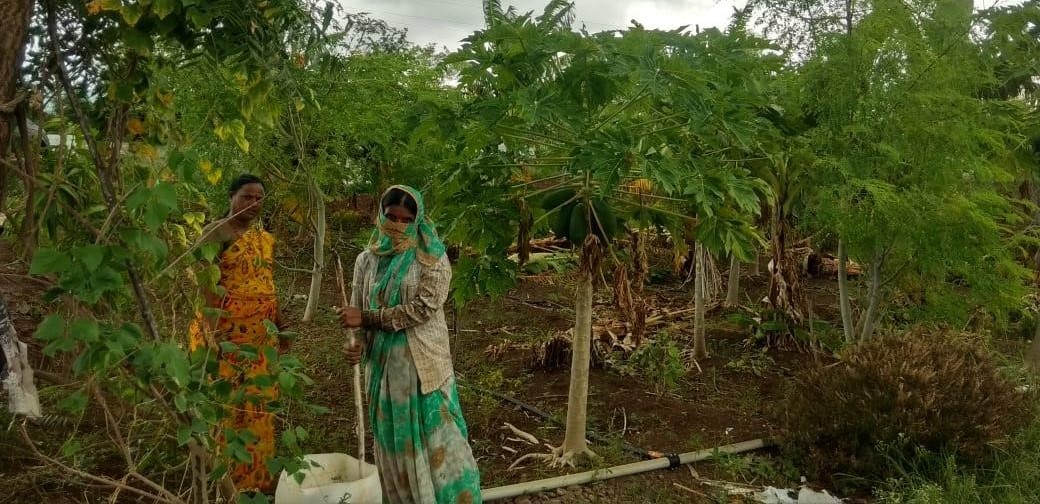
The multilayer farming system mainly consists of an overstory of trees or shrubs with an understory of economic or forage crops. By incorporating these principles, farmers can achieve greater yields and financial success while promoting environmental sustainability.
As a part of the program's approach, WOTR (Watershed Organisation Trust, the project implementing partner trained women change-makers) to spread awareness among villagers about the importance of nutrition and a healthy diet. Since 2018, the active promotion of multilayer farming to address food and nutrition insecurity in Maharashtra is undertaken. As a result, 1124 plots across 150 villages in Maharashtra have adopted this unique farming method to enhance food and nutrition security.
The multilayer farming system involves several steps to ensure maximum productivity from the available resources.
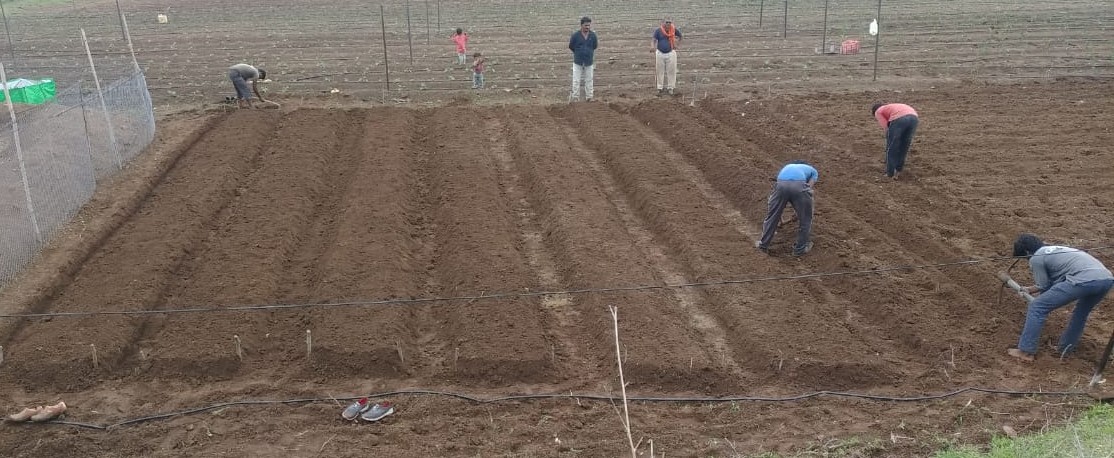
1.The first step is land preparation, which involves applying 300 kg of cow dung or vermicompost along with one kg of Trichoderma powder per 36 x 36 feet plot. Trichoderma is a bio-fungicide that helps to prevent fungal infections in plants and roots.
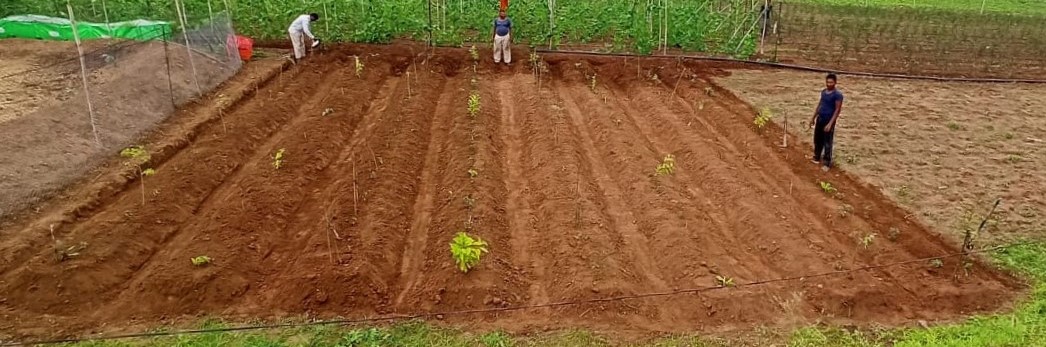
2.Next, eight beds of 3 x 36 feet are prepared with 1.5 to 2 feet of space left in between. These beds need to be arranged in the North-South direction to ensure that plants receive adequate sunlight.
3.After preparing the bed, 1-foot deep channels are dug to drain excess water so ensuring that the crops are not waterlogged.
4.Finally, in the middle of each bed, vegetable and fruit crops are planted according to a crop planning chart. By planting a variety of crops in the same plot, the multilayer farming system ensures the effective utilization of resources and provides an even distribution of income and employment throughout the year by producing several off-season crops.
The multilayer farming system has numerous benefits that make it an effective and sustainable farming method. It makes effective use of soil, water, and other resources, reducing waste and increasing productivity. Additionally the system reduces climate-specific damage and enhances soil health, helping to maintain an ecological balance in the environment. The soil covered minimizes water loss due to soil evaporation, generating a higher income per unit area with an even distribution of income and employment throughout the year. The multilayer farming system generates jobs and allows for better utilization of labor while reducing the impacts of climate-specific hazards such as high-intensity rainfall, soil erosion, and landslides. Multilayer farming also utilizes soil moisture at different depths and solar energy at different heights, improving soil characteristics and adding organic matter to the soil. It reduces pests and disease infestation and provides micro-climate conditions which ensure better productivity of crops underneath. Overall, multilayer farming is a sustainable and efficient farming method that not only maximizes productivity but also enhances soil and environmental health while promoting economic and social well-being.
Photos of the Technology
- 📍 Ahmednagar, Maharashtra, India
- 📷 WOTR Team
- 📍 Ahmednagar, Maharashtra, India
- 📷 WOTR
- 📍 Ahmednagar, Maharashtra, India
- 📷 WOTR Team
- 📍 Ahmednagar, Maharashtra, India
- 📷 WOTR Team