
Sustainable Biochar Production Through Agroforestry Systems And Its Application
Type: Technologies
Creation: 2023-04-24 06:45 Updated: 2024-04-11 15:07
Compilers: Santosh Gupta
Reviewers: Udo Höggel, Sally Bunning
Country/ region/ locations where the Technology has been applied and which are covered by this assessment
- Country: India
- Region/ State/ Province: Odisha
- Map: View Map
Description of the SLM Technology
Short description of the Technology
Biochar is a carbon-rich, solid material derived from a wide range of biomass or organic waste through a thermochemical method. It is an organic charcoal material that is the final product of pyrolysis, or high-temperature burning of agricultural biomass without oxygen. Surplus crop residues, agricultural waste, and wood from sustainable sources are used as feedstock (raw material). Such biochar production is linked with agroforestry plantation and agriculture to improve soil health and ensuring sustainable feedstock availability.
Detailed description of the Technology
Introduction and Background
Intensive cropping systems coupled with monocropping and high usage of synthetic fertilizers have led to the degradation of soils and depletion of nutrients directly affecting agricultural productivity and farmers' income. Farmers in the Balangir district of Odisha are facing similar challenges. To address these issues and promote sustainable farming practices, a biochar production initiative was introduced by utilizing crop residues and waste material from forests to produce biochar, a carbon-rich material that enhances soil fertility and soil structure. The initiative is a part of the Pro-Soil Project of Deutsche Gesellschaft für Internationale Zusammenarbeit (GIZ), India and implemented by the International Centre for Research in Agroforestry (ICRAF). The technology (a kiln for biochar production) and technical inputs for biochar production were sourced from the Indian Institute of Soil Science, Bhopal.
Biochar is a type of charcoal produced from biomass like agricultural or forest waste or organic materials through a process called pyrolysis. The application of sustainable biochar technology in agroforestry systems can lead to better soil structure, increased water retention, reduced nutrient leaching, and improved crop yields. Moreover, it aids in mitigating greenhouse gas emissions by locking carbon into soil for an extended period.
In the project region farmers used crop residues such as rice straw, wheat straw and residue of other crops along with non-usable biomass from local forests, such as branches, twigs, and leaves, to supplement the feedstock for the pyrolysis. Since the District has large forest areas, the availability of forest waste is no problem. The biochar produced was applied into existing crops fields as well as into agroforestry system. Aiming to promote agroforestry, the project promoted the integration of trees (both fruits and timber) and shrubs into existing agricultural practices. Agroforestry offers multiple benefits such as improved soil health, biodiversity, and carbon sequestration. When sustainable biochar production is integrated into these systems, it can create a sustainable cycle where agricultural waste is converted into biochar, which then enhances soil fertility and sequesters carbon when added back into the soil.
The project has actively involved women farmers, entrepreneurial youth, and farmers' groups in the collection, production and application process of biochar thus promoting community participation and creating awareness about the benefits of biochar.
Implementation
The biochar kiln technology, obtained from the Indian Institute of Soil Science, in Bhopal, is employed to convert biomass into biochar through pyrolysis. This technology ensures efficient and controlled production of high-quality biochar. The collected biomass undergoes a controlled pyrolysis process inside the biochar kiln, where it is burned in the relative absence of oxygen. Technical specialization during production includes kiln temperature control, feedstock preparation, and the management of pyrolysis gases to ensure efficient biochar production. This results in the conversion of biomass into biochar, also leaving behind bioenergy-rich gases. Quality control measures are implemented to ensure the production of biochar with optimal characteristics, including high carbon content, porosity, and stability.
The Biochar kiln used was designed with the aim to optimize temperature control and ensure efficient conversion of biomass. An efficient loading mechanism allows easy and controlled feeding of biomass into the kiln. This ensures a consistent flow of material during the pyrolysis process. Although local kilns are usually not equipped with temperature control mechanisms to regulate the pyrolysis temperature, the temperature in the kilns may alternatively be regulated through the rate of feeding biomass into the kilns. Such kilns usually have some safety features and proper ventilation so to prevent accidents.
To implement this technology the ICRAF conducted training sessions for farmers on the proper preparation and application of biochar. The trainings were focused on the following aspects:
-The collection and drying process for agriculture and forest waste
-The management of operations for the biochar kiln including the loading of raw material (feedstock) into the kiln, its burning, operation-timing, period check, volumes of raw material to be fed etc.
-Precautions to be taken during the process
-The quality check of prepared biochar charcoal and the process for pulverizing it
-Dosage recommendations for different crops as per local conditions
-The mixing of biochar with cow dung and cow urine before application
-Integration with existing farming practices and the long-term benefits of biochar on soil health
Impact and Knowledge Transfer
The biochar acts as a soil conditioner, enhancing water retention, nutrient availability, and microbial activity. The benefits and impacts on improved fertility, increased water retention, and reduced nutrient leaching, lead to higher crop yields and resilience against climate variability, carbon sequestration aids in reducing greenhouse gas emissions, contributing to global efforts to combat climate change, and utilizing agricultural residues reduces air pollution from open burning and provides a sustainable solution for organic waste disposal. Land users appreciated the enhanced soil productivity and environmental benefits brought by biochar. Overall, the Sustainable Biochar Production Technology represents a promising approach in sustainable agriculture and environmental stewardship.
The project team, in collaboration with local agricultural extension services and the Indian Institute of Soil Science, monitored the impact of biochar application on soil health parameters. This involved regular soil testing, crop yield assessments and feedback from participating farmers. In fact, they also measured the impact of biochar made from different feedstock (raw materials). Success stories were shared with neighboring communities, public stakeholders and researchers and encouraged the further adoption of sustainable soil management practices.
The biochar production initiative in the Balangir District of Odisha in India demonstrates a sustainable approach to addressing soil health issues using locally available resources. Through the collaboration between ICRAF and GIZ, this project not only improves soil fertility but also empowers local communities by providing them with sustainable solutions for agricultural challenges. The success of this intervention serves as a model for future initiatives aimed at promoting environmentally friendly and community-driven approaches to agriculture.
Photos of the Technology
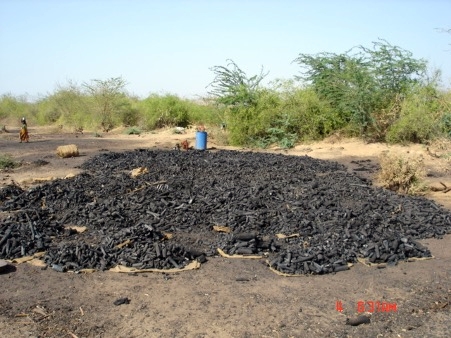
- 📍 Balangir and Nuapada Districts of Odisha State
- 📷 World Agroforestry