Leaf Litter Collection for FYM Production
Type: Technologies
Creation: 2023-07-05 09:51 Updated: 2024-04-01 10:21
Compilers: Karma Wangdi
Reviewers: William Critchley, Rima Mekdaschi Studer
Country/ region/ locations where the Technology has been applied and which are covered by this assessment
- Country: Bhutan
- Region/ State/ Province: Bhutan
- Further specification of location (e.g. municipality, town, etc.), if relevant: Punakha, Lingmukha
- Map: View Map
Description of the SLM Technology
Short description of the Technology
Leaf litter collection is the practice of collecting leaf litter from a designated forest area called sokshing and using it as bedding material for cattle. It then forms a constituent of farmyard manure which is applied to farmland.
Detailed description of the Technology
Leaf litter collection, is the practice of collecting leaf litter from a designated forest area called sokshing and using it as bedding material for cattle. It then forms a constituent of farmyard manure which is applied to farmland. The term 'sokshing' comes from 'sok' meaning leaf litter and 'shing' meaning tree. The tradition of harvesting leaf litter from a designated forest area for agricultural use has been in practice for decades in the life of Bhutanese farmer (Chettri et al., 2012). According to BHUCAT, 2012, the use of sokshing is a widely used traditional farming practice in Bhutan with dominance in temperate regions but spreading into more humid subtropical areas. Leaf litter from the forests is used for the purpose of livestock bedding and then farmyard manure (FYM) production. Leaf litter as animal bedding is kept for a few months to almost a year. In Bhutanese society leaf litter is an important component of agriculture because of its contribution to manure production with most communities having designated specific forest management units for its production and collection for individuals or for communities. Sokshing is an important and highly relevant system and it continues to be important for villagers, even in the face of changing livelihood and institutional orientations. The government recognises sokshing and its institutions as a relevant mechanism for community forest management (Dorji et al., 2003).
Leaf litter, predominantly gathered during the winter when the leaves have fallen, is collected from the forest floor by cleaning the entire understorey. It is carried to the farm and stored before being used as bedding material for cattle, providing comfort and insulation from cold. It is then mixed with cattle manure to form farmyard manure (FYM), (BHUCAT, 2012). FYM and mineral fertilizers are the two main sources of plant nutrients in Bhutan. Farmers not only depend on forests for leaf litter but also for livestock feed and construction materials (Gautam, 2009). FYM is a mixture of animal dung, crop residues, and other organic materials and plays a vital role in enhancing soil fertility and improving crop productivity. Its application to agricultural fields provides numerous benefits. Recent research by Gupta et al. (2022) demonstrated the positive impact of FYM on soil health and crop yields. The study found that FYM application significantly increased soil organic carbon content, which is essential for soil structure, water holding capacity, and nutrient retention. Furthermore, FYM enhanced the availability of essential nutrients such as nitrogen, phosphorus, and potassium, promoting optimal plant growth and development. Additionally, FYM improved soil microbial activity, leading to enhanced nutrient cycling and improved nutrient uptake by plants.
Leaf litter collection plays a role in ecosystem health and functioning. The accumulation of fallen leaves on the forest floor contributes to nutrient cycling, soil health, and moisture retention. Despite its benefits, the sokshing process exposes the forest's soil to erosion because all the leaves, debris, and undergrowth are removed. Nutrient mining occurs over time as a result of the annual removal of leaf litter, and many sokshing forests exhibit stunted growth and other signs of forest degradation. However, on balance, when used in conjunction with dairy production, sokshing offers a low-cost, readily available supply of bedding and then organic fertilizer, although it is labour-intensive.
In some situations, there may be specific benefits in removing the litter. A recent study by Jiang et al. (2021) emphasized the importance of leaf litter collection for mitigating the negative impacts of invasive species. The research found that invasive plants can alter the decomposition rates of leaf litter, disrupting nutrient cycling and leading to changes in soil properties. By collecting leaf litter, especially in areas where invasive species are prevalent, we can minimize their detrimental effects and help preserve the ecological balance.
Photos of the Technology

- 📍 Lingmukha Chiwog (Community), Lingmukha Gewog (Block), Punakha Dzongkhag (District)
- 🗓 2023-06-07
- 📷 Niki Rai
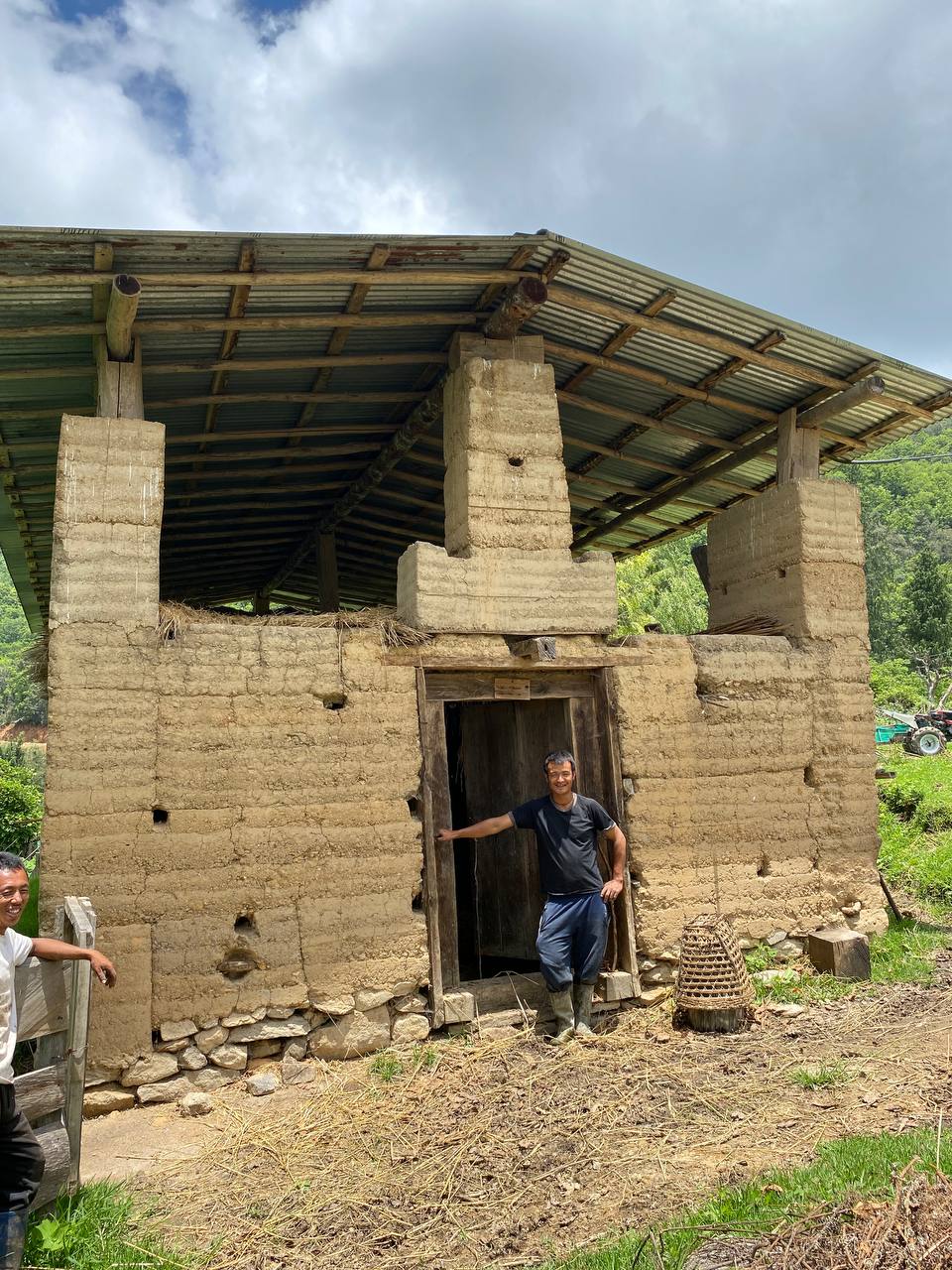
- 📍 Lingmukha Chiwog (Community), Lingmukha Gewog (Block), Punakha Dzongkhag (District)
- 🗓 2023-06-07
- 📷 Niki Rai