
Low-Cost Plastic-Lined Water Harvesting Pond
Type: Technologies
Creation: 2023-07-06 17:03 Updated: 2024-05-30 15:22
Compilers: Nima Dolma Tamang
Reviewers: William Critchley, Rima Mekdaschi Studer, Joana Eichenberger
Country/ region/ locations where the Technology has been applied and which are covered by this assessment
- Country: Bhutan
- Region/ State/ Province: Dagana Dzongkhag
- Further specification of location (e.g. municipality, town, etc.), if relevant: Pangserpo Chiwog, Drujeygang Gewog
- Map: View Map
Description of the SLM Technology
Short description of the Technology
Low-cost plastic-lined water harvesting ponds collect and store rain and overland flow water for agricultural and domestic purposes in the dry season. They are both economic and efficient.
Detailed description of the Technology
Low-cost plastic-lined water harvesting pond are used to collect and store rain or overland flow water for agricultural purposes in the dry season. They are economic and efficient. These ponds are required in the context of irrigation water shortages. Although rainfall has been projected to be increasing (NCHM, 2017), irrigation water shortage was - and continues to be - one of the major constraints in crop production (IHPP, 2017).
Water from precipitation and surface water sources is lost due to inadequate collection and storage. Villages at the top of the hills, in particular, suffer from acute irrigation as well as drinking water shortages. To tap and collect wastewater, rainwater, and water from other perennial and non-perennial sources, low-cost plastic lined water harvesting ponds are proposed. This water can be used during the dry or “lean” season for agricultural as well as household purposes.
The proposed model pond (plastic sheet size; 9m * 7m) costs less than Nu. 25, 000 (USD 315) for construction but can hold more than 27, 000 litre of water. The same dimension of pond if constructed using concrete, would cost more than Nu. 1, 19, 000 (USD 1500). Furthermore a 10, 000 litre synthetic tank available on the market costs more than Nu.35, 000.
Irrigation water shortage results in fallow lands. It is reported that 6,400 acres (2,600 ha) of irrigable land was left fallow in 2016 and 26 % of the total households surveyed were affected by irrigation water shortages (DoA, 2016). By reducing fallow land and increasing crop production, this technology could be a stepping stone towards food self-sufficiency – as well as providing water for consumption by people and livestock.
Though a similar technology is said to have introduced in the country many years ago, the present form of the technology was introduced to Barshong gewog in Tsirang Dzongkhag by the ‘Himalica’ pilot project in 2014. However, the proposed technology has been modified and improved to suit to the topography and needs of farmers in Bhutan. The proposed pond design is a reverse truncated square pyramid shape unlike the cuboid shape ponds of ICIMOD’s. The pond is designed in such way as to increase pond stability and ease of construction.
Concrete tanks require specific construction methods and faults can develop with ice freezing and expanding in cracks in tank walls during the winter (Slater, 2011). Plastic (silpaulin) sheet lined ponds are leak-proof and primarily depend on the longevity of the plastic sheet unlike concrete tanks. Concrete water tanks, (especially elevated tanks) are also prone to damage due seismic activities (Housner, 1963).
The low-cost plastic lined water harvesting pond adopted is cheap, environmentally friendly, and has positive social impacts. It reduces irrigation water constraints, addresses fallow land problems, and supplements water for domestic purposes. The technology is a tool for reducing poverty, expanding cultivated land and increasing food self-sufficiency resulting in a healthier and happier society.
Photos of the Technology
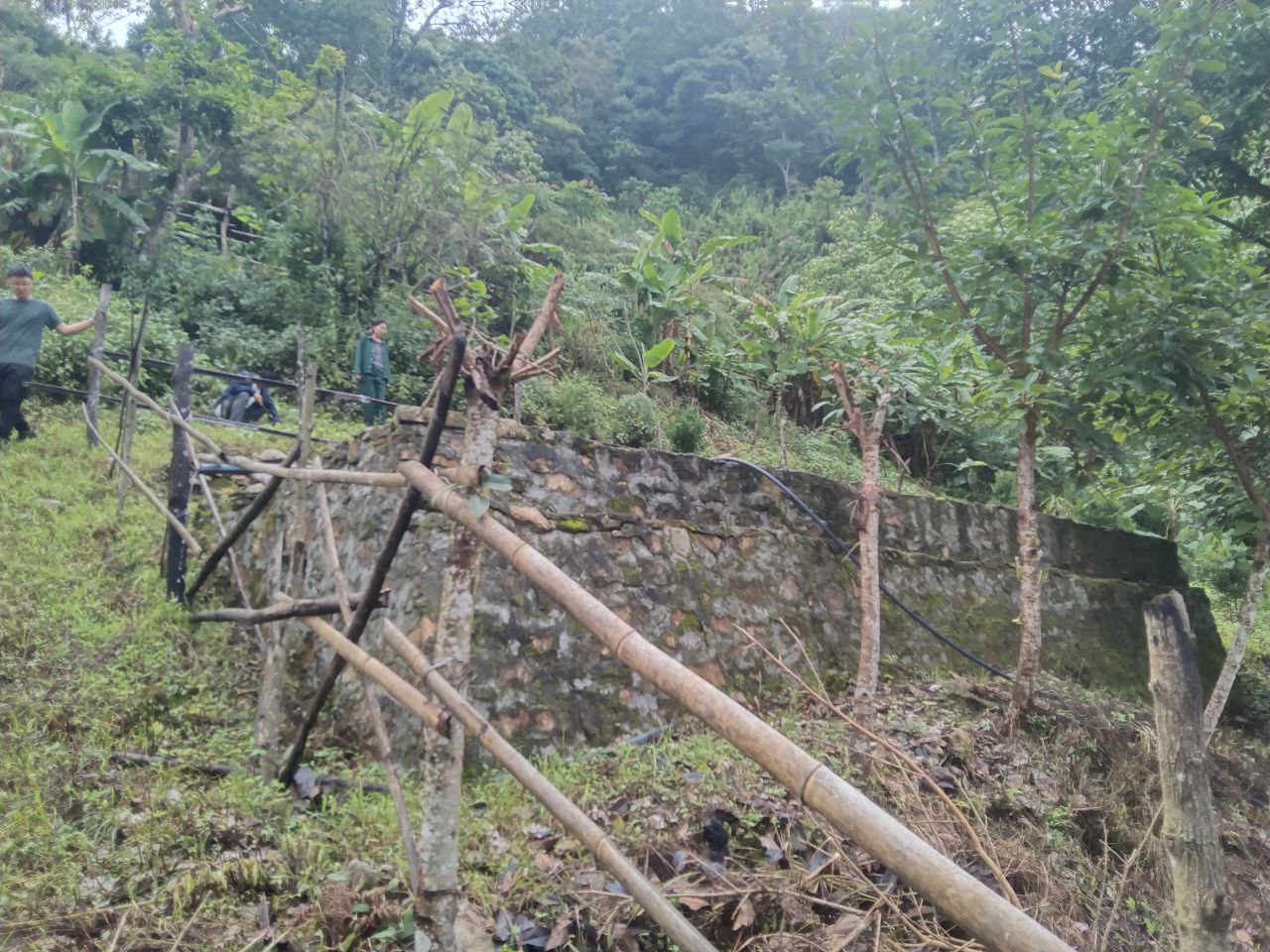
- 📍 Drujeygang Gewog, Dagana Dzongkhag
- 🗓 2023-07-07
- 📷 Thinley Penjor Dorji