
Mechanical Bench Terracing
Type: Technologies
Creation: 2023-07-08 16:05 Updated: 2024-06-04 14:39
Compilers: ONGPO LEPCHA
Reviewers: William Critchley, Rima Mekdaschi Studer, Joana Eichenberger
Country/ region/ locations where the Technology has been applied and which are covered by this assessment
- Country: Bhutan
- Region/ State/ Province: Trongsa Dzongkhag (district)
- Further specification of location (e.g. municipality, town, etc.), if relevant: Bemji Village, Nubi Gewog (block), Trongsa Dzongkhag (district)
- Map: View Map
Description of the SLM Technology
Short description of the Technology
Soil erosion by water is one of the major problems in hilly or mountainous countries like Bhutan. In such areas, effective erosion control measures are required to reduce the slope gradient and minimize surface runoff. Among many SLM interventions, mechanical bench terracing is one of the most widely promoted and popular technologies in Bhutan.
Detailed description of the Technology
Bhutan is one of the most mountainous countries in the world and agricultural activities are carried out on slopes up to 35 degrees (70 percent). Erosion by water is one of the major causes of land degradation. In such areas, effective erosion control measures include reducing slope gradients to minimize runoff by creating a series of level platforms or “bench terraces” along the contour. Current bench terracing is made using small to medium-sized earthmoving machines called excavators, and thus the technology is called Mechanical Bench Terracing. This is one of the main SLM measures promoted widely and most preferred by landowners who claim that it reduces soil erosion, improves soil fertility, conserves soil moisture, and eases field operations. Bench terraces create impact by 1) helping minimize the risk of soil erosion caused by surface runoff, 2) effectively regulating water flow, and 3) preventing soil saturation by allowing better drainage. Additionally, bench terracing transforms previously unusable or less productive land into cultivable areas, maximizing the utilization of limited land resources. A typical bench terrace on a 20-25 degree slope has a terrace bed of 2-5 m meters and a riser of 0.75 to 1 metre high. The risers are made of earth and the terrace is made flat most of the time to prevent runoff of rainwater.
Establishing and maintaining bench terracing involves a feasibility study of the sites, participatory planning, hands-on training of the landowners, and surveying of contour lines using A-frames. There is also procurement of construction materials, arranging labour and machines and training machine operators. Once constructed, proper water management, soil fertility, and nutrient management practices are crucial for ensuring the long-term sustainability and productivity of the terraced land. Furthermore, knowledge and training on crop cultivation techniques, field management, and maintenance are vital to optimize the benefits.
In summary, bench terracing offers numerous benefits. These include:
1) Overall reduction in land degradation
2) Soil conservation by prevention of erosion by runoff
3) Conservation of soil fertility
3) Increase arable land available for cultivation
4) Ease of mechanized field operations with level terrace beds
5) Water conservation and drainage6) Improved crop production
Land users like the fact that bench terracing provides land that is easier to work. The land is better utilized for cultivation, resulting in improved productivity. Land users generally appreciate its numerous benefits in terms of land productivity, soil conservation, and water management. What they dislike are the expense and labour input if expenditure has to be borne by the land owners and neither machine operators nor small to medium-sized machines are readily available in the market for hire.
Photos of the Technology
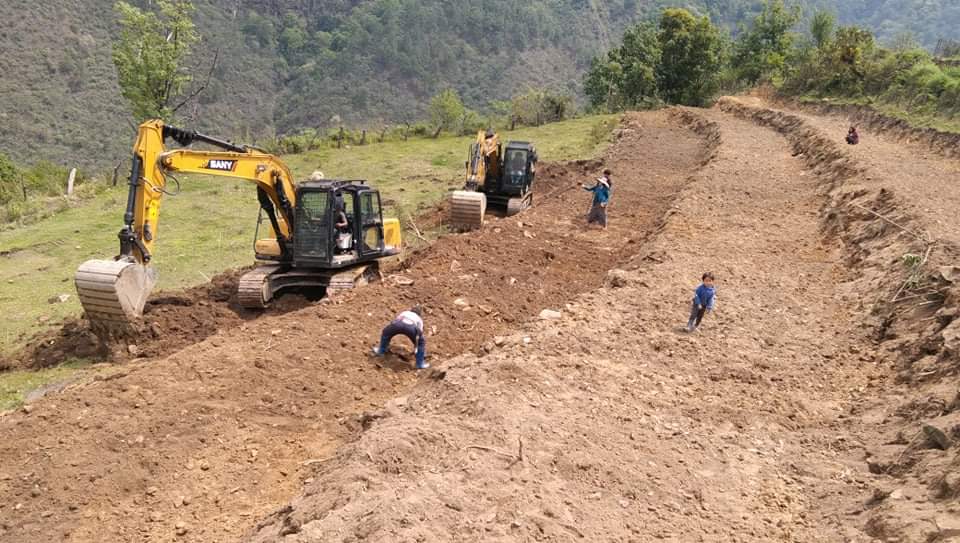
- 📍 Bemji Village, Nubi Gewog (block), Trongsa Dzongkhag (district), Bhutan
- 🗓 2021-01-08
- 📷 Chenga Tshering
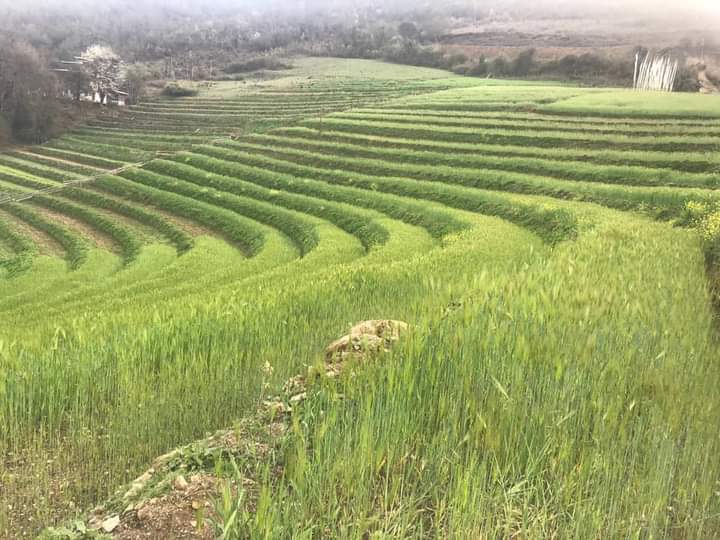
- 📍 Bemj Villagei, Nubi Gewog (block), Trongsa Dzongkhag (district), Bhutan
- 🗓 2020-01-08
- 📷 Chenga Tshering