
Water Source Protection
Type: Technologies
Creation: 2023-07-10 13:58 Updated: 2024-02-24 12:53
Compilers: ONGPO LEPCHA
Reviewers: William Critchley, Rima Mekdaschi Studer
Country/ region/ locations where the Technology has been applied and which are covered by this assessment
- Country: Bhutan
- Region/ State/ Province: Mongar Dzongkhag (District)
- Further specification of location (e.g. municipality, town, etc.), if relevant: Yakpugang village
- Map: View Map
Description of the SLM Technology
Short description of the Technology
Water source protection involves protecting lakes, rivers, springs, or man-made reservoirs to avoid water pollution and damage by livestock and wild animals. In the past, the emphasis was on fencing and improving vegetation cover at the discharge point itself, but a recent focus is on groundwater recharge areas.
Detailed description of the Technology
Water source protection involves protecting lakes, rivers, springs or man-made reservoirs to avoid water pollution and damage by livestock and wild animals. In the past this included fencing and enhancing vegetation cover at the discharge point – that is, where the water starts flowing. However, today, water source protection also focuses on improving groundwater recharge areas. The water source protection technology has many benefits. In addition to providing a clean and regular supply of drinking and irrigation water, it also enhances the vegetation cover of the catchment area.
Strategies target maintaining adequate water levels in underground water reservoirs to ensure a continuous flow of streams and springs. In Yakpugang Community Forest, the technology has been applied specifically in the southern mountainous part of the village. An area of 638 acres (255 hectares) has been established as the recharge zone, and three springs have been identified for source protection. Native tree species have been planted annually in the degraded watershed to improve forest conditions. The main purpose is to protect the quality and quantity of the water for both drinking and irrigation purposes. The technology is supported by an approach that involves collective efforts of the community who realize that if their drinking and irrigation water supply is to be sustainable, they must work together.
The main purpose is to ensure a continuous supply of water for drinking and irrigation to the community. This is achieved through managing the catchment areas where rainwater soaks through the ground to reach a groundwater reservoir, and one of the key interventions is protecting the water sources from wild animals and livestock.
The water source protection technology involves 1) meeting different stakeholders, 2) signing agreements between the stakeholders, 3) site selection and survey, 4) planting of native tree species, and 5) conducting annual monitoring and evaluation. Inputs like fencing materials, planting materials, and human resources are required for the implementation and maintenance of the technology.
The technology is liked because it helps provide a continuous supply of both clean drinking and irrigation water. Furthermore, protecting water sources by the community is rewarded in monetary form by the nearby town as part of the Payment for Environmental Services (PES). This incentive helps the community to generate income which is ploughed back into the improvement and maintenance of water sources. What is disliked is the reduction in grazing land since the land users are not allowed to graze their cattle inside the water source areas.
Photos of the Technology
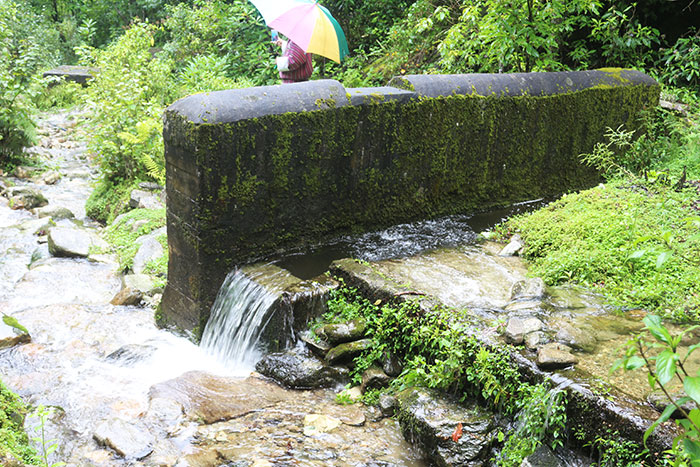
- 📍 Yakpugang village, Mongar Dzongkhag (District), Bhutan
- 🗓 2020-08-12
- 📷 Tashi Phuntsho, Kuensel
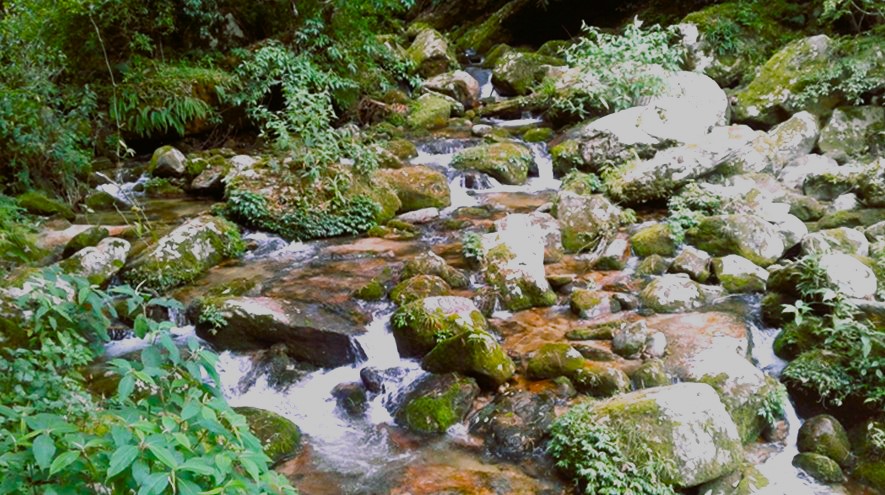
- 📍 Tsirang, Bhutan
- 🗓 2020-01-07
- 📷 Divisional Forest Office (DFO), Tsirang