
Vegetable Intercropping in Apple Orchards
Type: Technologies
Creation: 2023-07-10 19:40 Updated: 2024-05-30 15:19
Compilers: Tshering Yangzom
Reviewers: William Critchley, Rima Mekdaschi Studer, Joana Eichenberger
Country/ region/ locations where the Technology has been applied and which are covered by this assessment
- Country: Bhutan
- Region/ State/ Province: Thimphu
- Further specification of location (e.g. municipality, town, etc.), if relevant: Yusipang, Chang Gewog, Thimphu Dzongkhag
- Map: View Map
Description of the SLM Technology
Short description of the Technology
Vegetables are intercropped between fruit-bearing trees in orchards. This maximizes land utilization, increases agrobiodiversity, and optimizes agricultural productivity.
Detailed description of the Technology
Intercropping of vegetables with fruit-bearing trees in orchards can be an effective system in terms of production and agroecology. It is a sustainable farming technique that optimizes land use, increases agrobiodiversity, diversifies production, and enhances overall yields. Land users in Yusipang grow peas, beans, and cole crops (cabbages, kale, etc.) in their apple orchards.
Intercropping vegetables in orchard land optimizes the use of space, sunlight, water and nutrients. Intercropping also increases biodiversity within the orchard ecosystem. This coexistence of species reduces the vulnerability of the orchard to crop failure and pest infestation: it improves the residence of the overall system.
Trees in the system absorb nutrients from the soil and return them through fallen leaves, thereby improving soil fertility and reducing reliance on external fertilizers. This nutrient recycling improves the overall health of the orchard ecosystem. Intercropping can also help in natural pest management through various mechanisms – including the attraction of beneficial insects - thus reducing the need for chemical pesticides. It also fosters a beneficial microclimate.
To establish intercropping of vegetables in orchards, careful planning and design is required with respect to crop selection, spacing of trees and intercrops, irrigation, and nutrient management. Regular weeding and mulching are required alongside adequate irrigation, integrated pest management, and pruning of fruit trees to prevent competition for light and space.
Intercropping of vegetables in orchards thus offers multiple benefits to farmers and the overall agricultural system, including increased farm productivity. It increases climate resilience and improves the health of the agroecosystem. However, it is important to be aware of potential drawbacks. These include competition between crops for resources - and labour. Sound management practices can overcome these challenges and maximize the effectiveness of intercropping.
Photos of the Technology
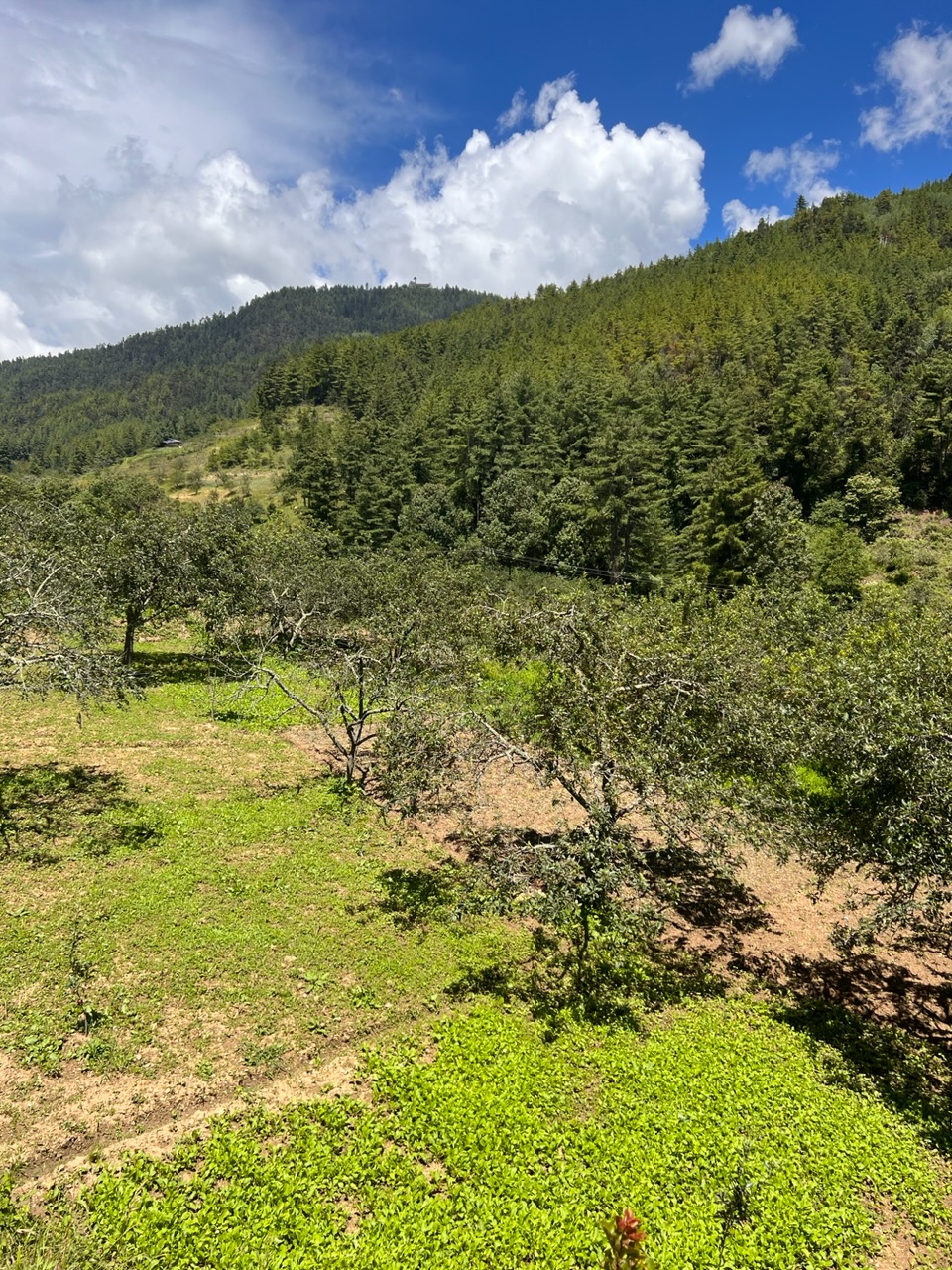
- 📍 Yusipang, Thimphu
- 🗓 2023-10-07
- 📷 Tshering Gyeltshen