
Citrus Canopy Management and Rehabilitation Program
Type: Technologies
Creation: 2023-07-12 10:12 Updated: 2024-05-30 15:23
Compilers: Nima Dolma Tamang
Reviewers: William Critchley, Rima Mekdaschi Studer, Joana Eichenberger
Country/ region/ locations where the Technology has been applied and which are covered by this assessment
- Country: Bhutan
- Region/ State/ Province: Dagana Dzongkhag
- Further specification of location (e.g. municipality, town, etc.), if relevant: Nindukha Village, Kana Gewog
- Map: View Map
Description of the SLM Technology
Short description of the Technology
Citrus canopy management refers to the set of practices and techniques employed to optimize the growth, health, and productivity of citrus trees by manipulating the structure and density of their canopy. Effective canopy management is crucial for achieving desirable outcomes in citrus cultivation, such as improved fruit quality, increased yields, efficient use of resources, and enhanced tree health.
Detailed description of the Technology
Citrus canopy management practices remain basic in Bhutan. Thus, the Australian Centre for International Agricultural Research (ACIAR) project was initiated and demonstrated citrus canopy management practices in selected orchards in 2010. In the same year, the Japan International Cooperation Agency (JICA) project trained land users and extension officers in eastern Bhutan on citrus management practices such as planting methods, nutrient management, pruning and training including top working, fruit thinning and post-harvest management practices. Since then, citrus growers have been slowly adopting the practices in their orchards. However, the adoption rate is low - affecting the yield and quality.
Bhutan has suitable climatic conditions for citrus production, particularly in the southern parts of the country due to the subtropical climate. Citrus such as oranges, mandarins and lemons are grown in orchards and home gardens. In Bhutan, citrus canopy management practices focus on optimizing tree growth, fruit production, and overall tree health. The main elements include pruning, training systems, canopy density management, tree height and size control, and disease and pest management integrated with irrigation and nutrient management practices. Pruning involves selectively removing branches, shoots, or foliage to shape the tree and improve its health. The stump should always be cut as close to the collar region as possible. Training structures the tree in a specific manner to optimize growth and management. Canopy density management regulates foliage density for light penetration and airflow. Techniques such as hedging or topping control the height and size of trees. Disease and pest management practices include adequate air circulation and sunlight exposure. Integration with irrigation and soil nutrient management enhances tree health and productivity. The desirable shape and size of citrus are variable depending on the grower's choice, location, and - most importantly - operational health and safety concerns. In general, the desirable shape and size of the tree should be 2 to 5 m tall, 2 to 5 m width of canopy, and 4 to 6 primary (scaffold) branches that are at least 1 m above the ground level.
The purposes/functions of citrus canopy management technology are to optimize fruit production, improve tree health, and facilitate harvest and maintenance operations. It helps maximize fruit yield and quality. Pruning and maintenance practices enhance tree vigour, reduce the risk of diseases and pests, and improve overall plant health. Controlling tree size and shape makes harvesting easier and more efficient, and simplifies other maintenance activities such as irrigation, fertilization, and pest control.
To establish and maintain citrus canopy management technology, activities such as regular pruning and training, knowledge and skill development, use of proper tools and equipment, monitoring and assessment, irrigation, and nutrition management are required. Regular pruning and training of citrus trees according to the selected system and management objectives is essential. Monitoring tree growth, health, and productivity is important, along with proper irrigation scheduling, water management, and nutrient application.
The benefits/impacts of the technology are improved sunlight exposure, enhanced air circulation, reduced disease incidence, increased fruit size and quality, ease of harvest, consistent yield, optimized water use, better pest management, and others. A well-managed canopy makes it easier to access the fruit during harvest, and achieve higher yields and better-quality fruits, reduced need for pesticides, as well as directing nutrients toward fruit production rather than excessive vegetative growth. However, there are some drawbacks of the technology such as the requirement for time-consuming manual labour, lower initial yields, high initial investments for equipment, and concerns about over-pruning.
Photos of the Technology
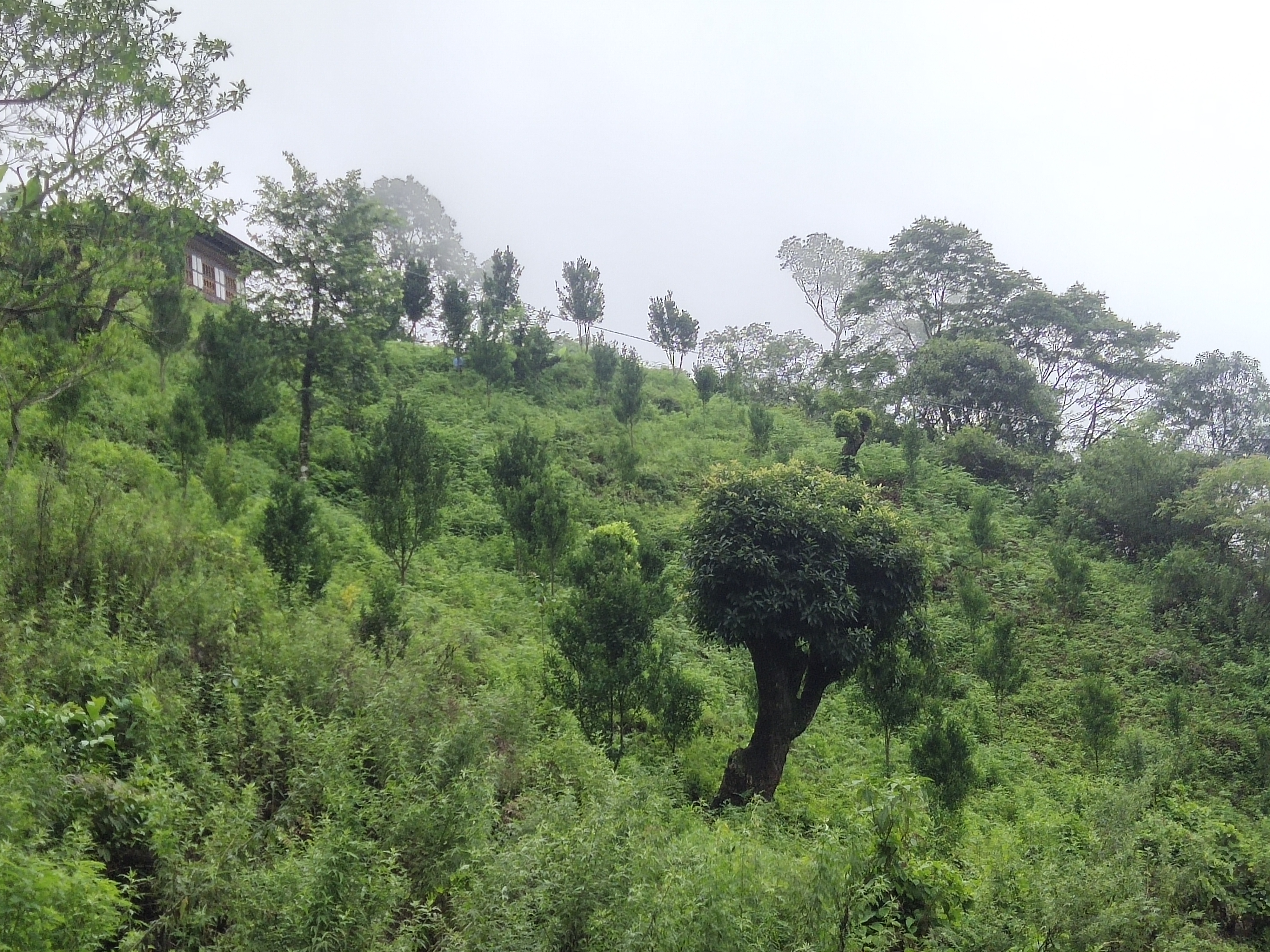
- 📍 Kana Gewog, Dagana Dzongkhag
- 📷 Thinley Penjor Dorji