
Managed Burning of Rangeland
Type: Technologies
Creation: 2023-07-15 13:35 Updated: 2024-06-04 15:14
Compilers: ONGPO LEPCHA
Reviewers: William Critchley, Rima Mekdaschi Studer, Joana Eichenberger
Country/ region/ locations where the Technology has been applied and which are covered by this assessment
- Country: Bhutan
- Region/ State/ Province: Bumthang Dzongkhag (District)
- Further specification of location (e.g. municipality, town, etc.), if relevant: Dhur village, Choekhor Gewog (Block)
- Map: View Map
Description of the SLM Technology
Short description of the Technology
Burning of rangeland (“tsamdro”) is a traditional management practice adopted by highlanders to control unpalatable grass and shrub species. This helps them produce adequate fodder for their yaks, cattle, horses, and sheep by creating a favorable environment for palatable grasses.
Detailed description of the Technology
The practice of burning rangeland (“tsamdro”) is a longstanding tradition among highlanders, whose livelihoods depend on livestock including yaks, cattle, horses and sheep. It is mainly practiced by transhumant communities or individuals who rely on livestock for their livelihoods. They follow a migratory livestock husbandry system that takes them from the highlands to the lowlands dependent on the availability of fodder resources, while simultaneously avoiding the extremes of climate. In the past, rangeland was allocated to individuals, communities, or religious bodies through payment for a minimal annual grazing permit, granting grazing rights. When pasture was scarce, controlled fires were intentionally set in specific areas to rejuvenate the rangeland with fresh grass and control unpalatable grasses and shrubs. For instance, the transhumant nomadic communities of Dhur village, Choekhor Gewog, in Bumthang have adopted the practice of burning rangeland. This practice is implemented during the winter months, dependent on weather, vegetation status, and wind patterns. Rooted in traditional knowledge and cultural practices, the practice is slowly diminishing nowadays due to environmental concerns and labour shortages as young nomads migrate - seeking better employment in towns.
The technique serves multiple purposes. These include promoting the growth of fresh and palatable pasture rich in protein, increasing plant diversity, adding nutrients to the soil through ash, and reducing dead plant material that inhibits new plant growth. Additionally, rangeland burning contributes to the control of livestock pests, especially ticks and flies. While rangeland burning is a straightforward process, it requires careful planning of time and location, creation of fire breaks to prevent uncontrollable spread, and leaving the land fallow for 2 to 3 years after burning to encourage grass growth.
Land users appreciate the technology for reducing their workload in collecting wild fodder grasses, enhancing visibility by removing trees and shrubs, and reducing the risk of predators. However, risks include the potential for uncontrolled fires if not properly managed and harm to the ecosystem and biodiversity in and around the pastureland. Burning also contributes to the loss of carbon dioxide (a greenhouse gas) to the atmosphere.
Photos of the Technology
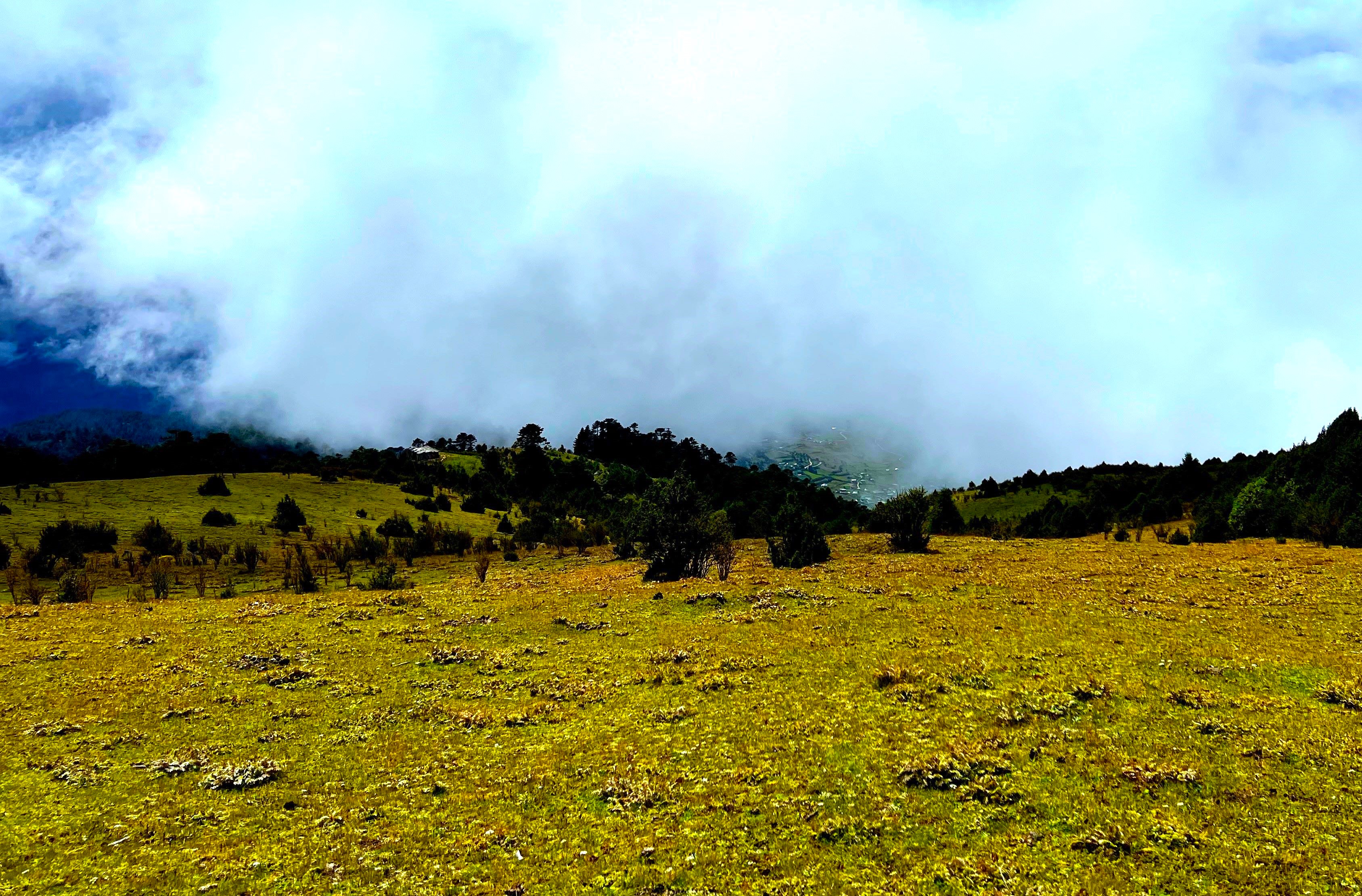
- 📍 Dhur village, Choekhor Gewog (Block), Bumthang Dzongkhag (District), Bhutan
- 📷 Tshewang Phuntsho
- 📍 Dhur village, Choekhor Gewog (Block), Bumthang Dzongkhag (District) Bhutan
- 📷 Tshering Zangmo