
Use of Dummy Tigers to Repel Wild Animals
Type: Technologies
Creation: 2023-07-19 06:09 Updated: 2024-06-04 15:00
Compilers: Tshering Yangzom
Reviewers: Rima Mekdaschi Studer, William Critchley, Joana Eichenberger
Country/ region/ locations where the Technology has been applied and which are covered by this assessment
- Country: Bhutan
- Region/ State/ Province: Drochukha Chiwog, Goenshari Gewog, Punakha Dzongkhag
- Map: View Map
Description of the SLM Technology
Short description of the Technology
Dummy tigers are used to scare off crop predators. This can be considered a SLM technology because it protects the crops from wild animals which in turn prevents erosion (both soil and water), adds nitrogen to the soil (i.e., by leguminous crops), and helps in nutrient cycling. Furthermore, time is freed up for the farmer to carry out other SLM activities.
Detailed description of the Technology
In the region of Drochukha, Bhutan, the foremost challenge faced by rural communities is crops damage by wildlife. Land users in this area contend with damage inflicted by a variety of wild animals, including wild boar, barking deer, sambar deer, monkeys, porcupines, bears, and rats. To mitigate crop damage by wildlife, the land users of Drochukha have implemented a unique solution by strategically placing dummy tigers to deter these animals and safeguard their crops.
In 2018, a woman from Drochukha initiated the idea of using dummy tigers to protect crops, and it proved to be highly successful. Following this, other residents also adopted the practice. Farmlands situated near the forest's periphery experience the most significant crop damage by wild animals. By placing dummy tigers near the forest's edge, the land users have not only reduced wildlife attacks in the peripheral regions but also significantly decreased such incidents in the central areas. To protect their crops from wild animals, they procured a dummy tiger at a cost of Nu. 3,380 (about USD 40) from Bajo town in Wangduephodrang Dzongkhag and another dummy tiger costing Nu. 2,000 (about USD 25) from the Indian market in Jaigaon. The land users constructed a raised wooden platform by placing four wooden poles in the ground and adding planks over them to support the dummy tigers, ensuring that they faced the forest.
The implementation of dummy tigers (two) has yielded numerous benefits for 21 households in the region. With the adoption of this innovative approach, Drochukha farmers have been able to increase their crop production and rejuvenate previously unused lands. Dummy tigers effectively safeguard standing crops and prevent wildlife depredation. Maintaining standing crops in the fields is essential to prevent erosion, both of soil and water, while also contributing nitrogen to the soil through the cultivation of leguminous crops and facilitating nutrient cycling. An important aspect of employing dummy tigers is that it prevents land users from resorting to fatal methods of crop protection that may involve the killing of wildlife. Human-wildlife conflicts have thus been reduced. The primary current concern of the land users of Drochukha is the fading colour of the dummy tigers, and they are eager for improved interventions that may involve mobile and sound-producing tigers.
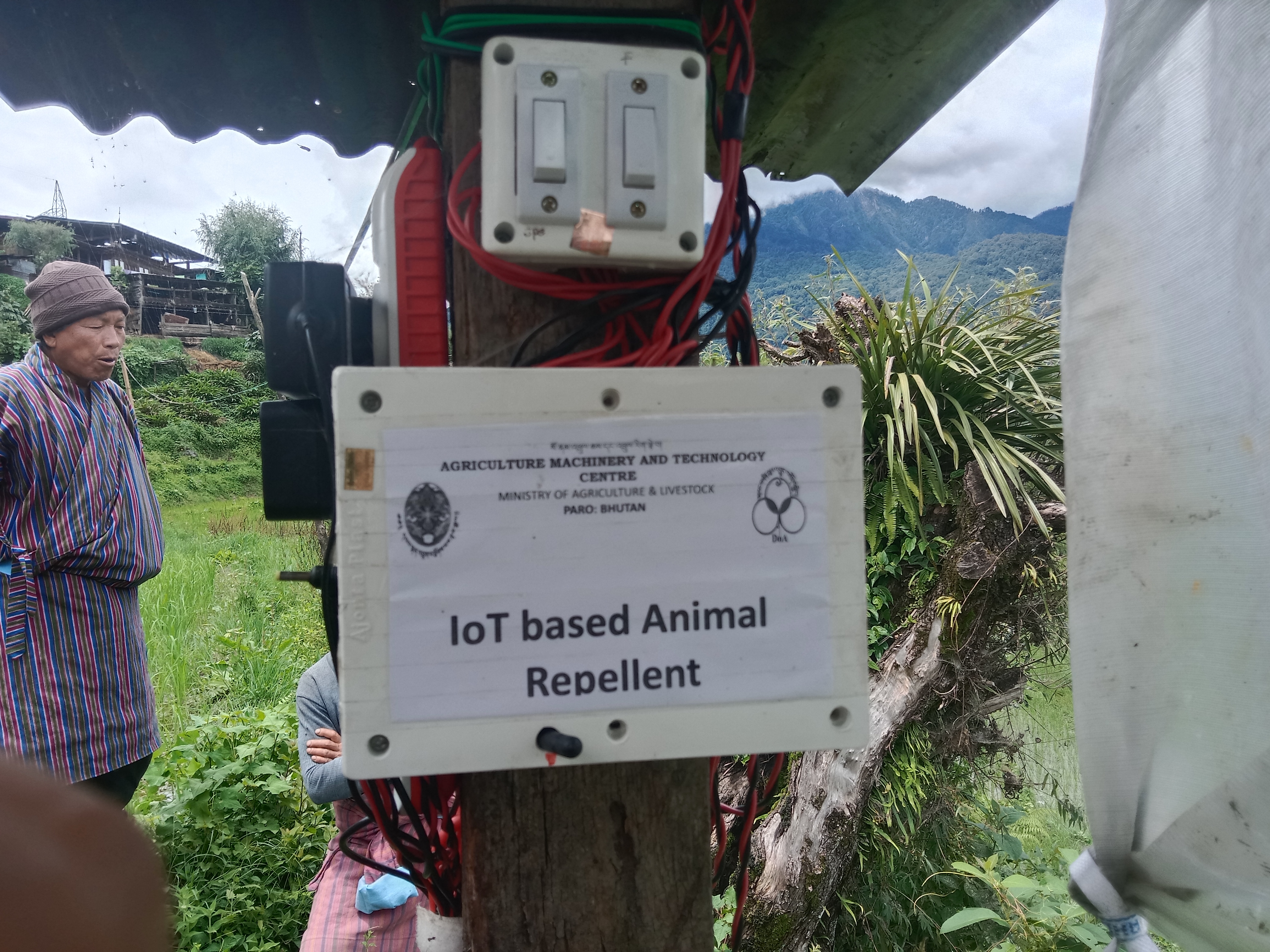
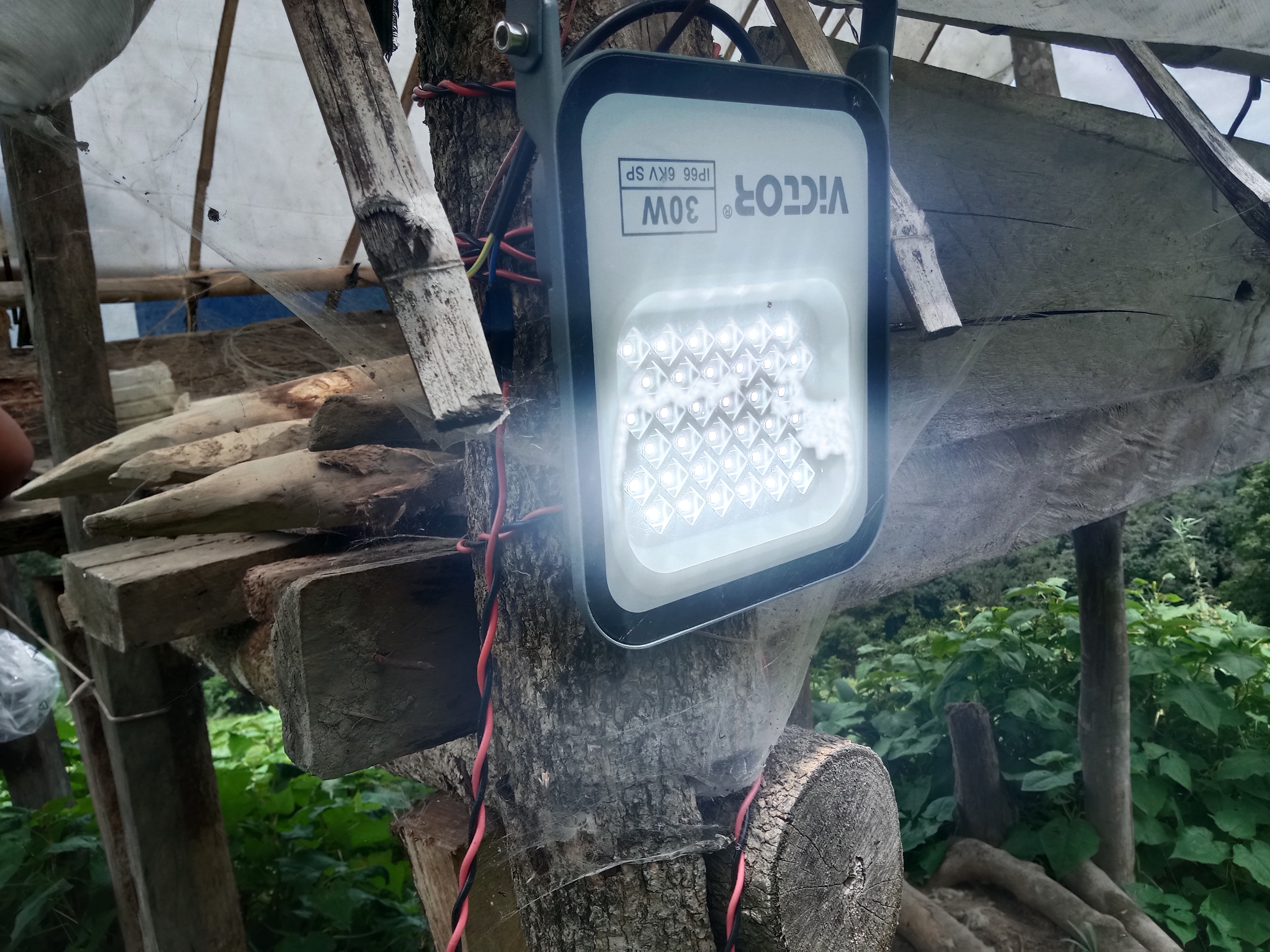
The Agriculture Machinery Centre (AMC) and the Dzongkhag Agriculture Office (DAO) have joined forces to create an IoT-based animal-repellent system. This system, positioned at the field's periphery, comprises three primary components: a speaker, a receptor card, and an amplifier. Once connected to an owner's smartphone, the system allows for the remote playback of various animal sounds. One system, consisting of a single receptor card, can be linked to up to five users. Additionally, two LED flashlights are integrated into the system to deter wild boars at night through powerful pulse flashes. The complete system comes at a cost of Nu. 30,000. Moreover, in their most recent endeavors, AMC and DAO are currently developing a robotic tiger capable of moving its head and limbs, enabling it to patrol the guardhouse and serve as a further deterrent to wildlife. The technology is being piloted as a project to evaluate its effectiveness in the field through trials.
Photos of the Technology
- 📍 Drochukha, Goenshari, Punakha
- 📷 Kuenzang Nima
- 📍 Drochukha
- 📷 Kuenzang Nima
- 📍 Drochukha
- 📷 Kuenzang Nima