
Biogas plant
Type: Technologies
Creation: 2023-07-19 14:00 Updated: 2024-04-03 12:22
Compilers: ONGPO LEPCHA
Reviewers: Rima Mekdaschi Studer, William Critchley
Country/ region/ locations where the Technology has been applied and which are covered by this assessment
- Country: Bhutan
- Region/ State/ Province: Shumar Gewog (Block), Pemagatshel Dzongkhag (District)
- Further specification of location (e.g. municipality, town, etc.), if relevant: Darchung under Shumar Chiwog (Community)
- Map: View Map
Description of the SLM Technology
Short description of the Technology
Biogas is a renewable fuel generated through the anaerobic digestion of organic matter like food or animal waste, typically within a biogas plant. The biogas plant is adapted to household conditions and animal waste production. While this technology benefits small-scale farmers, challenges include the cost of establishment and the need for consistent waste input. Adoption has significantly reduced costs for users, lowered greenhouse gas emissions, and provided organic fertilizer, enhancing crop productivity and livestock health.
Detailed description of the Technology
Biogas is a renewable fuel produced through the anaerobic digestion of organic matter, such as food or animal waste. Typically, biogas is intentionally generated in an enclosed environment (a biogas plant) for household consumption. This plant is constructed near a livestock shed for easy collection of animal waste and in proximity to households, mainly used for cooking, heating, and as an alternative to commercial LPG gas.
The plant can be adjusted based on the amount of animal waste, making it viable for smallholder farmers with just a few cows. In most parts of the country, the technology is modified so that even a small amount of animal waste can produce some gas. The digestion chamber is made smaller in diameter and height to generate enough pressure for the gas to reach the stove through the pipe. Initially, the Biogas project started to promote clean and renewable energy for household cooking, reducing the consumption of firewood. Currently, there are more than 8000 biogas plants of different sizes - 4 m3, 6 m3, 8 m3, and 10 m3, and a few large-scale biogas greater than 50 m3 in large individual dairy farms and government livestock farms.
The major activities and inputs required to establish and maintain the technology include having ample space around the residential area for the plant's construction. Additionally, materials such as cement, sand, gravel, stone, iron rods, pipes, pressure gauges, and a stove are necessary. Human resources are needed for the construction of the plant, and land users should have livestock (cows, buffaloes, horses, etc.) that can provide dung/waste for gas generation.
There are numerous benefits and impacts of the technology, including its positive effects on rural communities, greenhouse gas emission reduction, maintaining carbon neutrality, and minimizing the use of imported LPG gas and chemical fertilizers. It also reduces electricity bills needed for operating electric heaters, saving time for land users who would otherwise collect firewood. The by-product (bio-slurry) from the digester is used as organic fertilizer, enhancing crop productivity and serving as a nutritious feed supplement for animals.
Land users both appreciate and have concerns about the technology. They acknowledge the cost reduction benefits, citing the significant savings compared to market-priced commercial LPG gas and reduced expenses on operating electric heaters. The technology has also provided them with additional time by eliminating the need to gather firewood. The bio-slurry, a by-product of the biodigester, serves as fertilizer to enhance crop production and contributes to livestock waste management, improving livestock health and production.
However, land users note that biogas plant establishment is expensive and may not be suitable for economically disadvantaged individuals. Some users experience challenges, such as the biodigester chamber failing to produce enough gas despite being constructed according to technical specifications. The daily requirement of adding animal waste to the input tank is perceived as tedious, and for land users with only one or two milking cows, supplying the required amount of animal waste for the biodigester chamber is often a problem.
Photos of the Technology
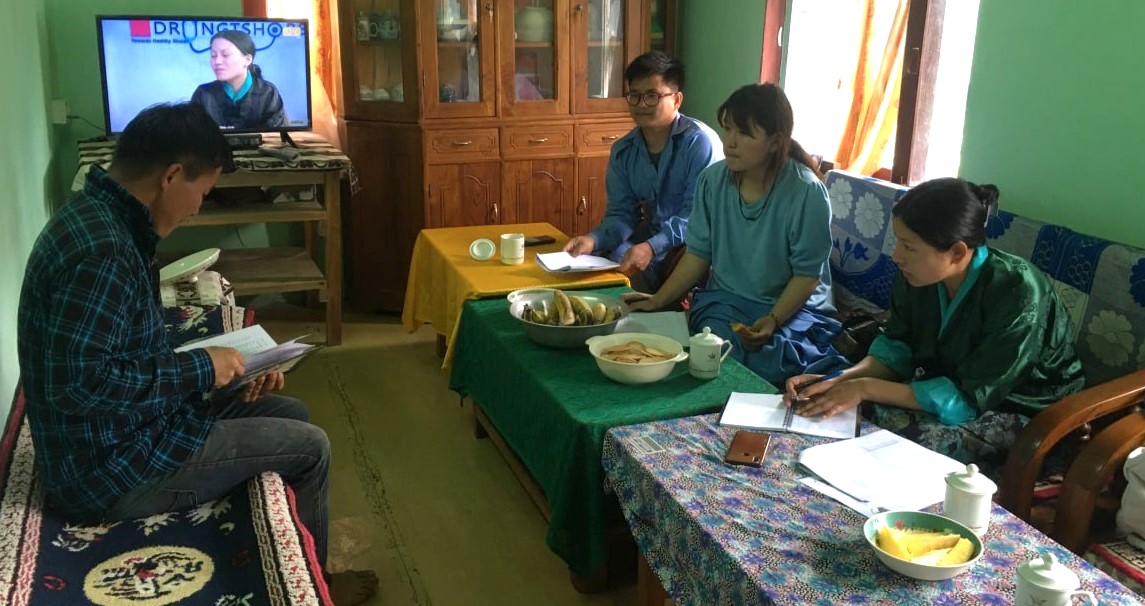
- 📍 Shumar, Pema Gatshel
- 📷 Ongpo Lepcha
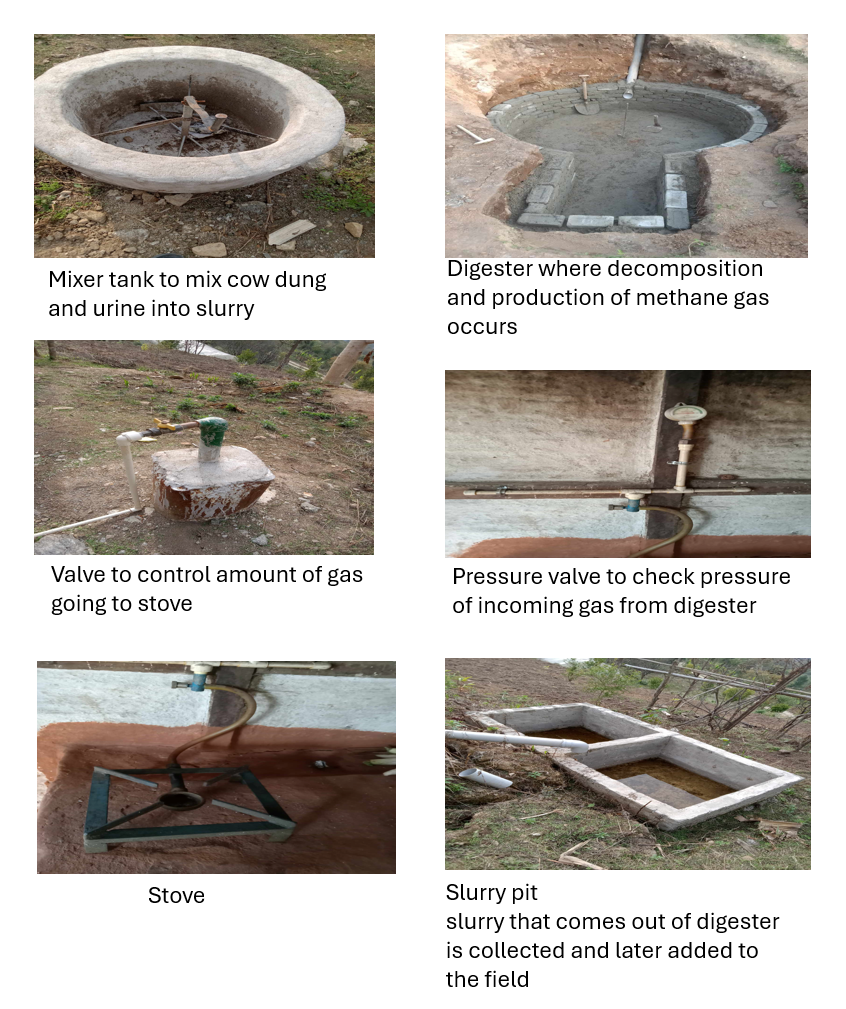
- 📍 Khebisa, Dagana
- 🗓 2024-06-03
- 📷 Chogyel Wangdi