
Terrace Consolidation by Machine
Type: Technologies
Creation: 2023-07-21 13:08 Updated: 2024-06-04 14:41
Compilers: Karma Wangdi
Reviewers: William Critchley, Rima Mekdaschi Studer, Joana Eichenberger
Country/ region/ locations where the Technology has been applied and which are covered by this assessment
- Country: Bhutan
- Region/ State/ Province: Samtse
- Further specification of location (e.g. municipality, town, etc.), if relevant: Sang-Ngag-Chhoeling
- Map: View Map
Description of the SLM Technology
Short description of the Technology
Terrace consolidation is the merging of existing narrow bench terraces into larger terraces to enable farm mechanization, commercial farming and crop intensification. This technology is promoted as the existing terraces are generally narrow and this limits efficient operation and utilization of land and other resources.
Detailed description of the Technology
Terrace consolidation involves merging of small terraces into larger terraces using a machine to make more efficient use of land through farm mechanization, commercial farming and crop intensification. This technology is promoted as the existing terraces are generally narrow and this limits efficient operation and utilization of land and other resources.
The consolidation of narrow terraces is recommended if the general slope of the proposed site is less than 20° (36%) with good soil drainage and low risk of land degradation. While consolidating narrow terraces, it is strongly recommended to remove the topsoil from the terraces and put it back once the levelling is completed. The consolidated terrace should maintain a maximum riser height of 1.5 m and bed width of 3.5 m. For slopes below 12° (21%), the bench width should not exceed 5–6 m.
Farmers can expand the amount of arable land available, maximize agricultural operations, and encourage sustainable farming methods for higher crop output and enhanced ecological resilience by converting narrower and more steep bench terraces into bigger ones (NSSC, 2020). A large portion of hillside farmers around the world rely on terracing. For the purpose of facilitating the growth of field crops, horticultural crops, fodder, and other crops that require specific management practices (e.g., irrigation), alone or in agroforestry systems, hilly or mountainous terrains are divided into narrow but graduated steps, typically 2-3 m wide and 50-80 m long across the slopes (Chapagain & Raizada, 2017).
Enlargement of terraces begins with a thorough survey and analysis of the topography and terrain. In order to build larger terraces with the least amount of environmental damage, this phase is essential. The next step in the construction process is to reshape the present, small terraces into larger, more open ones. To make wider terraced levels, this may entail moving soil and cutting through slopes. Furthermore, filling up the gaps and levelling the land's surface is required in order to reduce the number of risers and produce a continuous, gently sloping terrace. The installation of suitable drainage systems is also crucial to guarantee adequate water management and stop soil erosion.
Larger terraces enhance water management capabilities. With a more extensive surface area, water runoff is minimized, and the distribution of irrigation water becomes more even, promoting better soil moisture retention and reducing erosion. This, in turn, contributes to soil health and fertility, supporting sustainable farming practices. Moreover, the consolidation of smaller terraces into larger ones reduces the overall number of risers, thereby enhancing accessibility for farmworkers and farm machinery. This ease of access further optimizes the use of resources and fosters better crop management. Additionally, larger terraces can enable the implementation of crop diversification strategies, such as intercropping and crop rotation, promoting biodiversity and mitigating the risk of crop failure due to pests or adverse weather conditions.
However, the process of enlarging terraces involves altering the terrain, which can lead to soil erosion, habitat destruction, and ecological imbalances. This environmental impact may negatively affect local flora and fauna, reducing biodiversity and disrupting the delicate ecological equilibrium (Deng et al., 2021). Planning for safe discharge of excess water out of the terrace system effectively helps preserve soil fertility and reduces runoff. It is essential also to pay close attention to the preservation of the local ecosystem and biodiversity throughout the process.
Photos of the Technology
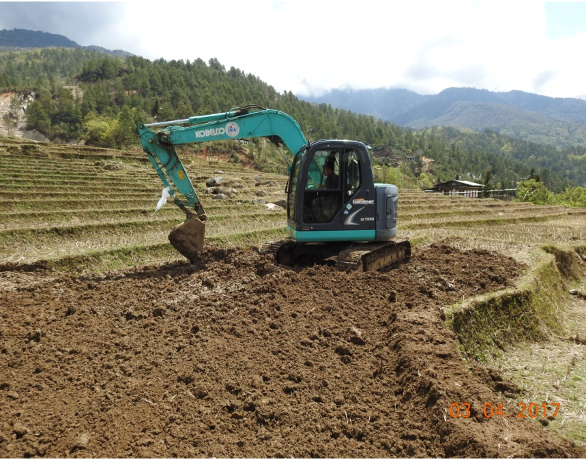
- 📍 Bayling, Yangtse Gewog (Block), Trashi Yangtse Dzongkhag (District)
- 📷 Tashi Wangdi
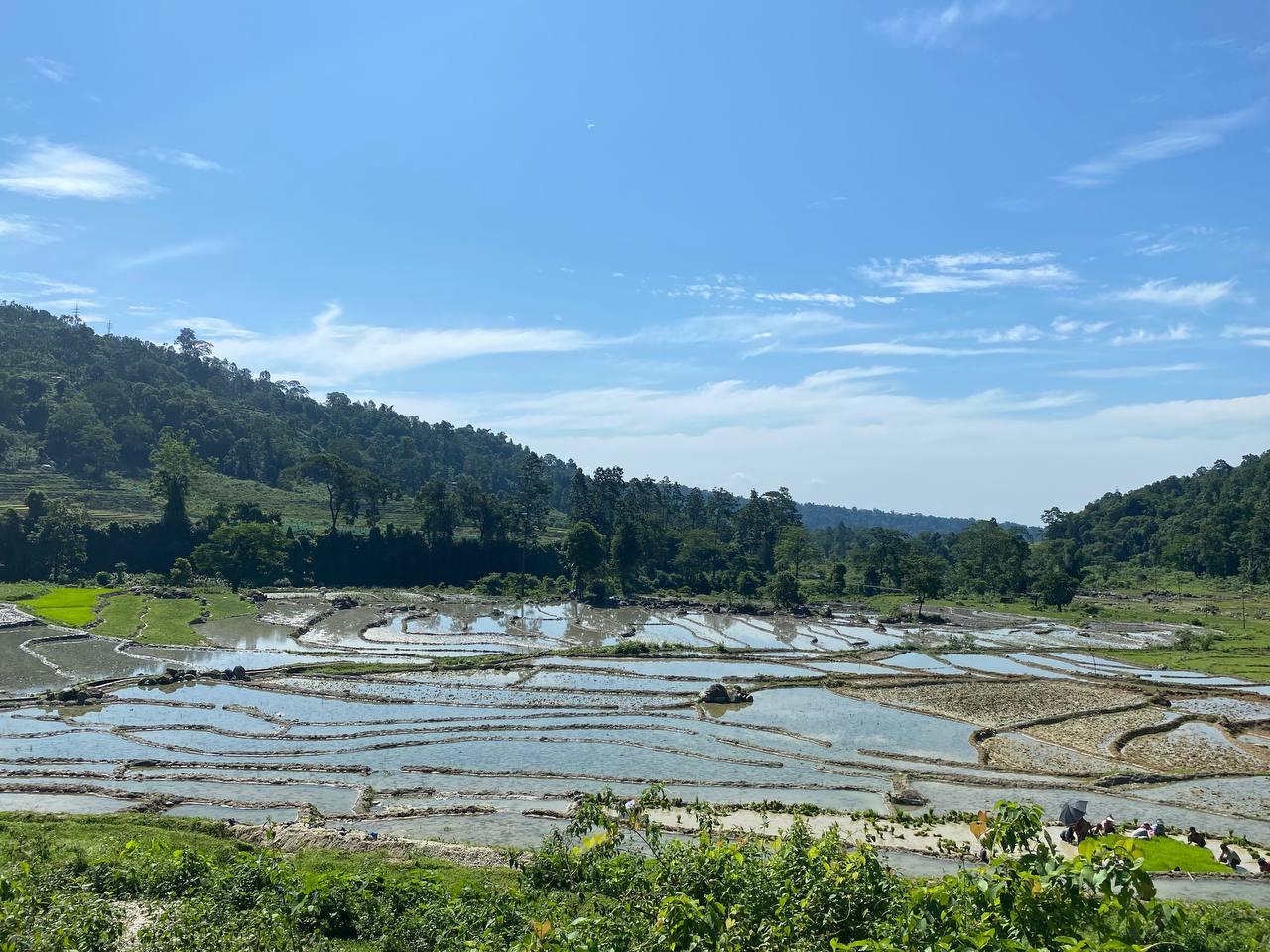
- 📍 Sang-Ngag-Chhoeling village, Yoseltse Gewog (Block), Samtse Dzongkhag (District)
- 📷 Sonam Wangchuk